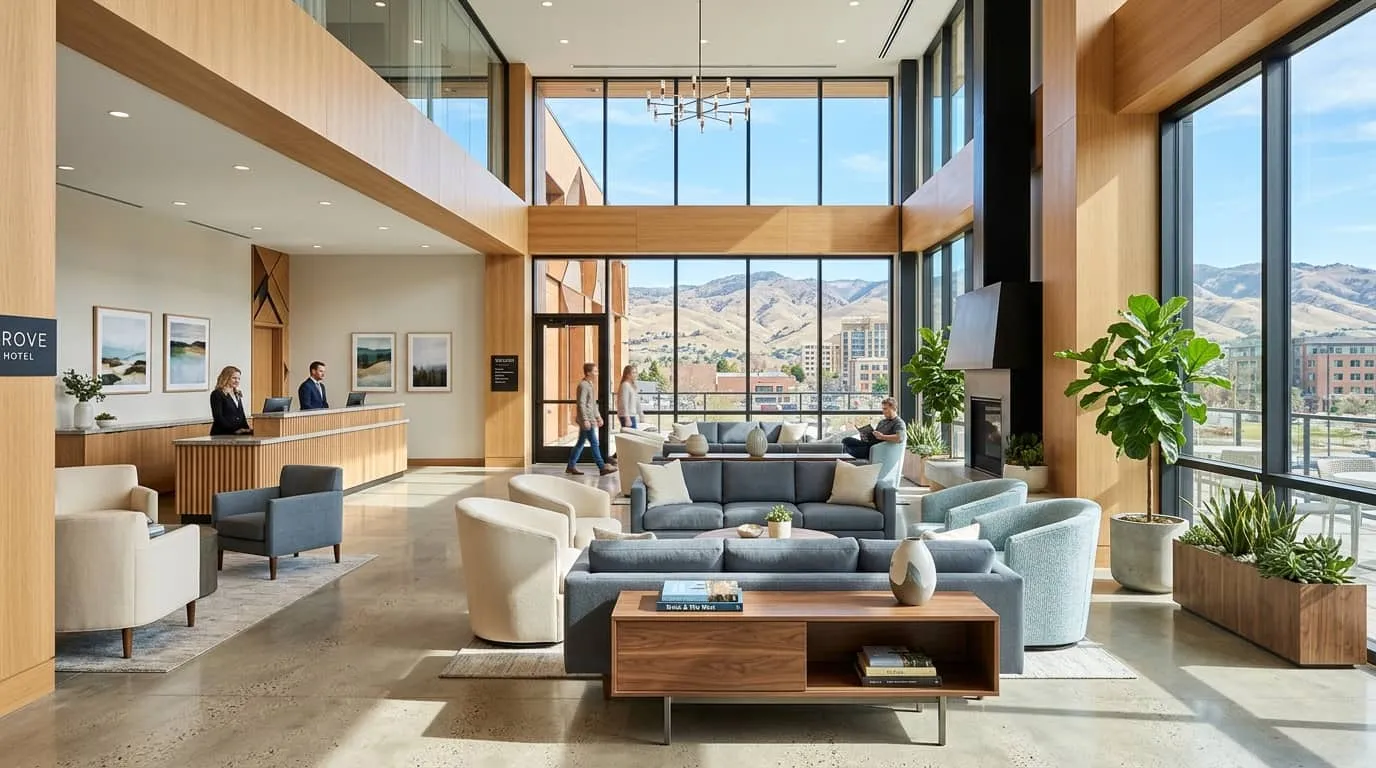
The boutique hotel category in Boise is experiencing real demand. The wave of tech-sector employees and entrepreneurs who relocated from California, Oregon, and the Bay Area brought with them a hospitality preference for properties with distinct design identities over the predictable comfort of flag-branded chains. That preference creates both an opportunity and a challenge for boutique operators. The opportunity is a guest who will pay a premium for a room that feels considered. The challenge is that this same guest has stayed in well-executed boutique hotels in San Francisco, Austin, and Portland and will evaluate your furniture program against those experiences. Getting boutique hotel furniture right in Boise is no longer optional.
What Boutique Means in the Boise Context
A boutique hotel in Boise draws its identity from specific things the city offers. The outdoor recreation identity anchored by the Boise River Greenbelt and a quick drive to Bogus Basin creates one design language: textured natural materials, warm wood tones, leather accents, and a spatial sensibility that feels connected to the landscape. The Basque Block and the cultural specificity of Boise's historic downtown create another reference point: handcrafted character, artisan scale, materials with visible production history.
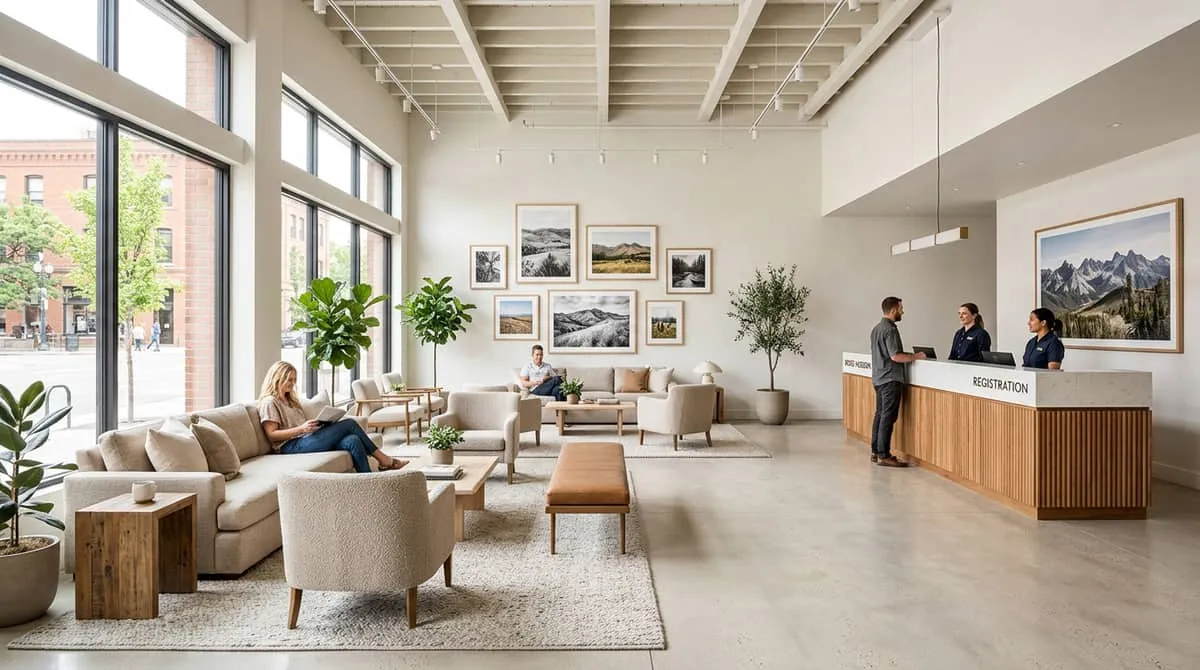
The BoDo district and the tech campus developments near the freeway corridor create a third register: clean lines, precision finishes, materials that communicate sophistication without excess. Properties near Boise Centre targeting the conference and corporate traveler need furniture programs that communicate professionalism without sacrificing the residential warmth that distinguishes a boutique room from a business hotel room.
None of these reference points are served by generic catalog solutions. Boutique hotel furniture needs to be specced to a concept brief, not selected from a standard hospitality program. The operators who understand this from the start build properties that photograph well, generate strong word-of-mouth, and command rates that justify their FF&E investment. The operators who cut corners on furniture design and quality produce rooms that guests describe as trying too hard or feeling cheap, and those reviews follow a property for years.
Guest Room Furniture: Where the Return on Investment Lives
Guest room furniture in a boutique hotel is where most of the FF&E budget goes and where most of the guest experience is formed. Guests who book a boutique hotel room for $200 to $350 per night in the Boise market are spending more than they would at a select-service flag property two miles away. They need to see and feel the difference within the first 30 seconds of entering the room.
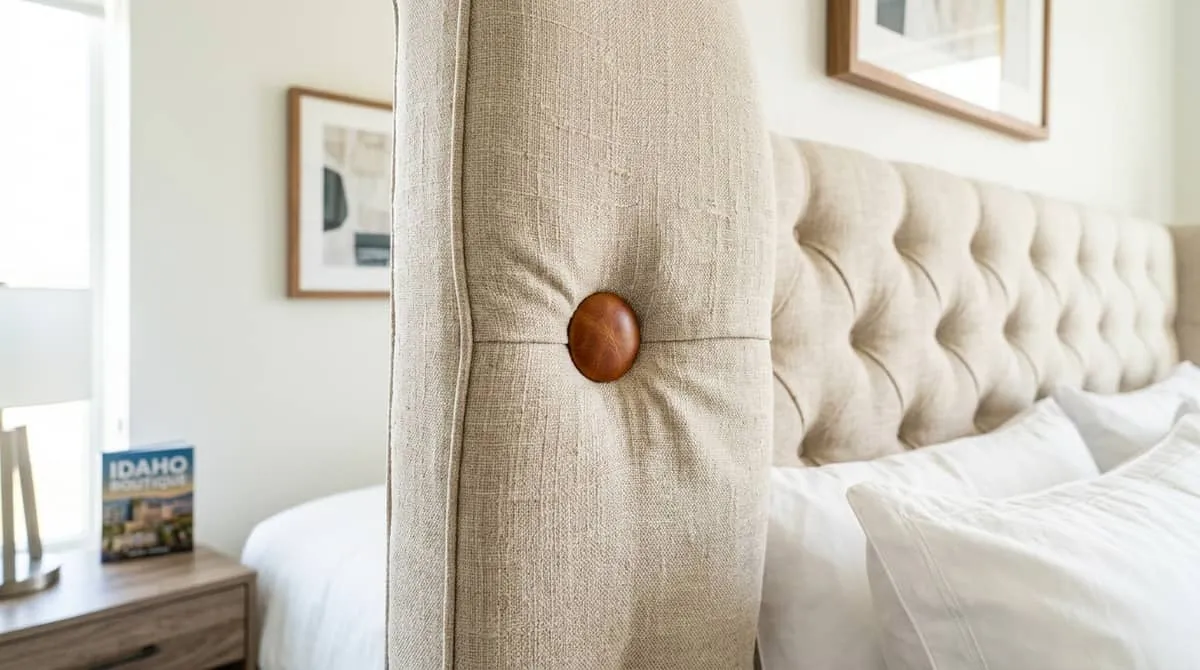
The headboard is the dominant visual element in most guest rooms and the piece that communicates your concept most clearly. Custom upholstered headboards with panel detailing, decorative nail-head trim, or channel tufting in hospitality-grade fabric read as intentional and elevated. The fabric must be specified at a minimum of 30,000 double rubs with commercial flame compliance. The underlying frame needs to be mounted at the correct height for your mattress platform and attached to the wall structure securely, not just resting against it.
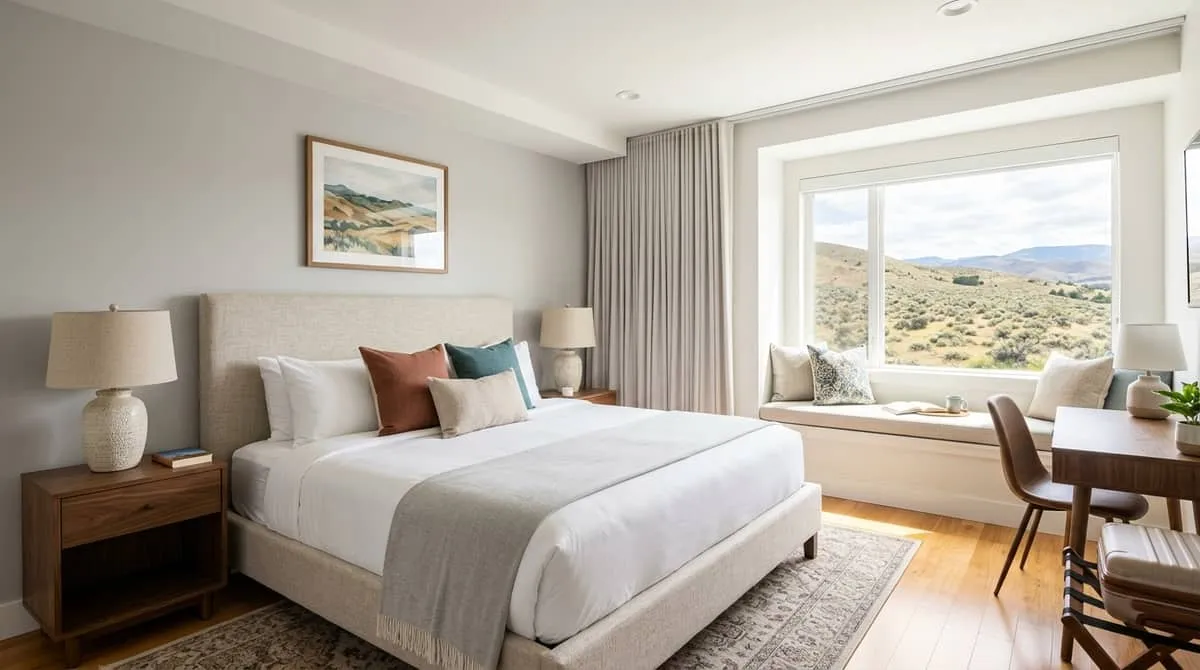
Case goods, the nightstands, dresser or credenza, and desk if included, should use a consistent finish language that ties the room together. Stained hardwood, painted MDF with solid wood edge banding, and lacquered finishes all work depending on your concept. What does not work is mixing finish families without a clear design rationale, which is a common outcome when rooms are specced piece by piece from different catalog sources rather than as a coordinated program.
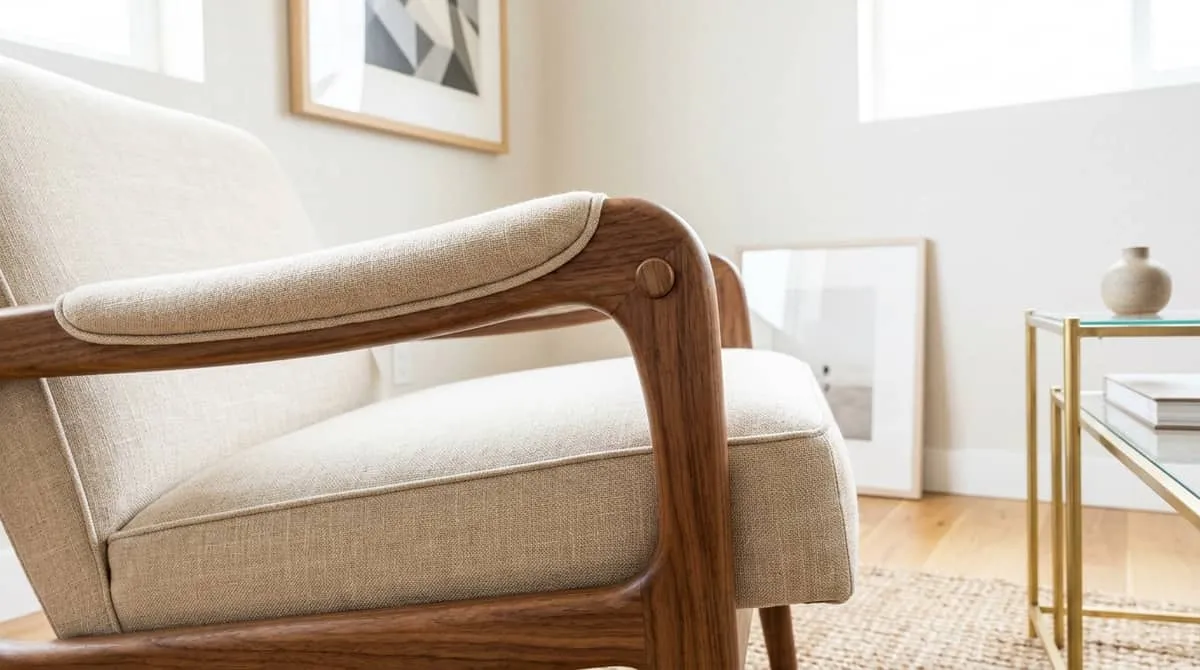
Seating in a boutique hotel guest room usually includes a lounge chair, a desk chair, or both. The lounge chair is the piece guests use to make coffee in the morning and wind down in the evening. It should be upholstered in a fabric that holds up to that daily use pattern, should be at a height and depth that actually allows comfortable seating, and should contribute to the room's design vocabulary rather than being treated as an afterthought. Contract-grade lounge seating for guest rooms starts around 100,000 cycle ratings and should meet those minimums in the spec documentation.
Public Spaces and the Boutique Hotel First Impression
Boutique hotel public spaces, the lobby, bar area, and any social lounge, carry the first impression that determines whether a guest feels their booking decision was validated. In a market like Boise, where the boutique guest is often choosing between your property and well-regarded alternatives, the lobby furniture program is a direct competitive factor.
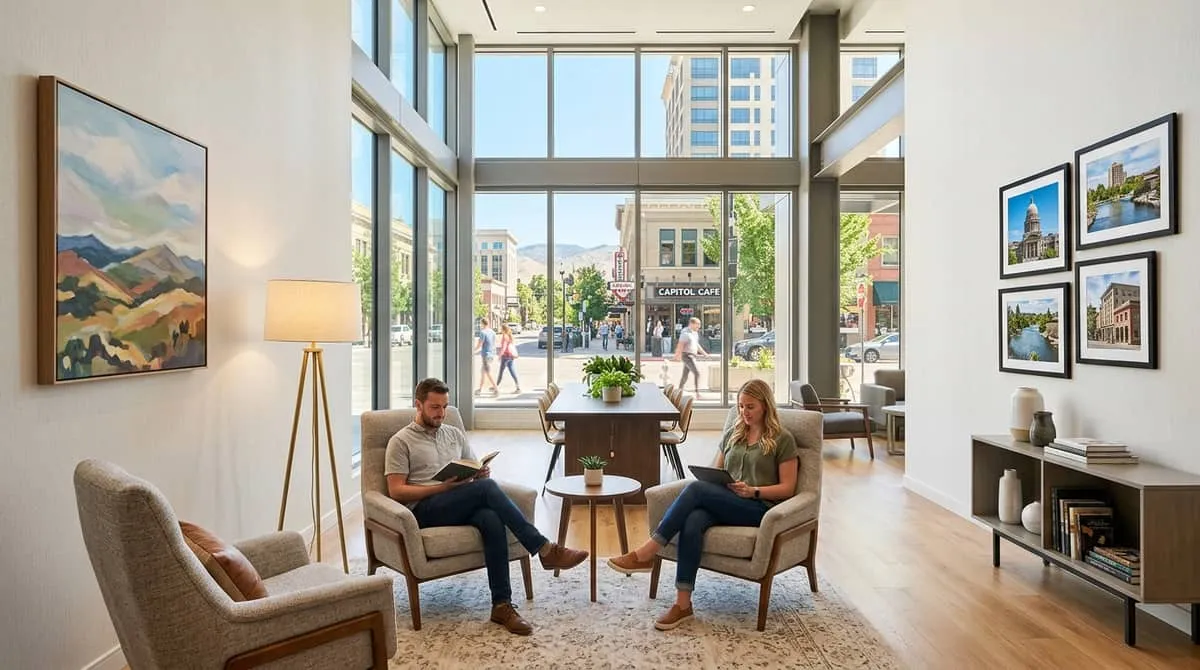
Lobby seating needs to work as both a waiting area and a social space. Mixed seating heights with lounge chairs, sofas, and occasional higher seating create a space that accommodates different uses throughout the day. Material variety within a consistent color palette prevents the uniform look of a standard hotel lobby while maintaining design coherence. Each piece should be specified to commercial durability standards regardless of how residential the aesthetic feels, because lobby furniture sees continuous use patterns that residential furniture is not built for.
The bar or social lounge in a boutique Boise property targeting the tech-sector and outdoor recreation guest should feel approachable without being casual. Solid wood table surfaces, upholstered seating with interesting textile detail, and a material palette that references local character without being literal about it creates the right register. Think Douglas fir grain patterns, volcanic stone references, leather in natural tones. These choices communicate a sense of place without becoming a hospitality theme park.
Smaller outdoor social spaces, a courtyard near the BoDo foot traffic or a terrace overlooking the Boise River Greenbelt, extend the property's social offer significantly. Outdoor furniture for these spaces should be specified for Idaho's seasonal range, including summer heat, smoke season particulate accumulation, and cold dry winters. Powder-coated aluminum with all-weather cushions or solid teak with appropriate sealer is the practical standard. Resin furniture that photographs well but degrades in UV exposure within two seasons is not a meaningful option in this market.
Procurement Strategy for Boutique Hotel FF&E in Boise
Boutique hotel FF&E procurement works best when it starts with a complete design brief and a room-by-room specification before any supplier conversations begin. That sequence, brief first, then supplier, prevents the common problem of design direction drifting toward what a supplier happens to carry rather than what the concept requires.
The design brief should specify finish families, color palettes, material types, and key design references for each space category: standard guest rooms, suites if applicable, lobby, bar, and outdoor areas. From that brief, a contract furniture supplier can build a specification package with product recommendations, lead times, and pricing that actually reflects your concept.
Lead times for boutique hotel programs with custom pieces run 12 to 16 weeks for upholstered items and case goods, and should be sequenced based on your construction timeline. Guest rooms generate revenue from opening night, so those pieces need to arrive and be installed on schedule. Public spaces with slightly more flexible opening timelines can sometimes be phased in weeks later without revenue impact, giving you scheduling flexibility if production or freight creates delays.
Budget allocation in boutique hotel FF&E typically reflects the principle that guest rooms hold the most value because they are the revenue-generating product. Lobby and bar programs are the second priority because they form the first impression. Outdoor spaces and corridors carry important aesthetic function but are lower priority in a constrained budget scenario.
Find a supplier who has done boutique hotel programs, can provide examples with photos and references, and understands the difference between contract performance specifications and catalog hospitality product. In the Boise market right now, that distinction determines whether your property competes successfully or becomes an expensive lesson in the cost of under-speccing.
For Boise properties comparing boutique hotel furniture options, project-specific pricing tells you more than any published range. Request a quote and we will scope it to your space and volume.