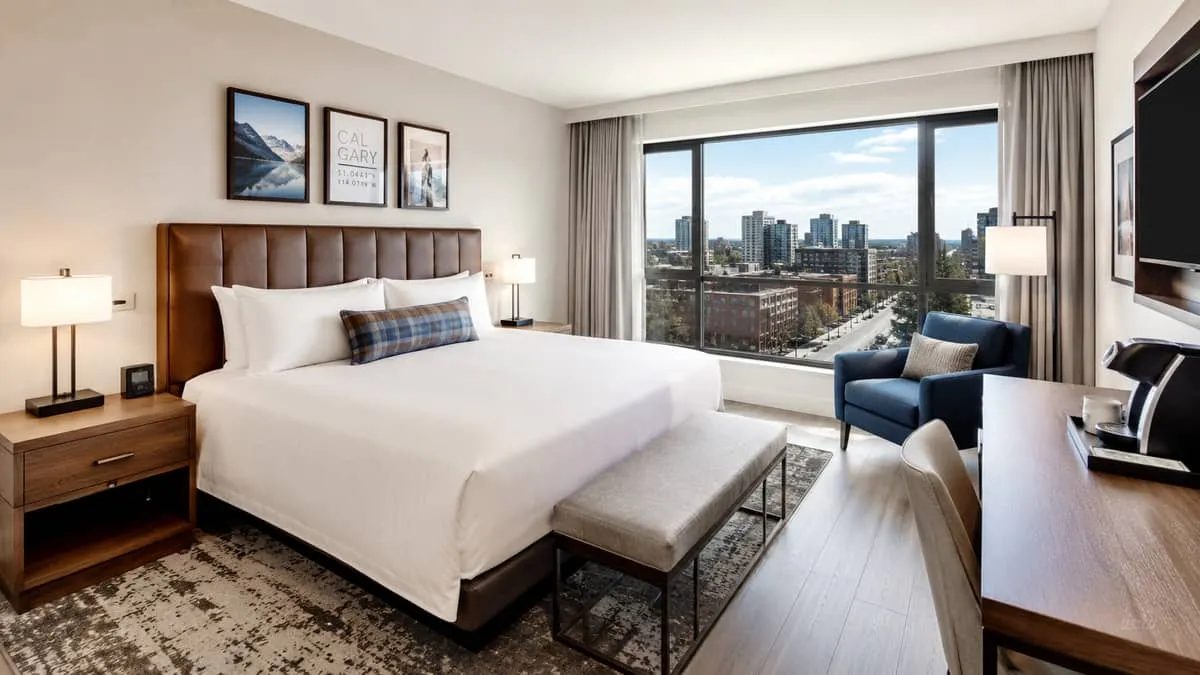
Calgary's boutique hotel market is built on a tension that most operators learn to work with early. The city's economy runs on oil and gas, finance, and agriculture, which means corporate accounts dominate weekday occupancy. But the leisure traveler who chooses a boutique property in Inglewood or the Beltline over a tower room near the Telus Convention Centre is making a deliberate statement. They are opting out of the polished uniformity of Marriott and Hyatt, and they expect the alternative to be genuinely worth it. Furniture is how you make that case without saying a word.
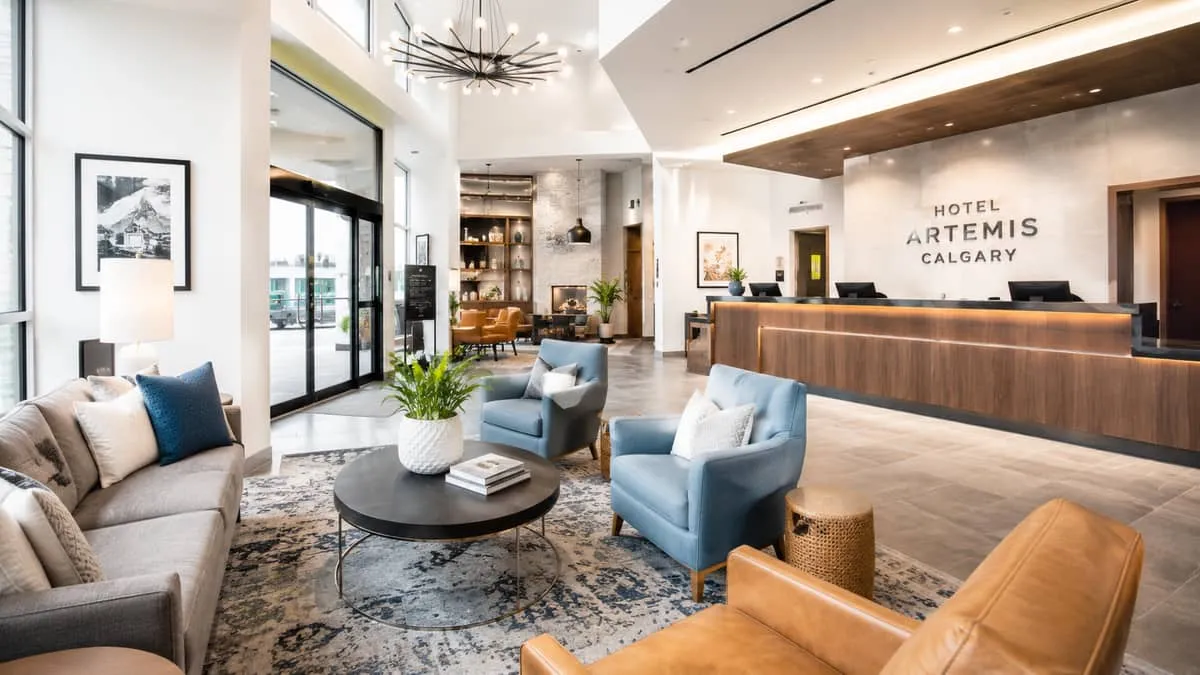
Why Inglewood and the Beltline Are Defining Calgary's Independent Hospitality Scene
The two neighbourhoods where Calgary's boutique hotel identity has concentrated are Inglewood and the Beltline, and they have developed in distinctly different directions.
Inglewood, running along 9th Avenue SE toward the Bow River, built its character through independent galleries, craft breweries, and repurposed heritage industrial buildings. The neighbourhood resisted the corporate development pressure that reshaped much of inner-city Calgary and came out the other side with a genuine sense of place. Boutique properties in this corridor lean into that inheritance: exposed brick and steel, warm wood tones drawn from Alberta timber, lighting that references industrial heritage without becoming caricature. A guest checking into a well-executed Inglewood property should feel the specificity of place the moment they walk through the door, not when they read the about page.
The Beltline operates on a different register. The strip along 17th Avenue SW has become Calgary's most active dining and bar corridor, with steakhouses, cocktail bars, and independent restaurants that draw serious food and beverage travelers from across the region. Hospitality properties in this zone compete against that backdrop. Guests who've booked a table at one of the 17th Avenue spots and want to stay within walking distance are looking for a room that matches the energy of the neighbourhood, which is urban contemporary, confident, and edited. Heavy or ornate furniture reads wrong here. So does anything that feels like it was selected to please everyone and offend no one.
Understanding which of these two registers your property inhabits is the first decision in any furniture procurement process.
What Calgary Boutique Hotel Guests Are Actually Signaling
The leisure traveler who books a boutique property in Inglewood or the Beltline instead of flying to Vancouver or taking the train to Toronto is making a specific choice. Calgary's high-disposable-income market produces travelers who have done both. They know what a well-designed boutique room in Gastown or Kensington Market looks like. When they choose to stay in their own city, or when they fly into YYC and pick an independent property over the downtown towers, they are testing whether Calgary's creative hospitality sector can deliver at the same level.
Furniture quality is one of the primary signals they read. Not price tags, not brand names, but the physical experience of sitting in a chair, pulling a drawer, feeling the weight of a door handle. Guests who are opting out of the corporate hotel experience are specifically attuned to the shortcuts that corporate procurement takes. They notice when upholstery fabric is slightly too thin, when a desk chair rocks because the base isn't weighted properly, when a headboard flexes when they lean against it. These are the signals that collapse the design story an operator has built in every other direction.
This is not about spending more money on furniture than the economics support. It is about spending it correctly, on contract-grade pieces that perform under genuine hospitality use rather than residential pieces that photograph well and fail within two seasons.
The Inglewood Aesthetic: Industrial Heritage With Alberta Craft Touches
For properties in or adjacent to Inglewood, the furniture language that works draws on a specific vocabulary. Reclaimed or reclaimed-look wood with visible grain and texture. Metal in matte black or raw steel finishes rather than chrome or brushed nickel. Upholstery in warm, grounded tones: cognac leather, wool-blend textiles in ochre or slate, earthy neutrals that reference the foothills palette an hour west of the city.
The craft element matters. Alberta has a genuine community of furniture makers, ceramicists, and textile artists, and the best Inglewood properties find ways to bring that work into the guest experience. Contract furniture procurement for this aesthetic doesn't mean buying from local makers for every piece, which would be financially impractical and logistically complicated. It means sourcing contract-grade anchor pieces that share the visual sensibility of that craft work, and layering in locally made accents at the art, accessories, and soft goods level.
Specifically for guestrooms, the pieces that carry the most weight in an Inglewood-register property are the bed frame and headboard, the lounge chair if the room size supports one, and the desk or work surface. A platform bed in dark-stained solid wood with simple joinery reads correctly here. A welded steel bed frame with a wrapped upholstered headboard in a textured natural linen also works. What doesn't work is a bed frame with MDF panels and thin veneer, which reads as the kind of compromise that corporate properties make, which is exactly what this guest paid to avoid.
For seating, look for contract-grade lounge chairs with hardwood frames and cushions rated at minimum 30,000 Martindale rubs on the upholstery fabric. For the Inglewood aesthetic, a chair with visible wood joinery and a leather or leather-look seat in a warm tone is appropriate. If the room runs to a small dining or work chair, a steel-frame piece with a solid wood seat is consistent with the industrial heritage reference without being heavy-handed.
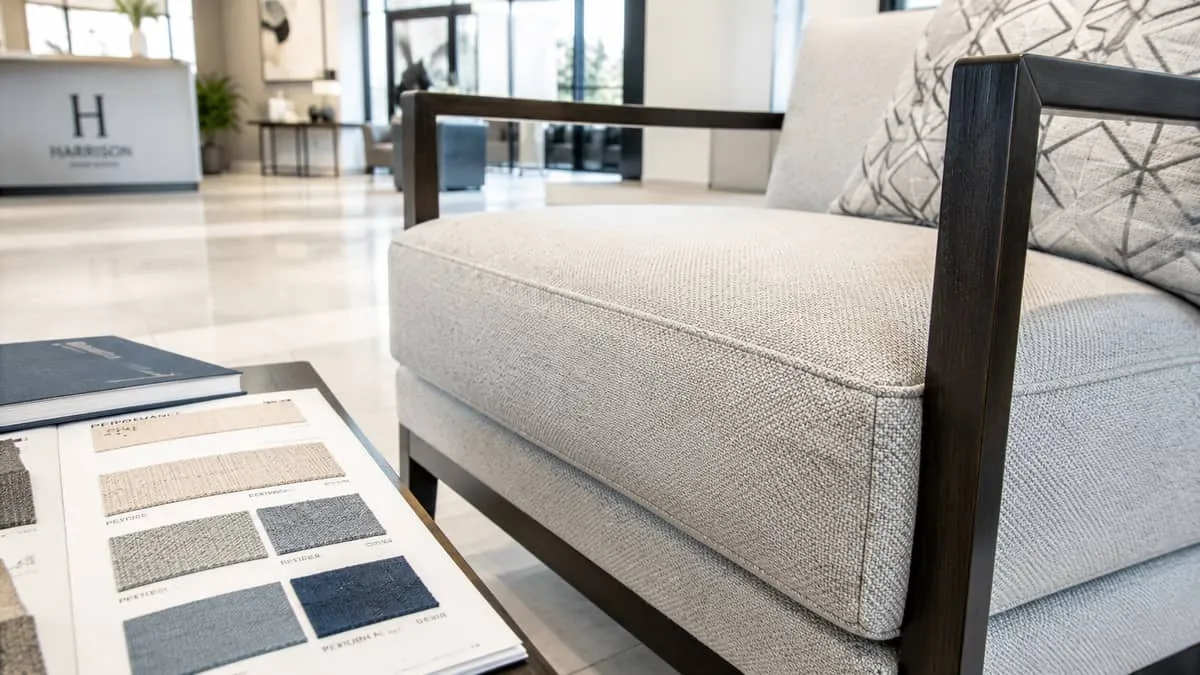
The Beltline Register: Urban Contemporary for a Guest Who Knows What They're Looking At
The 17th Avenue corridor has produced a dining and nightlife scene that competes seriously with peer cities. The steakhouses and cocktail bars that anchor the strip attract guests with calibrated taste, and the boutique properties that serve this market need to match that calibration.
For the Beltline register, the furniture language shifts toward clean-lined contemporary with better-quality material expression. Upholstered beds in performance velvet or tightly woven fabric with sharp edges and minimal ornamentation. Side tables in powder-coated steel or lacquered wood. Desk chairs with genuine ergonomic credibility, because business travelers who book boutique properties in this zone still work, they just work in better rooms.
The palette here runs cooler than the Inglewood aesthetic. Charcoal, deep navy, warm white, and matte black hardware. Natural stone or stone-look surfaces on nightstands and desks where budget allows. Lighting that layers, with bedside reading capability, ambient warmth, and some form of accent or task lighting at the desk.
What distinguishes contract-grade furniture in this register is the quality of the upholstery finish and the precision of the frame construction. A bed with a channel-tufted headboard in a deep charcoal performance fabric, on a platform base with clean powder-coated steel legs, communicates correctly to the guest who compared it to what they saw at a boutique property in Toronto's King West and chose to stay home instead. If the stitching is uneven or the frame flexes, that comparison goes badly.
For lobby and common area seating in a Beltline property, modular sectional configurations in performance fabric give flexibility for the mixed use these spaces see across the week, corporate guests on laptops Monday through Thursday, leisure guests gathering before a 17th Avenue dinner on Friday and Saturday.
Stampede Week and the Volume Question
Every July, Calgary runs the largest outdoor show in the world. Stampede week drives occupancy across the city's hotel inventory to near capacity, and boutique properties bear volume that they don't see in any other week of the year. Guests who wouldn't typically interact with boutique hospitality book whatever is available. Staff turnover accelerates. Housekeeping moves faster and handles furniture less carefully than in quieter periods.
This is not a reason to lower your specification. It is a reason to be precise about where you spend on durability. The pieces that take the most abuse during Stampede week are seating in public areas and lobbies, bed frames and headboards in guestrooms, and any furniture near exterior access points where guests come and go in boots and work wear.
For lobby seating, frame construction in welded steel or solid hardwood with dowel and mortise-and-tenon joinery holds up where stapled frames fail. For guestroom seating, foam density matters as much as Martindale ratings on the fabric. A cushion with low-density foam compresses permanently under heavy use in a single high-occupancy week. Commercial-grade foam at 1.8 lb density minimum sustains shape through the kind of volume Stampede week generates.
Contract-grade specifications aren't a premium category choice for boutique properties with unlimited budgets. For Calgary operators, they are a basic protection against the specific operating conditions of this market.
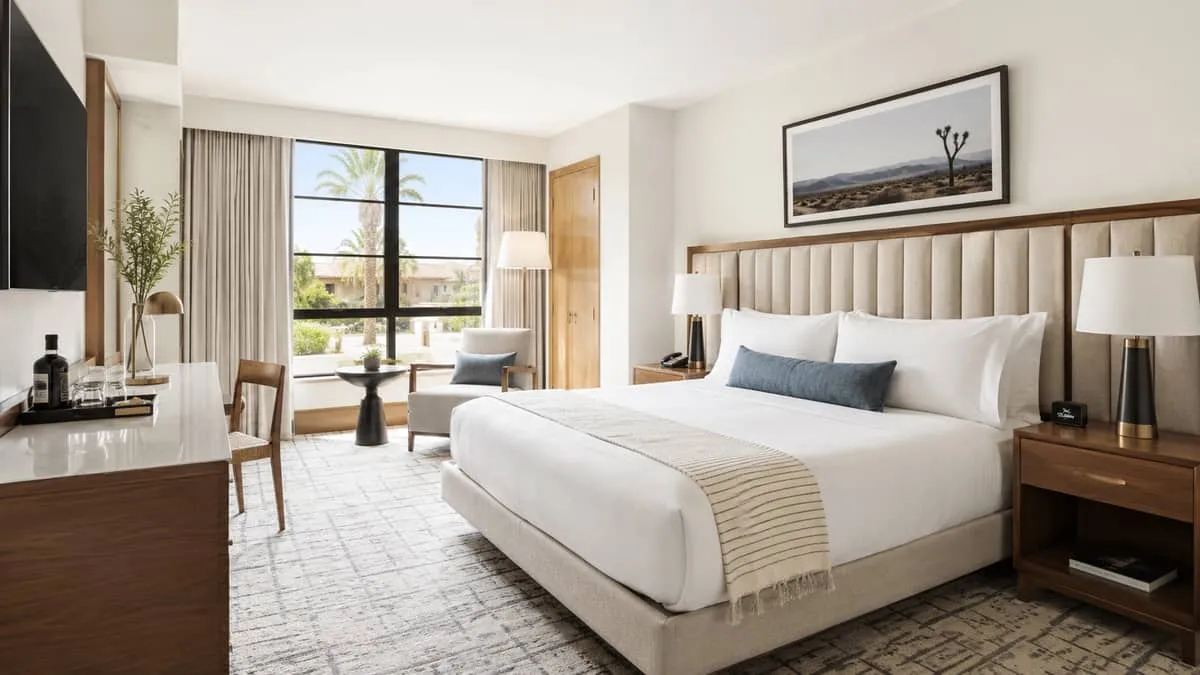
Coordinating Finishes Across a Mixed Sourcing Strategy
Neither the Inglewood aesthetic nor the Beltline register calls for a single-catalog approach. Both benefit from mixing pieces that read as curated rather than matched. The risk in mixing is rooms that feel incoherent, where a guest registers design effort without feeling the payoff of a specific point of view.
The discipline that prevents that outcome is finish coordination. Decide on a metal finish, one or two wood tones, and an upholstery range before you order anything. Hold to those decisions across every piece in the room. In the Inglewood register, that might be matte black metal, a warm medium walnut wood tone, and upholstery in cognac or warm grey. In the Beltline register, it might be powder-coated graphite metal, a white-oak or light ash wood tone, and upholstery in charcoal or deep teal.
Within those constraints, you can mix bed frame profile, chair silhouette, and case good style without the room losing coherence. The finish thread holds it together. A supplier who works with boutique hospitality projects should be able to build a package across multiple product categories that shares finish specifications, even if the individual pieces come from different collections.
Custom COM (customer's own material) programs allow you to specify fabric or leather for upholstered pieces rather than selecting from a supplier's standard options. For Calgary properties trying to establish a specific neighbourhood identity, this is worth using. A textile house in Calgary or Edmonton may have access to materials that reference the regional landscape in ways that a national supplier's standard fabric library doesn't.
Procurement for Independent Operators: Working Within the Reality of Smaller Scale
Calgary's boutique hotel market is not a volume play for furniture suppliers who built their businesses around large hospitality groups. An independent operator with a single 35-room property in Inglewood is not going to get the same attention from a major hospitality trade supplier as a 200-room corporate renovation. This is a real constraint and it shapes how boutique procurement needs to work.
The most functional approach is to identify suppliers who specifically serve independent and smaller boutique hospitality clients. Some have built programs around shorter production runs. Others work through local commercial interior designers who maintain supplier relationships and can advocate for smaller client projects within those relationships. If your renovation timeline is tied to an oil-price-driven upswing and you have a fixed opening target, a supplier who understands Calgary's economic rhythm and builds compressed timelines into their project management is worth paying attention to.
Ask specifically about minimum order quantities and how replacement matching works two or three years after original installation. A single damaged piece in a guestroom that can't be matched requires a room refresh that shouldn't be necessary on that timeline. Suppliers who serve boutique hospitality clients know this problem and have a process for handling it. Those who don't will give you a vague answer about doing their best.
The East Village development and the continued investment along the Bow River corridor suggest Calgary's independent hospitality sector will keep growing. Properties that get their furniture specifications right from the opening set themselves up to compete on the dimension that actually matters to the guest who bypassed Vancouver and chose them instead.
If you are sourcing boutique hotel furniture for your Calgary property, the fastest way to real numbers is to tell us what you need. Request a quote with your quantities and timeline.