Milwaukee's boutique hotel development is concentrated in neighborhoods where the architecture does the heavy lifting repurposed warehouse buildings in Historic Third Ward, loft conversions along the river, renovated mid-century structures in Walker's Point. These settings demand furniture that matches the authenticity of the building, not furniture that looks like it was selected from a flag-brand catalog. The guest who chooses a boutique property in Third Ward over a corporate hotel by the convention center is paying a premium for an environment that feels specific to Milwaukee, and the furniture is a primary vehicle for delivering that specificity.
Third Ward, Walker's Point, and Milwaukee's Boutique Hotel Geography
Historic Third Ward has emerged as Milwaukee's most coherent boutique hospitality district. The neighborhood's stock of late-19th-century brick warehouse buildings many now converted to mixed-use lofts, galleries, and boutique retail provides the physical container for hotel concepts that want genuine industrial character without having to construct it artificially. Boutique properties in this corridor can expose original timber framing, brick walls, and concrete floors and let the architecture set the design tone. Furniture needs to complement that vocabulary: solid wood frames, honest metal construction, upholstery in natural or performance materials that read as curated rather than mass-produced.
Walker's Point, Milwaukee's original immigrant neighborhood now home to an active creative community, restaurants, and nightlife, is the next wave of boutique development. Properties there are working with a similar material vocabulary but serving a younger, more design-literate demographic that responds to furniture with a clear point of view. Sofas in the lobby need to communicate something a particular warmth, a nod to the neighborhood's history, a material choice that would be out of place in a chain property. Lounge chairs in guest rooms need to hold up to daily use while looking like they belong in a carefully considered space, not a bulk procurement decision.
The lakefront boutique properties occupy a third category hotels positioned to capture the Lake Michigan view and the premium guest who wants a design-forward environment close to the water. These properties compete on room quality and common space experience, which means every piece of guest room furniture and every lobby seating arrangement is part of the competitive positioning.
Across all three contexts, boutique hotel furniture in Milwaukee needs to be contract-grade underneath the surface. The guest experience depends on how furniture looks and feels; the operator's economics depend on how long it lasts under the high occupancy rates that Fiserv Forum, Summerfest, and Wisconsin Center convention traffic drive year-round.
Specifying for Milwaukee's Industrial-Lakeside Aesthetic
The design language that resonates most strongly in Milwaukee's boutique hotel market draws directly from the city's industrial heritage and lakefront geography. Reclaimed brewery wood white oak, maple, and pine salvaged from the city's historic brewing facilities carries genuine local provenance when used in headboard panels, case good surfaces, and lobby furniture frames. Aged copper and brass hardware references the brewing equipment that defined Milwaukee manufacturing for a century. Lake Michigan's blue-grey palette translates into upholstery colors, wall finishes, and accent pieces that feel specific to this geography.
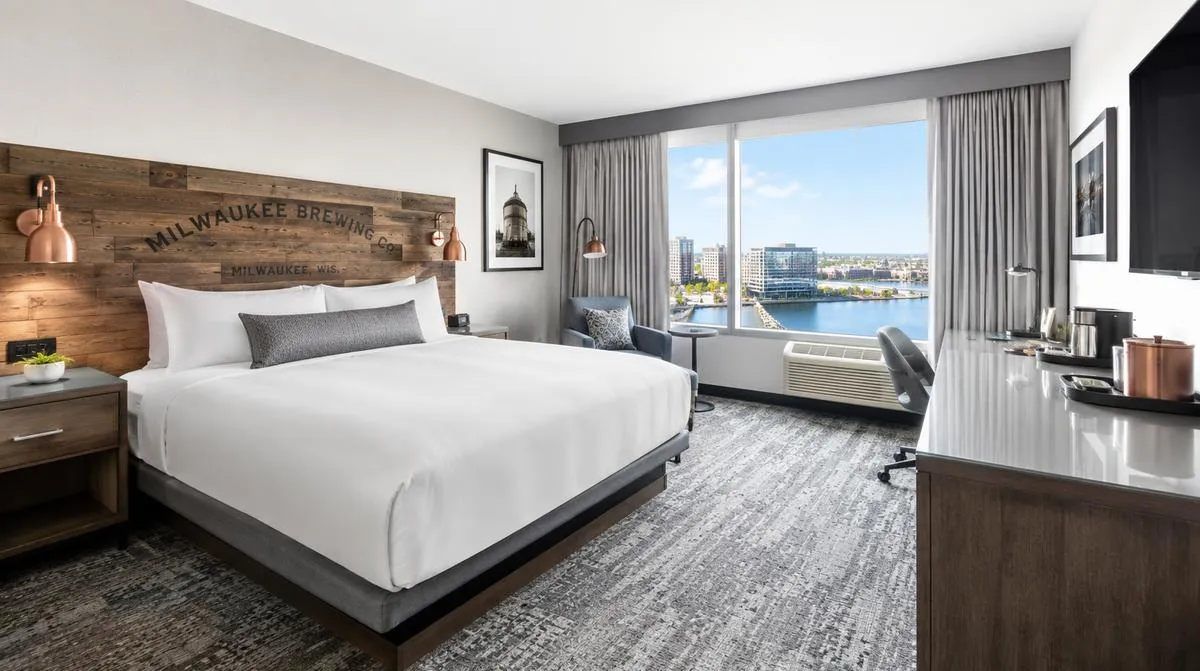
For guest rooms, headboards are the single piece of furniture that most strongly communicates the property's design identity. A reclaimed wood panel headboard with integrated brass hardware reads very differently than an upholstered headboard in a neutral fabric, even if the room layout is identical. Boutique operators in Milwaukee should treat the headboard as a design statement, not just a functional element.
Case goods benefit from the same material discipline. Walnut or white oak drawer fronts with blackened steel pulls, exposed joinery details, and matte or oil finishes hold up visually better over time than high-gloss lacquer in environments with the humidity variation that Milwaukee's lake proximity creates. Ottomans and bench seating at the foot of beds in natural leather or performance leather alternatives add warmth without formality appropriate for the unpretentious Midwestern quality that Milwaukee boutique guests respond to.
Common areas, including lobby, bar, and lounge spaces, should maintain the same material vocabulary: exposed metal, honest wood, and upholstery that ages well rather than shows wear.
Procurement Realities for Boutique Projects
Boutique hotel projects in Milwaukee typically operate with tighter timelines and more constrained budgets than full-service branded properties, which makes procurement efficiency critical. The key is distinguishing between pieces where customization earns its cost headboards, signature lounge pieces, lobby focal-point furniture and pieces where in-stock contract product at the right spec delivers equivalent results at significantly lower cost and lead time.
Lead times for custom furniture run twelve to twenty weeks depending on manufacturer. In-stock contract pieces ship in four to eight weeks. For a 40- to 80-room boutique project, a procurement strategy that specifies custom pieces only where they directly serve the design concept and uses high-quality in-stock pieces elsewhere can shave six to eight weeks off the project timeline while maintaining design integrity. Given Milwaukee's event-driven calendar, those weeks often translate directly into revenue.
Tell us about your Milwaukee boutique hotel furniture needs and we will turn your quantities, finishes, and timeline into a firm quote. Request a quote whenever you are ready to compare.