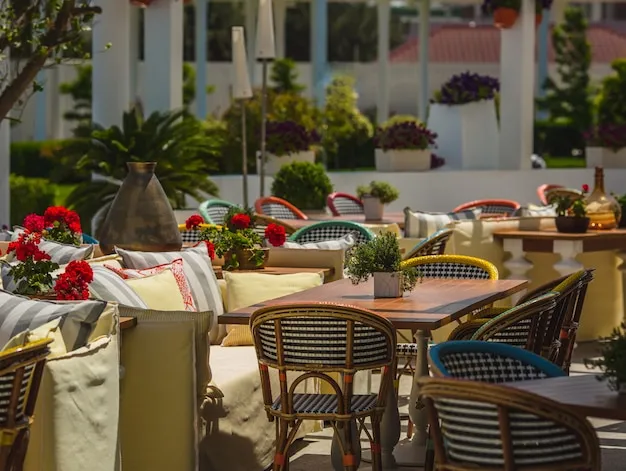
Outdoor seating is where most hospitality buyers get burned, sometimes literally. A patio set that looks identical to a commercial product can be residential grade underneath, and the difference does not show up until the second summer when frames are pitting, slings are sagging, and cushions smell like a wet basement. Commercial patio furniture is a different product engineered for weather exposure plus heavy daily turnover. Here is what separates the real thing from the catalog lookalike.
What commercial patio furniture has to survive
A restaurant patio chair does not just sit outside. It gets sat in dozens of times a day, dragged across pavers, rained on, baked in direct sun, and wiped down with cleaning chemicals after every service. Residential outdoor furniture is built for a backyard used a few times a week. The two are not interchangeable, and treating them as such is the single most expensive mistake in outdoor hospitality furniture.
The three forces you are fighting are UV degradation, moisture, and mechanical fatigue from constant use. A frame that handles all three is what you are paying for.
Frame materials and what each one costs
Frame choice is the biggest driver of both durability and price.
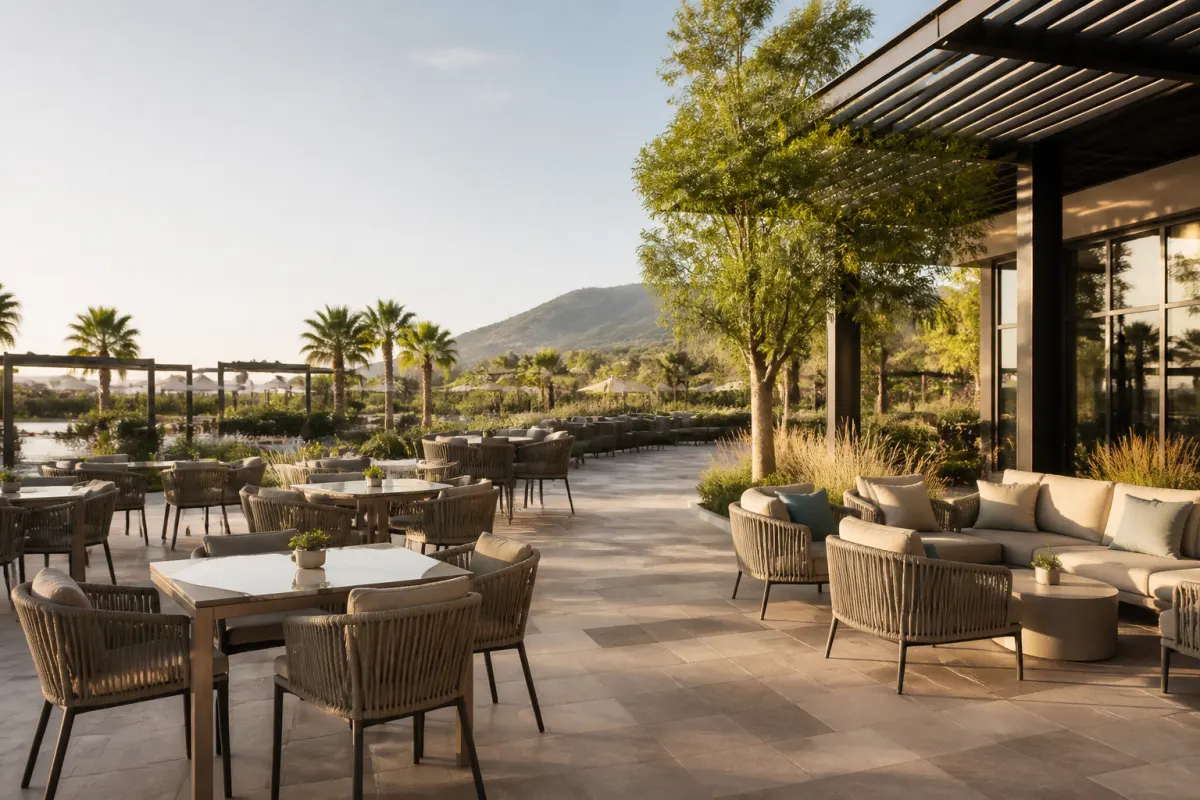
Powder-coated aluminum is the workhorse of commercial patio furniture. It does not rust, it is light enough to stack and move, and a quality powder coat resists fading for years. Look for a marine-grade or commercial-grade powder coat applied over a cleaned and primed surface, not a thin spray over bare metal. Expect roughly $90-220 per chair depending on weight and finish.
Powder-coated steel is heavier and stronger, which matters in windy coastal or rooftop settings where lighter chairs blow over. Steel must be fully sealed because any coating chip leads to rust. Pricing runs similar to aluminum, often $110-250 per chair.
Teak and eucalyptus hardwoods bring a premium look and naturally resist moisture and rot. Teak is the most durable and the most expensive, often $250-500 per chair, and it needs occasional oiling or it weathers to gray. Eucalyptus is a lower-cost hardwood alternative but has a shorter service life outdoors.
HDPE resin and all-weather wicker over aluminum cover the casual and resort looks. Genuine commercial wicker is woven over a welded aluminum frame, not a plastic skeleton. Synthetic resin wicker should be UV-stabilized polyethylene, not vinyl, which cracks in sun.
Seating surfaces, slings, and cushions
The frame is only half the product. The seating surface is what guests touch and what fails first if it is underspecified.
- Slings (fabric stretched across the frame) should be a solution-dyed acrylic or PVC-coated polyester rated for outdoor use. Solution-dyed means the color goes through the fiber, so it fades far slower than printed fabric.
- Outdoor cushions need quick-dry reticulated foam and a marine-grade, solution-dyed acrylic cover such as the fabrics specified at 1,000+ hours of UV resistance. Standard indoor foam holds water and grows mildew.
- Hard seats in HDPE or slatted aluminum eliminate the cushion-failure problem entirely and are the lowest-maintenance option for high-turnover patios.
Ask for the UV rating in hours and the fabric warranty in writing. A serious outdoor fabric carries a multi-year fade warranty.
Commercial grade versus retail outdoor furniture
The retail patio set at a big-box store is built to a price for occasional home use. The tells are thin-wall tubing that flexes when you press on the frame, plastic feet that crack, exposed fasteners that rust, and cushions with no UV rating listed. Commercial outdoor hospitality furniture uses thicker-gauge tubing, welded rather than bolted joints where possible, stainless or coated hardware, and stackability for seasonal storage. It also carries a commercial warranty, typically 2-5 years on frames, which a retail product will not.
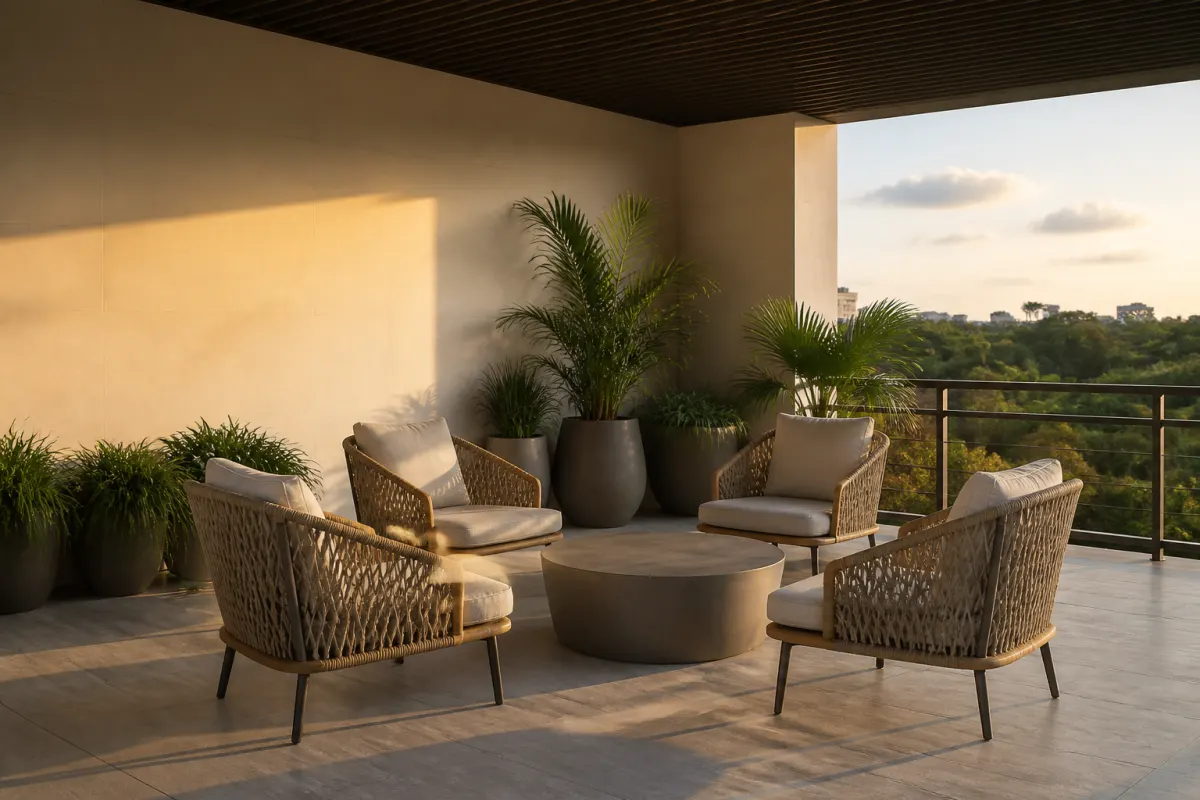
If a supplier cannot tell you the tubing gauge, the powder-coat spec, and the fabric UV rating, you are looking at a retail product wearing a commercial label.
Sizing, layout, and quantities
Plan your patio layout before you choose product. Standard dining chairs pair with 28-30 inch high tables; bar-height outdoor seating pairs with 40-42 inch tables. Allow roughly 24-30 inches of width per diner and leave a clear path of at least 36 inches for service aisles and accessibility.
Stackability matters for any climate with an off-season. Chairs that stack 6-10 high let you clear a deck for winter or storms in minutes and protect the investment when it is not earning.
Ordering in volume
Commercial patio furniture is sold in minimums because finishes and fabrics are made to order. Typical minimums run 10-20 chairs per style and 4-6 tables, with custom frame colors and sling or cushion fabrics available at those quantities. Lead times on factory-direct outdoor orders generally run 10-14 weeks, so for a spring patio opening you should be placing orders in the winter. Furniture ordered early can be stored. A patio with no chairs cannot seat a single cover.
When you request a quote, send your seat count, the table heights you are pairing to, your climate, and any brand colors. We will spec frame material, coating, and fabric to match the exposure your patio actually sees, then confirm pricing and lead time.
Climate changes the spec more than most buyers expect. In a market like Phoenix, commercial pool furniture takes months of intense direct sun and chlorine exposure on top of the daily turnover every patio sees, so see our commercial pool furniture Phoenix guide for the frame and fabric adjustments that climate calls for.
Ready to spec your patio? Request a quote or browse the outdoor collection in the Commercial Furniture Depot catalog, and we will help you build a set that survives more than one season.