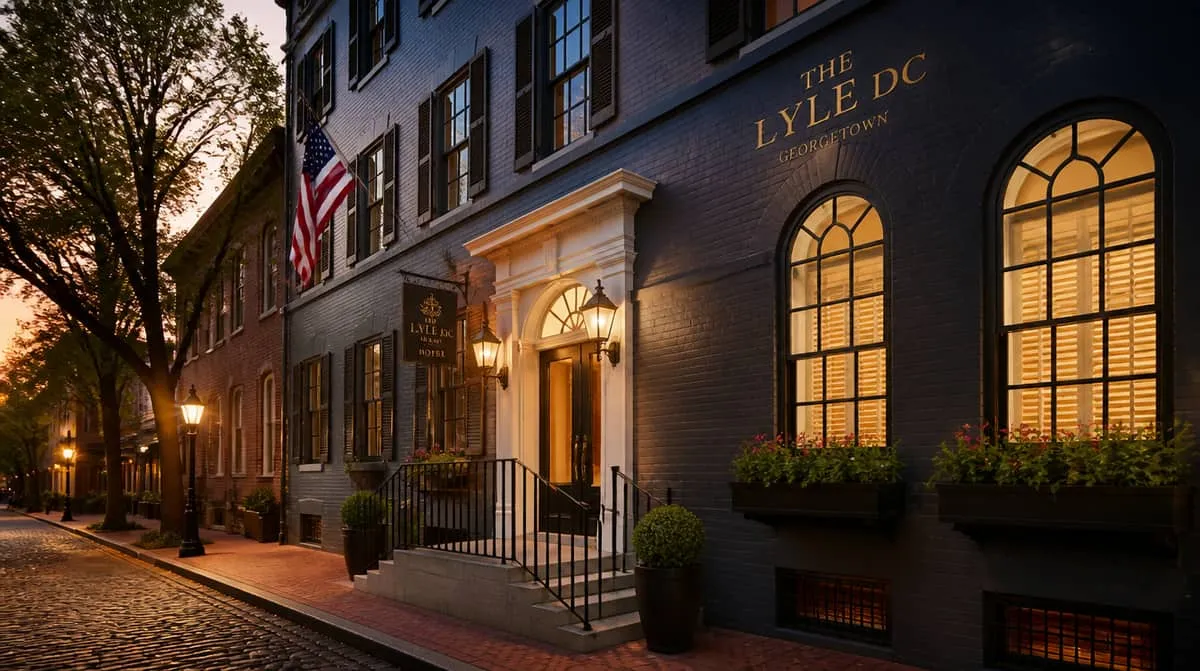
Washington DC's commercial outdoor dining and rooftop bar scene has expanded significantly over the past decade, driven by zoning changes, rooftop development in Shaw and Capitol Hill, and the city's strong spring and fall shoulder seasons when outdoor seating is at a premium. Unlike a Southern or Southwest market where outdoor dining runs year-round, DC's outdoor hospitality season is concentrated: April through October, with a strong peak during the spring Congressional calendar and the outdoor dining months of May through September. The furniture that serves this season needs to perform in a humid Mid-Atlantic climate, survive winter storage or outdoor exposure, and meet the aesthetic standards of a clientele that includes diplomats, government officials, and legal professionals who extend their working environment to terraces and rooftop spaces. Commercial patio furniture Washington DC is a specialized procurement that requires understanding both the city's climate and its design culture.
DC's Outdoor Hospitality Market
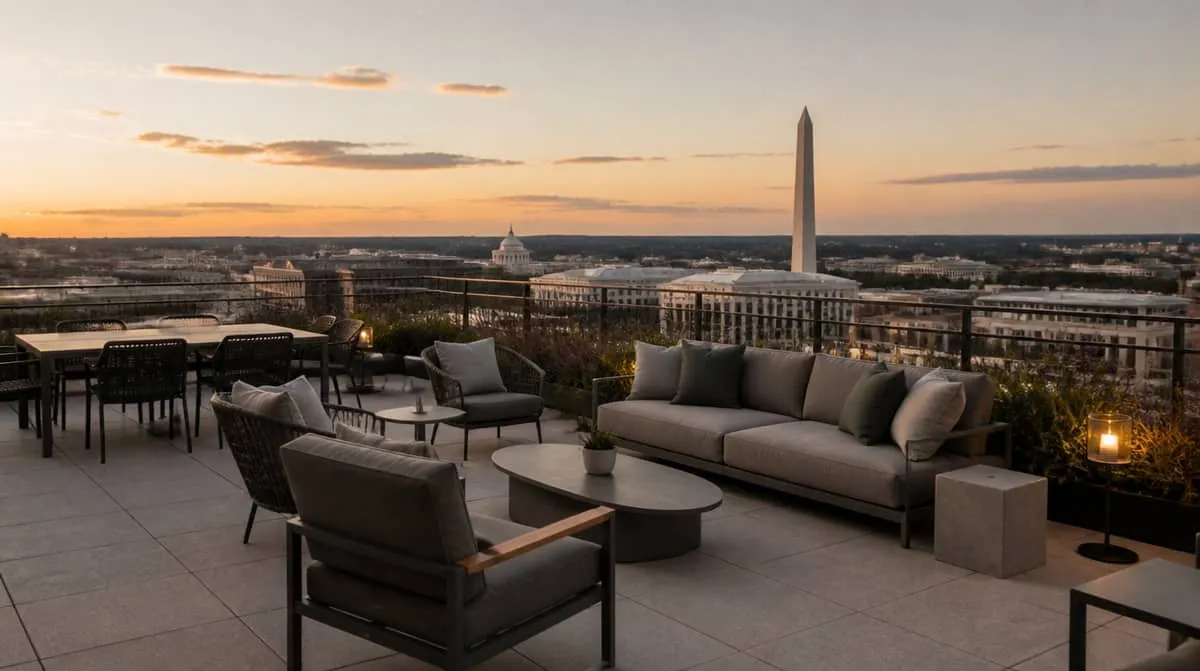
Washington DC's rooftop bar and terrace dining market is concentrated in a few key corridors. The Penn Quarter and downtown hotel corridor has a cluster of rooftop bars with views of the Capitol dome and the Mall that are among the most photographed dining experiences in the city. These spaces draw a mix of tourists, professional drinkers, and diplomatic guests and the furniture on these rooftops appears in social media content constantly, which means visual quality is as important as physical durability.
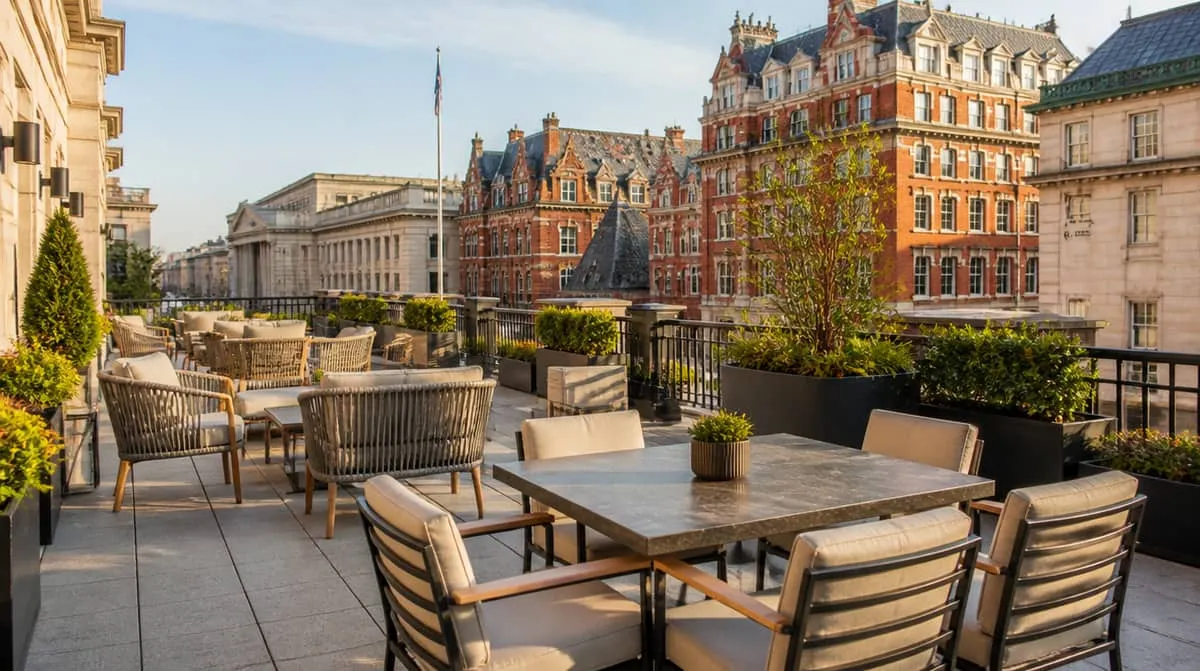
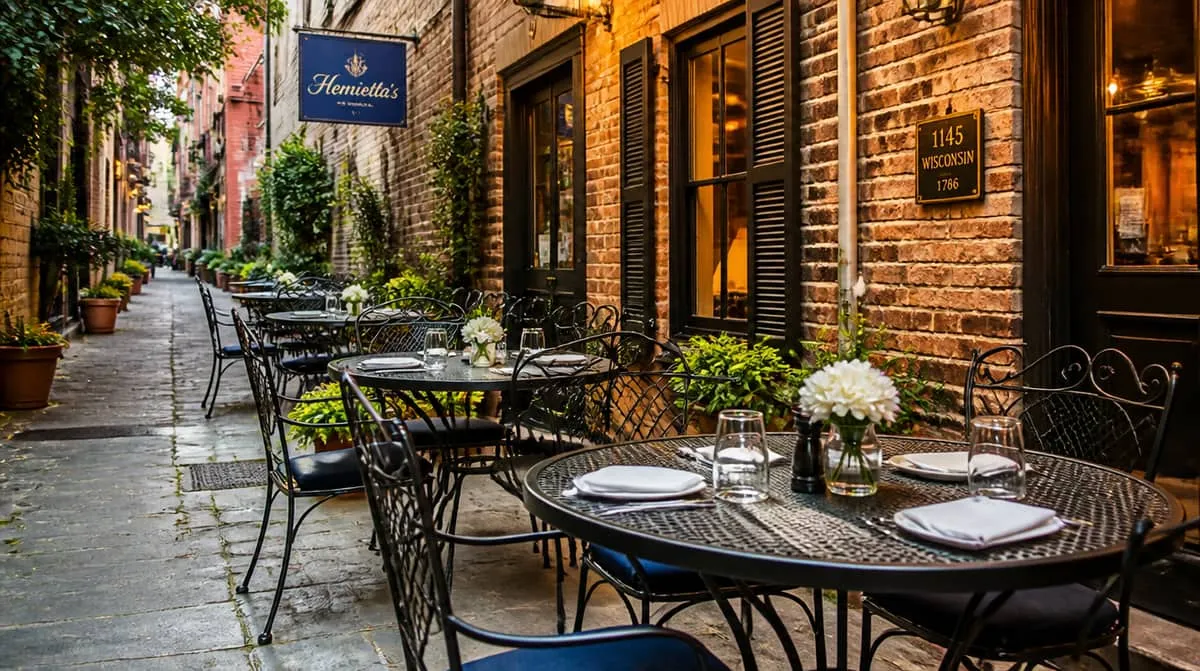
Georgetown's terrace and courtyard dining scene is shaped by the neighborhood's architectural character: brick patios behind converted townhouses, canal-side tables, M Street terraces that overflow with guests during pleasant weather. Commercial patio chairs in Georgetown outdoor settings tend toward traditional profiles wrought iron or powder-coated aluminum in classic silhouettes, or teak with naval-quality weatherproofing. The neighborhood's aesthetic does not accommodate lightweight plastic or obviously budget-grade outdoor furniture.
Capitol Hill's growing restaurant and bar scene along Barracks Row and Pennsylvania Avenue SE has developed a strong outdoor dining culture, particularly on warm evenings during Congressional session. The demographic here skews toward Hill staffers and consultants who use outdoor seating for post-work decompression and casual working dinners. Commercial outdoor tables in this setting need to be comfortable for longer seating sessions and robust enough to handle the density of use that characterizes a Hill neighborhood happy hour.
Dupont Circle's sidewalk café culture is one of DC's most established outdoor dining traditions. The neighborhood's mix of embassies, think tanks, and professional services offices generates a consistent outdoor dining demand from early spring through late fall. Sidewalk seating in Dupont needs to comply with DC's outdoor dining permit requirements while meeting the aesthetic standards of a neighborhood where European diplomatic staff are regular guests and bring reference points from the street café traditions of Paris and Brussels.
Shaw's rooftop venues and outdoor spaces associated with the 14th Street NW restaurant corridor have a younger, more design-forward character. Concrete, steel, and contemporary outdoor furniture profiles work in these settings though the commercial-grade durability requirement is identical regardless of aesthetic direction.
Climate and Specification Requirements for DC Outdoor Furniture
Washington DC's Mid-Atlantic climate presents specific challenges for commercial outdoor furniture. Summers are hot and humid June through August regularly sees sustained humidity above 70 percent, with heat index values that accelerate material degradation on anything not properly specified for outdoor use. Springs and falls bring heavy rainfall and freeze-thaw cycles that will destroy furniture with inadequate weatherproofing. Winters in DC are mild enough that outdoor furniture left uncovered will experience freezing temperatures and precipitation but not the extreme cold that affects further north markets.
This climate profile favors specific material choices. Powder-coated aluminum is the default for DC commercial outdoor furniture because it does not rust, handles humidity without degradation, and can be finished in the dark colors and traditional profiles that DC's design culture expects. Teak is appropriate for properties where the investment and maintenance commitment are justified Georgetown and Penn Quarter properties with high outdoor dining revenue per seat make the math work. Resin wicker on aluminum frames performs well in DC's humidity if the frame is properly sealed and the resin is UV-stabilized.
Commercial patio chairs for DC rooftop bars need to be stackable or foldable for winter storage, since most properties bring outdoor furniture in during the November-through-March period. Storage space in DC's dense urban properties is limited, so specifying furniture that stacks efficiently matters as much as its in-season performance. A rooftop bar that cannot store its 80 chairs efficiently loses valuable interior square footage during the off-season.
Outdoor cushion fabrics need to be solution-dyed acrylic Sunbrella is the standard for UV resistance and moisture resistance in DC's humid summer climate. Solution-dyed acrylic retains color through DC's intense summer UV exposure and dries quickly after the afternoon thunderstorms that characterize July and August in the city.
Procurement Timing for DC Outdoor Projects
Commercial patio furniture for DC properties should be ordered by February or March at the latest for April delivery and setup. Lead times on commercial outdoor furniture run eight to twelve weeks, and arriving late for DC's outdoor dining season which peaks sharply in May means leaving money on the table during the most profitable outdoor weeks.
For rooftop bar openings or major outdoor furniture refreshes, a commercial patio furniture Washington DC supplier with knowledge of DC's outdoor dining season should be your first call in January.
Pricing for commercial patio furniture in Washington DC depends on quantities, finishes, and your delivery window, so a project-specific quote beats any list figure. Request a quote to get yours.