Ask three companies for the same contract chair and you may be talking to a factory, a warehouse, and a salesperson without realizing they play different roles. The titles blur, everyone uses the word "supplier" loosely, and a first-time buyer can spend weeks before understanding who actually builds the furniture and who is just moving it. Sorting that chain out is worth the effort, because where you buy in the chain changes your price, your lead time, and who is accountable when something goes wrong.
This guide untangles manufacturers, suppliers, and dealers. If you are still getting oriented to the category, the contract furniture buyer's guide covers the fundamentals first.
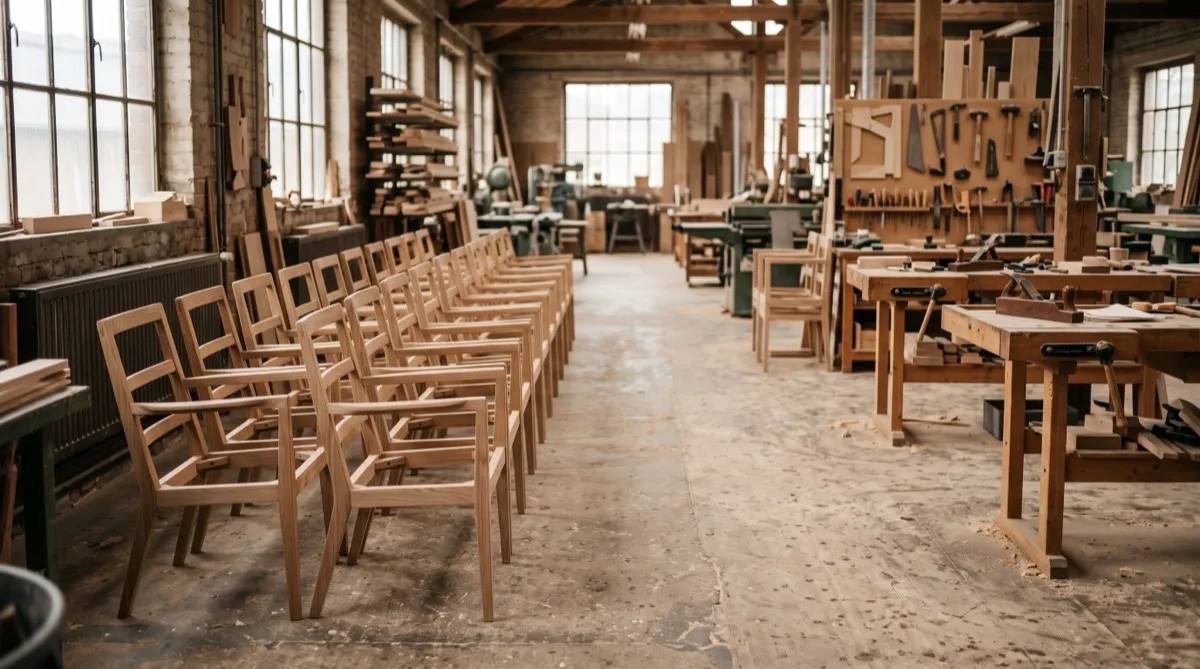
Who actually makes contract furniture
A contract furniture manufacturer physically builds the product, whether in a domestic factory or an overseas one. Manufacturing, distribution, warehousing, and sales may belong to different companies or to one organization. Establish the actual maker and model before assessing the product; a company’s position in the sourcing chain does not establish a durability standard.
A commercial label, a brand name, or a particular joint does not establish how a complete chair was tested. Ask for the applicable test standard, report, tested model and configuration, intended use, and any load limits. Steel gauge, wood preparation, welds, corner blocks, and dowels are details to compare against those documents, rather than universal requirements for every contract product. Use the contract grade furniture standards guide to organize that review and confirm the scope of the actual report.
Manufacturers, suppliers, and dealers: the three roles
Three roles sit between raw material and your loading dock, and knowing which one you are talking to tells you what to expect.
Manufacturers build. A factory-direct proposal may offer production choices on finish, fabric, or dimension, but customization, minimum quantities, and pricing depend on that maker and order. Confirm who handles freight, importing, receiving, and installation before comparing the factory price with another channel.
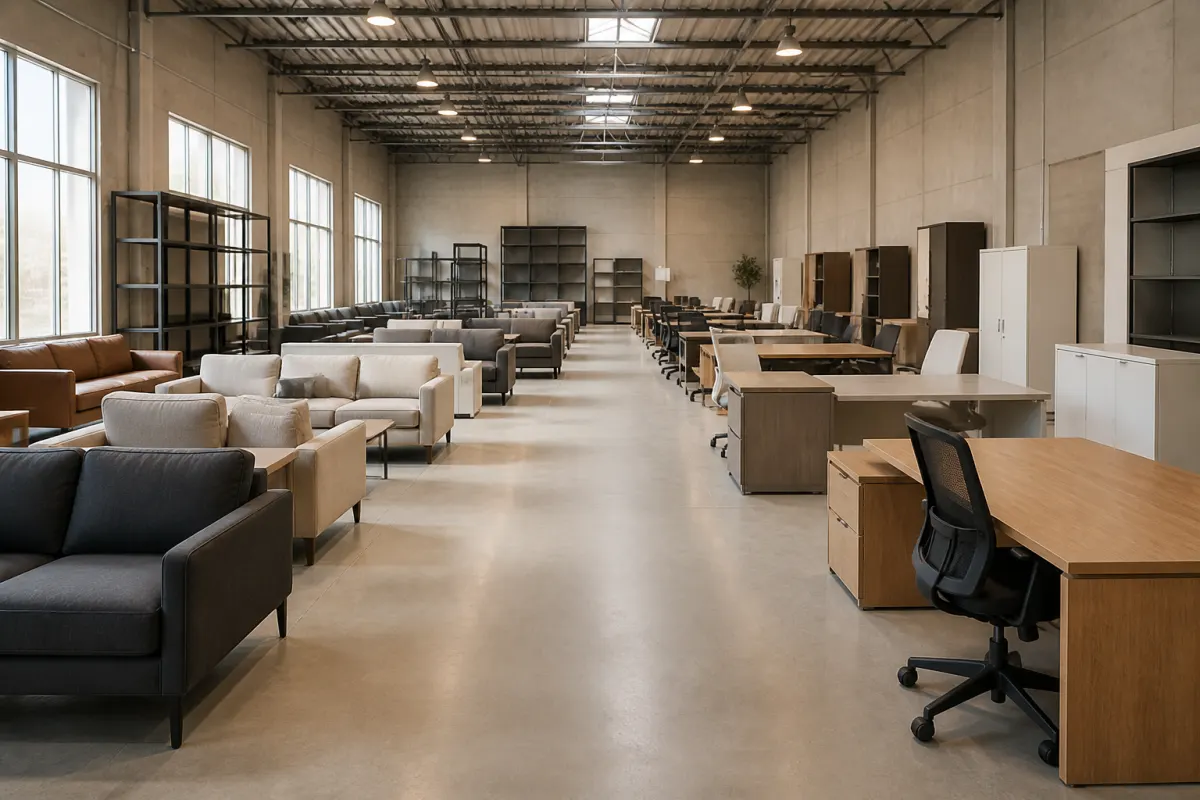
Suppliers may add inventory, sourcing, and logistics services. A stocking dealer can offer an allocated item without waiting for a new production run; confirm the specific quantity and finish rather than assuming catalog availability. An import supplier may arrange freight, customs, warehousing, or installation, but those services and their costs need to appear in the proposal. The contract furniture suppliers guide helps structure the questions for each supplier model.
Reps and distributors can provide access to a manufacturer’s line, with responsibilities that vary by agreement. Ask who takes the order, holds or allocates inventory, manages delivery, and resolves shortages or damage. A clear written responsibility map is more useful than assuming that every intermediary adds delay.

Factory direct vs distribution: the real tradeoff
The choice buyers agonize over is factory direct versus buying through distribution, and it comes down to what you are optimizing for.
A factory-direct proposal is worth comparing when your quantity or customization needs suit the maker’s production terms. Compare the approved configuration, production slot, inspection, freight, receiving, and installation costs. A lower unit price alone does not establish the lower delivered cost or a better schedule.
A dealer proposal is worth comparing when a documented allocation of the required stock can meet your date. Check that the quoted quantity, finish, accessories, and delivery service are included. Available stock can change, so use the order’s allocation and delivery commitments rather than a channel-wide speed assumption.
A supplier coordinating sourcing, importing, warehousing, and installation can simplify your responsibility map when those services are actually included. Compare its complete proposal with the factory, forwarder, and installer alternative on the same scope, costs, and milestones. Our how to source contract furniture walkthrough covers the procurement sequence.
Overseas vs domestic production
Production origin affects the route, documentation, and parties involved in receiving the order. Ask for the actual factory origin, production approvals, shipping terms, importer responsibilities, and inspection scope. Neither an overseas origin nor a domestic one establishes a price advantage, customization capability, or product quality.
For either production origin, assess the proposed route and documented schedule. Confirm the tested model and configuration, who conducts inspection, what is checked before dispatch, and how defects are handled. Match the actual proposal to the project’s timeline and budget; country of origin alone cannot answer those questions.
What a buyer should verify
Regardless of which role you buy from, request the applicable product test documentation and confirm its scope. Read the warranty’s covered use, exclusions, term, remedies, and claim process. Ask where inspection happens and who signs off the approved samples. Map each handoff and identify who resolves a short or damaged delivery, rather than assuming fewer organizations always means better service.
Getting a real number
To compare a real price, bring your item list, quantities, finish and fabric selections, delivery location, receiving conditions, and target dates. Request a quote with those inputs and ask each proposed supplier to document production, freight, installation, and support responsibilities. Independent supplier proposals establish the available terms for the actual order.
Identify who owns each stage of the order
Write down who manufactures the furniture, who invoices you, and who handles receiving issues, installation, and warranty claims. These may be different organizations. Confirm which samples and specification documents each party approves before production.
Compare stock and custom production against the same delivery scope. A factory price and an installed dealer quote are not comparable until freight, receiving, assembly, and after-sales responsibilities are made explicit.