
A 200-room hotel needs a coordinated furniture specification and receiving plan. Those disciplines also help a smaller commercial project; scale alone does not establish pricing or procurement quality.
But the principles behind how major hotel properties handle furniture procurement apply to any commercial buyer, even if you're furnishing one restaurant or one office. Here's how it works.
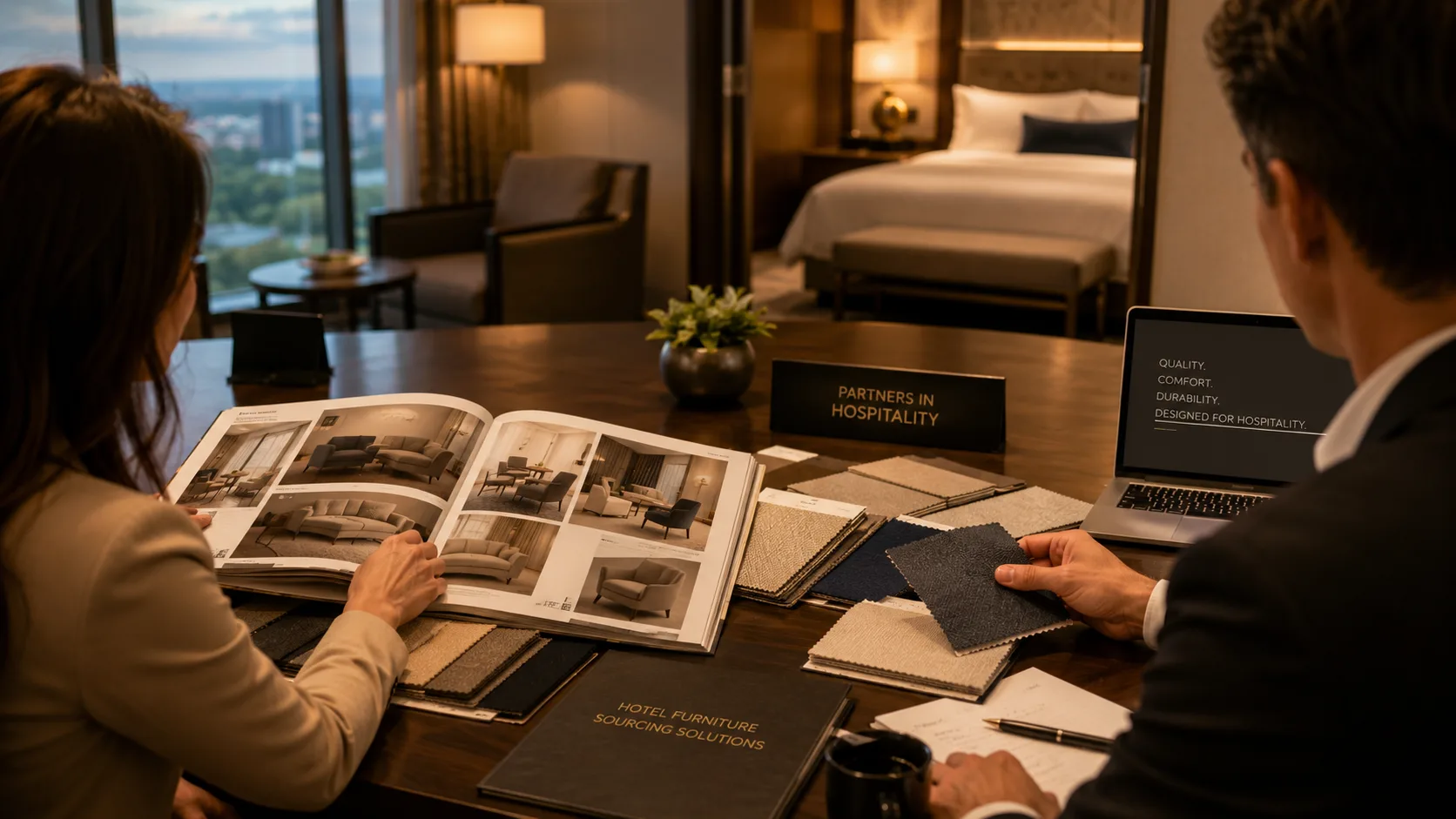
How hotels spec furniture
Define who owns the FF&E specification, approvals, purchasing and receiving. Some properties use a consultant or designer; others assign those tasks within the project team.
For a branded property, obtain the current applicable furniture requirements and approval process. Marriott, Hilton and Hyatt requirements must be confirmed for the specific project rather than inferred from a brand name.
Independent properties should also name the people responsible for the design brief, product documentation and approvals.
Begin furniture planning early enough to cover design, approvals, production, freight and installation. 12 to 24 months may be a project scenario, not a universal hotel procurement schedule.
How the sourcing actually works
Ask where the proposed products are manufactured and who is responsible for inspection, freight, receiving and claims. Country of origin alone does not establish quality, and this guide has no verified industry-wide manufacturing share.
Compare the actual purchasing route and contract responsibilities, whether through a procurement agent, supplier or manufacturer. Document who handles defects and replacements instead of assuming every hotel uses the same accountability chain.
CFD connects project inquiries with relevant independent suppliers. Ask each proposed supplier to document origin, availability, approvals and delivery terms for the specific order; the site does not establish a universal factory-direct 14 week service.
Build the timetable from confirmed project milestones. A year of planning or 14 to 16 weeks for a smaller buildout cannot guarantee availability or opening readiness.
What certifications hotels require
Request the exact performance, flammability and emissions documentation required by the project and any current brand standard. These evidence types have different scopes.
BIFMA references need an exact standard, version, product scope and report or listing for the proposed model. A vague BIFMA-certified label does not establish that every chair or barstool has the same independent testing or intended use.
CAL 117 is a flammability reference that must be checked against the current applicable requirements and the complete proposed assembly. Confirm the needed documentation with the project authority; do not treat it as a universal hotel qualification.
Greenguard certification concerns low chemical emissions, as described by UL Solutions. Confirm the listing covers the proposed product and the project's required program; it does not establish structural durability.
Request the relevant reports, listings and care instructions before committing, and verify that they identify the actual proposed configuration.
What small operators can replicate
You don't need an FF&E consultant or a 200-room project to apply these principles. The process scales down cleanly.

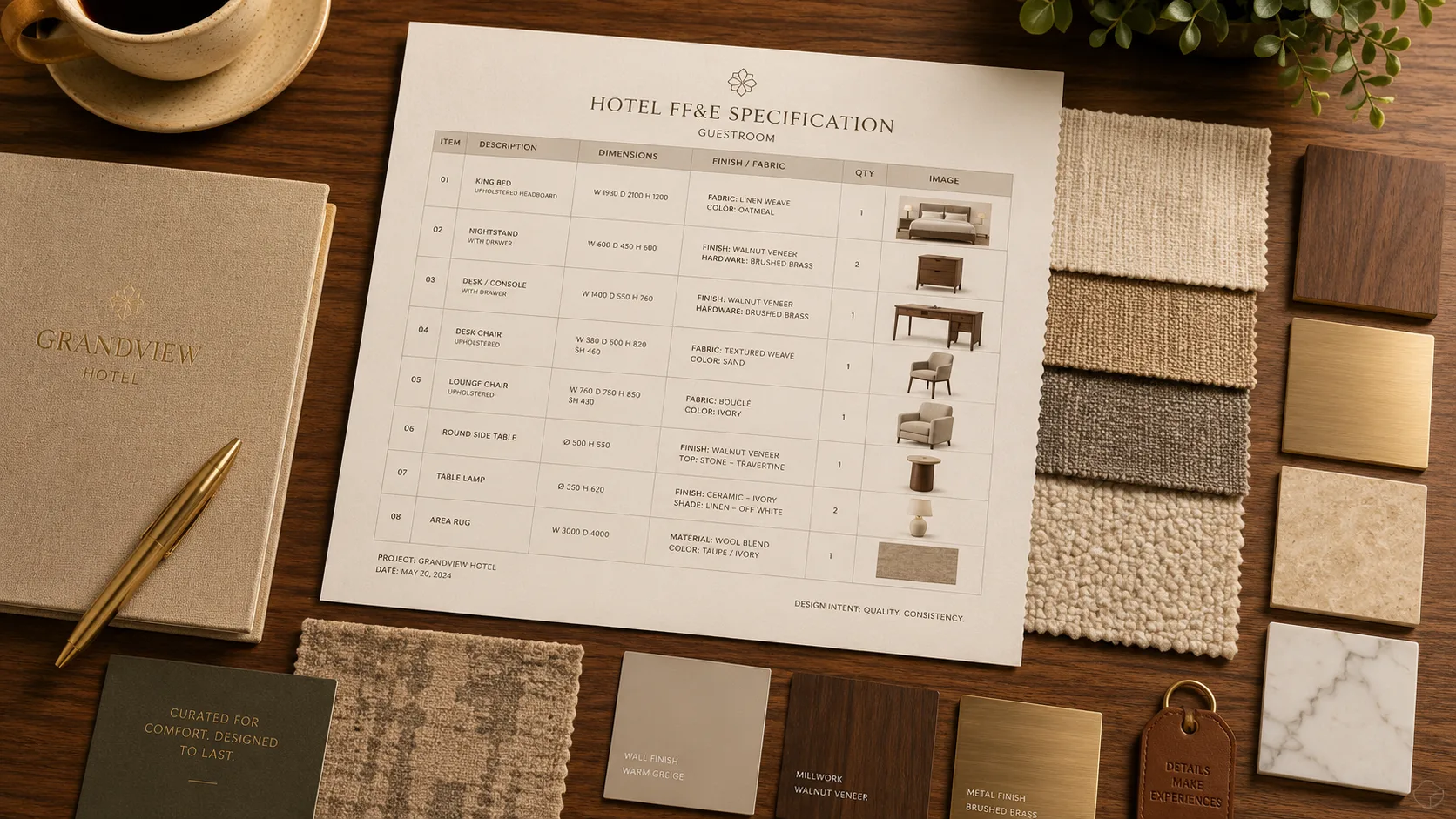
Before you contact any supplier: have a written spec that covers product category, dimensions, finish, fabric, and quantity. This is what the FF&E document does for a hotel. For a single-location buildout you can do this in a spreadsheet or even a clear email.
Compare two or three quotes on the same specification if suitable suppliers are available. Check inclusions, delivery, installation and claims responsibility alongside unit price.
Obtain a written timetable for stock allocation or production, approvals, freight and installation. Factory-direct orders have no universal 14 week window.
Work with a supplier who can provide certifications and documentation. If a supplier can't tell you the Wyzenbeek rating on their upholstery or the BIFMA status on their seating, that's a gap worth asking about.

The bottom line
A written specification, comparable quotations and early schedule planning help connect the design brief with an actual order. The roles and approvals may differ between 20 chairs and 2,000; document them for your project.
Related reading: What Is Contract Furniture · Commercial Furniture Lead Times · Choosing a Hotel Furniture Supplier