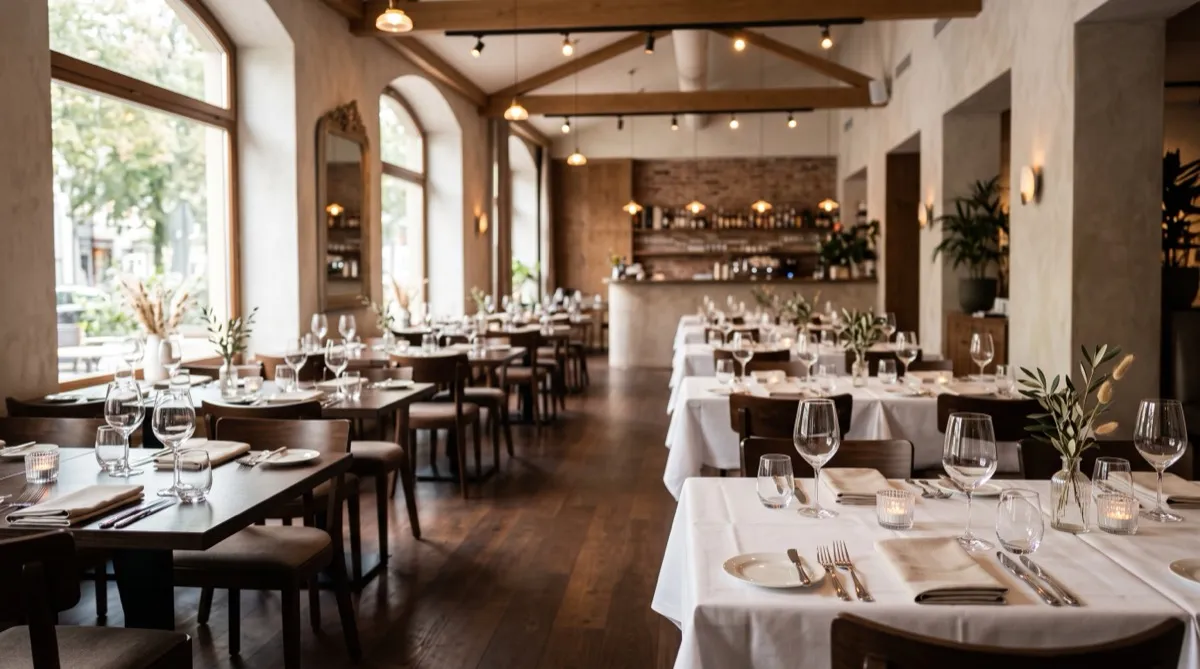
Opening a restaurant is one of the most expensive things you can do, and furniture, which should be one of the easier decisions, ends up being one of the most confusing.
How many chairs do you need? What's a realistic budget? Where do you actually order from? And how far in advance do you need to start?
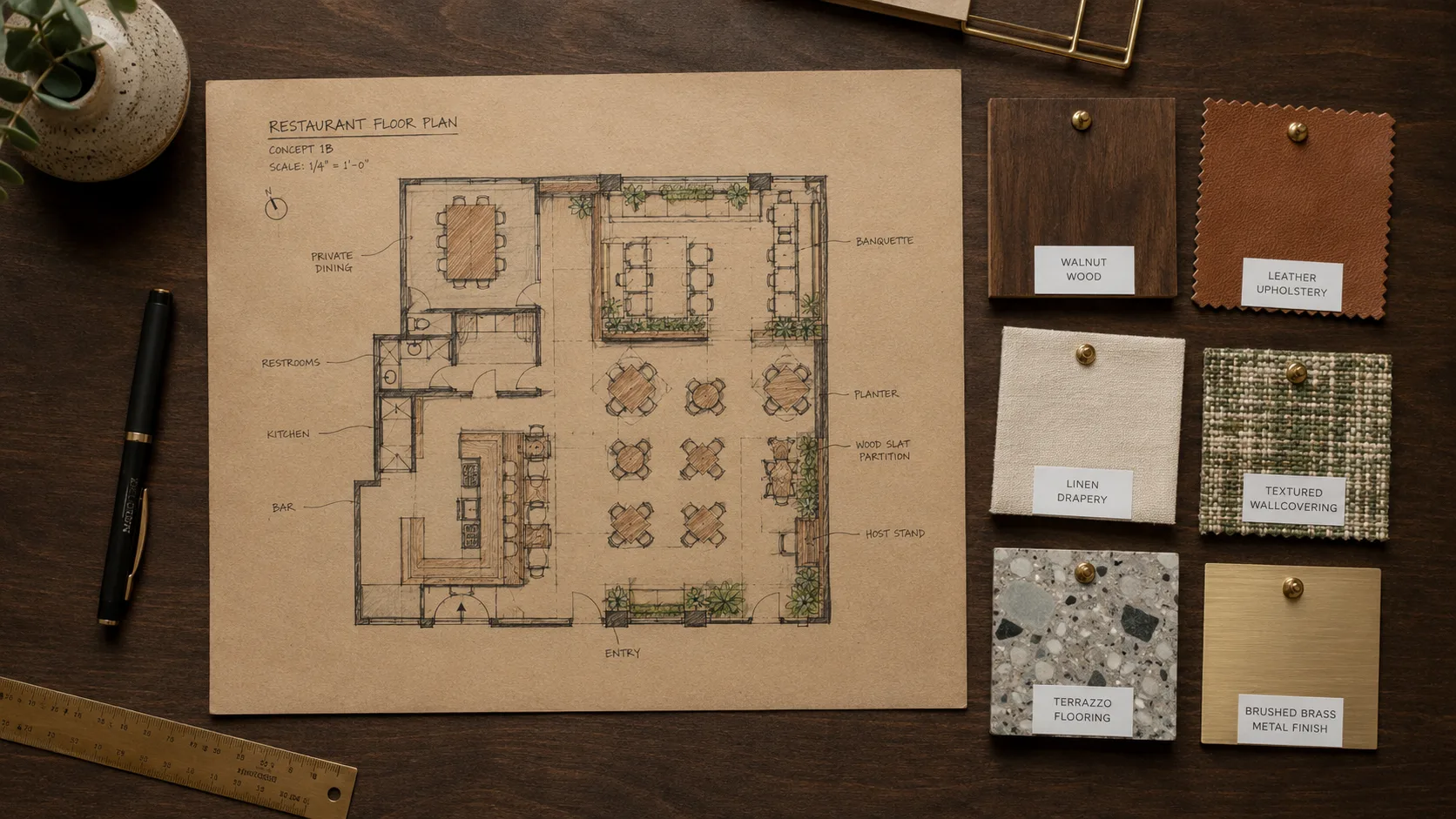
Here's the full picture so you don't have to figure it out the hard way.
Step one: lock your floor plan before you count a single chair
Before you order anything, you need your dining room layout finalized.
Have the project team confirm the actual layout, circulation, accessibility and permitted occupancy. 15 to 20 square feet per guest can be an early scenario, not an approved capacity rule. A 1,000-square-foot room does not automatically seat 50 to 65 guests.
Choose spare quantities from storage, damage history and confirmed reorder time. 10 to 15 percent can be a scenario: a 60-seat layout with 68 to 70 chairs includes 8 to 10 spares, but it is not a universal requirement.
This step sounds obvious but it's where most operators get tripped up. They order based on a floor plan that changes during buildout and end up short, or they order before the layout is locked and then realize the furniture doesn't work with the final table configuration.
What pieces a restaurant actually needs
Most restaurants need four categories of furniture:
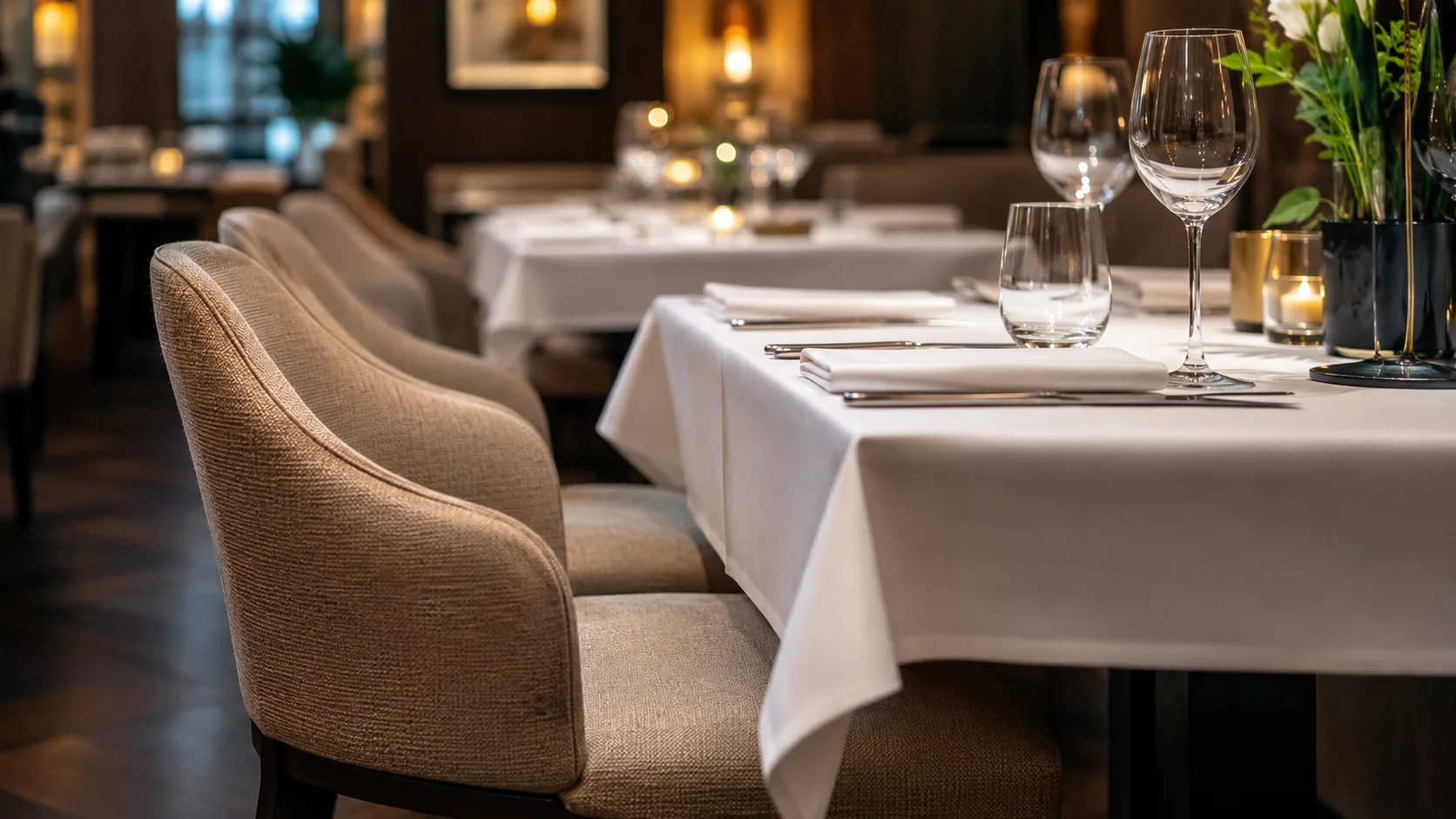
Dining chairs should be specified for the actual occupancy, handling and cleaning. Request the intended-use and test documentation; a busy restaurant does not invariably seat 30 to 50 people in each chair daily.
Barstools come into play if you have a bar or high-top counter. Height matters more than most people realize. Standard bar height is 28 to 30 inches for the seat; counter height is 24 to 26 inches. Measure your bar top before you order.
Tables are typically sold as bases and tops separately. This gives you flexibility on size, shape, and finish to match your space. A four-top that can split into two two-tops is worth considering for flexibility.
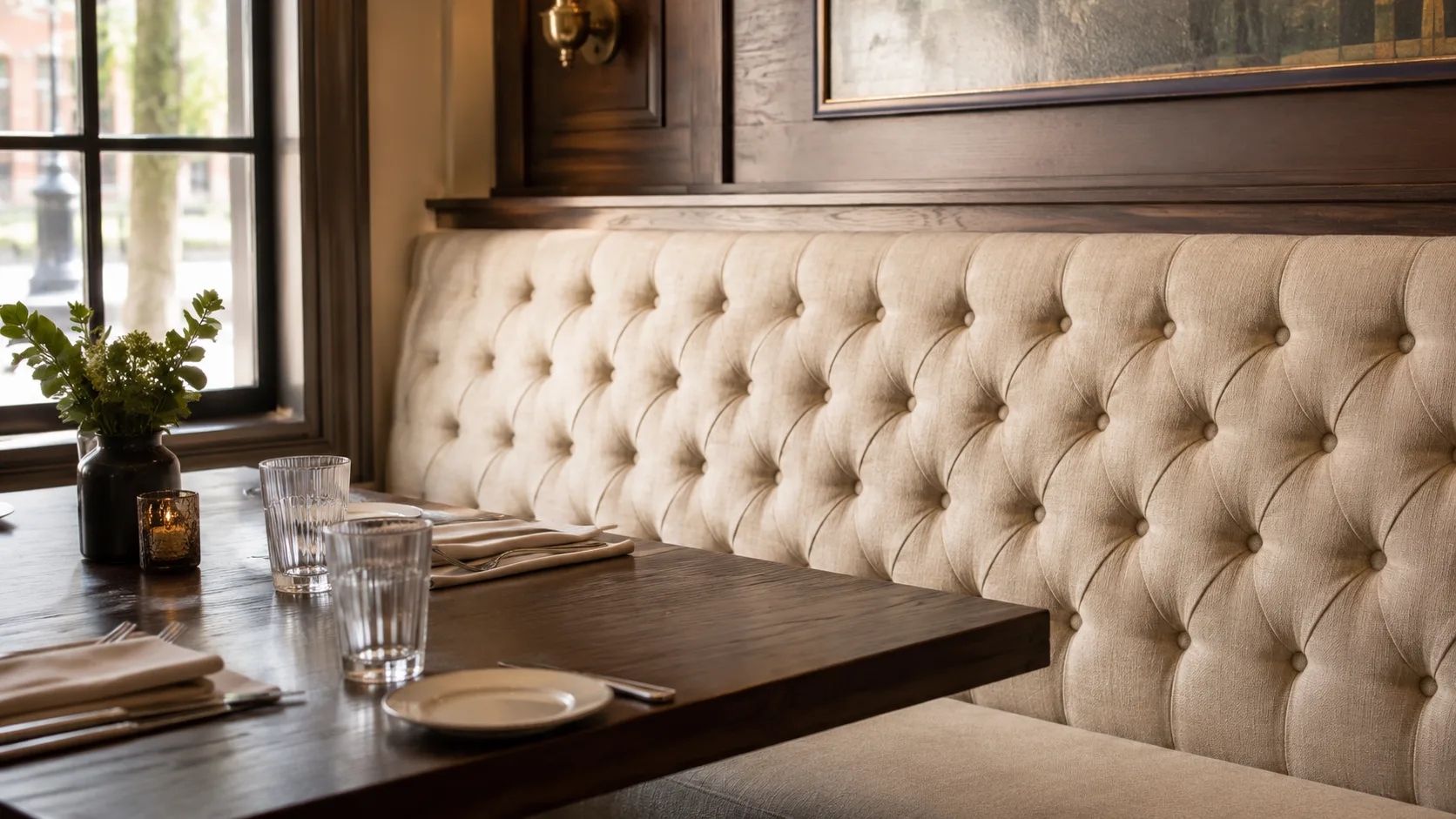
Lounge or waiting area seating is lower volume use than your dining chairs, but it's the first thing guests see when they walk in.
Budget: what to actually expect
Obtain current quotes for the exact specifications and quantities. The figures below are hypothetical budget inputs to compare with those quotations, rather than verified current North American prices.
- Dining chairs: $150 to $450 per chair depending on material and upholstery
- Barstools: $200 to $550 per stool
- Table bases: $100 to $250 each; table tops: $150 to $400 each
- Lounge seating: $500 to $1,500 per piece
For a 60-seat scenario, a $25,000 to $55,000 allowance must be checked against an actual item list and quotes. Include freight, installation, storage, applicable taxes and spare quantities separately.
For comparison only, a $200 chair assumed to last seven years has a different annualized cost from a $70 chair assumed to be replaced every eighteen months. Those are hypothetical price and service-life inputs, not proof that a proposed commercial chair lasts longer or costs less.
Timeline: when to place your order
This is where most restaurant operators get into serious trouble.
Ask which items are stocked or made to order and obtain separate dates for approvals, manufacture, freight and receiving. 6 to 12 weeks plus two weeks of freight is a planning scenario, not a universal delivery window.
Coordinate supplier dates with the contractor's room-readiness milestones. Confirm whether storage is available, what it costs and who bears risk if the site is delayed.
Confirm approvals, the delivery plan and any storage arrangements before placing the order.
The bottom line
Finalize the approved layout, document items and spare quantities, compare like-for-like quotations and schedule from confirmed milestones. Keep that specification for receiving and subsequent orders.
Related reading: How to Spec Restaurant Furniture · Commercial Furniture Lead Times · Commercial Barstool Buying Guide
Keep a specification that supports the next order
Record each furniture model, dimensions, finish, upholstery, quantity, and location in one schedule. For a restaurant group, use that schedule to identify compatible spare furniture and match later orders rather than allowing each location's specification to drift.
After the room has operated, review where furniture moves, which finishes show contact wear, and whether the installed counter and stool heights work together. Update the specification before ordering for an extension or another location.