
Specifying furniture for a restaurant or bar opening sounds simple until you're in it. There are more decisions than most people expect, and the order you make them matters.
Go to a supplier with a vague idea and the process takes weeks of back-and-forth. Go with a complete spec and you have a quote in 24 to 48 hours. Here's how to get there.
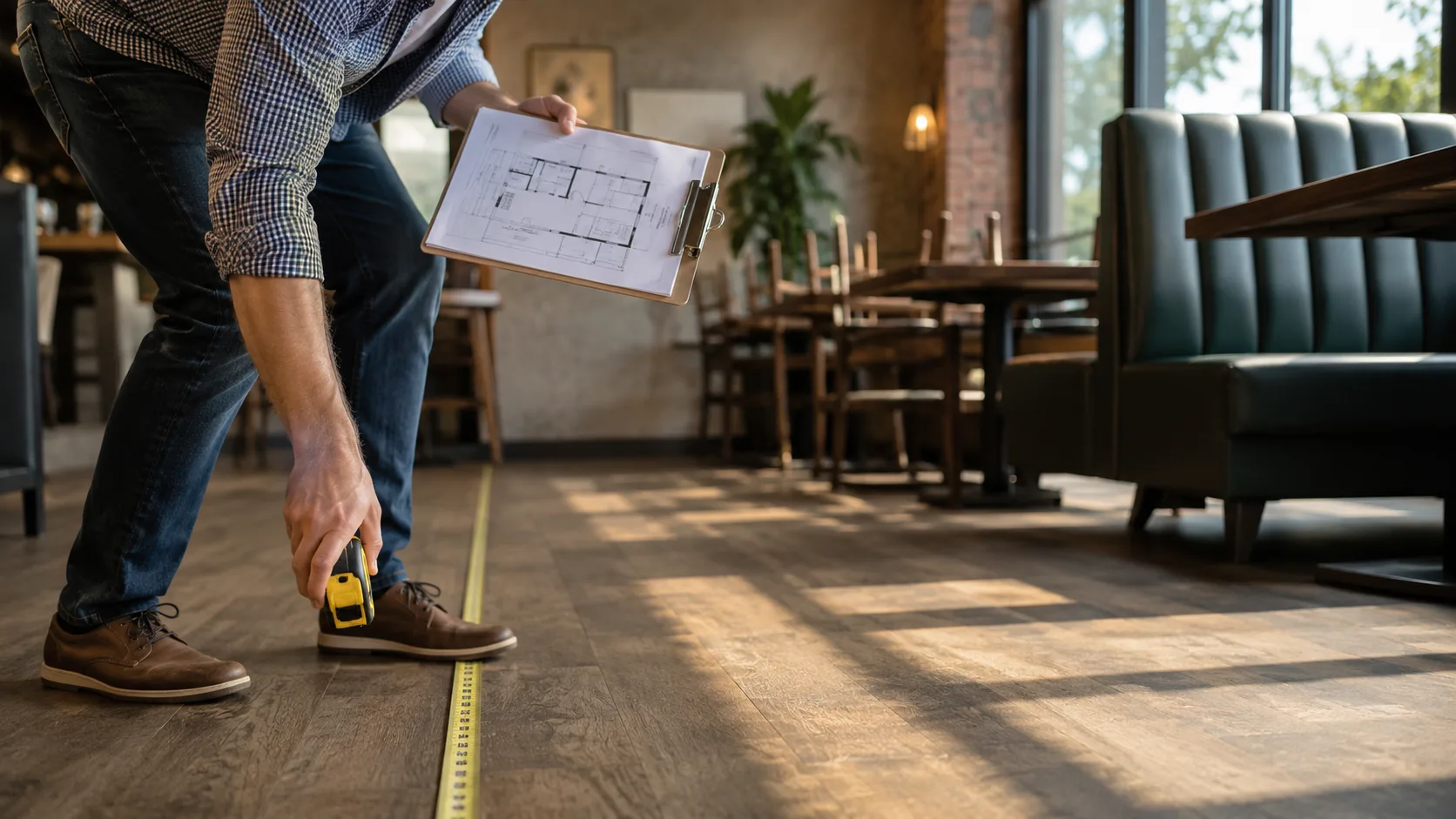
Start with the floor plan
Everything starts with the floor plan. Before you can spec furniture you need to know exactly what you're working with.
Document the dining room layout: square footage, table configuration, how many 2-tops, 4-tops, or communal tables. Document the bar: how long is the bar top, what height is it, is there back bar seating. Document any lounge or waiting area: square footage and its intended use, whether it's a holding area for guests waiting for tables or a destination lounge.
From the floor plan you get your seat count. From the seat count you get your order quantities. Add 10 to 15 percent overage to every quantity you calculate. Commercial furniture lasts years, and you need spares for the ones that get damaged in the first year.
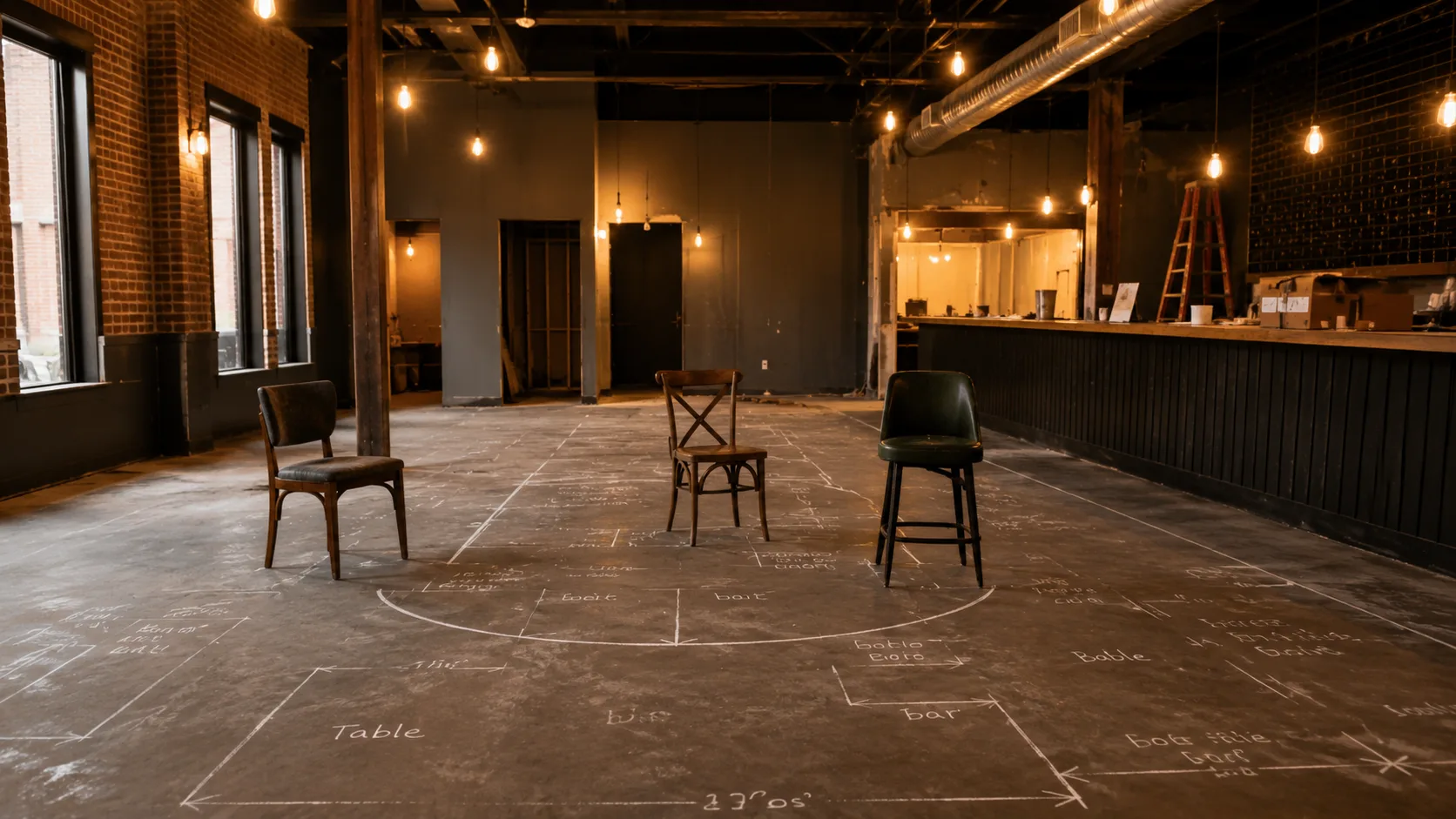
Define your aesthetic and functional requirements
Your furniture has to do two things: fit your brand and survive your environment. Both matter equally.
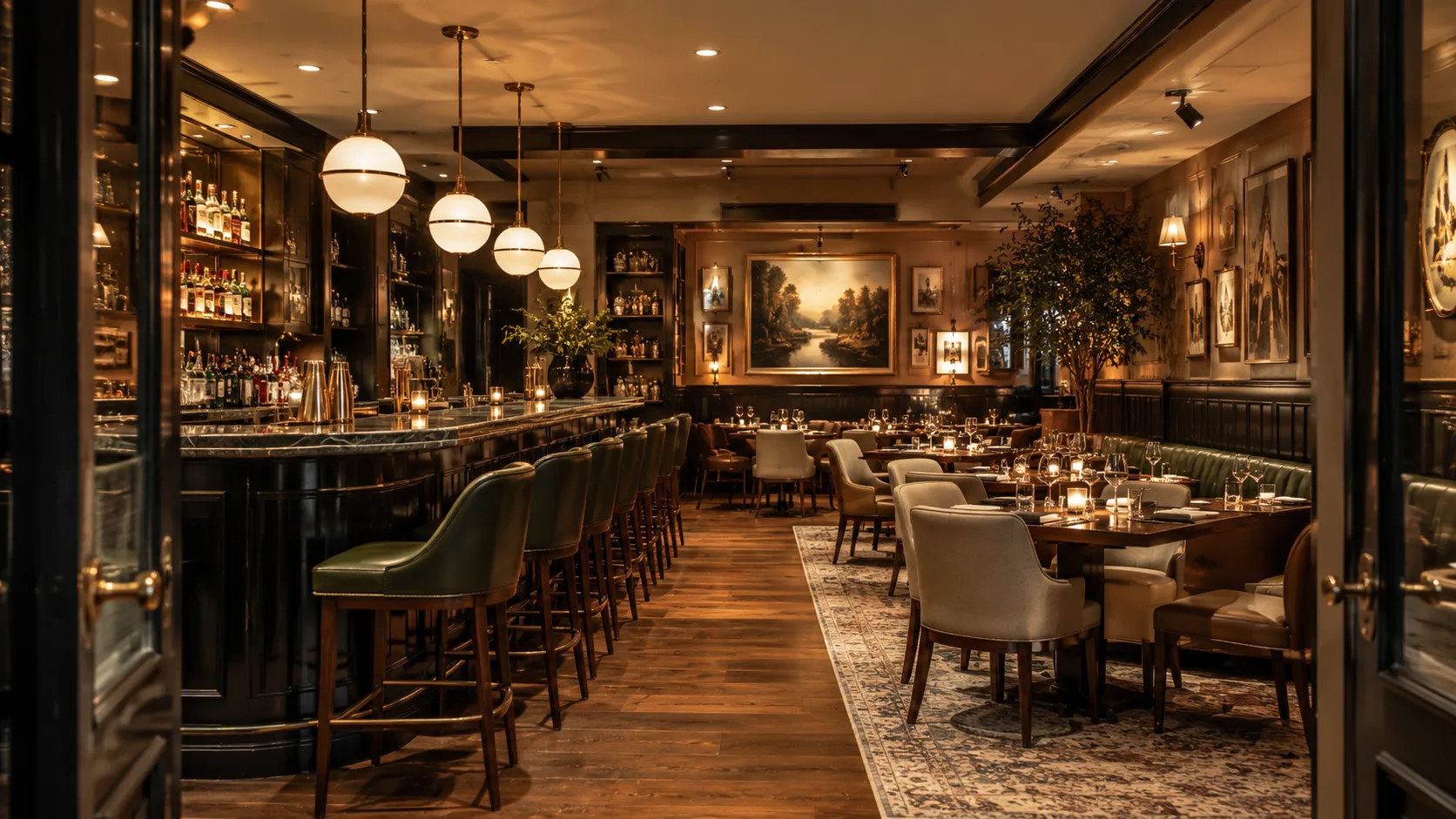
Aesthetic: what is the tone of the space? Fast casual, upscale casual, fine dining, bar and nightclub? The furniture silhouette and finish should match. A clean-line metal chair reads casual. A tufted upholstered chair with a wood frame reads upscale. Get clear on where you are on that spectrum before you talk to anyone.
Functional: how long are guests staying? A fast-casual counter service restaurant needs a different chair than a wine bar where guests sit for two to three hours. Comfort level should match dwell time. Higher dwell time means you need better seat cushioning and more ergonomic proportions.
Practical: do you have a patio? You need outdoor-rated furniture with UV-resistant fabric and powder-coated or stainless steel frames. Late-night crowd? Higher durability specs across the board. Lots of cleaning at the end of each service? Specify vinyl or commercial fabric that handles bleach solutions.
Write these requirements down before you contact any supplier. It focuses the conversation and produces a faster, more accurate quote.
Build your spec sheet
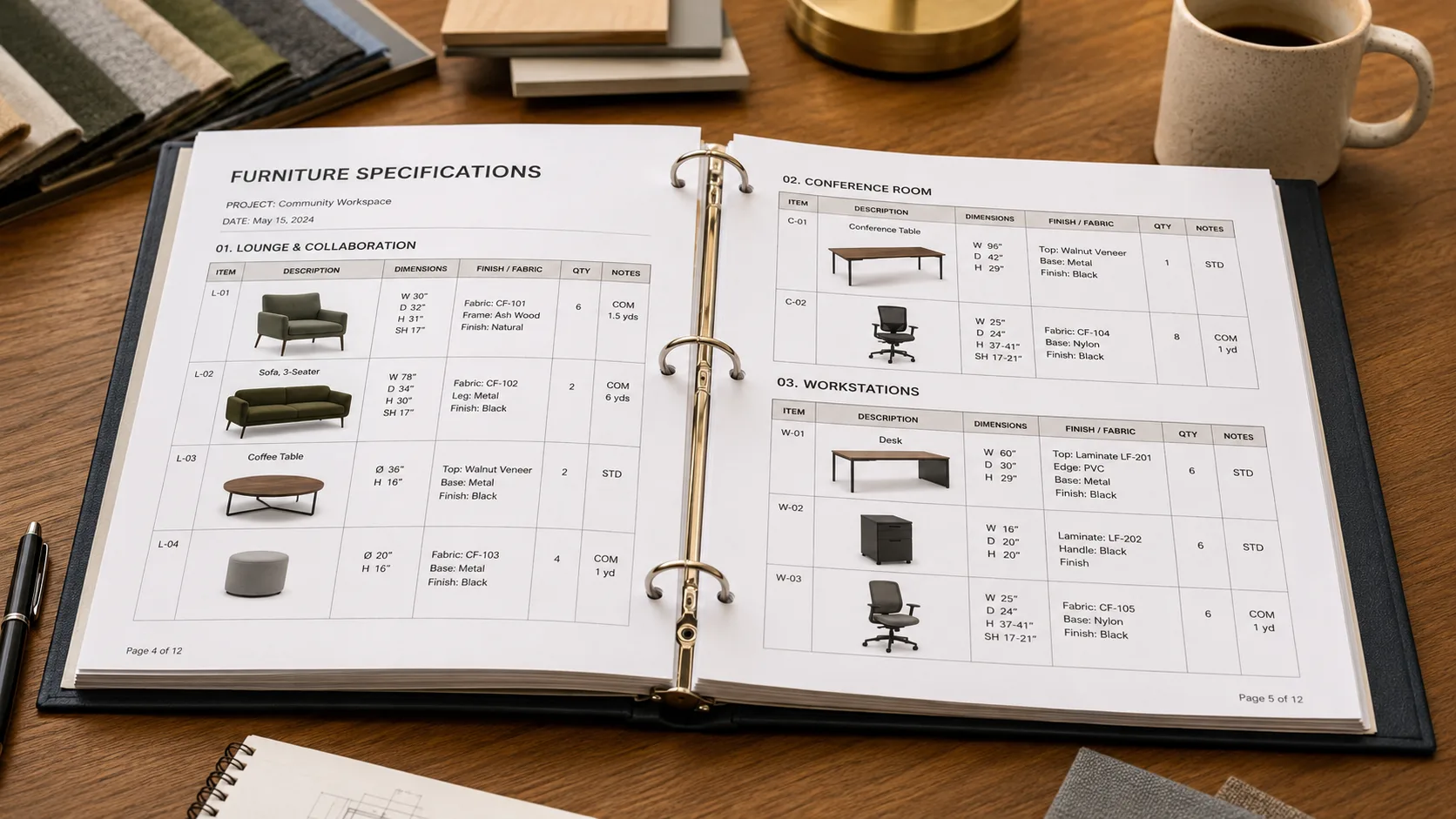
For each furniture category you're ordering, document these details.
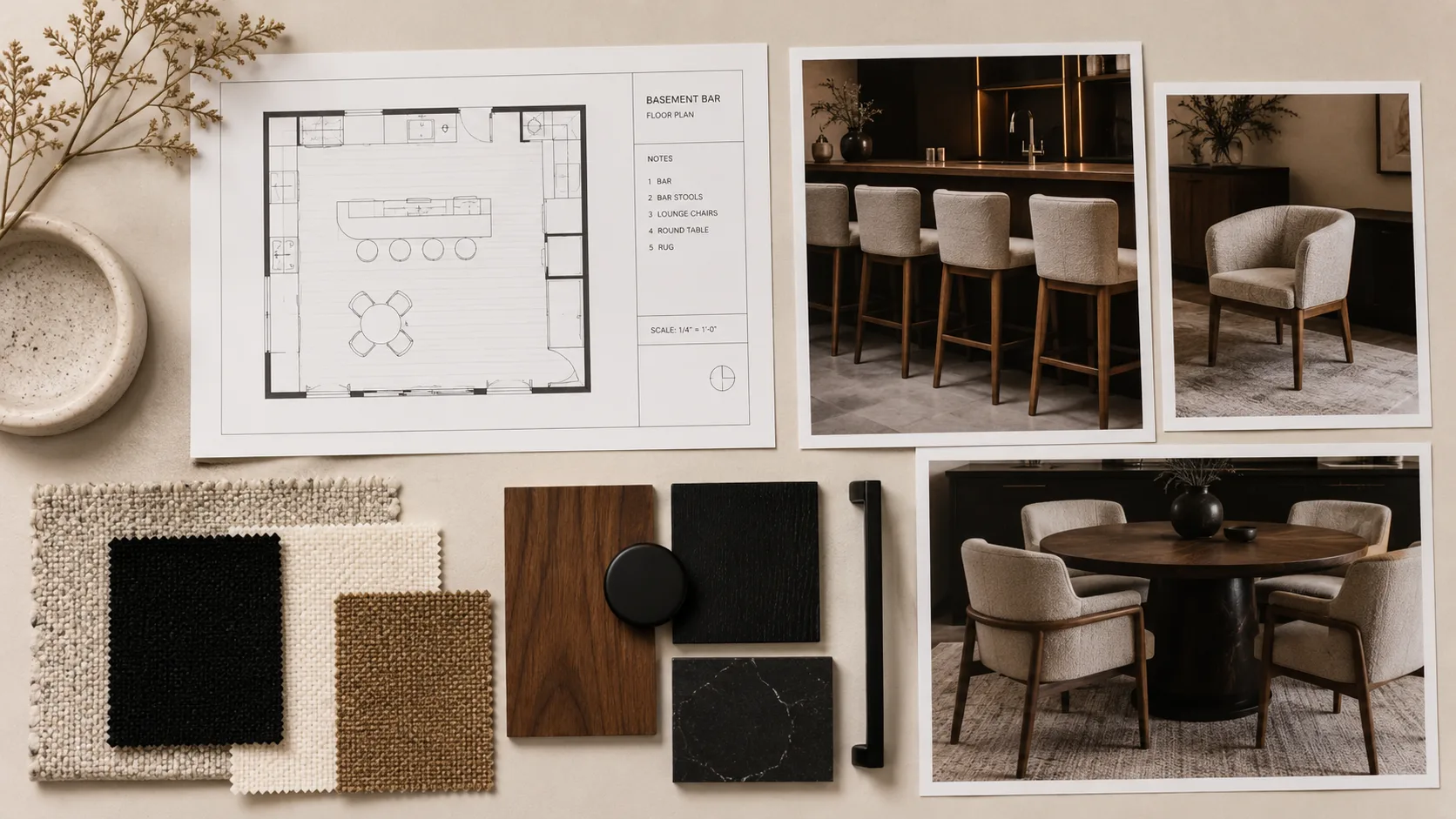
Style: the look you're going for. Reference photos work well here. If you have a specific chair or barstool in mind from a hotel or restaurant you like, a photo of it is worth a thousand words of description.
Dimensions: seat height, overall height, width, depth. For barstools, confirm your bar top height first and subtract 10 to 12 inches to get your seat height. Measure before you spec.
Frame material and finish: metal or wood, and what color. Black powder coat, brushed steel, natural oak, walnut stain. Be specific.
Seat: upholstered or hard seat, and if upholstered, fabric or vinyl and what color. Vinyl is easier to clean and more durable in high-spill environments. Fabric reads softer and warmer. Both are available in commercial grades.
Quantity: with 10 to 15 percent overage built in.
This is your spec sheet. A supplier can work from this directly and turn around a quote in 24 to 48 hours. Custom orders are available if your spec requires a specific finish, fabric, or dimension that isn't standard, so bring reference photos and dimensions and ask what's possible.
Timeline and budget
Build your spec sheet at least 16 weeks before your target opening date. That gives you two weeks to get quotes and make supplier decisions, two weeks for order finalization and deposit payment, and 10 to 14 weeks for production and delivery on factory-direct orders. If items are in local stock, the timeline compresses.
For budget, a rough rule of thumb for a full-service restaurant is $250 to $600 per seat in furniture costs at commercial grade. A 60-seat restaurant should budget $15,000 to $36,000 depending on spec level and materials. That range is wide because the gap between a basic metal-frame chair and an upholstered booth is significant.
If budget is tight, prioritize dining chairs and barstools first. These take the most daily abuse and are where quality matters most. Lounge seating sees less traffic and is a place where you can spec slightly more conservatively without as much operational impact.
Bringing it to a supplier
When you contact a supplier, have your spec sheet ready. The conversation should be: here's what I need, here's the quantity, here's the timeline, what are my options and what does it cost.
If you're not sure on specific finish or fabric choices, that's fine. Tell the supplier your aesthetic direction and budget range and ask to see options. But know your quantities and timeline before you reach out. Those two numbers drive everything else in the conversation.
A supplier who can't give you a quote within 48 hours of receiving a complete spec is not well organized. A supplier who asks you a dozen clarifying questions after you've provided a spec is actually doing their job right.
The bottom line
A complete spec sheet turns a weeks-long back-and-forth into a 48-hour quote. Start with the floor plan, write your requirements down, document dimensions and quantities for each category, and build in 16 weeks from spec to opening day. That's the whole process.
Related reading: Commercial Furniture Lead Times · Commercial Upholstery Fabric Guide · Commercial Dining Tables Guide
Our take
Every spec is a hypothesis until the room has run real services. The first months of operation show exactly where the plan holds and where it needs adjusting: which chairs migrate between sections and take extra handling, whether the barstools actually match the counter height once the millwork was built, and which finishes are showing contact wear at the aisle pinch points. Schedule a deliberate walkthrough around the ninety-day mark, tighten hardware across the whole floor while you are at it, and fold what you learn back into the spec document before ordering anything else. If a patio addition or a second location is in the plans, that revised spec, validated by actual service, is worth far more than the original.
The bottom line: Write the spec, open the room, then audit the spec against reality after the first stretch of service. The corrected version is the document that should drive every future order.