A luggage rack is one of the least glamorous pieces of furniture in a hotel guestroom, and one of the most functionally important. Guests open a suitcase on it within minutes of arriving, drop the full weight of packed clothing and gear onto the straps repeatedly across a stay, and expect it to hold steady the whole time without a second thought. It doesn't get the design attention a headboard or an accent chair gets, but a failed strap or a wobbling frame turns into a guest complaint fast, and a repeat one at that if the property doesn't fix the underlying spec.
Rack versus bench: two different guest experiences
The traditional folding luggage rack, an X-frame stand with fabric straps, remains common because it's compact, inexpensive to maintain, and easy for housekeeping to fold flat and store when not in use. It works well in standard rooms with tighter footprints where floor space for a full bench isn't available.
A luggage bench serves the same core function, a stable surface to set an open suitcase, but adds genuine seating capacity and a more finished look. It suits higher-tier rooms and suites where the extra floor space exists and the property wants the piece to double as a bench rather than reading as purely utilitarian equipment. Some properties standardize on benches property-wide for a more upscale feel across every room type, while others reserve benches for suites and keep folding racks in standard rooms to manage cost and footprint.
Strap and frame durability
Straps take the real abuse in this category. Fabric webbing needs to be rated for repeated heavy loading, since a fully packed suitcase can weigh well over the load a lighter residential strap was designed for, and that weight gets applied and removed multiple times during a single guest stay. Look for straps rated for genuine commercial daily-use cycling, not a decorative webbing that's fine for occasional home use but frays or stretches under hotel turnover frequency.
Obtain the folding rack's actual frame, hinge, strap and complete-assembly load documents, then test its permitted handling with staff. Steel or hardwood labels alone do not establish repeated-folding performance or a first-year failure forecast. Keep the maker's inspection and replacement-part instructions with the room package.
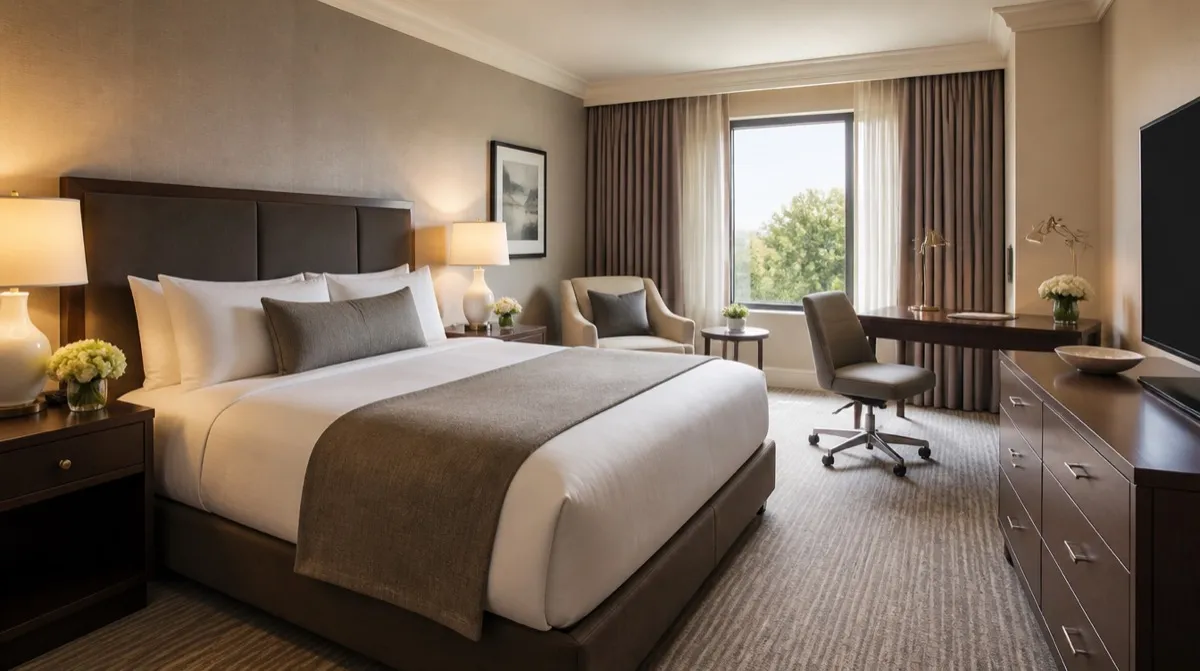
Bench construction for the seating-forward option
If the property is going the bench route, treat it as genuine seating furniture, not just a taller luggage rack. That means a frame rated for a person's full weight sitting down, not only the distributed weight of a suitcase, plus upholstery that matches the durability standard of the rest of the room. Vinyl or a high Wyzenbeek-rated fabric holds up better than a delicate decorative fabric given how much contact a guestroom bench actually sees between luggage handling and occasional sitting.
Bench dimensions should give a suitcase room to sit fully open without hanging off the edge. A bench sized purely for aesthetics, narrower than a standard checked bag, forces guests to balance luggage precariously, which undermines the entire point of providing the piece.
Matching the casegoods finish
Whichever format the property chooses, finish coordination with the rest of the room matters as much as function. A luggage rack or bench in a mismatched wood tone or metal finish stands out as an afterthought against a coordinated headboard, nightstand, and wardrobe program. Our hotel headboards guide and hotel nightstands guide cover the anchor pieces of that same program if you're specifying the full guestroom casegoods package together, which keeps finish matching simpler than ordering each piece separately over time.
Ordering at property scale
Build luggage-rack and bench quantities from the approved room-type schedule and the property's operating standard. One per room is a possible planning assumption, not a universal minimum; suites, shared rooms or optional racks may need a different count. Use the FFE budget calculator alongside the full casegoods package and compare itemized freight for combined and separate deliveries rather than assuming bundling is cheaper.
For a guestroom project, submit a furniture request with the rack/bench choice, room-type quantities, intended seated or luggage loads, approved finishes and delivery dates. Independent suppliers may confirm exact models, commercial-use limits, matching and quote terms.
Housekeeping considerations
Whichever format is chosen, factor housekeeping labor into the decision, not just guest experience. A folding rack that housekeeping has to unfold, straighten, and refold correctly at every turn adds a small but repeated task across hundreds of room turns a month. A fixed bench removes that step entirely, at the cost of the floor space it permanently occupies. Properties running lean housekeeping staffing sometimes find the bench pays for the extra footprint in saved labor time over a renovation cycle, while properties with tighter room footprints find the folding rack's compactness is worth the added housekeeping step. Neither choice is universally correct, and walking a housekeeping supervisor through both formats before finalizing the spec tends to surface the right answer faster than deciding from a floor plan alone.