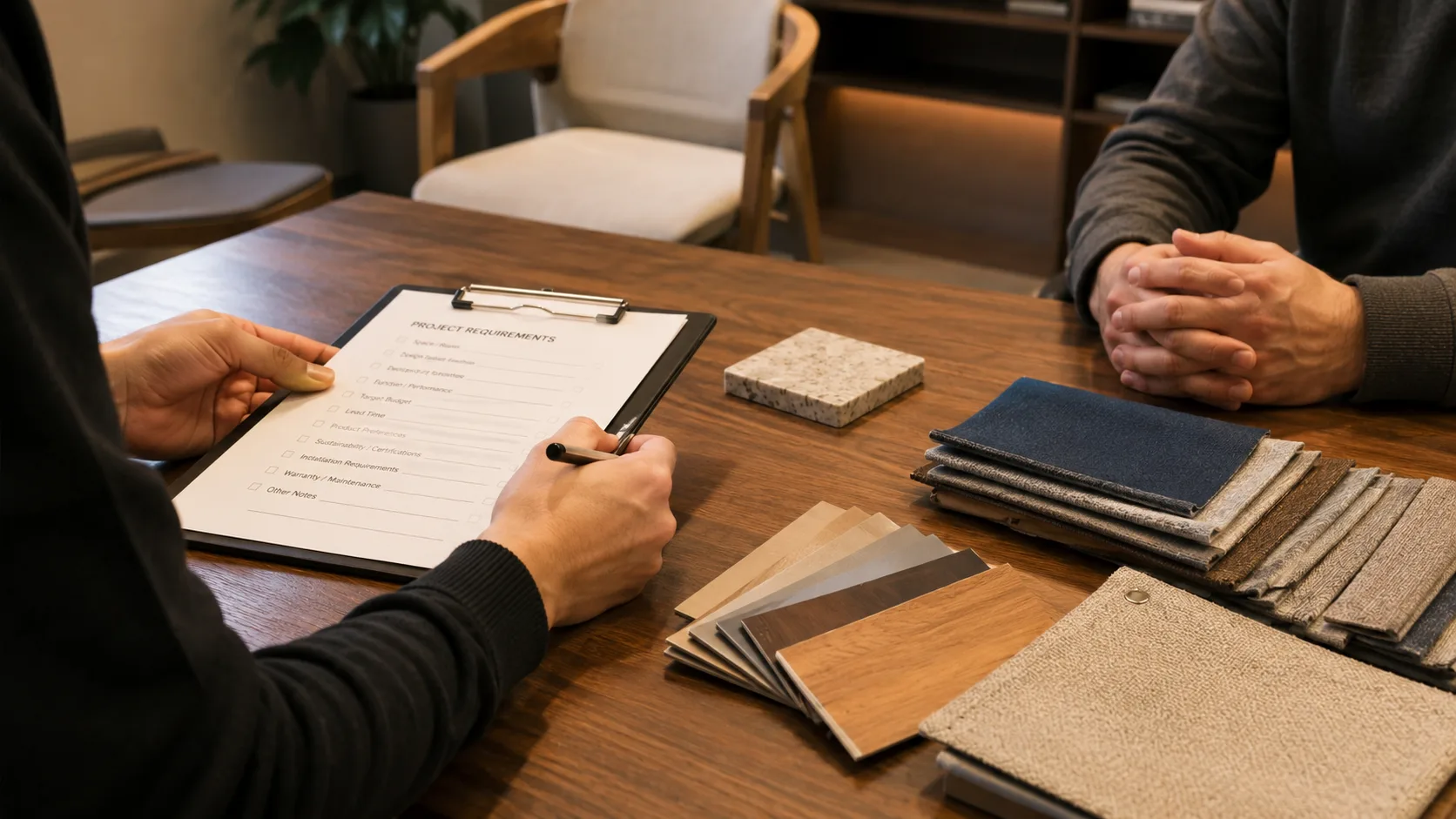
Most buyers go into a conversation with a commercial furniture supplier not knowing what to ask. They get a quote, it looks reasonable, they place an order, and then the problems start. A finish that doesn't match the reference. An upholstery that fails in 18 months. A lead time they didn't understand.
Here are the exact questions to ask before you commit to any commercial furniture supplier. The answers will tell you everything you need to know.
Questions about the product
Where is this furniture manufactured? The honest answer for most commercial furniture in North America is China. That's standard and it's how competitive pricing is possible. What matters is whether the supplier has quality control at the factory level and a local point of accountability on this end. "We manage quality oversight at the factory and handle any issues on this end" is the right answer. Vague answers about their supply chain are not.
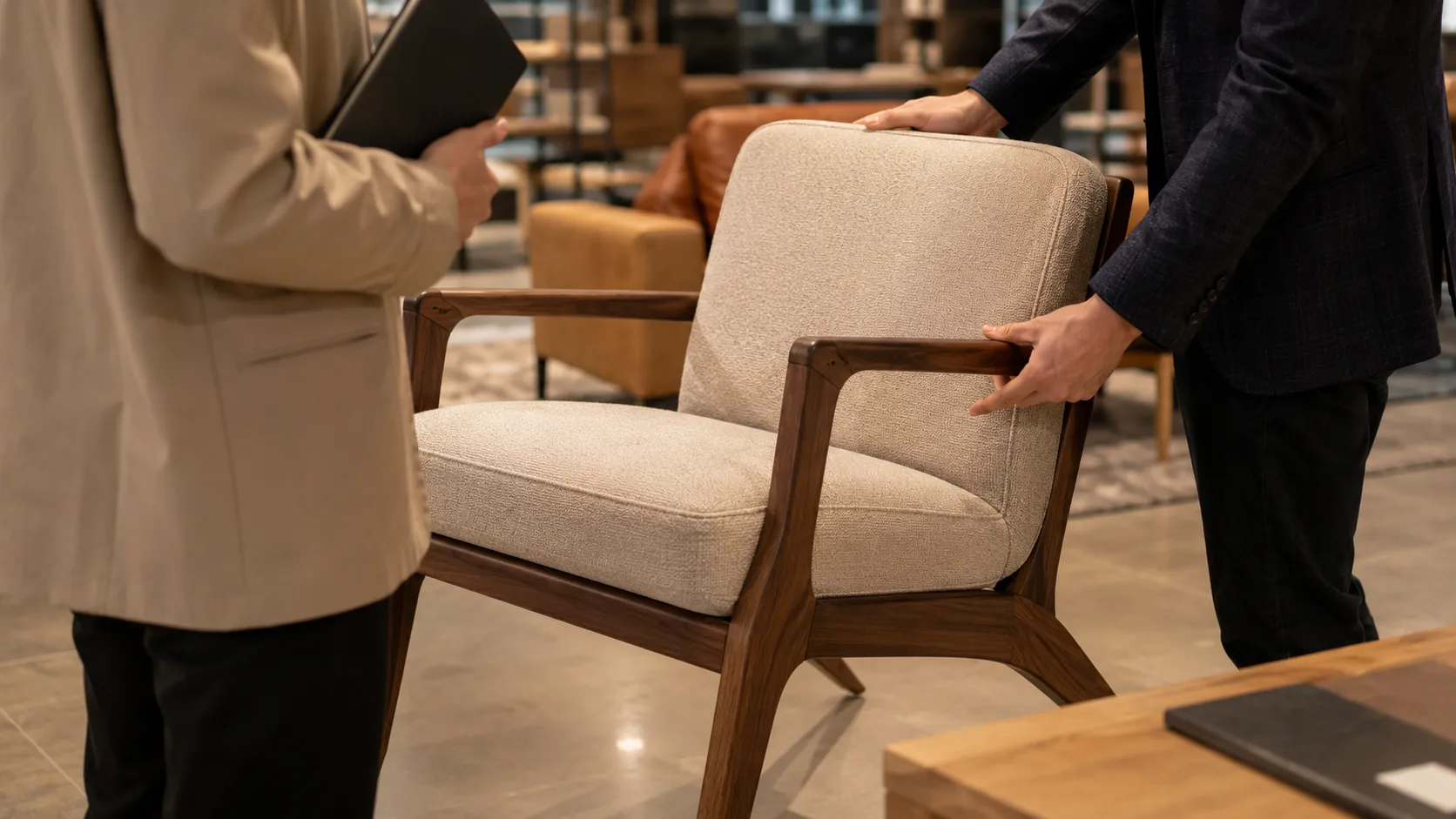
What are the frame material and joinery specs? You want to hear: welded steel or solid hardwood with reinforced joints. If you hear particleboard, MDF, or cam-lock joinery on a product being sold as commercial grade, ask follow-up questions. Those materials and joint types are not built for commercial use cycles.
What is the Wyzenbeek rating on the upholstery? Should be 50,000 minimum for restaurant and bar environments. They should know this number without looking it up. If they have to research the Wyzenbeek rating on their own product, that's a gap.
Is this product BIFMA certified? For seating, BIFMA certification means it's been independently tested to commercial standards. Not all commercial furniture carries it, but a supplier should know the certification status of their products and be able to tell you which pieces are or aren't certified.
Questions about the order
What is the minimum order quantity? A legitimate answer is a specific number: 20 barstools, 10 dining chairs, 4 lounge chairs. "No minimum" is not a legitimate commercial furniture answer. It means either pre-made retail inventory with limited options or a retail-grade product. Know what you're getting.
What are your payment terms? Standard in commercial furniture is 50% deposit to start production and 50% balance before shipping. Know this before you commit and budget accordingly.
Can I do custom finishes, fabrics, or dimensions? A good commercial supplier says yes with specifics: which products support customization, what the minimum order is for custom runs, and what the lead time looks like. We do custom orders on finishes, fabrics, and dimensions across most of our product lines.
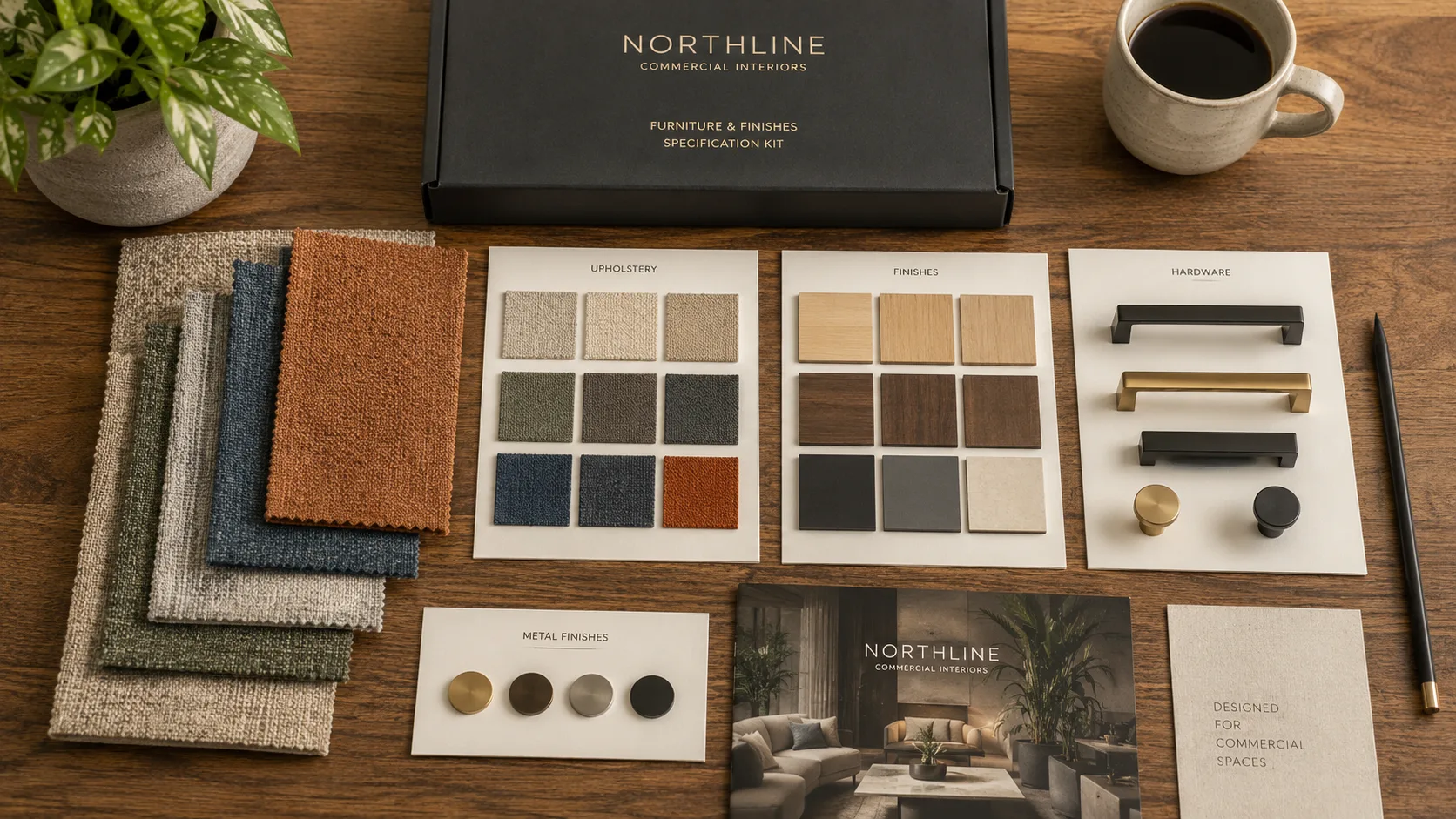
Can I see physical samples before committing to quantity? The only acceptable answer is yes. For any upholstered product, physical samples are non-negotiable before a quantity order. Colors on a screen are not reliable for matching. If a supplier won't send samples, find another supplier.
Questions about lead time and logistics
What is the production lead time from order confirmation to production complete? They should give you a specific range, not "it depends." For factory-direct orders, 10 to 14 weeks is the typical range. For items in local stock, shorter. Know which situation you're in before you confirm a timeline.
Is this item in local stock or does it ship from the factory? These are different situations with meaningfully different lead times. Local stock is weeks. Factory-direct is 10 to 14 weeks. Ask specifically for every line item in your quote.
How is the product shipped? Curbside freight means it arrives at the curb and you handle it from there. Liftgate delivery means the truck has a lift for ground-level delivery. White glove means installation and placement. Know what you're getting so your receiving is planned correctly.
What is the process if product arrives damaged? A clear damage claim process in writing is the right answer. "Contact us and we'll figure it out" is not. Get the damage claim process documented before you sign anything.

Questions about warranty and references
What is the warranty on frames? Minimum one year. Good suppliers offer two to five years on frame and hardware.
What is the warranty on upholstery? Shorter than frame warranty is normal. Typically one year. Ask whether it covers defects only or includes wear under commercial use.
Do you have references I can contact? Any supplier with real commercial clients will say yes without hesitation. They should be able to put you in touch with a restaurant or hotel owner who has ordered from them. A supplier who hedges on this question is telling you something important.
The bottom line
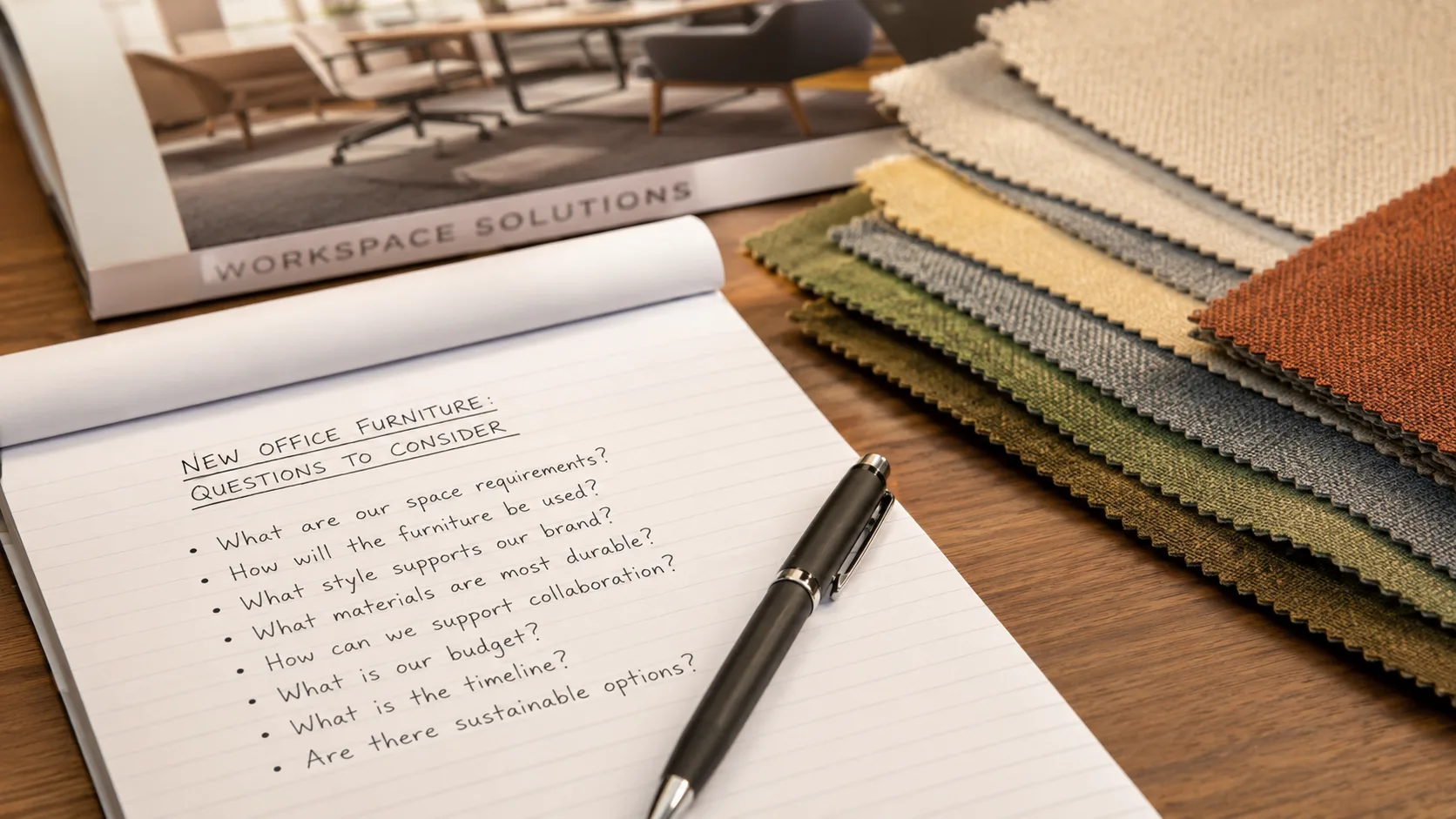
Ask these questions before you place an order. A supplier who can answer every one of them immediately and in writing is one worth working with. A supplier who struggles with the Wyzenbeek rating on their own upholstery or can't give you a specific damage claim process is one worth walking away from. The questions are quick. The consequences of skipping them aren't.

Related reading: Commercial Furniture Lead Times · Commercial Upholstery Fabric Guide · How to Order Commercial Furniture in Bulk
Our take
Every question on this list protects the first order. There is one more worth asking that protects the next two or three years, and buyers almost never raise it: how long will this exact product, finish, and fabric stay available to reorder. Commercial buyers rarely buy a venue's seating only once. A dining room grows a section, a banquet chair gets damaged, a second location opens on the same look. If the line was discontinued or the fabric book rotated in the meantime, the match is gone and you are either reupholstering a whole zone or living with an obvious mismatch. So ask the continuity questions directly. Is this a stable catalog line or a short-run item. If a line is being retired, is there any end-of-life notice to customers. And can you note the exact frame, finish, and fabric identifiers on the order so a reorder years later references the same spec rather than a salesperson's memory. A supplier who can answer that is one you can standardize on.
The bottom line: Add one question the standard checklist skips: how long this exact product, finish, and fabric will stay available to reorder. Continuity is what lets you expand a venue or replace a damaged piece years later without a visible mismatch, so favor a supplier who can commit to a stable line.