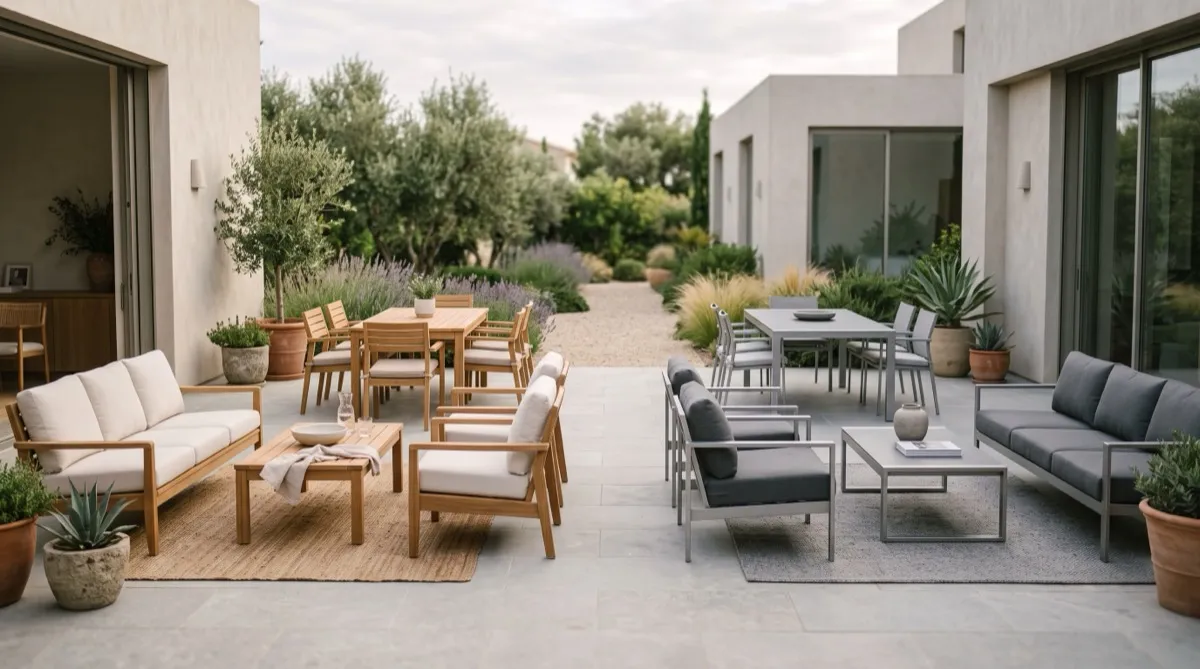
This guide compares teak and aluminum as two outdoor furniture options. Other materials can also suit an approved commercial outdoor program. For these two, compare the exact construction, exposure limits, actual weight, care, repair options, and how each piece will be used on the property.
How each material handles weather
For teak furniture, review the selected species, construction, finish, care instructions, and outdoor-use documentation. Natural weathering can change its color, but a one-to-two-season scenario is not a universal timetable or proof that change then stops. Joinery and condition still need inspection; material type does not guarantee structural soundness after a decade outdoors.
Aluminum does not develop iron rust or rot like wood, but neither the frame nor its coating is immune to every exposure. Review corrosion, coating weathering, salt/pool contact, and repair information for the selected product. Impact resistance also depends on the actual frame geometry and construction.
Weight and how it affects use
Compare the actual weights, approved handling, loaded carts, and staffing for the proposed teak and aluminum pieces. Material alone does not establish mass or reset labor. For exposed patios and rooftops, follow exact product and site securing limits; heavier furniture is not automatically safe in wind.
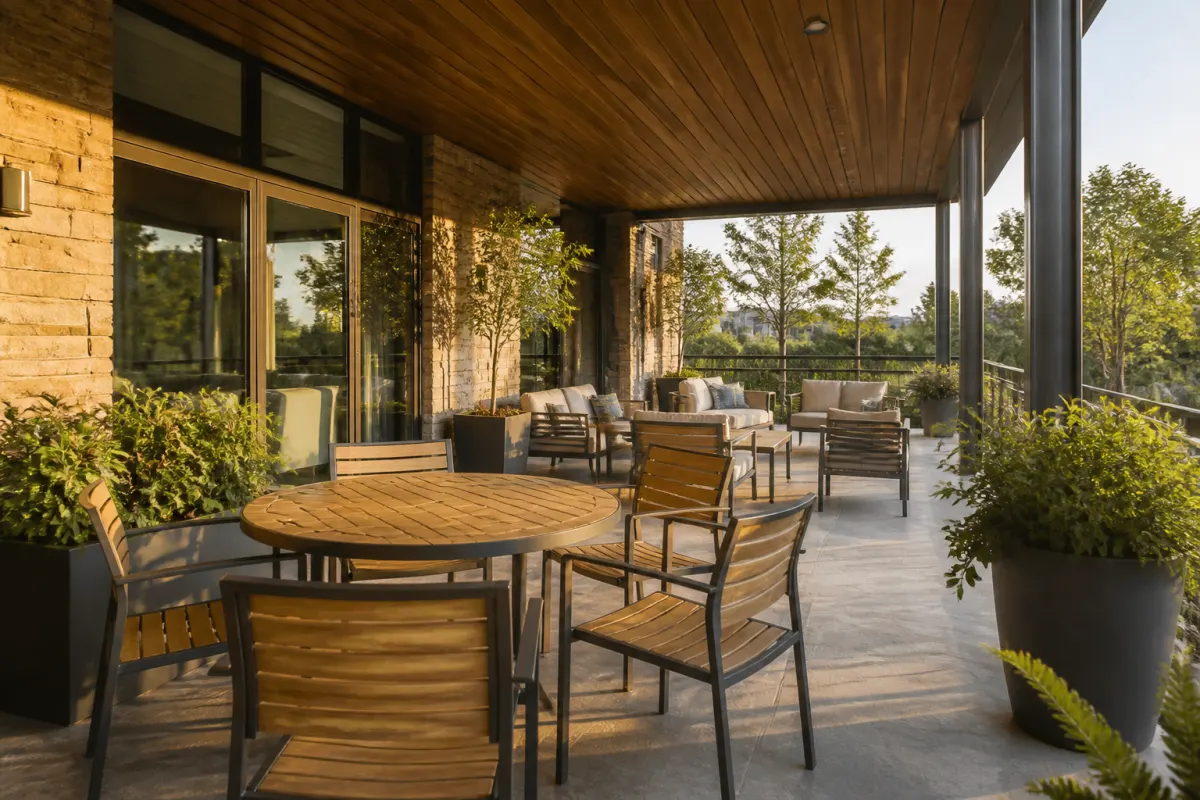
Compare actual piece weights and approved handling methods. A one-third-weight comparison is a hypothetical scenario, not a general ratio for aluminum versus teak furniture. For exposed sites, check the exact furniture and umbrella securing instructions and site requirements rather than assuming weight alone establishes wind safety.
Maintenance over the furniture's life
Agree on the desired wood appearance and follow the selected maker's care instructions. Natural weathering and a maintained color are different programs; oiling is not a universal requirement or the only possible color treatment. Obtain approved cleaners, treatment products, and limits on sanding or refinishing before scheduling work.
Follow the selected aluminum product's cleaning, inspection, coating-repair, hardware, and storage instructions. Compare those tasks with the actual wood program and maintenance staffing. No evidence here establishes aluminum as maintenance-free or the material that best survives neglect.
Lifespan and total cost of ownership
Compare ownership cost using the exact products and your operation's repair and replacement records. A decade of service is a holding-period scenario to test, not a guarantee supplied by teak, aluminum, or a commercial label. Include initial cost, approved care, parts, repair assessments, downtime, and possible replacement at different periods before ranking the options.
Look and how it fits the property
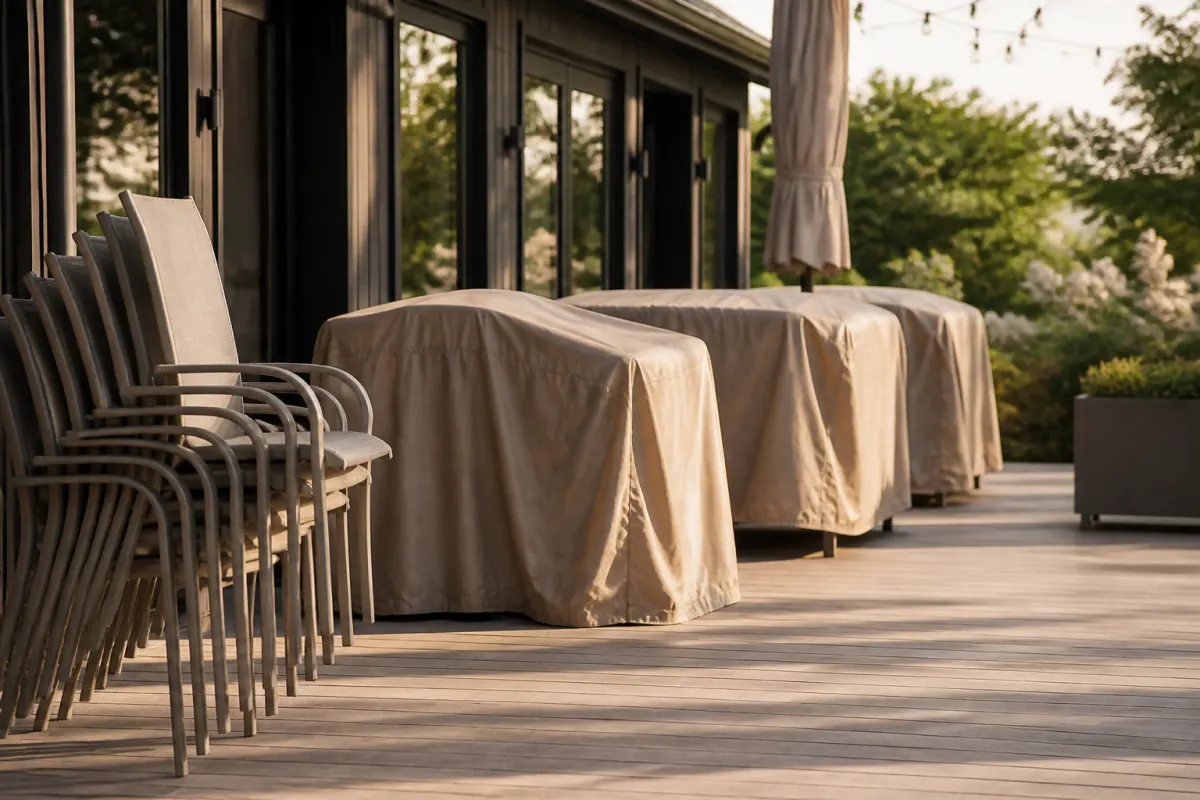
Review teak and aluminum samples, finishes, and silhouettes against the design brief. Their appearance can suit different properties, but no market-default or fixed premium tier is established here. Select the look alongside the exact exposure, care, and repair requirements.
When to mix materials on one property
Compare one-material and mixed-zone programs using actual use, exposure, samples, handling trials, and care capacity. Teak and aluminum can each be considered for lounge, dining, or event zones when the exact products meet the requirements. A mixed program does not automatically establish a better operating result.
Sourcing and lead times
Ask the suppliers to identify the production location and dated milestones for the selected products. A 10 to 14-week custom-order window is an early schedule scenario to confirm against fabric/finish approval, production, dispatch, transit, and site receiving. Do not infer one industry-wide manufacturing origin or timeline from the material.
Get a spec recommendation
Include climate, zone use, approved care capacity, dimensions, seat counts, and receiving dates in a quote request. Relevant independent suppliers review the brief and confirm actual teak or aluminum options, product documentation, availability, prices, and terms; the site does not validate a material choice.
Related reading
- Wicker vs metal for commercial patio furniture
- Outdoor furniture maintenance for commercial properties
- Winterizing commercial patio furniture
Our take
Consider repair and refurbishment before purchase. A sound aluminum frame may be a candidate for coating work, and some teak surfaces may be cleaned or refinished, but feasibility depends on construction, condition, finish, disassembly, and maker-approved methods. Request a repair assessment and cost, including workshop transport and downtime; re-powder-coating should not be described as a routine on-site task. A year-eight or year-ten review can be a chosen asset-plan milestone, not a promised service life.
The bottom line: Compare each model's approved care and repair path as well as its initial appearance. Include assessment, downtime, transport, and replacement parts in the restoration-versus-replacement decision.