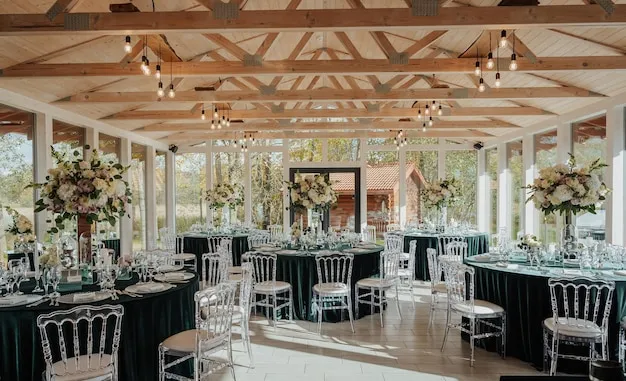
Ballroom furniture lives a harder life than almost any other commercial furniture. Chairs and tables are set up, broken down, stacked, rolled, and stored multiple times a week, often by rotating staff in a hurry. A ballroom package has to survive that turnover for years while still looking event-ready under bright lighting. Here's how venues and hotels choose chairs, tables, and staging that hold up.
Think in packages, not pieces
A working ballroom needs four coordinated systems, and the smart move is specifying them together as one package.
Seating is banquet and stacking chairs, the highest volume item and the one set up and torn down most often.
Tables are round and rectangular folding tables plus cocktail and highboy units.
Staging and risers create the platform for head tables, dance floors, and presentations.
Transport and storage is the carts, dollies, and caddies that make rapid turnover possible without destroying the furniture or the staff.
A ballroom furniture supplier worth working with quotes all four together, because they have to work as a system. Chairs that don't stack onto the dollies you bought, or tables that don't fit your storage room, create daily friction.
Choosing ballroom chairs
Ballroom seating has to stack high, gang into clean rows, and survive constant handling.
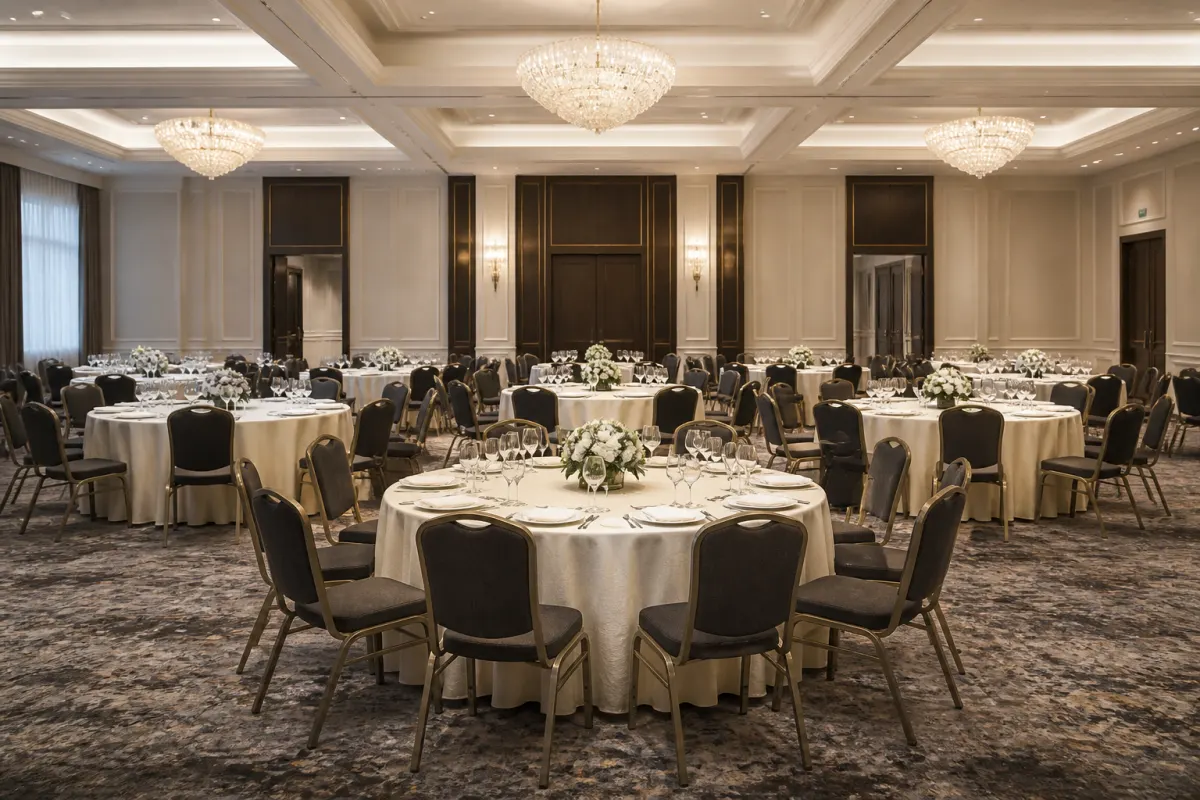
Steel stacking banquet chairs are the standard, with powder-coated frames, padded vinyl or commercial-fabric seats, and stack heights that store dozens in a small footprint. Expect 45 to 90 dollars per unit at volume.
Aluminum stacking chairs cost more, 70 to 130 dollars, but are lighter for staff to handle and resist corrosion in humid venues.
Resin Chiavari chairs deliver the upscale wedding-and-gala look at 40 to 80 dollars and survive transport far better than wood Chiavaris.
Look for welded frames rated for tens of thousands of cycles, a minimum 50,000 Wyzenbeek upholstery rating, ganging hardware to lock rows together, and floor glides that protect your ballroom flooring. Stack height is a real budget factor, since chairs that stack higher store more in less square footage.
Choosing ballroom tables
Tables drive your room capacity and your setup speed.
60-inch round tables seat 8 to 10 guests and are the banquet standard. Expect 60 to 130 dollars.
72-inch round tables seat 10 to 12 and suit larger galas.
6-foot and 8-foot rectangular tables handle head tables, buffets, and registration, at 50 to 120 dollars.
Cocktail and highboy tables serve receptions, at 70 to 150 dollars.
Prioritize a locking leg mechanism that won't collapse mid-event, a top that survives repeated dolly loading, and a weight light enough for one or two staff to handle. Top construction drives both price and longevity. Plywood with a vinyl edge is the budget choice, while laminate and honeycomb tops cost more and last longer under heavy event rotation.
Staging and risers
Staging is the piece buyers most often forget until the first event that needs a head-table platform.
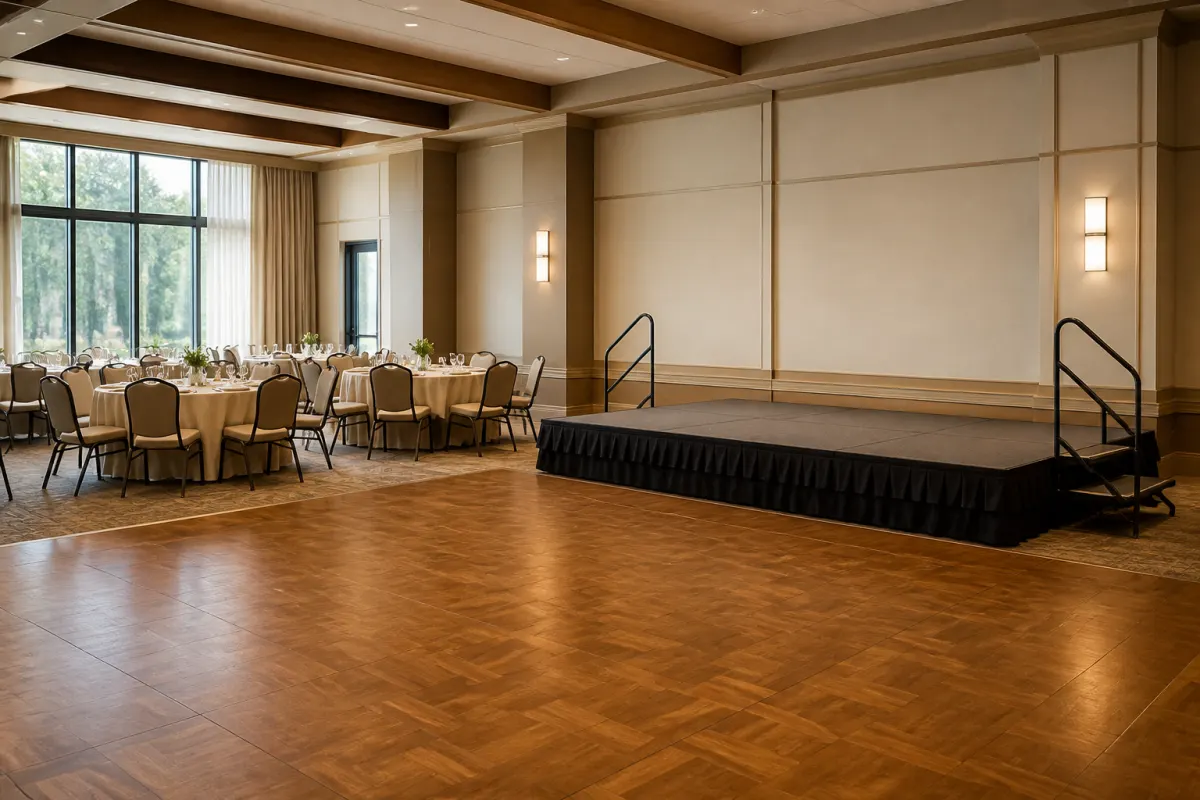
Modular stage decks lock together to build platforms of any size and adjust in height for head tables, dance floors, and presentations.
Choose adjustable-height legs so one stage system serves multiple event types.
Specify a non-slip deck surface and safety rails or skirting for any elevated platform, both for guest safety and for code compliance.
Confirm the load rating. Commercial stage decks carry published per-square-foot load ratings, and you want that documentation for both safety and insurance.
Staging is a long-term capital purchase. A quality modular system serves a venue for many years and pays for itself against repeated rental fees.
Transport, storage, and the real cost of turnover
This is where venues either save money or bleed it. Without proper carts, a ballroom turnover means staff carrying chairs by hand, which is slow, injury-prone, and the leading cause of furniture damage.
Chair dollies and caddies move 40 to 80 chairs at once.
Round and rectangular table carts move stacks of folded tables safely.
Stage and riser carts handle the heavy deck panels.
Budget transport at roughly ten to fifteen percent of the furniture order. It is not optional at ballroom volume. The carts pay for themselves in reduced labor and dramatically lower breakage.
Minimums, volume pricing, and customization
Ballroom furniture is bought in volume, so per-unit prices fall as quantity rises. Meaningful price breaks typically begin at 50 units and step down again at 100, 250, and 500-plus. Customization, frame finish, upholstery color, and table edge, is available and holds the same minimums as standard orders. Custom finishes let a venue match furniture to its brand or ballroom palette.
Order chairs, tables, staging, and carts on one purchase order. Consolidating improves pricing, simplifies freight, and ensures everything works together as a system on day one.
Lead times and planning
Stocked items ship faster. Custom finishes and large factory-direct quantities run 10 to 14 weeks. For a new ballroom or a full refresh, order at least 14 weeks ahead of your first booked event. Furniture ordered early sits safely on its carts. A booked event with no chairs is a problem that money cannot fix at the last minute.
The bottom line
Spec the ballroom as a package: chairs, tables, staging, and transport, not chairs alone. Confirm welded frames, Wyzenbeek ratings, locking table legs, and rated stage decks before comparing prices. Budget ten to fifteen percent for carts. Push for volume breaks at 50, 100, and 250 units, and plan 14 weeks on custom orders.
Tell us your room dimensions, guest capacity, and event mix, and we'll build a complete ballroom package quote with the volume pricing your venue qualifies for.
Ballroom packages, market by market
Ballroom volume and event mix vary a lot by market, so we build local packages for hotels and venues in the busiest event cities. See our commercial furniture supplier directory by city for full coverage, or start with a market close to your venue: New York, Los Angeles, Chicago, Las Vegas, and Orlando.
Related reading: Banquet Furniture Cost Guide · Commercial Seating Buyer's Guide · How to Order Commercial Furniture in Bulk · Venue furniture: a complete guide for ballrooms and event spaces
Related reading
Our take
The package framing is the right backbone for this guide, and the transport section is where most buyers underspend. One lifecycle angle it does not cover: a ballroom's furniture is judged under bright, even lighting where any mismatch shows instantly, yet chairs and tables wear at different rates and get damaged individually. Ordering a modest matched buffer beyond the working count, and staggering replacement rather than running a set until it fails, keeps the room reading as one coherent set under those lights. A single visibly newer or differently faded chair in a head-table row is the kind of detail a wedding client notices in photographs.
The bottom line: The correct way to buy a ballroom is as a coordinated package of chairs, tables, staging, and transport. Add a small matched buffer of the highest-volume pieces so mid-season damage swaps out invisibly under event lighting.