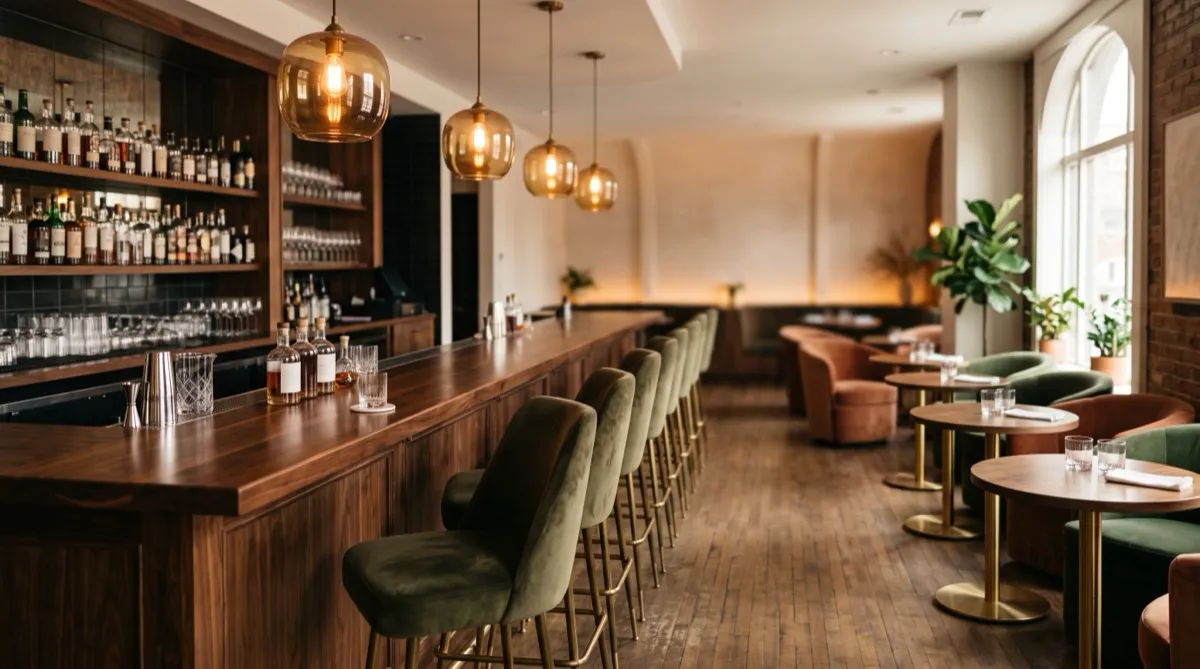
Bar furniture needs to suit the actual commercial use, cleaning, movement and exposure of the venue. A retail or commercial label alone cannot establish whether it fails in a season or lasts for years. Compare documented model performance, permitted use and maintenance requirements before ordering.
Here's exactly what to buy, what to avoid, and how to source it.
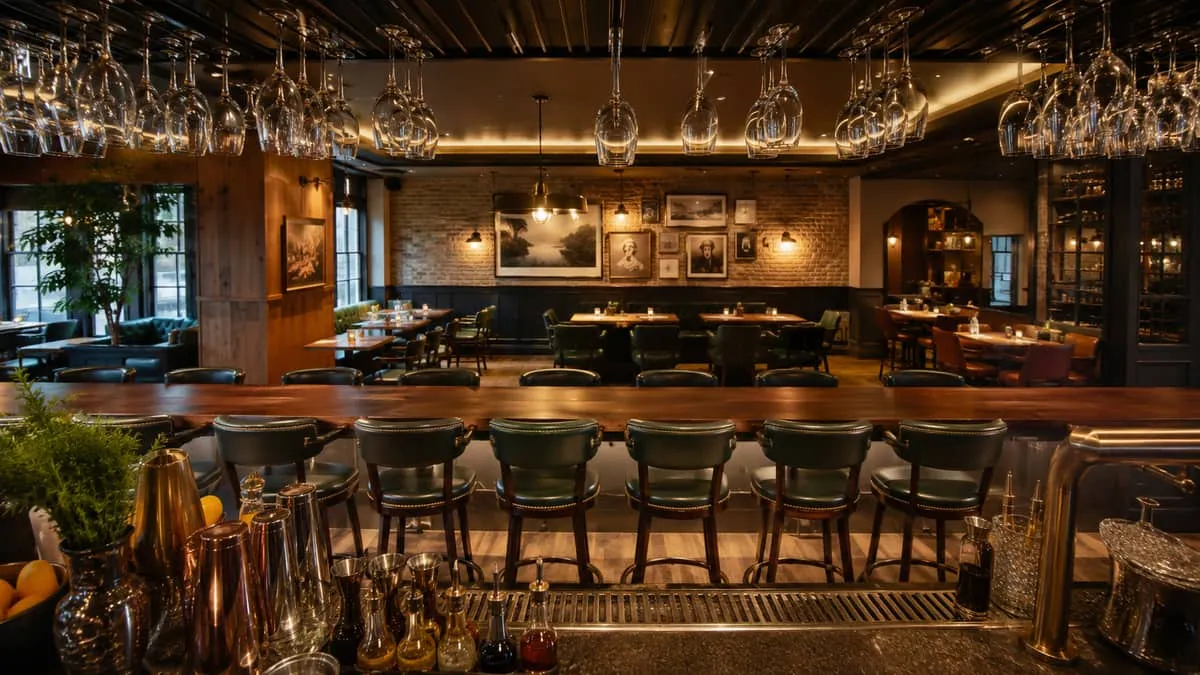
What bar furniture needs to survive
Think through what your furniture goes through in a single night.
Alcohol, beer, soda, and juice spill on every surface multiple times per service. Guests lean on barstools, stand on footrests, put their full weight on table edges while talking. Furniture shifts constantly as groups form, change, and leave throughout the evening. And at the end of every night, commercial cleaning products get applied to everything.
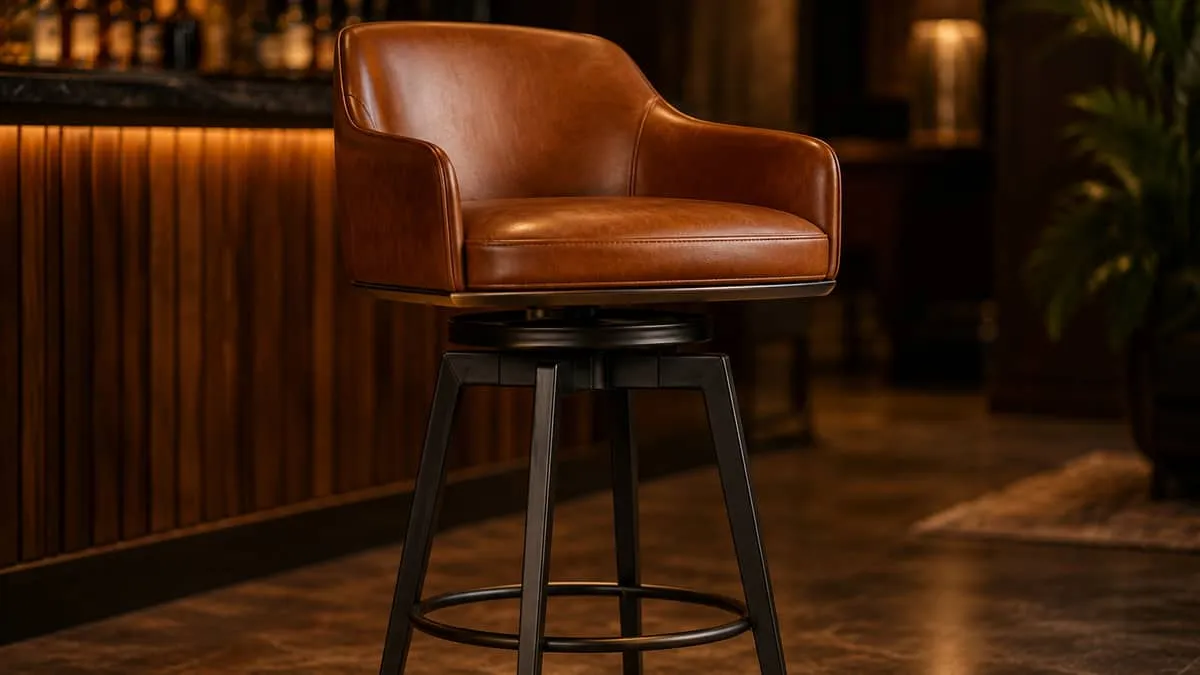
The 6 to 12-month retail and 7 to 10-year commercial figures are hypothetical comparison periods, not verified service-life forecasts. Use observed maintenance and replacement records for the actual models when comparing total ownership cost. Selection and inspection still need to address the bar's real loading, cleaning and handling conditions.
The essential pieces for any bar
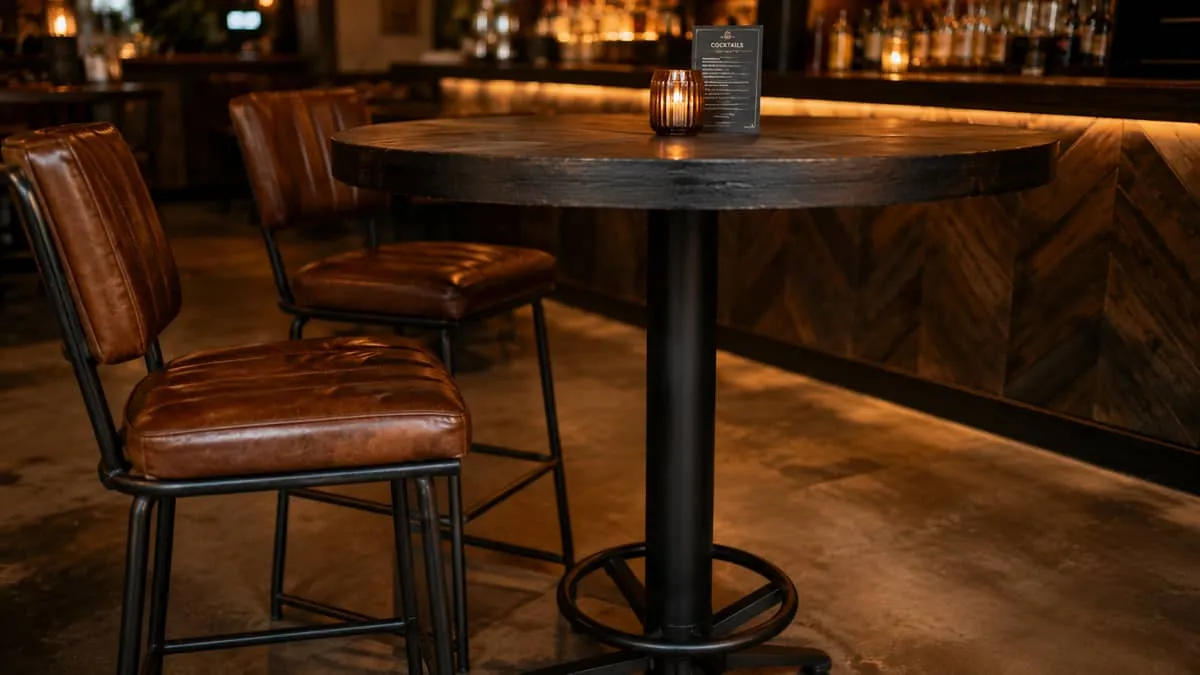
Barstools need documented frame, joint and footrest performance for the intended use. Welded, bolted and other assemblies must be judged as tested models, not by a blanket ban on fasteners. Check permitted loads, replaceable parts and cleaning compatibility. A 28 to 30-inch seat under a 42-inch top gives a top-to-seat difference of 12 to 14 inches; measure the underside and test actual thigh clearance before approving that pairing.
High-top tables need a manufacturer-approved top/base assembly for the intended height, loads and venue. Heavy cast iron, steel or another material alone does not establish resistance to leaning or tipping. Compare exact stability and care documents for laminate, solid surface or properly specified wood; no top material is automatically suitable for every bar.
Lounge seating needs upholstery chosen for the actual food, drink and cleaning exposure. The 50,000 Wyzenbeek figure is an example abrasion result, not a universal lifespan requirement; ACT's abrasion guidance explains the limit. Confirm the selected fabric or vinyl's care instructions, including any velvet option.
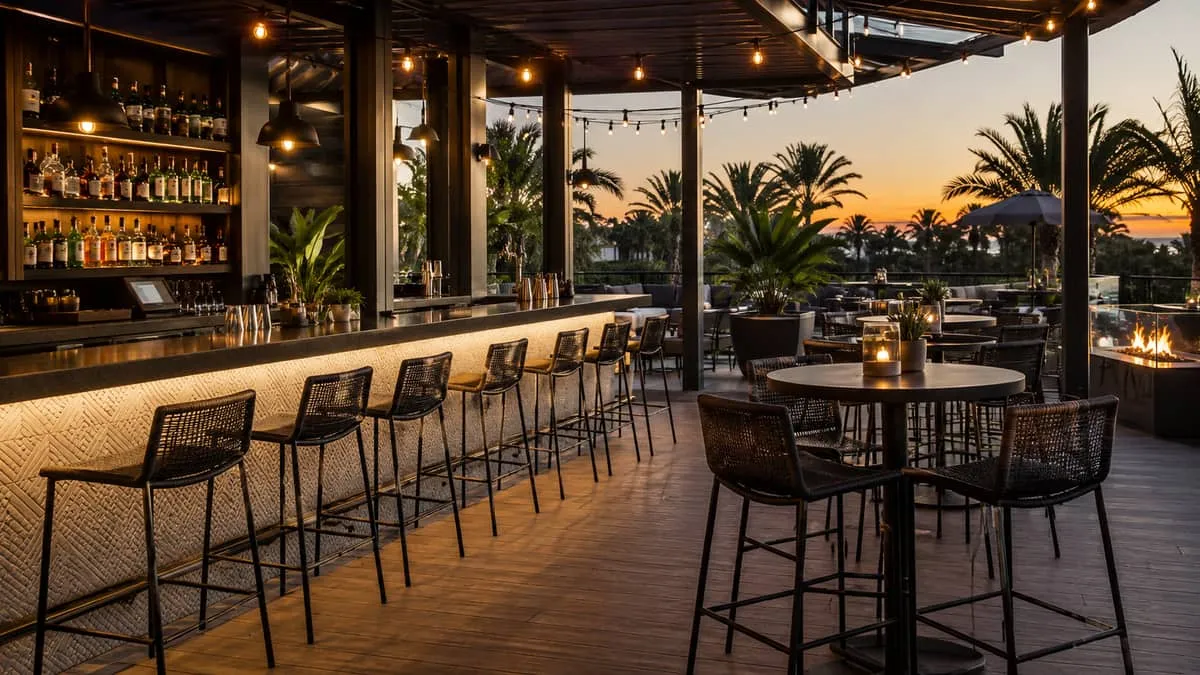
Outdoor seating needs the exact model's permitted commercial exposure, coating/care limits and maker-approved storage or stacking. Aluminum does not develop iron rust, but the complete assembly can still corrode or weather; a powder-coat label does not establish UV immunity.
What to avoid
Retail barstools from any seller. Check the exact model's permitted commercial use, joint construction, load documentation, upholstery and warranty. A retail channel does not establish a months-to-failure forecast. Compare the actual delivered price and maintenance requirements with the proposed commercial model.
Wood tops at the bar. Obtain the selected finish's beverage-contact and cleaning instructions and budget its actual maintenance. Do not rule out every wood assembly or assume laminate/solid surface is immune to staining or damage.
Unverified top/base pairings. Obtain the maker's approved assembly and use limits. A heavy cast-iron base does not by itself prevent tipping, and aluminum is not limited to outdoor use. Confirm actual loads and installation before approval.
Upholstery without care evidence. Compare the exact textile or coated material against the venue's food, drink and named cleaners. A fabric or vinyl label alone does not establish odor, staining or maintenance performance.
Zones, seating, and the floor plan
Most bars have distinct zones with different furniture requirements.
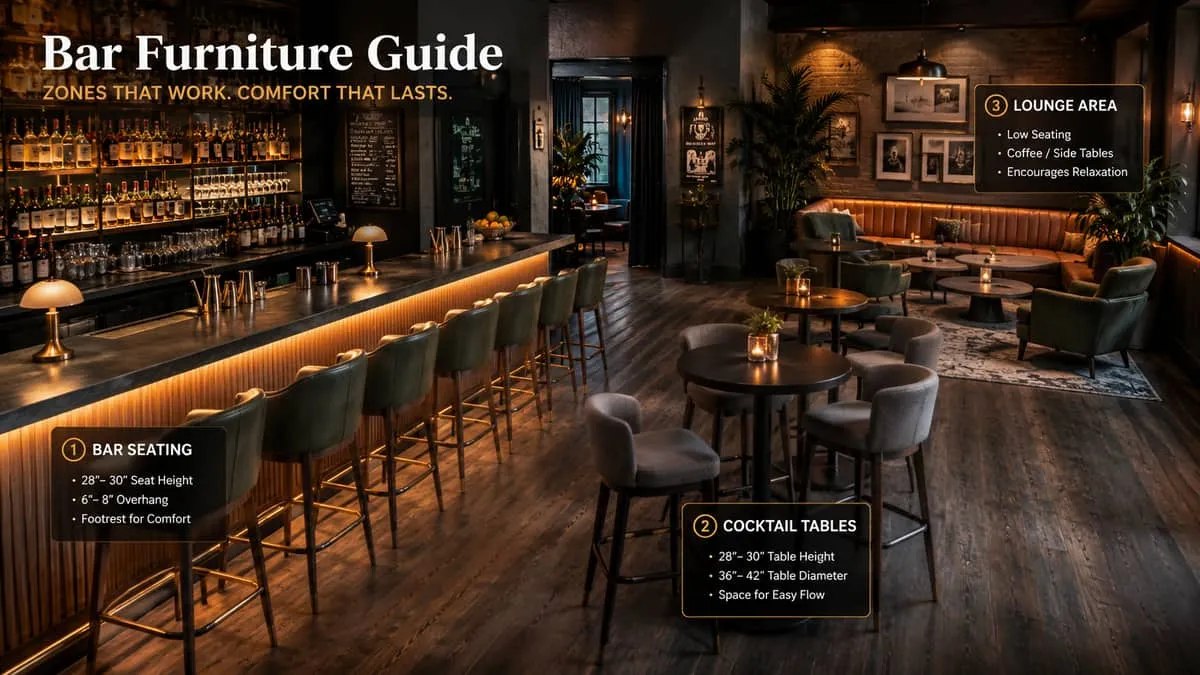
The bar: measure the actual seat, top underside/apron and footrest. A 10 to 12-inch gap is a starting comfort example, not a fit guarantee for every stool. Obtain frame/footrest and seat-care documents for the chosen model.
High-top or cocktail table area: high-top tables with stools or without. Standing areas with small cocktail tables. More casual and flexible than the bar itself.
Lounge: if you have a dedicated lounge section, this is where you can invest in more comfortable and visually premium seating. Lower furniture, performance fabric or leather, lower tables.
Patio or outdoor: if applicable, outdoor-rated aluminum frames and all-weather spec.
Spec each zone separately. The right choice at the bar is different from the right choice in the lounge.
Nightclub and lounge furniture
Commercial nightclub furniture has a different job than a neighborhood bar. The room runs late, the crowd is denser, and the seating has to look premium under low light while taking the same physical abuse as any high-volume bar. That combination is where a lot of venues overspend on the wrong pieces.
For a nightclub or late-night lounge, compare the exact banquette upholstery's beverage and cleaning compatibility, the approved lounge/table stability documents and any modular reset arrangement. Marine-grade vinyl or a weighted base alone does not establish spill immunity, resistance to crowd leaning or a months-to-failure forecast for alternatives. Test samples and the staff reset under the intended operating conditions.
Use the club's actual load, care and operating requirements to evaluate the selected assemblies. Prioritize zones from observed guest use and the design brief; no evidence here establishes that VIP guests universally spend most or that furniture style causes a higher check.
Sourcing, minimums, and lead times
Confirm country of manufacture for the selected model rather than assuming every bar product is made in China. Treat the 10 to 14 week custom window as a provisional planning scenario and obtain written stock, approval, production and delivery dates.
Include custom finish, upholstery or dimension requests in the brief with reference images. Independent suppliers must confirm whether they can make or source the exact option, its testing, minimum quantity, cost and dates; CFD does not manufacture the furniture.
Treat 20 units and a 14-week ordering allowance as provisional minimum-quantity and schedule inputs. Confirm actual carton/pallet or production minimums and the dated delivery plan before approving an opening date.
The bottom line
Use frame, footrest, seat, table-base and upholstery specifications to compare the exact models. Confirm approved use, replacement parts, cleaning and warranty terms, then keep an inspection record after installation; these construction labels alone do not establish years of service.
Bar and lounge furniture, city by city
Use the city planning directory to prepare location and delivery requirements, including New York, Los Angeles, Chicago, Miami or Las Vegas. These pages do not establish a local CFD showroom or supplier stock. Independent suppliers confirm service areas and purchase terms directly.
Related reading: Commercial Barstool Buying Guide · How to Choose the Right Barstool Height · How to Furnish a Bar or Nightclub
Divide a nightclub by operating mode
Treat fixed bar seating and a floor that changes during the night as separate furniture zones. Check stability where guests lean on tables; check carrying weight and storage where staff clear space for dancing or rebuild a VIP area.
For lounge seating, inspect seams, exposed edges, replaceable glides, and the cleaning instructions. Test the actual reset with staff before approving a large order. Furniture that works in the opening layout must also have somewhere to go when the room changes.