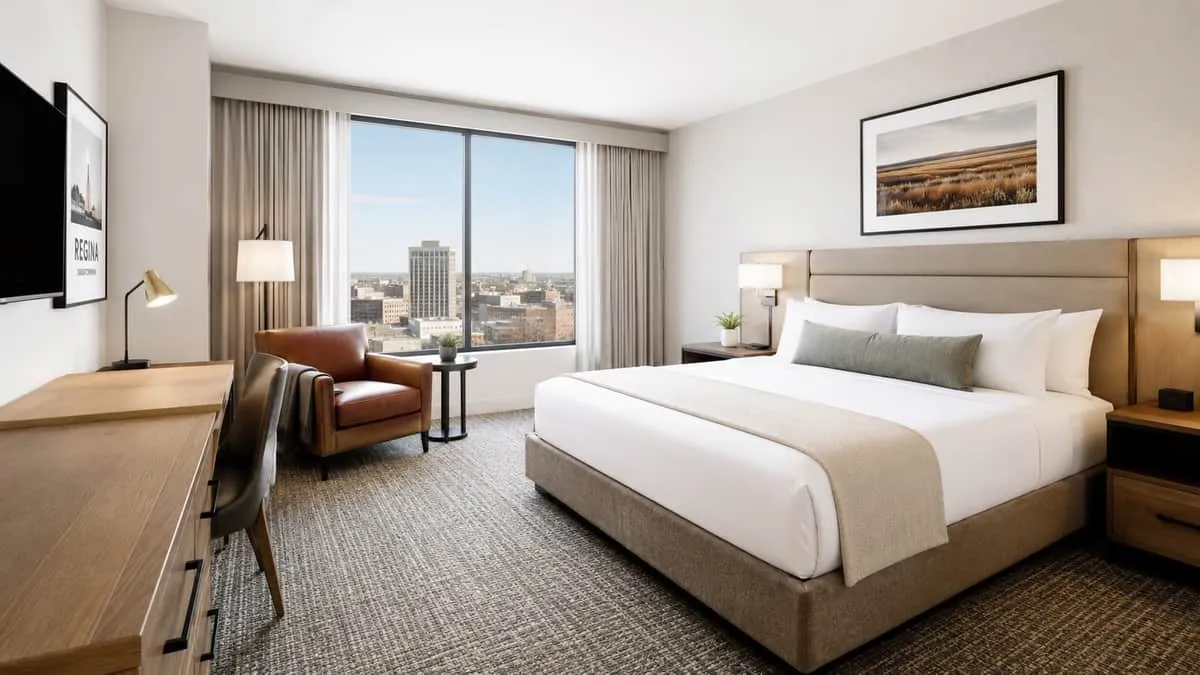
Regina's hospitality market plays by its own rules. You've got a civil service base that fills rooms Monday through Thursday, Roughriders weekends that push occupancy to the ceiling, and a corporate dining scene anchored by energy and agriculture clients who expect something a cut above chain-hotel standard. If you're running a boutique or independent property anywhere from downtown near Victoria Avenue to the Warehouse District, you're threading a real needle: guests want character and polish, your budget is tighter than a Marriott's, and most furniture suppliers honestly aren't set up to deal with orders in the 20 to 60 piece range.
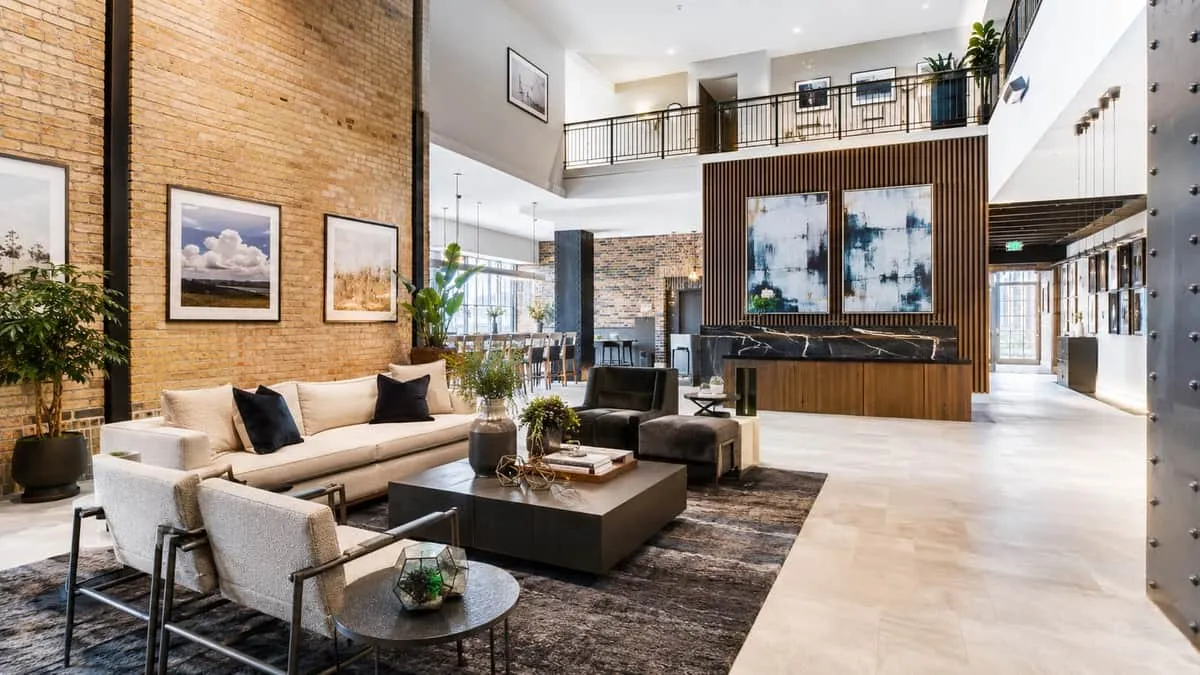
Why Boutique Hotels Need a Different Furniture Strategy
Chain hotels get leverage through volume. A 300-room Hilton Garden Inn orders the same desk chair across five properties and gets pricing that reflects it. When you're sourcing boutique hotel furniture in Regina for a 35-room independent, you don't have that leverage, and most big hospitality suppliers know it.
The problem isn't just cost, though. It's also fit. Large contract furniture programs are designed for uniformity across hundreds of SKUs. Boutique properties need pieces that work together visually, reflect a specific design story, and still meet commercial durability standards. A velvet club chair that photographs beautifully but fails a 100,000-cycle rub test will be threadbare inside two football seasons. That's not a design problem, it's a sourcing problem, and it's entirely avoidable.
Your strategy needs to combine a few anchoring pieces from contract-grade hospitality lines with carefully selected accent furniture from commercial vendors who actually understand load ratings and warranty terms. Mixing tiers is fine. Mixing contract-grade with residential-grade without knowing which is which will cost you on replacements within 18 months. That's a lesson a lot of boutique operators learn the hard way.
Design Cohesion in a Limited-Inventory Environment
One of the most consistent challenges with boutique hotel furniture projects in Regina is that you often can't get 30 identical units of an accent chair. The supplier is out, the lead time is 16 weeks, or the piece has been discontinued. This is where design cohesion becomes a discipline rather than an afterthought.
Start with a material palette, not a product list. If you commit to warm walnut tones, aged brass hardware, and a neutral upholstery base with one or two accent textiles, you have real room to swap specific pieces without losing visual coherence. A guest room with a walnut bed frame from one supplier and a walnut-finish nightstand from another will read as intentional. A room with mismatched finishes from unplanned substitutions will read as patchwork. Guests notice, even if they can't articulate why.
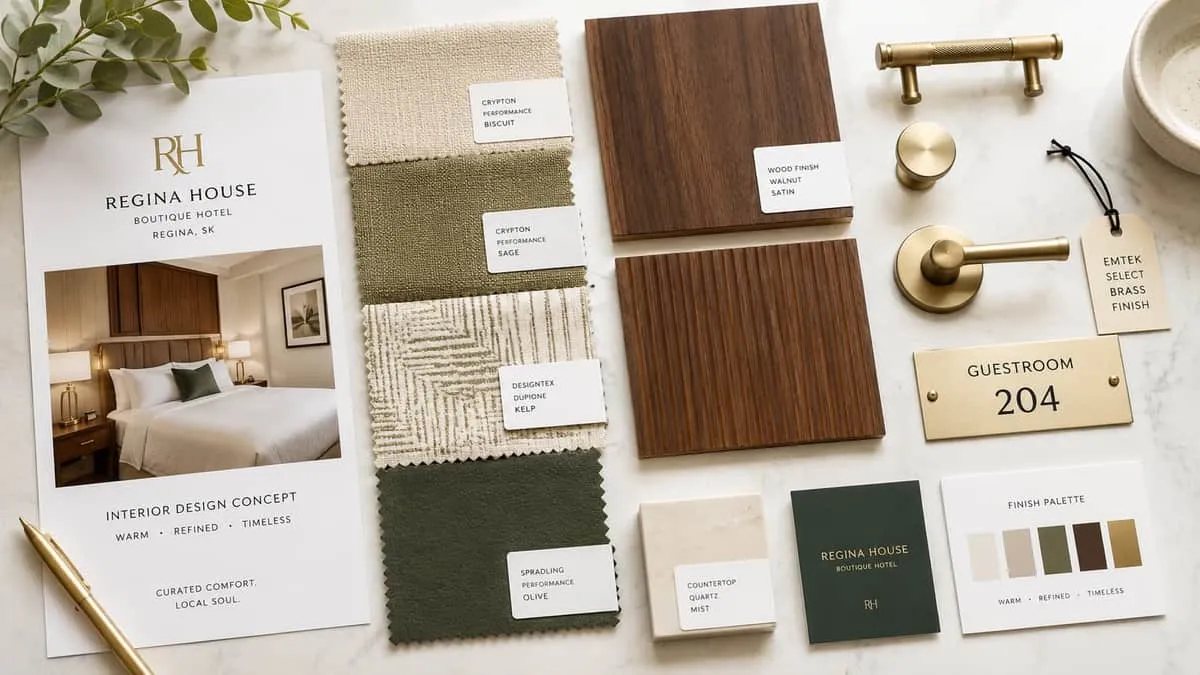
Custom upholstery is worth seriously considering for your signature pieces, particularly lobby seating and restaurant chairs if you run a food-and-beverage operation. Saskatchewan has a handful of regional upholstery workrooms that will take on commercial projects at quantities national vendors won't touch. You get something that fits your design brief exactly, and you're not competing with a hotel in Toronto for the same lead time slot. That regional advantage is genuinely underused by Regina operators.
Contract Grade Requirements You Can't Skip
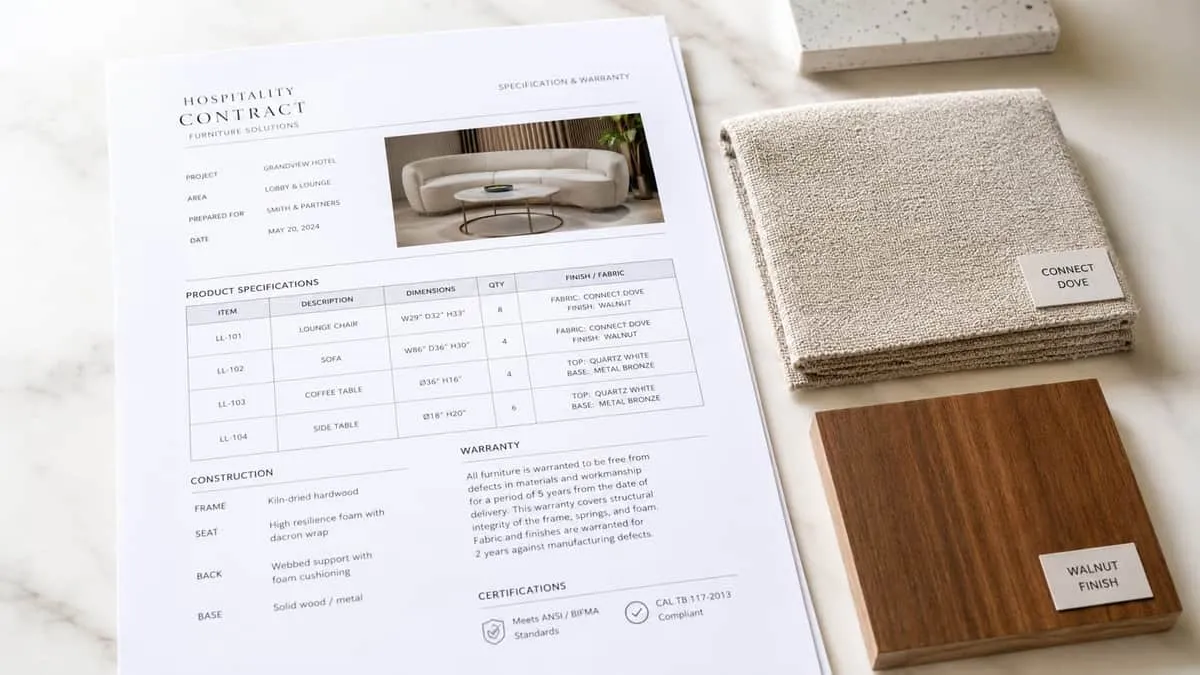
Every piece going into a commercial hospitality space needs to meet certain minimums, regardless of how good it looks in a supplier's lookbook. For upholstered seating, rub count matters: 50,000 double rubs is the floor for guest rooms, 100,000 for lobbies and dining areas. For casegoods like dressers and desks, you want furniture built with commercial joinery, not furniture-board construction that swells the moment a guest leaves a wet towel on it.
Fire retardancy is the other non-negotiable. Upholstered pieces in commercial hospitality need to meet California TB117-2013 at minimum, and depending on your municipality's requirements, you may need to hit higher standards. Regina follows Saskatchewan building code, which references national standards, so confirm the specifics with your contractor before you finalize any upholstery order. Don't assume your supplier has already sorted this.
When you're evaluating suppliers for a boutique hotel furniture project in Regina, ask directly: do you have a hospitality division, or are you a residential showroom with a commercial price list? The difference matters more than most people expect. A supplier with real hospitality experience will have spec sheets, warranty terms written for commercial use, and the ability to have an intelligent conversation about code compliance. A residential operation repurposed as commercial will hand you a COF certificate and hope you don't ask follow-up questions.
Finding Suppliers Who Work at Boutique Scale
National hospitality furniture programs often carry minimum order values that simply price out smaller properties. If a supplier requires a $50,000 minimum, a 30-room boutique with a $120,000 total FF&E budget is already spending nearly half of it before they've bought a single mattress or light fixture.
The practical workaround is to combine supplier types. Use a national contract furniture dealer for your anchoring pieces, specifically beds, desks, and case goods where consistency matters most and quantities are high enough to meet minimums. Then source accent seating, artwork, and decorative elements through commercial-grade secondary vendors or regional suppliers who are comfortable working at smaller volumes.
Some Toronto and Vancouver-based hospitality furniture dealers have started taking western Canada projects more seriously as Regina's corporate hotel market has matured. If you're planning a renovation or a new build near Wascana Centre or in the growing south Regina commercial corridor, get quotes from two or three dealers who have completed boutique or independent projects in the 25-to-75 room range. Ask for references from finished projects, not renderings. Anyone can make a rendering look good.
Regina's boutique and independent hotel market is small enough that reputation travels fast among operators. The suppliers who deliver on time, substitute intelligently when a piece is unavailable, and stand behind their warranty claims are the ones that keep getting recommended. Finding them before you're mid-project and short 12 chairs is the whole game.
If you're planning a boutique hotel furniture project in Regina and want to talk through sourcing options, lead times, or contract-grade requirements for your specific property, get in touch. We work with independent and boutique hospitality clients across Saskatchewan and can connect you with suppliers who actually understand smaller-scale commercial projects.
For Regina properties comparing boutique hotel furniture options, project-specific pricing tells you more than any published range. Request a quote and we will scope it to your space and volume.
Related reading
- What is contract furniture
- Commercial furniture vs retail
- Hospitality furniture supplier guide
- Boutique hotel lounge chairs
- Hotel sofas and loveseats
- Hotel headboards
Our take
The regional upholstery workrooms mentioned above change more than the initial sourcing math. They change the ownership model. A property within reach of a Saskatchewan workroom that takes commercial projects can plan on reupholstering its signature lobby and dining pieces mid-life instead of replacing them, which shifts the buying logic toward the best frames the project can manage, upholstered in whatever fabric fits today, with the expectation of a second act later. For a 30-room independent working at boutique scale, frames worth recovering are the difference between a refresh that takes a few weeks through a local workroom and a full procurement cycle through a national supplier's lead time queue.
The bottom line: Buy frames good enough to reupholster and keep a regional workroom relationship warm. At boutique scale, restoration beats replacement for the signature pieces.