
Regina's hospitality market has its own rhythm, and if you're new to it, here's what you need to know. It spikes when the Roughriders are home, fills up with government contractors during budget season, and sees steady corporate dining demand from the agriculture and energy sectors anchored downtown near Saskatchewan Drive. If you're opening or renovating a hotel or restaurant here, you're not dealing with Vancouver or Toronto. You're dealing with a mid-market city where budgets are practical, winters stretch timelines, and your furniture needs to work hard for years. Getting FF&E procurement Regina right starts with understanding that reality.
FF&E vs OS&E on a Regina Project
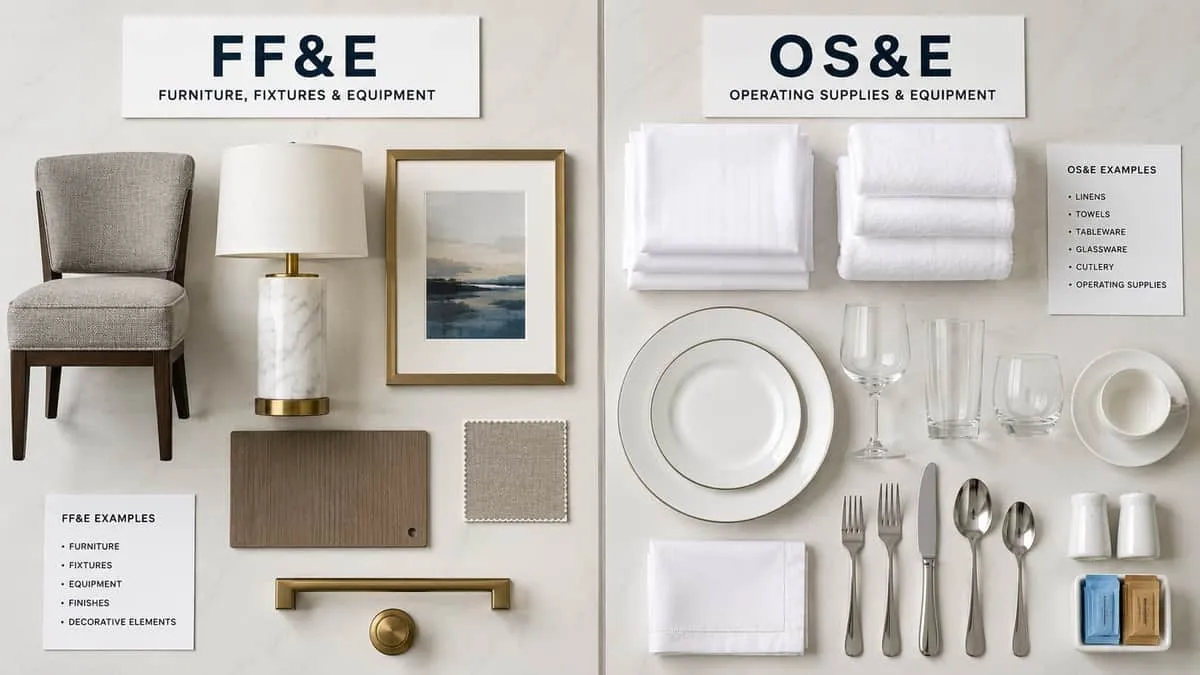
Before you start calling suppliers, get clear on what falls under FF&E and what doesn't. FF&E stands for furniture, fixtures, and equipment. This covers guestroom beds, lobby seating, restaurant chairs, dining tables, lighting fixtures, and case goods like dressers and nightstands. OS&E stands for operating supplies and equipment, which is everything that gets used up or replaced regularly: linens, tableware, cleaning supplies, kitchen smallwares.
The distinction matters because of how you track money and report assets. FF&E gets capitalized as a long-term asset. OS&E is treated as an operating expense. If you're working with a hotel flag or a franchise agreement, your brand standards will list both categories separately, and your procurement process needs to track them that way from day one.
For most Regina projects, whether you're outfitting a limited-service hotel near the airport or a corporate dining room downtown, FF&E procurement typically lands between 15 and 25 percent of your total project budget. That number shifts depending on whether you're doing a full gut renovation or just swapping out soft goods.
How the Procurement Timeline Actually Works
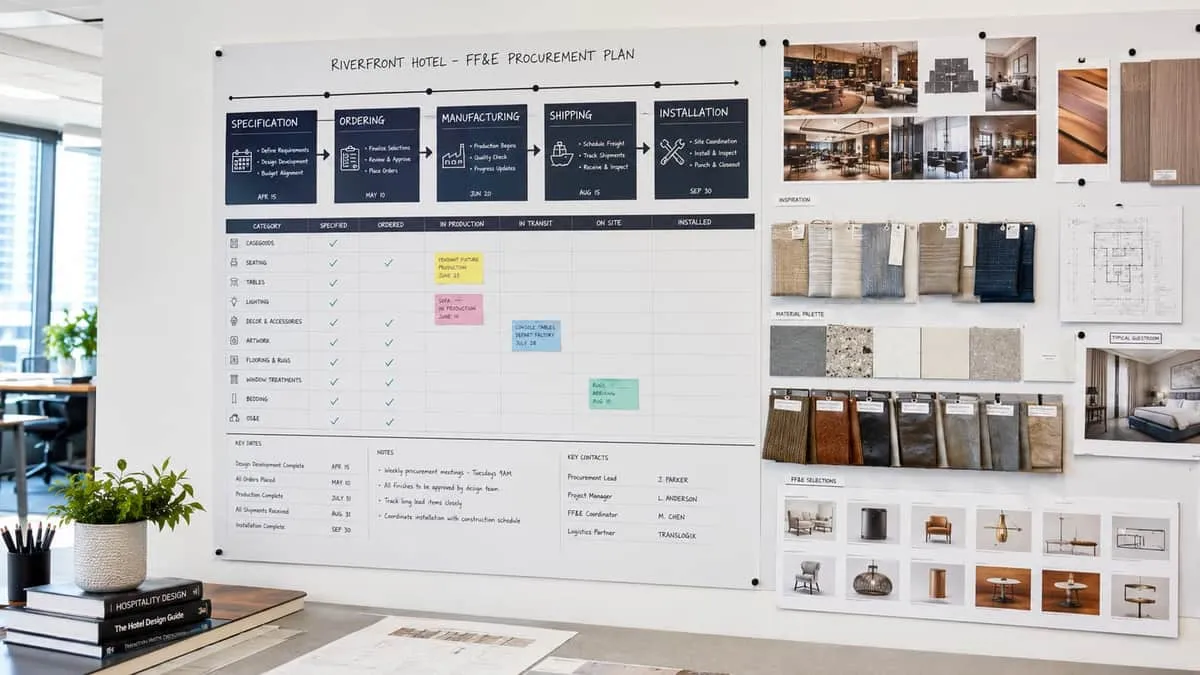
This is where Regina projects catch people off guard. FF&E procurement is not something you sort out in the final stretch. If you're targeting a specific opening or renovation completion date, you need to be placing orders six to nine months out, sometimes longer if you're going custom.
Here's how the timeline flows. Your interior designer or purchasing agent finalizes specifications, usually working from brand standards or a custom design package. Suppliers get contacted for quotes, samples get reviewed, and purchase orders go out. Then the product goes into manufacturing, which for contract furniture typically takes ten to sixteen weeks. After that, you're adding shipping time, customs clearance if product is coming from overseas, and local delivery and installation coordination.
In Regina, there's one more layer to account for: the city isn't a major freight hub. Most commercial furniture routes through Calgary or Winnipeg before it reaches Saskatchewan, which adds transit time and complexity. If you're working around a Roughriders home game opening or a government contract deadline, build buffer into your schedule and make sure your general contractor knows about it. Trades shouldn't be waiting on furniture to finish their work.
Working With Designers and Purchasing Agents
Some owners on smaller Regina projects try to manage FF&E procurement themselves, calling suppliers directly and coordinating their own deliveries. For a simple refresh, that can work. For a full fit-out or a brand-standard renovation, you're better off with a designer or purchasing agent who knows the commercial furniture supply chain.
A qualified interior designer brings trade pricing and supplier relationships to the table. They also catch specification mistakes before those mistakes become expensive: a fabric grade that's too light for a high-traffic lobby, a table height that doesn't match the chair you ordered separately, a fixture that's not rated for commercial use. Those errors cost real money to fix after the fact.
A purchasing agent, sometimes called an FF&E coordinator or project purchasing manager, handles the entire procurement lifecycle from purchase order through installation punchlist. They track lead times, manage freight claims when things arrive damaged, and coordinate the installation schedule with your contractor.
For Regina's government and corporate market, where interiors need to project reliability and professionalism without being flashy, having a professional manage your FF&E procurement tends to result in fewer surprises and a finished space that holds up to the city's standards.

Budget Breakdown: What You're Actually Paying For
When you get an FF&E budget estimate, it's almost never just the furniture price. You're also paying for freight, receiving and warehousing if product arrives before the space is ready, installation labor, and disposal of old furniture if this is a renovation.
For a typical limited-service hotel guestroom in Regina, FF&E costs per key often land between $4,000 and $8,000 depending on the spec level and whether you're working with a brand mandate or going independent. A corporate restaurant dining room might run $150 to $300 per seat when you account for chairs, tables, lighting, and ancillary pieces.
The Wascana Centre area and Regina's south end, where newer commercial and hospitality development has been active, tend to see higher spec requests from owners looking to attract government and professional clientele. The airport corridor and east end lean toward durable, value-driven specs built to handle higher turnover volume.
Whatever your budget, put a ten to fifteen percent contingency in there. Freight damage, discontinued fabrics, and lead time extensions are common enough in commercial furniture procurement that a contingency isn't optional, it's just good project management.

Getting FF&E procurement right in Regina comes down to planning earlier than feels necessary, working with people who know the commercial supply chain, and building a budget that accounts for the real costs, not just the sticker price on the furniture. Whether you're outfitting a new property or refreshing an existing one, the process rewards specificity and punishes last-minute decisions. Start with clear specs, build your timeline backward from your opening date, and treat procurement as a core part of your construction schedule, not an afterthought.
If you want to go deeper on how contract furniture differs from what you'd find at a retail showroom, or how to evaluate hospitality furniture suppliers for a Saskatchewan project, the articles below are a good next step.
If you are sourcing FF&E for your Regina property, the fastest way to real numbers is to tell us what you need. Request a quote with your quantities and timeline.