
Choosing furniture for a restaurant or office requires a comparison between actual products. A brand name or sales channel cannot tell you whether a chair fits your table, a desk suits office use or a finish tolerates your cleaning routine.
IKEA for Business offers furniture for commercial spaces. Its range also includes residential products, and IKEA tells buyers to check the individual certifications and tests for their intended use. Apply that same model-level check to any proposed contract furniture.
How IKEA furniture is built
Construction varies across the range. Read the materials, dimensions, intended use and supporting documents for the product being quoted instead of assuming all IKEA furniture has one frame or joint type.
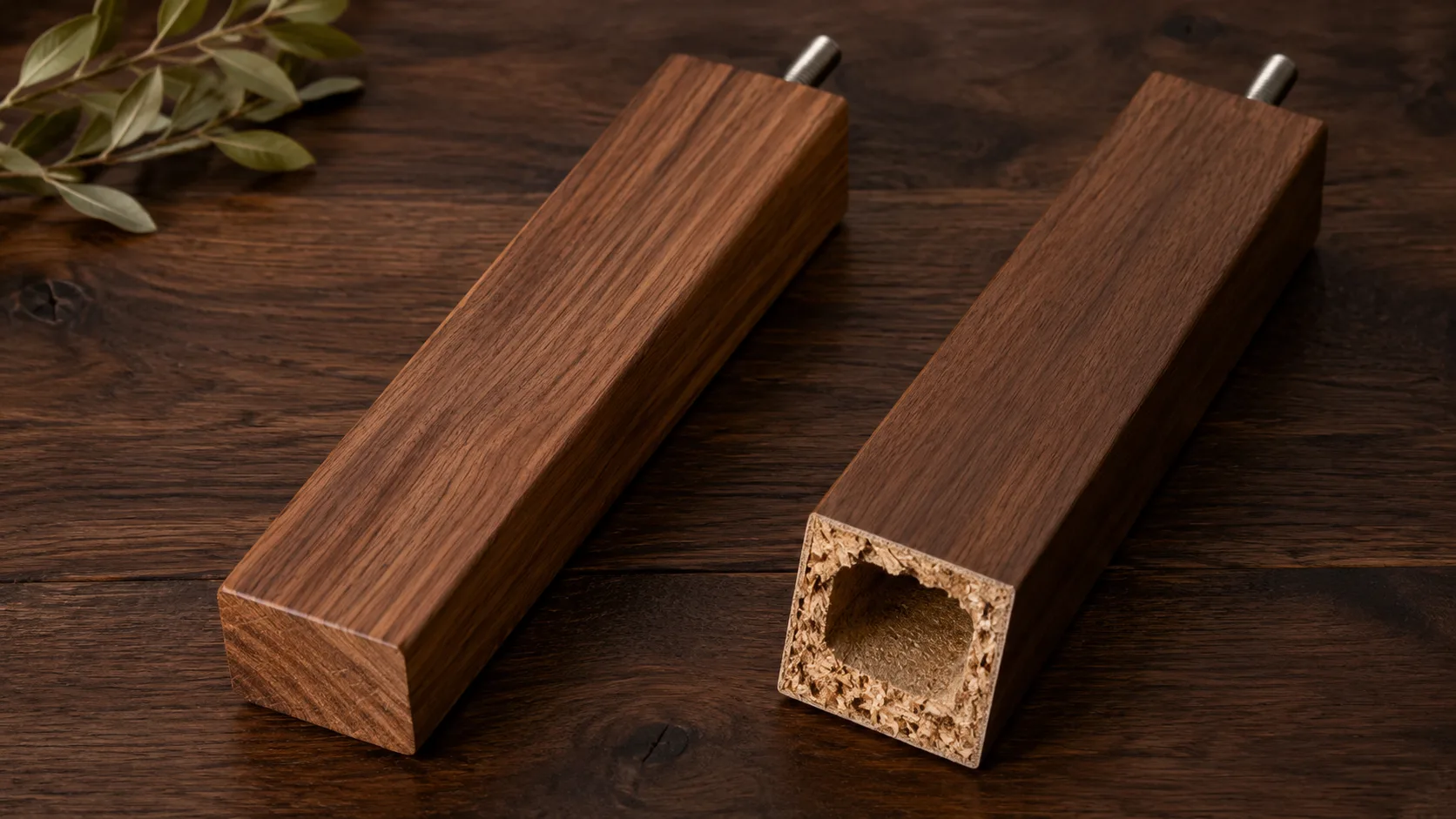
For example, IKEA identifies the IDÅSEN desk, article 992.810.39 as contract grade and developed and tested according to ANSI/BIFMA standards. Its listed construction includes a steel underframe and an engineered tabletop with ash veneer. This is evidence about that desk, not proof that every IKEA product suits every workplace.
For each alternative, ask for the exact model's intended-use statement, relevant test documentation, care instructions and warranty. Check whether the quoted finish, upholstery or size is the configuration those documents cover. The contract furniture guide explains how to organize that verification.
What happens in year one
Plan an inspection and maintenance routine for either purchase. Check joints and fasteners, glides, upholstery seams, tabletop edges and moving parts against the maker's instructions. Record problems by model and location so a repeated fault can be investigated.

Cleaning is part of the specification. Supply the actual cleaning products and frequency, then obtain the approved method for the selected fabric and finish. A material name alone does not authorize bleach or establish resistance to every spill or chemical.
There is no verified first-year failure schedule for the products compared here. Use documented condition, repair costs and your own operating records when deciding whether a piece should remain in service.
The cost comparison over 5 years
A useful comparison separates acquisition cost from assumptions about replacement. Retain the same scope for delivery, assembly, repair parts and removal when comparing quotes.
For an arithmetic example, 40 chairs at an assumed $80 each cost $3,200 initially. If that complete set is replaced at months 18, 36 and 54 at the same assumed price, the three replacement purchases add $9,600. Including the initial purchase, the five-year chair spend is $12,800 before delivery, labor or other costs. Those replacement dates and prices are scenario inputs, not IKEA product prices or a forecast of failure.
At an assumed $150 to $200 per chair, 40 chairs cost $6,000 to $8,000 initially. If no replacement is needed within the same period, that remains the chair-only spend. If repairs or replacement are needed, add them. A contract label cannot establish the no-replacement assumption.
Run more than one replacement scenario if service life is unknown. Include staff time, temporary seating and disruption where they are relevant, using your own costs. Compare the result with the actual quote and warranty rather than treating the lowest initial price or a higher price as proof of long-term value.
The foam difference
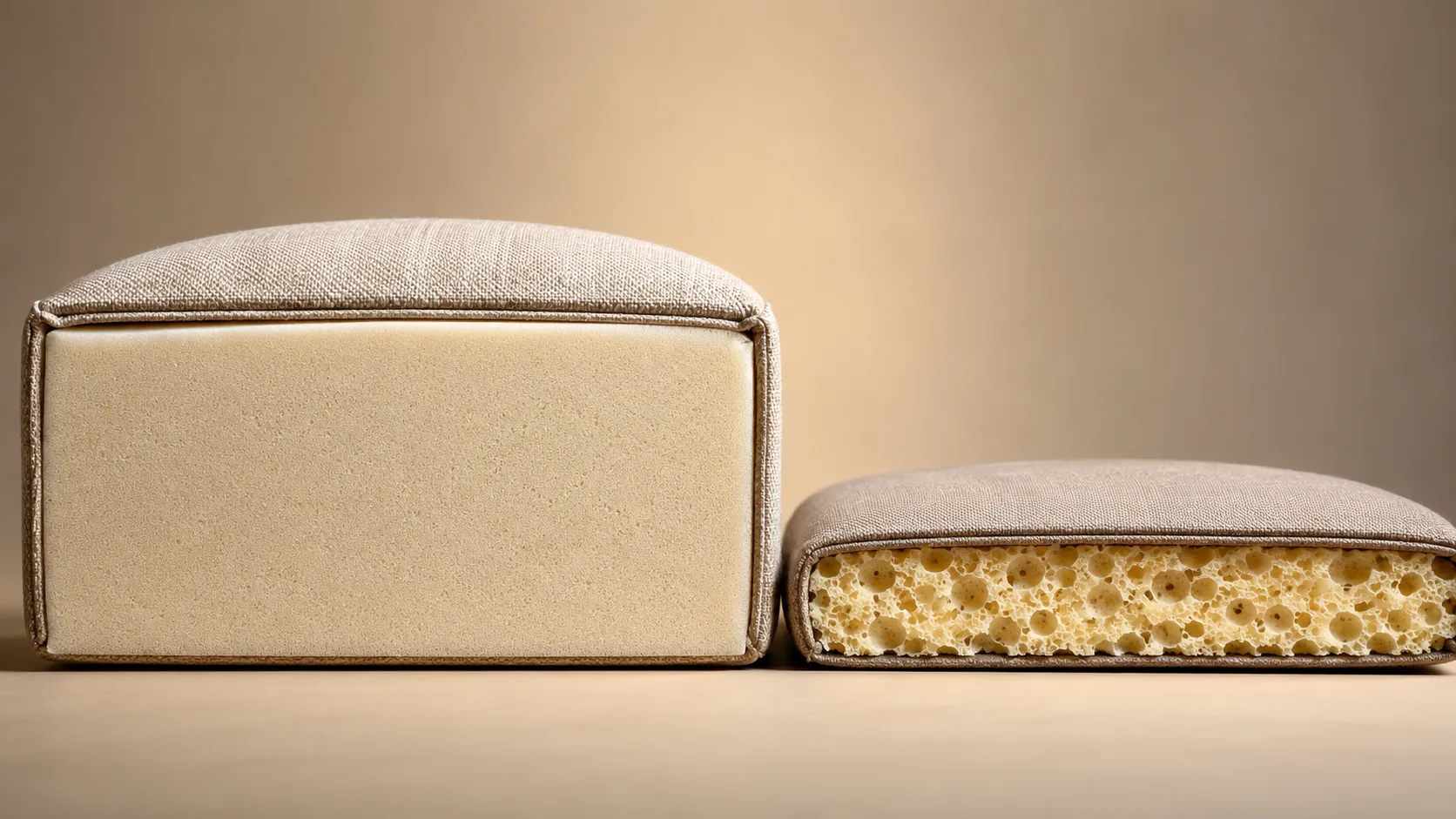
For upholstered seating, ask about cushion density, firmness, thickness, support and fatigue-test information. These are separate properties.
The Polyurethane Foam Association explains that density is mass per volume, commonly expressed in pounds per cubic foot, while indentation force deflection measures firmness. Firmness is independent of density: a firm cushion is not automatically a high-density cushion or a longer-lasting one.

Compare a sample in the intended sitting position, then keep its cushion and upholstery specification with the order. For textile care and test questions, use the commercial upholstery guide alongside the exact maker's documents.
When retail furniture actually makes sense
A readily available product can suit a temporary installation, a small office or a larger project when its intended use, dimensions and support match the job. Treat a short installation period as a schedule input, not a reason to skip fit or safety requirements.
Cash flow may favor a smaller initial purchase or phased delivery. Compare that plan with a complete package using the same quantities and included services. Confirm current availability and whether matching additions can be ordered; a familiar name does not guarantee an unchanged model or finish.

For public-facing seating, keep the documented use, relevant performance evidence and approved care method beside the selected model. The same process applies whether the product comes from IKEA, another retailer, a dealer or a manufacturer.
The bottom line
Shortlist products that fit the room and documented use, compare the complete delivered scope, and test the replacement assumptions in the budget. The better purchase is the one supported by those checks for your project.
Related reading: How Long Does Commercial Furniture Last · Contract vs Residential Furniture · Commercial Upholstery Fabric Guide