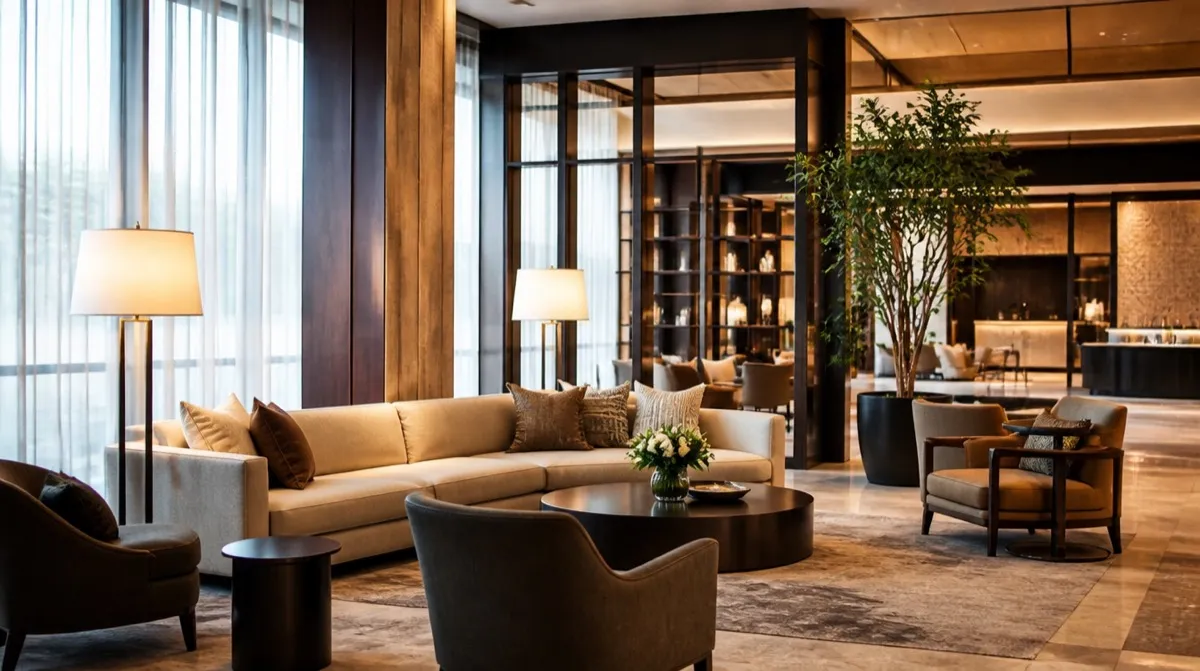
Commercial hospitality furniture is a different animal from anything you would buy for a home or a standard office. It has to survive constant public use, wipe clean after spills, hold up to daily rearranging, and still look good enough to shape how a guest feels about your property. For procurement teams outfitting a hotel, restaurant, bar, or event venue, the real challenge is not finding one good chair. It is sourcing a coordinated package of seating, tables, casegoods, and outdoor pieces that all meet commercial specs and look like they belong together. This guide covers the categories, the specs that matter, and how to source a whole property as one program.
The categories of commercial hospitality furniture
Almost everything you will spec falls into four broad categories:
- Seating. Banquet and stacking chairs, dining chairs, barstools, lounge chairs, booths, and benches.
- Tables. Dining tables, banquet rounds and rectangles, cocktail and highboy tables, and occasional tables.
- Casegoods. Headboards, nightstands, dressers, credenzas, desks, and reception millwork.
- Outdoor. Patio and poolside seating and tables built to survive sun, moisture, and temperature swings.
Most properties draw from all four. A hotel with a restaurant, a bar, a ballroom, and a pool touches every category, which is exactly why coordination matters so much.
Seating specs that matter
For seating, record frame tests, textile type and care, and cushion density, firmness, and fatigue data. The ACT guidance distinguishes high-traffic woven or knit abrasion criteria from coated fabrics; 50,000 is not a universal threshold for every textile or a service-life forecast. Likewise, a 35 to 40 ILD cushion assumption describes firmness, not density or a promise against flattening, as the Polyurethane Foam Association explains. Compare the complete selected assembly.
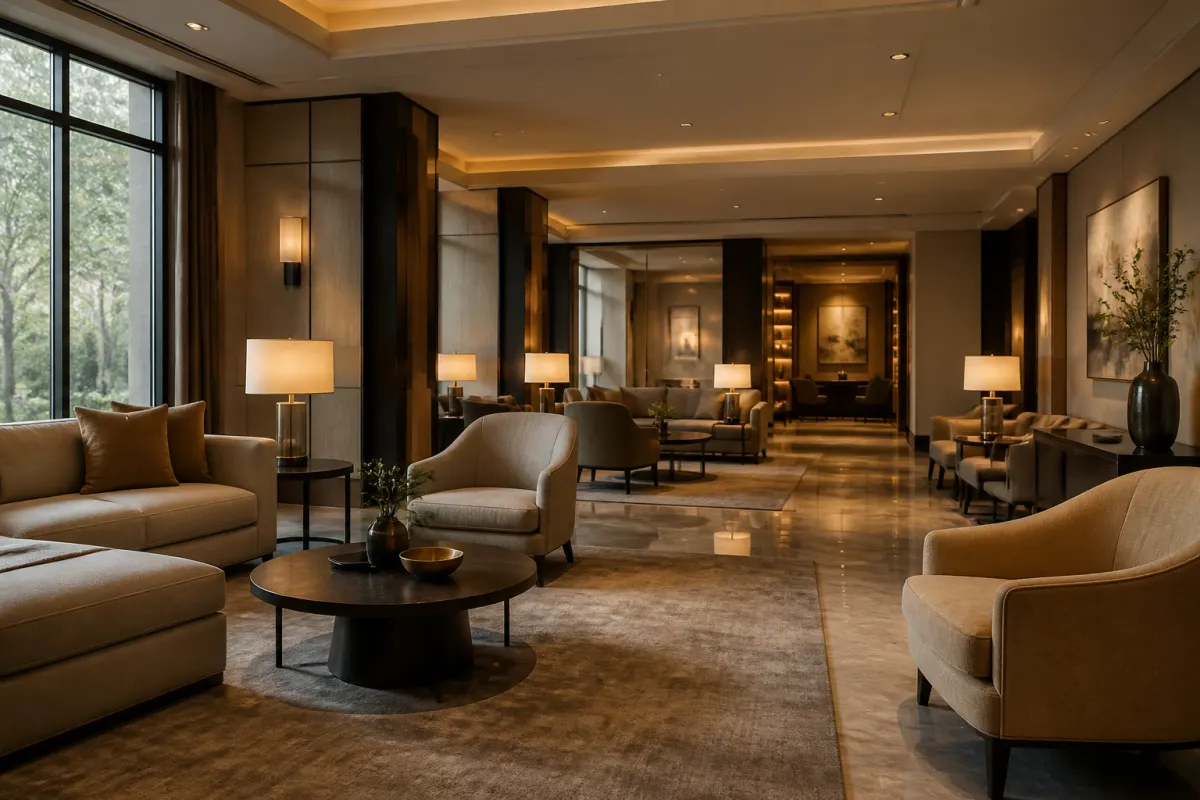
For an illustrative pre-quote budget, the article uses the following per-unit assumptions before freight; they are not verified current supplier prices. The assumed bands are steel-frame stacking banquet chairs at $45 to $90, aluminum $70 to $130, resin Chiavari chairs $40 to $80, wood or aluminum Chiavari $90 to $180, and folding chairs $20 to $50. The illustrative barstool band is $110 to $320, and the lounge-chair band is $300 to $900; obtain matched-specification quotes for the actual frame and fabric.
Table specs that matter
Hospitality tables have to survive being wiped down hundreds of times, bumped by chairs and carts, and in the case of event tables, folded and stored constantly. Look for commercial-grade tops that resist heat, moisture, and scratching, along with sturdy bases and, for event tables, reliable folding mechanisms and edge protection.
The illustrative table budget inputs are round 60-inch folding banquet tables at $60 to $130, rectangular 6 to 8-foot tables $50 to $120, and cocktail or highboy tables $70 to $150. As with seating, the base and mechanism matter as much as the top, because a table that fails at the hinge is out of service regardless of how nice the surface looks.
Casegoods and outdoor
Compare the exact casegoods core, joints, edge details, finish, drawer loads and cycle tests, care, and replacement hardware. Solid hardwood, engineered wood and particleboard are material descriptions rather than a verified durability ranking; obtain the selected assembly's documents.
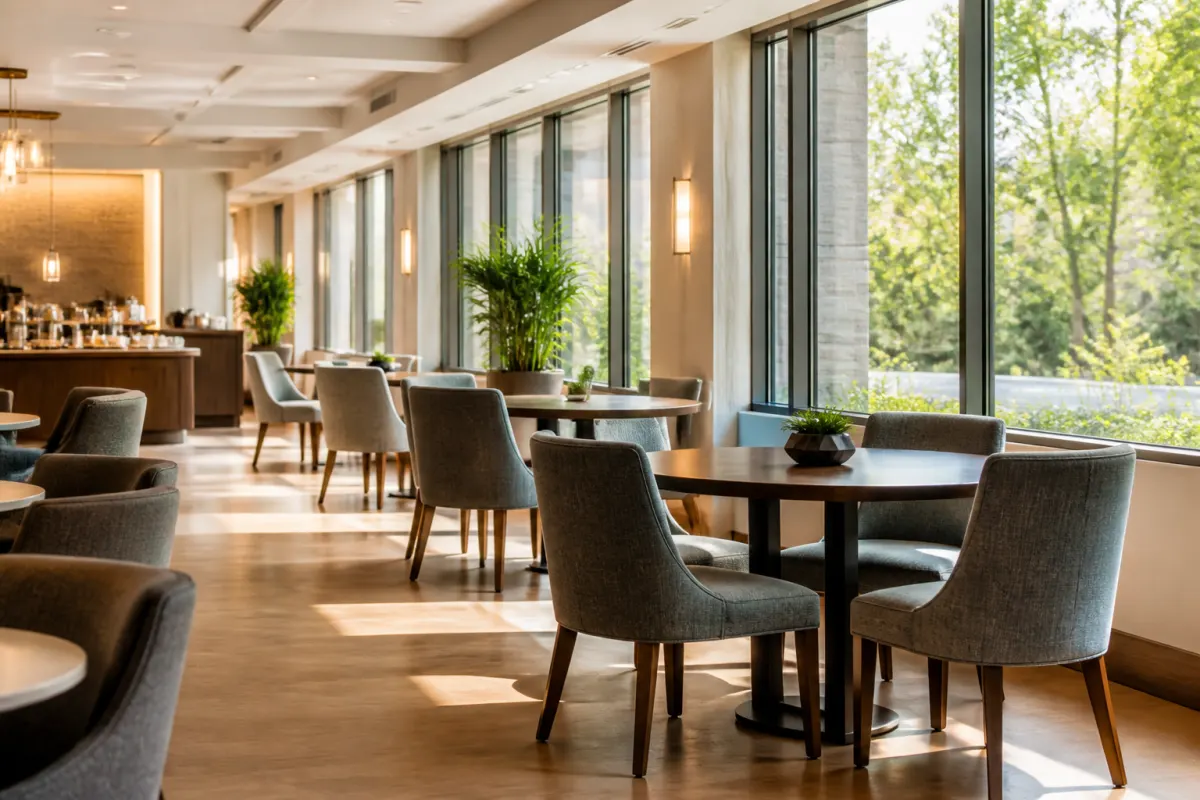
Identify the actual sun, moisture, temperature, salt or other exposure and obtain the selected model's intended exterior use, finish, cushion, care and storage documents. Evaluate resin, aluminum, teak, foam and textile options as exact products; their names alone do not establish weather performance or a failure date.
Commercial grade versus retail
Compare the proposed model's documented intended use, structural tests, textile and cushion properties, care instructions, parts, and commercial-use warranty. A retail or contract label does not establish a season-or-two failure date or a guaranteed replacement saving. Include expected maintenance and repair line items in the lifecycle comparison, using the property's records where available.
Sourcing a coordinated package across a property
Compare coordinated and separate-category proposals on matched specifications, approved samples, batch controls and itemized delivery scope. Neither one program nor multiple vendors establishes consistent finishes or an inevitable mismatch; retain the approval records for each item.
A coordinated hospitality package needs compatible specifications and a delivery plan for each category. A 10 to 14 week custom-finish and upholstery duration is an illustrative preliminary assumption; obtain dated milestones for each product and fulfillment route. When you are ready to spec an entire property, request a quote with your item list and opening date and ask responding suppliers to state which items, finish controls, and delivery stages their proposal covers. Unquoted categories need separate ownership.
The bottom line
Keep the coordinated property program, with a documented specification and schedule for each category. Select seating from the exact frame, textile, cushion, care, and warranty evidence; specify outdoor pieces for their intended exposure. Compare itemized quotes against the same room schedule rather than treating an abrasion number, ILD band, or single lead time as proof that the whole package will last.