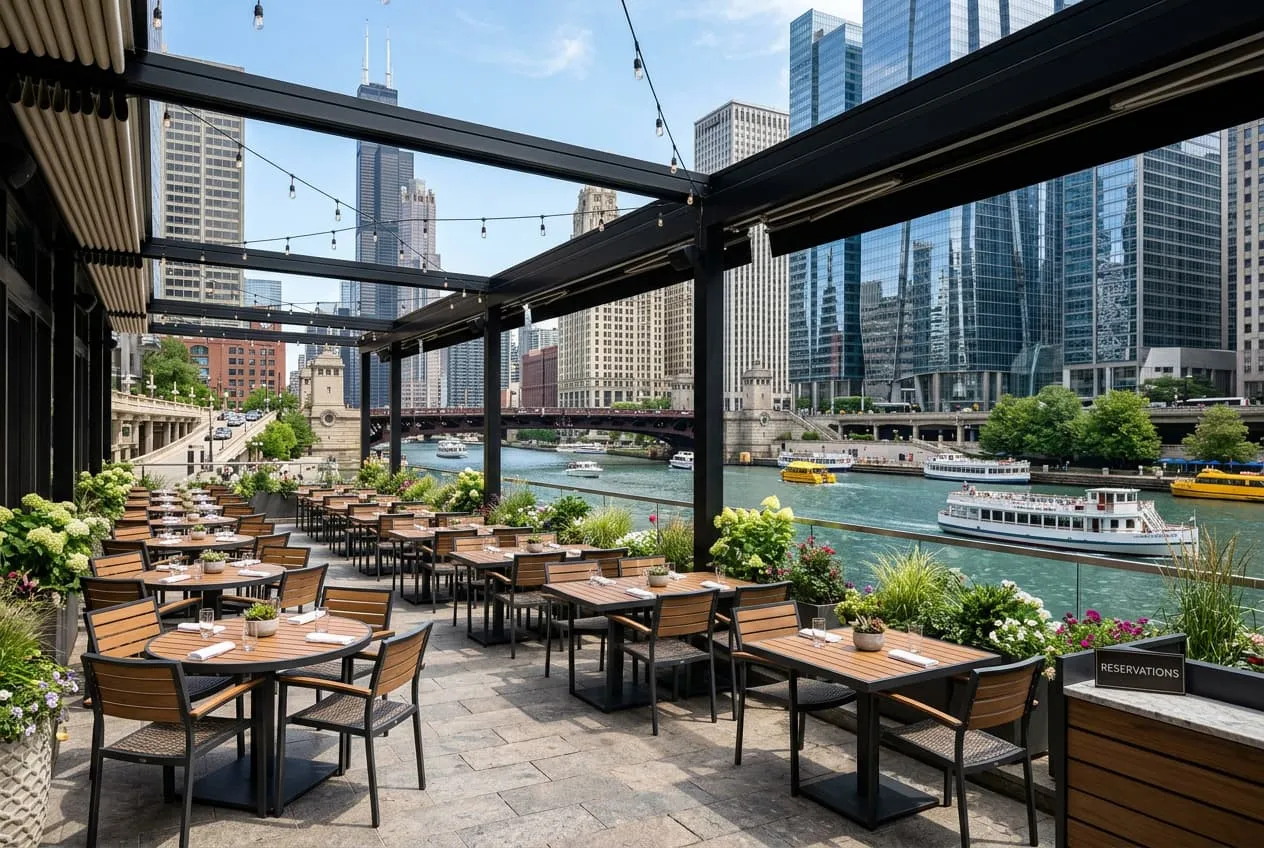
Albuquerque's hospitality market moves on its own rhythm, and anyone sourcing furniture here needs to understand it before signing a purchase order. Downtown holds the city's convention hotel base, anchored by the Albuquerque Convention Center a few blocks from Civic Plaza. Old Town keeps drawing visitors who want an adobe courtyard and a margarita after a day at the museums. Nob Hill, along the old Route 66 corridor near the University of New Mexico, has become the city's most active independent restaurant strip. Uptown adds a newer, more polished retail and hotel cluster around ABQ Uptown. If you are developing or refreshing a property in any of these districts, the challenge is rarely finding furniture. It is locking in specifications, respecting lead times, and getting delivery timed to a construction schedule and, in many cases, to the annual surge around the Albuquerque International Balloon Fiesta.
What FF&E Covers on an Albuquerque Project
FF&E stands for furniture, fixtures, and equipment. In a hotel context, that is your guestroom beds, nightstands, desks, and chairs. It is your lobby lounge seating, restaurant banquettes, patio furniture for a rooftop bar with Sandia Mountain views, and the decorative lighting that runs through your public spaces. In a restaurant-only project, it covers dining tables, all seating, host stands, and any fixed booth or banquette work procured through the furniture budget rather than the general contractor's scope.
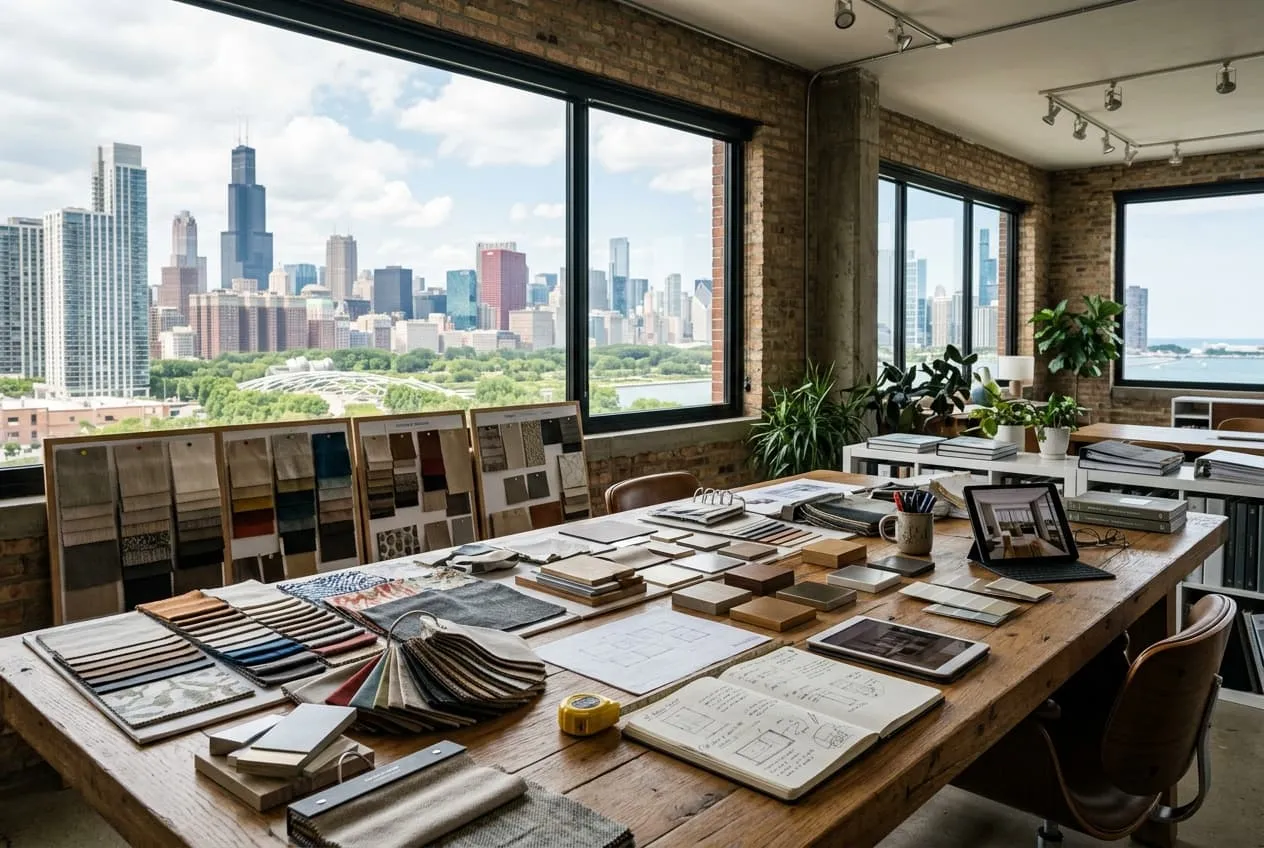
What FF&E does not cover is OS&E, operating supplies and equipment. That category handles linens, dishware, glassware, kitchen smallwares, and anything with a short replacement cycle. The distinction matters because FF&E is a capital expense managed by ownership or development, while OS&E is an operational cost managed by whoever runs the property day to day. On a larger Albuquerque project, a convention hotel near Civic Plaza or a multi-outlet restaurant group opening across Nob Hill and Downtown, the FF&E budget can run into seven figures. Treat it as an afterthought and the project pays for that mistake later.
Get your FF&E scope defined in writing before you approach any vendor. A clear scope document keeps your interior designer, procurement agent, and general contractor working from the same definitions, and it prevents the kind of dispute that eats weeks of schedule for no good reason.
How the Albuquerque Market Shapes Procurement Timelines
Albuquerque operators are frequently surprised by how fast the procurement clock actually runs. Contract furniture manufacturers, particularly ones building custom upholstered seating or branded casegoods, typically carry lead times of 14 to 22 weeks from confirmed purchase order to delivery. Custom pieces designed to reflect the city's Southwestern and Pueblo Deco character, rather than generic catalog stock, can push that to 28 weeks or longer.
For a downtown convention hotel, a boutique property near Old Town, or a restaurant buildout in Nob Hill, procurement needs to start well before construction wraps. The practical sequence looks like this: specifications locked during design development, bids issued two to three weeks later, purchase orders placed no later than 20 to 22 weeks before your target delivery date, and delivery phased into the property zone by zone as construction turns over each floor or dining room.
Albuquerque's event calendar creates a pressure point that few other markets deal with in quite the same way. When the Balloon Fiesta fills Balloon Fiesta Park every October, or a major event lands at the Convention Center, hotel occupancy across Downtown and Uptown spikes hard, and rates follow. If your opening date is tied to one of those windows, a procurement delay does not just cost you days. It costs you the rate premium that came with hitting that date, and that is real revenue walking away, not a scheduling inconvenience.
The high desert climate adds its own procurement variable. Rooftop bars and patio dining in Nob Hill and Old Town need furniture rated for intense UV exposure, wide day-to-night temperature swings, and the short but heavy monsoon season that arrives most summer afternoons in July and August. That narrows the field of suitable outdoor product compared to milder or more humid markets, and it adds cost when the specification is done correctly the first time.
Working With Designers and Procurement Agents
Most Albuquerque hospitality projects involve three parties: an interior designer setting the aesthetic direction, a procurement agent managing vendors and purchase orders, and you as the owner holding the budget and the deadline. How well those three parties communicate determines whether the project opens on schedule or spends its last month in crisis mode.
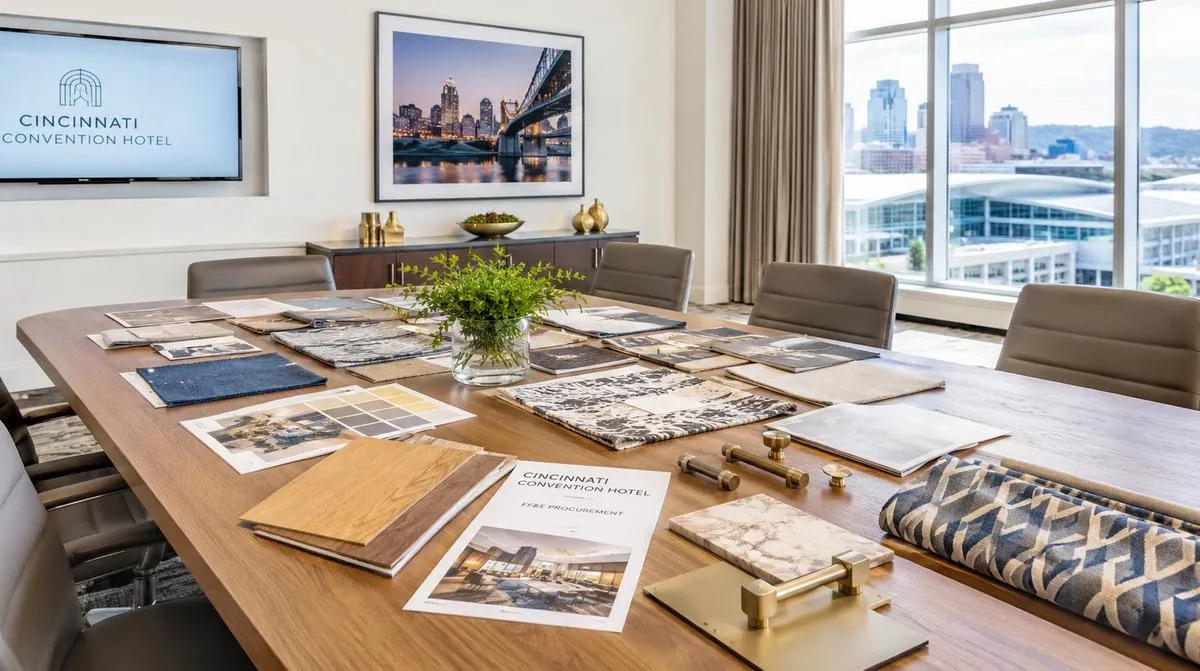
Albuquerque has a compact but capable base of interior design firms with hospitality experience, many of them working the Downtown convention hotel circuit and the independent restaurant scene stretching from Old Town through Nob Hill and toward the university. A number of those designers have relationships with contract furniture reps who cover the broader Southwest region and understand New Mexico's design vocabulary, from adobe-inspired texture to Pueblo Deco detailing. That relationship saves time, because a rep who already knows your designer's spec language can flag lead times and substitution options before the project goes to formal bid.
The most common mistake on Albuquerque projects is bringing the procurement agent in too late. Wait until design is fully resolved before asking about pricing and lead times, and you will be redesigning pieces under time pressure, substituting product at the last minute, and in the worst cases pushing back a certificate of occupancy. Bring procurement in during schematic design, while specifications are still flexible enough to value-engineer without gutting the concept.
For larger projects, a full-service convention hotel or a multi-unit restaurant group expanding across several Albuquerque neighborhoods, many owners bring in a dedicated FF&E procurement consultant to sit between design and purchasing. That role owns vendor communication, purchase order management, freight coordination, and punch list resolution. For smaller projects, the interior designer often manages procurement directly with a purchasing fee built into the contract. Either approach can work. What does not work is leaving the question of who owns procurement decisions unresolved once the project is already moving.
What Your Budget Should Account For
FF&E budgets for Albuquerque hospitality projects vary by property tier and design ambition. A select-service hotel near the Sunport or a mid-scale property in Uptown typically runs $9,000 to $16,000 per key. A full-service Downtown convention hotel or a design-forward boutique near Old Town can reach $22,000 to $35,000 per key, with lobby and public space budgets climbing past that when the design program leans into custom Southwestern detailing.
Several line items reliably catch Albuquerque developers off guard. Freight from domestic contract furniture manufacturers, most of them based in North Carolina, Wisconsin, and Mississippi, adds 8 to 12 percent on top of product cost given the distance to New Mexico. White-glove delivery and installation, usually contracted separately from the furniture purchase, runs another 5 to 8 percent. Storage costs come into play when furniture arrives before the site is ready to receive it, which happens more often than most schedules acknowledge.
Custom and semi-custom work carries premium pricing and longer lead times, but it has become increasingly standard on Albuquerque's higher-profile projects, where operators want furniture that reads as regionally authentic rather than pulled from a generic catalog. Build a contingency of at least 10 percent into your FF&E budget from the outset. Albuquerque's construction market has its own supply pressures, and field changes late in the process are not unusual. That buffer lets you absorb surprises without making procurement decisions under financial pressure.
The properties that open on time and on budget in Albuquerque are the ones that started procurement early, respected lead times, and kept the designer and procurement agent talking constantly throughout the process. Whether you are outfitting a convention hotel near Civic Plaza, a boutique property close to Old Town, or a new restaurant concept in Nob Hill, the fundamentals hold: start earlier than feels necessary, specify clearly before you bid, and build freight and installation into your numbers from day one.
Freight, Delivery, and Installation in Albuquerque
The furniture is only half the project. Getting it from the manufacturer to a finished, installed guestroom or dining room is where Albuquerque timelines most often slip, and it deserves its own line in the plan. Most domestic contract furniture ships from North Carolina, Wisconsin, and Mississippi, and freight to New Mexico runs on multi-day transit that has to be booked against a receiving window, not assumed. An order that leaves the factory on time still misses an opening if no one confirmed the delivery appointment, the dock access, or who signs for the load.
White-glove delivery and installation is usually contracted separately from the furniture purchase, and on an Albuquerque project it is worth specifying deliberately rather than defaulting to curbside freight. A white-glove crew brings the pieces to the room, unpacks, assembles, places to plan, and removes the packaging, which matters most on casegoods and larger lounge pieces that arrive partially knocked down. Curbside freight saves a few percent up front and then costs it back in staff hours and the risk of damage from moving heavy cartons through the building without the right equipment.
Storage is the quiet budget line. Furniture frequently arrives before a site is ready to receive it, and Albuquerque projects without a dedicated staging plan end up paying for warehouse space or crowding a half-finished space with cartons. Confirm before you order whether the supplier can hold a completed order and release it on your call, and build the receiving sequence, casegoods first and public-space seating last, into the schedule so the installation crew is not working around deliveries that landed in the wrong order.
Owners searching for FF&E movers in Albuquerque are usually describing exactly the white-glove crew covered above, a different vendor relationship than the freight carrier hauling pallets in from North Carolina, Wisconsin, or Mississippi. Freight carriers get product to the metro; FF&E movers and installation crews take it from the dock into the finished room, a separate skill set with its own scheduling logic. Interstate 25 and Interstate 40 cross directly through Albuquerque, and that crossroads position is part of why freight reaches the metro reliably, though dock access near Downtown or Old Town still has to be timed around the traffic those two interstates carry rather than assumed. The Sunport handles some smaller or time-sensitive air cargo shipments, though most contract furniture still arrives by truck given the distance from manufacturing regions in the Southeast and Midwest. On our end, Commercial Furniture Depot stays focused on the furniture program and lets logistics partners handle the freight carriers and installation crews, never taking on moving company work directly. For the fuller picture, our FF&E movers guide and FF&E logistics and installation page walk through how that runs from purchase order to installed room.
We quote FF&E for Albuquerque operators against their own layouts and order sizes rather than a generic sheet. Request a quote and we will put together pricing for your property.