FF&E procurement for Jacksonville hospitality properties requires planning against a demand calendar that mixes predictable seasonal patterns with the specific event spikes that an NFL city generates. The Jaguars home schedule fills hotels on game weekends. The snowbird season fills the Beaches communities from November through March. The Prime Osborn Convention Center's event calendar creates midweek demand peaks. And Florida's coastal specifications -- marine-grade materials, UV-stable finishes, moisture-resistant upholstery -- add a compliance layer to every specification decision that inland markets don't face. Getting FF&E right in Jacksonville means planning against all of these constraints simultaneously.
Jacksonville's Renovation Calendar
The primary renovation window for most Jacksonville hotels is late spring -- April through June -- after the snowbird season winds down, before the summer tourism peak, and outside the Jaguars regular season schedule. This window is relatively open for downtown and Beaches properties alike, though contractor availability tightens as more operators renovate in the same window.
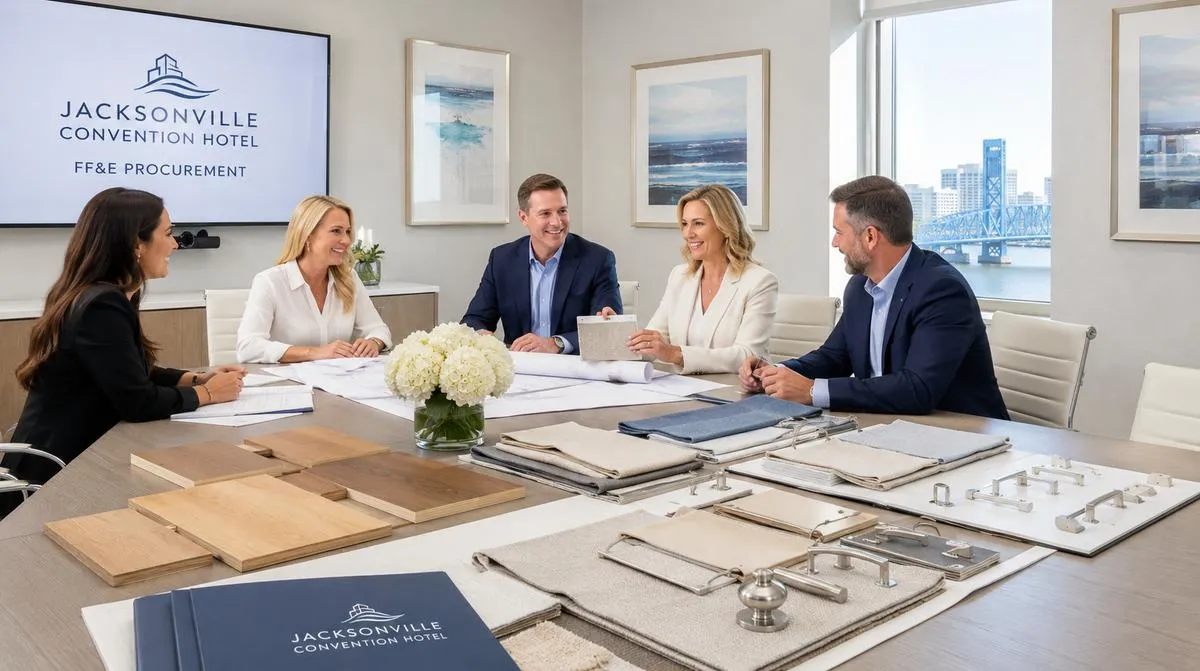
Properties near TIAA Bank Field have a renovation calendar governed by the Jaguars schedule -- home games run from September through January (or into February for playoff scenarios), and any renovation work that affects hotel access or occupancy during game weekends is directly impacting the highest-revenue nights of the year. Map the home schedule before setting renovation start dates.
The Beaches communities have a snowbird-driven occupancy pattern that flips the downtown renovation calendar. The period from November through March is peak season for Beaches properties -- the renovation window for these hotels is typically late spring through early fall, which overlaps with the summer heat that slows construction in Florida.
Florida Coastal Specifications in FF&E
Florida's coastal environment creates specification requirements that need to be built into FF&E planning from the first design decision. Upholstered furniture near windows in oceanside or riverfront hotel properties faces UV exposure and elevated humidity that requires performance fabric upholstery with moisture-resistant backing -- not standard contract upholstery specified for an inland property.
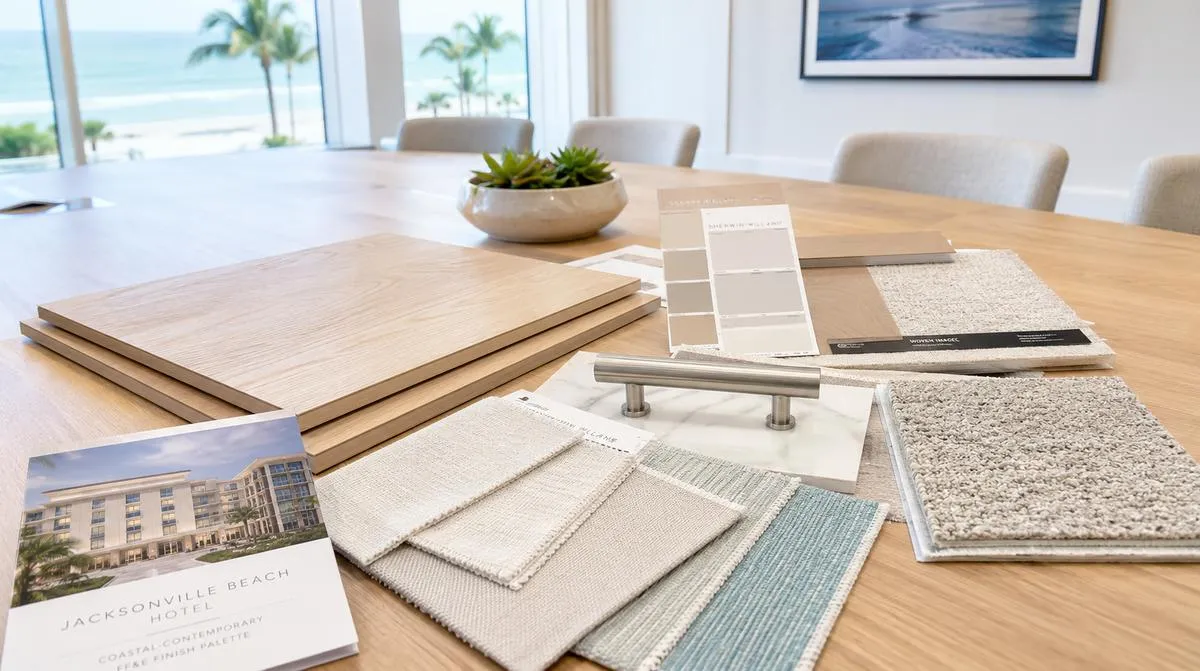
Any metal furniture components -- decorative hardware, case goods handles, frame accents -- in a Jacksonville coastal hotel need to be specified in stainless steel, solid brass, or marine-grade powder-coated aluminum. Chrome-plated steel hardware in a Jacksonville coastal environment begins showing rust within 12 to 18 months of installation in a way that doesn't happen in Atlanta or Charlotte.
Confirm that all wood furniture -- beds, case goods, desks -- is manufactured from kiln-dried hardwood or properly sealed engineered wood with moisture-resistant construction. Florida's humidity creates swelling, warping, and finish failure in wood furniture that wasn't built for a high-humidity environment.
Freight Logistics for Jacksonville Properties
Jacksonville is home to one of the Southeast's major container ports -- JAXPORT handles significant cargo volume and provides direct freight access for commercial furniture arriving from international manufacturing. This makes Jacksonville one of the better-served secondary markets for furniture freight logistics. Domestic furniture manufacturers in North Carolina and the broader Southeast serve Jacksonville efficiently by truck.
Direct-to-property delivery in Jacksonville requires coordination with property management for loading dock access. For Beaches properties, narrow residential-scale streets in some beach neighborhoods require smaller delivery vehicles -- confirm access requirements with your freight carrier before scheduling delivery.
Pricing for FF&E in Jacksonville depends on quantities, finishes, and your delivery window, so a project-specific quote beats any list figure. Request a quote to get yours.