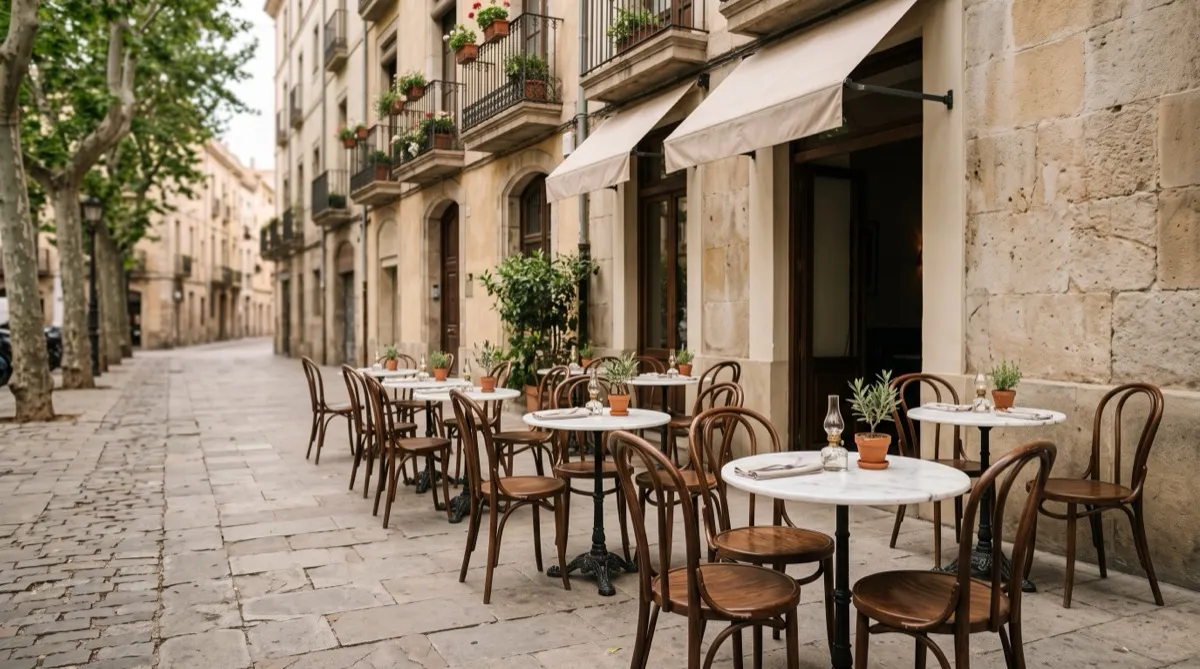
The French bistro look includes bentwood and woven chair styles, with curved frames, cane or woven surfaces, and a compact visual profile. The look does not establish the maker, materials, intended use, or lifespan. Assess the actual model and documents before ordering a cafe seating program.
What defines the authentic bistro chair construction
Bistro is a style description covering different constructions. For example, Thonet’s 214 is a solid bentwood coffee-house chair, while Sika-Design’s Isabell Exterior is described by its maker as an aluminium-frame chair with ArtFibre weave. These are manufacturer examples, not CFD product specifications. Ask for the proposed model’s frame, weave, joints, dimensions, use, and care documents rather than using weight, screws, or a cane pattern as an authenticity test.
Indoor vs outdoor versions
Select each model for the actual indoor or outdoor setting. Natural wood, cane, metal, and synthetic weave describe materials; the manufacturer’s model-specific exposure and care instructions establish approved use. Compare a coordinated indoor/outdoor pair if needed, but one or two versions depends on the documented models and site conditions rather than a universal material rule.
Color and weave variations
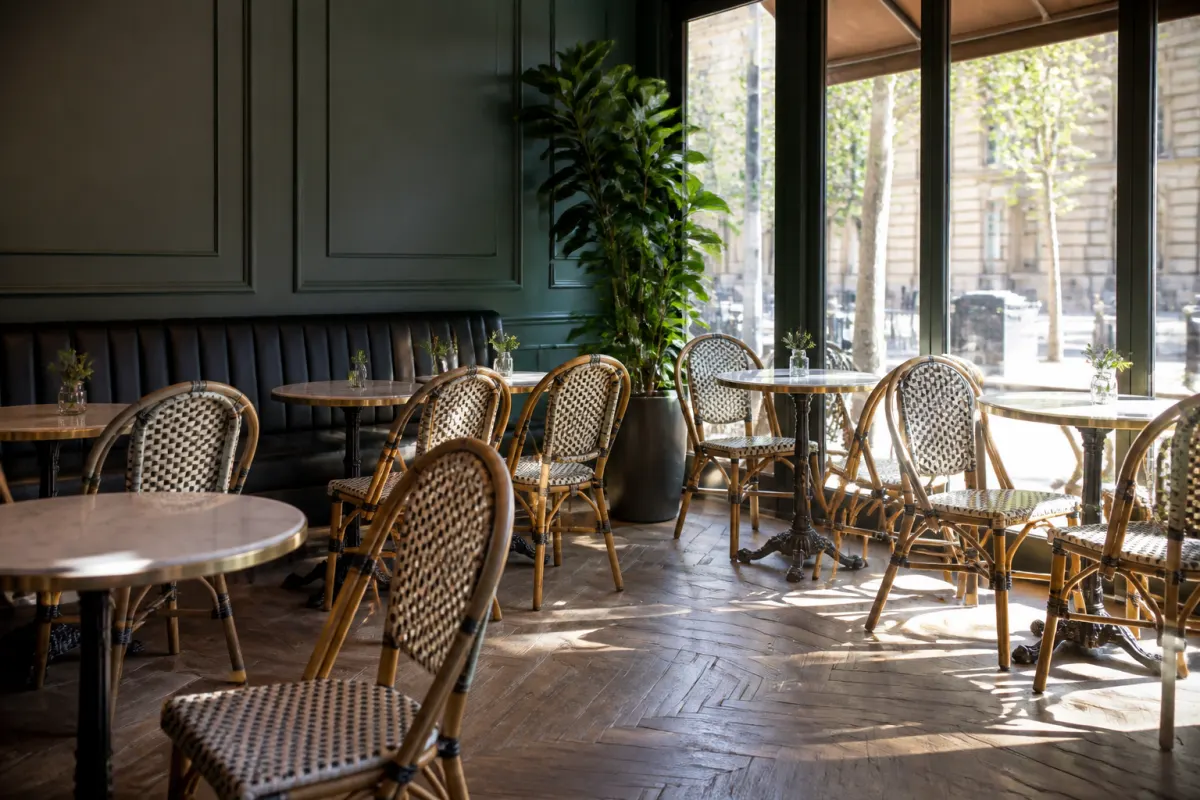
Review natural wood tones, painted frames, and the available weave colors against the cafe palette. Coordinating two colors is one design option. Check the actual samples and model documents for each selection; a color or weave change may also change materials, care, or the configuration offered.
Pairing tables with bistro chairs
Round or bistro-style tables can suit the chair’s visual profile. Confirm the actual chair width, seat height, table height, underside clearance, and leg positions together, then trial sitting and movement. Ask for the table and base combination’s approved use and stability documentation; neither a heavier base nor a bistro silhouette establishes the fit or performance.
Stacking and storage
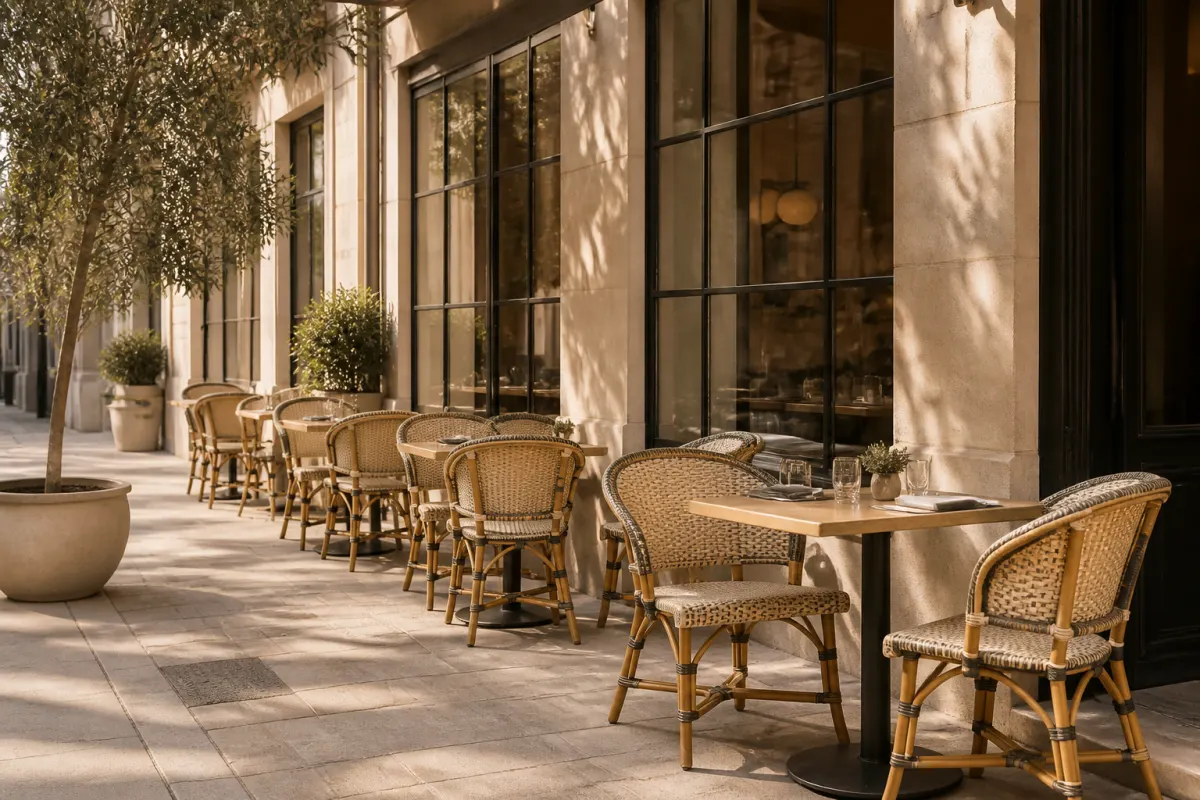
If storage or cleaning requires stacking, request the exact chair’s approved stack limit, footprint, handling instructions, and compatible cart. Do not assume a bistro-style chair is stackable from its photograph or commercial label.
What to avoid
Before ordering, check the actual frame and weave attachment, documented use, cleaning instructions, and any exposure limits relevant to the patio. Review an assembled sample and ask how damage or worn weave is serviced. A photograph, joinery label, or origin cannot establish a failure mode or predict that a chair will fail within a season.
Sourcing and lead times
Confirm the proposed maker, production origin, available quantity, finish and weave choices, minimum order, sample terms, and delivered price. The April 28, 2026 guide’s 10 to 14 week custom window was a planning example, not evidence of current production or availability. Obtain approval, production, dispatch, and delivery milestones for your cafe order.
How many to order and mixing with other chair styles
Decide whether to repeat one chair style across the cafe or use different seating at windows, the patio, and the main dining room. Base the split on actual layouts, documented exposure, cleaning, storage, and samples, with quotes for the resulting quantities. Record finish and weave acceptance criteria and reorder terms; an initial batch or similar appearance does not guarantee future color matching.
For the broader restaurant and cafe furniture category, see our bar and restaurant furniture guide.
Get your cafe furniture priced
Request a quote with the seat count, indoor and outdoor split, approved layout, preferred visual direction, and delivery conditions. Compare independent supplier proposals for the actual chair and table models, finish samples, use documents, and coordinated delivery scope.