A dresser, nightstand or wardrobe needs a documented surface, substrate, edge and hardware specification. Similar-looking pieces can use different assemblies. Those details matter alongside joinery, installation, cleaning and maintenance; the surface label alone cannot predict a replacement year.
Compare the proposed assemblies before a renovation or new-build order, when finish samples and drawings can still be checked against the room brief.
The three materials in play
High-pressure laminate (HPL) is a manufactured decorative surface bonded to a supporting substrate in a casegood assembly. Ask which laminate grade, substrate, edge treatment and adhesive are used, and request the manufacturer's care and performance documentation. A laminate label alone does not establish scratch, heat, water or cleaner resistance for the complete piece.
Wood veneer is a thin layer of real wood over a substrate. Species, veneer thickness, finish system and edge construction affect both appearance and repair options. Confirm the actual topcoat and cleaning instructions rather than assuming every veneer uses a catalyzed finish or has the same durability.
Thermofoil commonly uses a formed decorative film over a substrate such as MDF. Confirm the exact film, adhesive, substrate and intended application with the manufacturer. Request temperature, moisture and cleaning limits; the term alone cannot establish price rank or service life.
Durability under real guest behavior
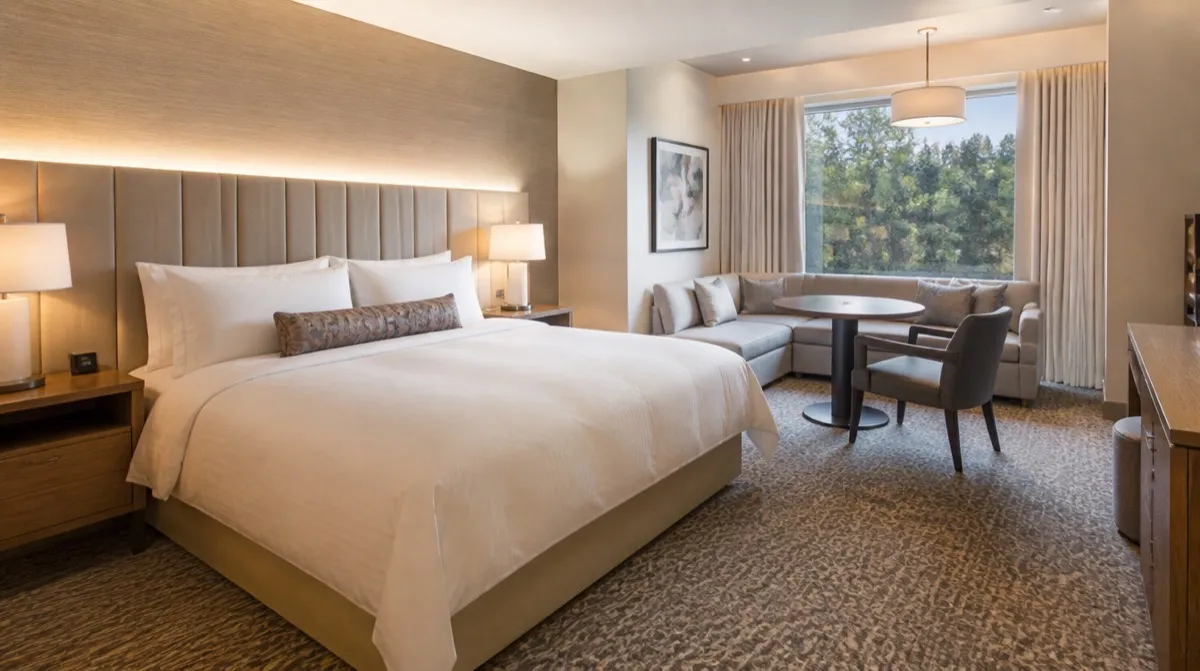
Include luggage contact, wet glasses, ice buckets and housekeeping products in the brief. Give the supplier the actual cleaning routine and ask which exposures the proposed surface and edges permit. Samples can help compare appearance and cleaning, but a room photograph cannot verify performance.
Compare test documentation and care instructions for the actual HPL, veneer and thermofoil assemblies. Inspect edge sealing, seams and exposed substrates. No universal material ranking establishes chemical compatibility or the condition after years of guest use.
Match the complete assembly to the design, brand requirements, maintenance resources and documented use conditions.
Repairability and replacement cycle economics
Repair options should be checked along with the initial specification.
Ask whether damaged laminate areas can be repaired acceptably or whether a top, door or panel can be replaced separately. Confirm finish matching and part availability; neither a guaranteed long life nor mandatory whole-piece replacement follows from HPL alone.
Ask the manufacturer or a qualified refinisher whether the proposed veneer and finish allow local touch-up or refinishing. Thin veneer cannot be assumed to tolerate sanding. Price the actual repair and downtime before relying on it in a maintenance plan.
For thermofoil, ask how damaged film or a delaminated front is handled and whether replacement fronts are available. Compare repair and replacement scenarios using your own cost and timing assumptions. The furniture depreciation calculator is a planning tool; accounting depreciation does not predict physical service life.
Matching material to property tier
For select-service and extended-stay rooms, compare cleaning requirements and replacement components across the proposed packages. Avoid using property tier as a substitute for the actual assembly specification.
A mixed-material package may use different surfaces for a headboard, console front, dresser and nightstand top. Confirm each application and compare samples together; one decorative surface does not establish the performance of another.
For boutique and luxury properties, include the desired real-wood appearance or other design priorities alongside maintenance and repair requirements. Veneer and thermofoil suitability must be evaluated by product and application, rather than ruled in or out by property tier alone.
Sourcing and lead times
Ask whether the proposed casegoods are stocked or made to order, what quantities and finish approvals are required, and when production can begin. Confirm production, freight and installation separately in writing. There is no universal ten to fourteen week factory window or minimum tied to room count.
Request a quote with room count, surface preferences, cleaning products and target timing so relevant independent suppliers can propose and document suitable assemblies.