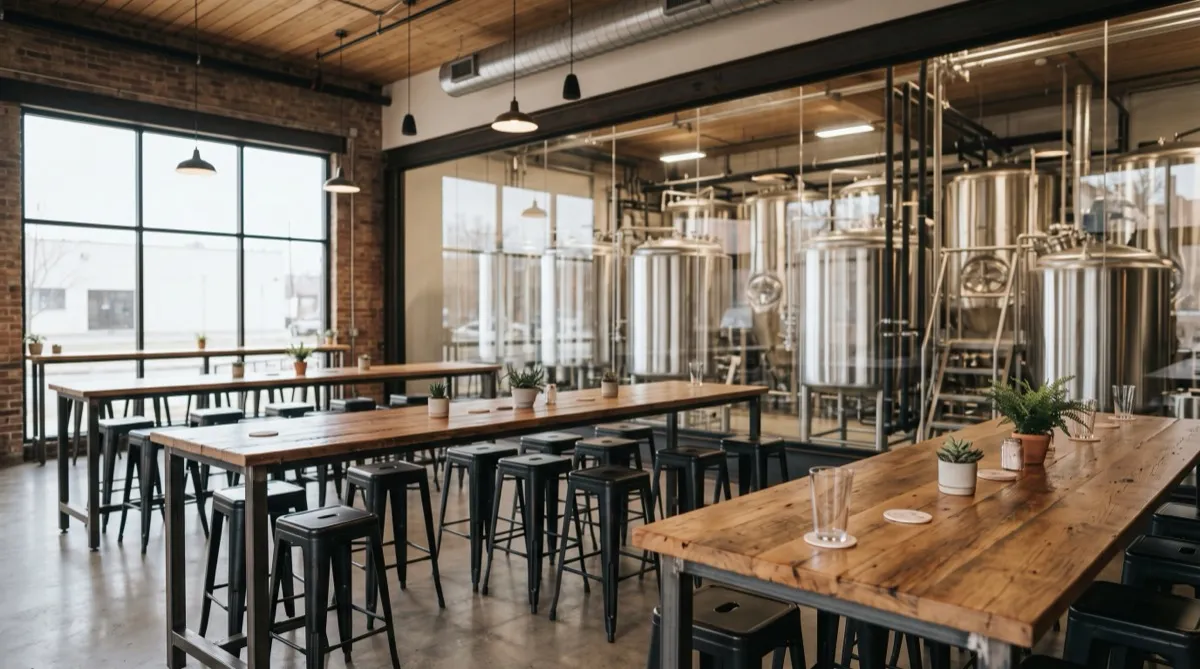
Brewery taprooms have become one of the most interesting commercial hospitality spaces of the last decade. You're part bar, part retail, part event venue. The furniture has to work for a Saturday afternoon flight crowd, a Tuesday night trivia event, and a Thursday private party.
Here's how to spec it right.
Understand how your taproom actually gets used
Before you spec a single piece of furniture, map your actual use cases. They're different from a standard bar.
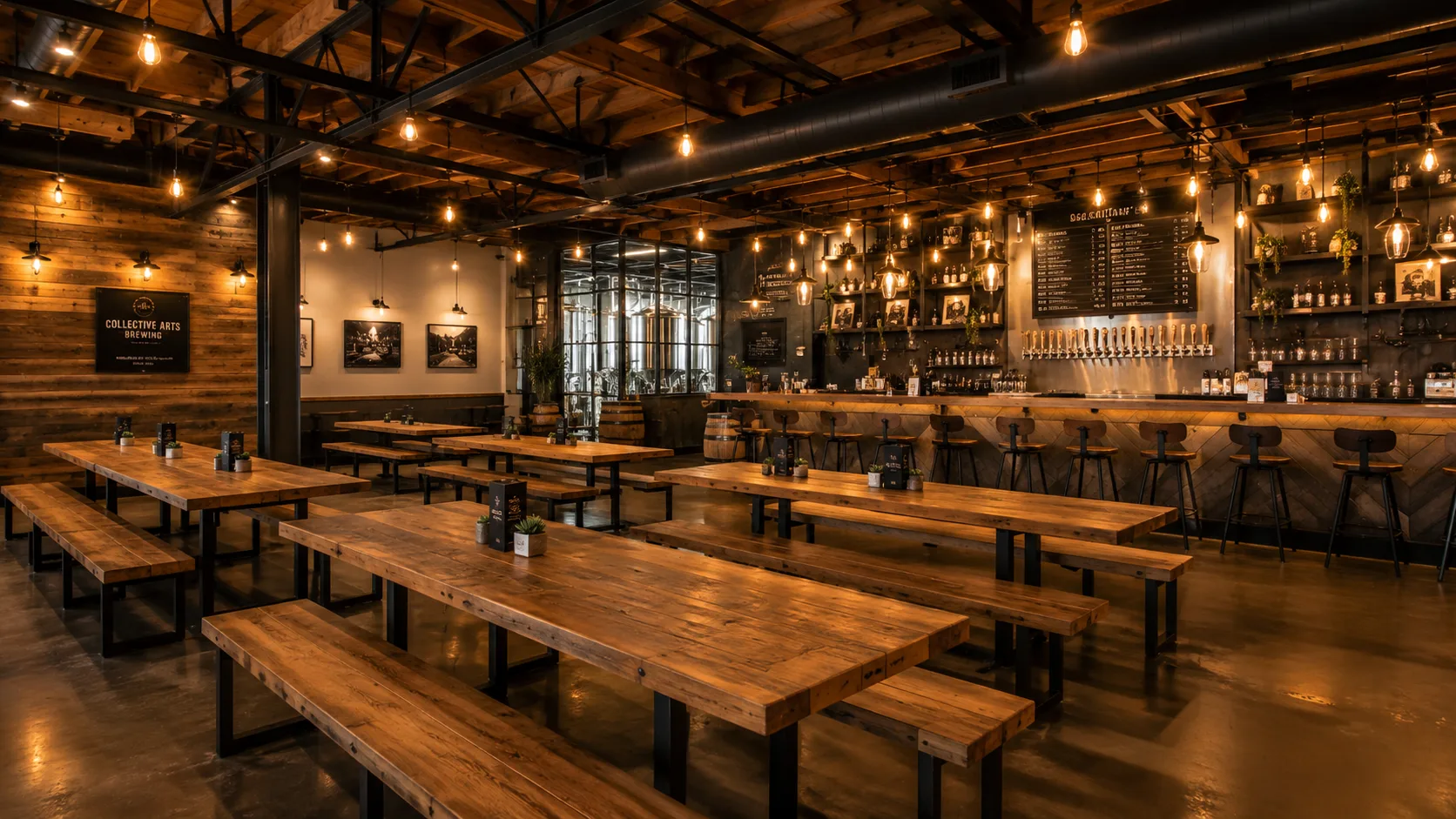
Daily tasting room: Record actual dwell time, party sizes and seated/standing use. 30 to 90 minutes can be a planning example, not a universal tasting-room pattern.
Events: private parties, release parties, trivia nights, live music, outdoor festivals. Furniture needs to move and stack to reconfigure the space, sometimes multiple times in one day.
Retail: if you have a to-go sales area, that zone needs to stay clear and accessible. Furniture that migrates into the retail path creates friction at checkout and on pickup.
Family-friendly vs. 21+only: Reflect the actual operating policy and guest tasks in the brief. Confirm cleaning, seat fit and handling requirements across both types rather than assuming adult-only use permits less cleanable upholstery.
The furniture mix for a taproom
Bar seating at the main bar or counter needs dimensions matched to the installed surface. 28 to 30 inch seat height is a planning example to trial, not a fit guarantee. Confirm footrest, load and cleaning documentation. Quantity follows the layout and confirmed supplier terms; this guide does not impose a 20-unit minimum.
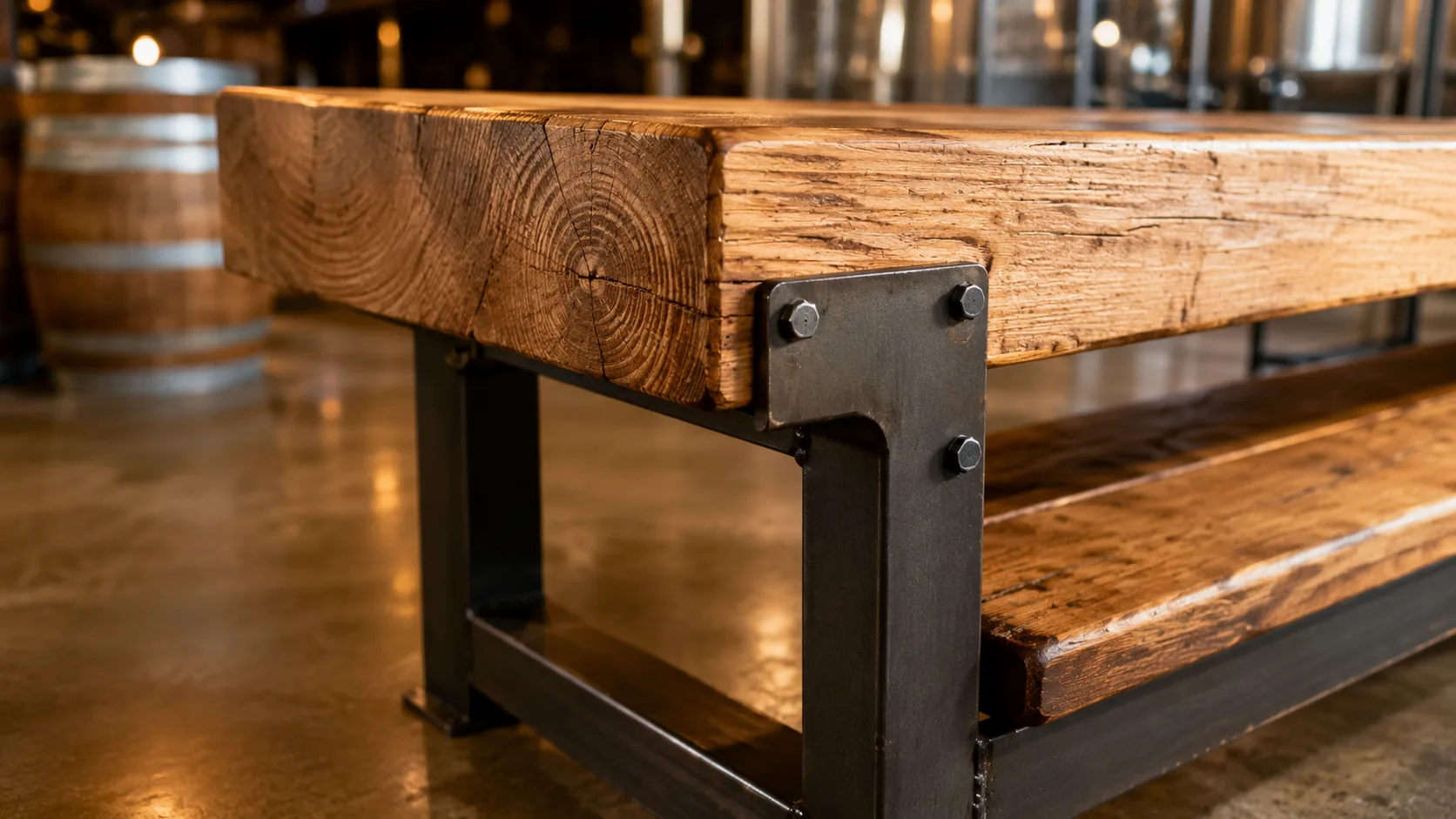
Communal tables are one of the best furniture investments for a taproom. Long shared tables encourage the social dynamic that makes a taproom worth visiting over buying a six-pack and going home. Heavy bases, durable laminate or solid surface tops. Reclaimed wood tops look great in a brewery environment but require maintenance in a beverage setting.
High-top tables and stools for standing groups and smaller parties who want their own space. More flexible than fixed dining configurations and easy to move for events.
Lounge zone: one soft seating area with armchairs or lower sofas. Lower tables at 16 to 20 inches. This is where guests settle in for a longer visit and where you can elevate the aesthetic with better upholstery.
Outdoor: For a patio or beer garden, request the actual frame, finish, fastener and seating-surface exposure limits. Verify stacking and seasonal storage instructions; an aluminum or all-weather label does not make the assembly corrosion-proof.
Durability requirements specific to taprooms
Include beer spills and the actual cleaning procedure in the material brief, without assuming beer is harder on every product than all other beverages.
Check seating near service areas. Compare the proposed fabric, vinyl or hard seat against spill handling and approved cleaners. Fabric does not universally develop odor within months, and vinyl is not automatically compatible with every routine.
Trial cleanability across zones. Check the actual surface and upholstery samples with supplier-approved procedures rather than treating laminate, powder coating or performance fabric as complete specifications.
Table tops: Inspect surface texture, seams, edges and the approved cleaning procedure. Open or rough surfaces may be harder to reset, but a material label alone cannot establish cleanliness or bacterial risk.
The reclaimed wood question
Reclaimed wood is visually compelling in a brewery and fits the aesthetic authentically. A few decisions to make before you commit.
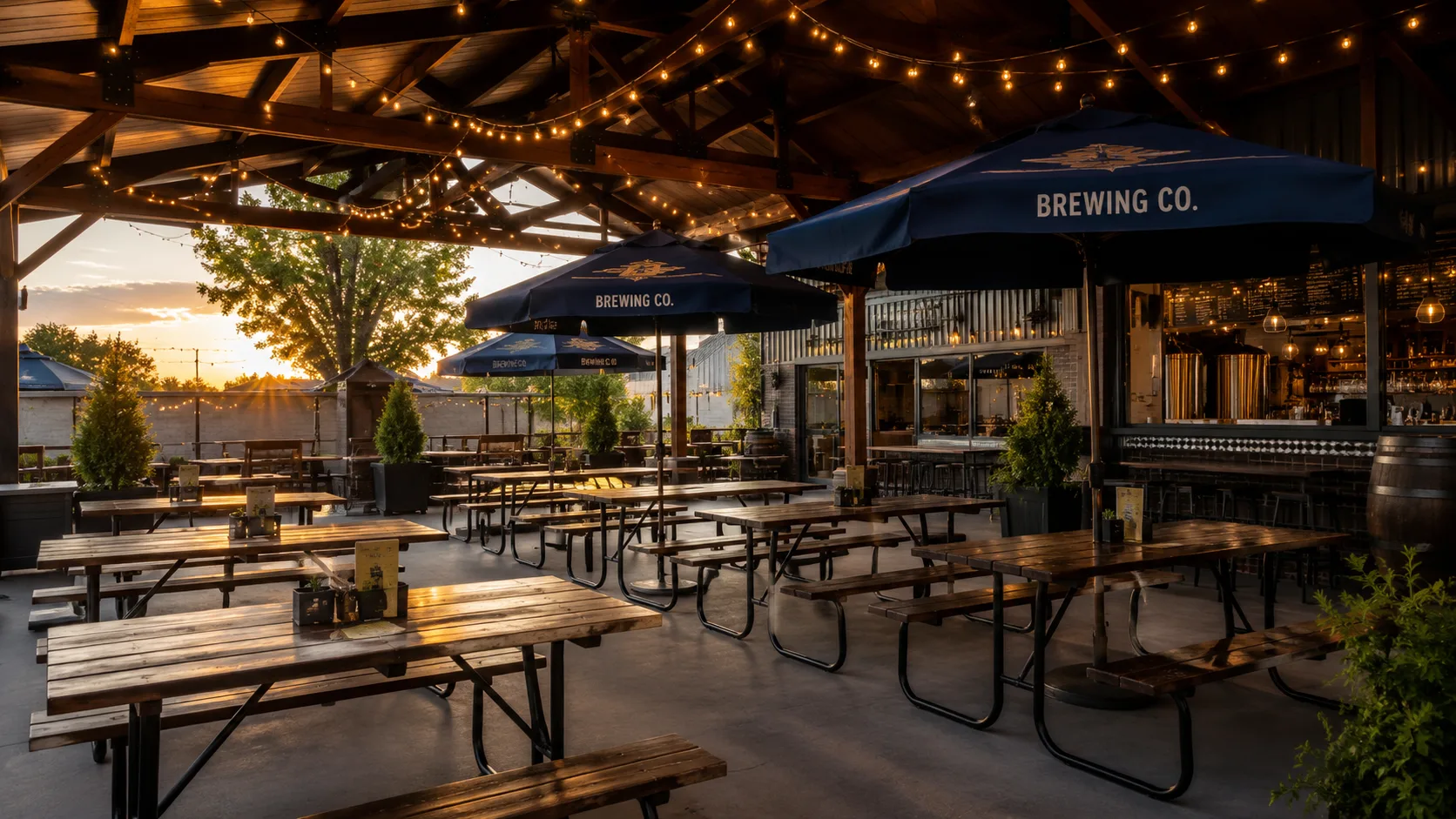
For reclaimed wood communal tables, obtain the surface and cleaning specification for the intended zone.
At the main bar and high-tops, confirm whether the actual reclaimed-wood surface can tolerate the expected spills and cleaning, and what maintenance is required. Compare documented alternatives rather than sealing aggressively without instructions.
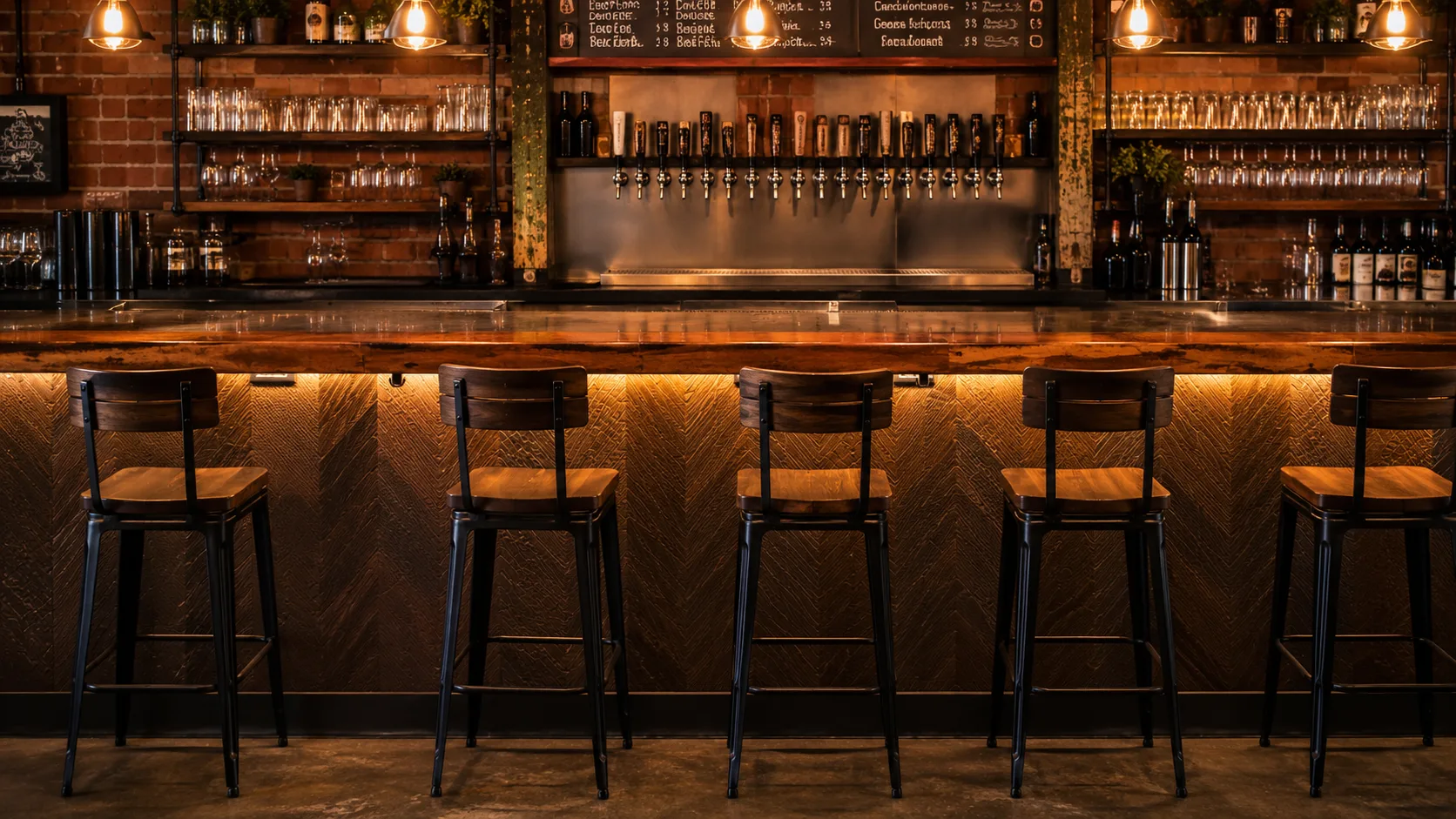
The visual warmth of reclaimed wood is real and worth preserving where it can be maintained. Just be honest about where that maintenance is realistic given your staffing and service pace.
Sourcing, custom options, and timeline
Ask prospective suppliers for origin, stock status, custom feasibility and a written approval/production/freight schedule. CFD connects inquiries with independent suppliers; neither China origin nor a universal 10 to 14 week factory-direct window is established by this guide.
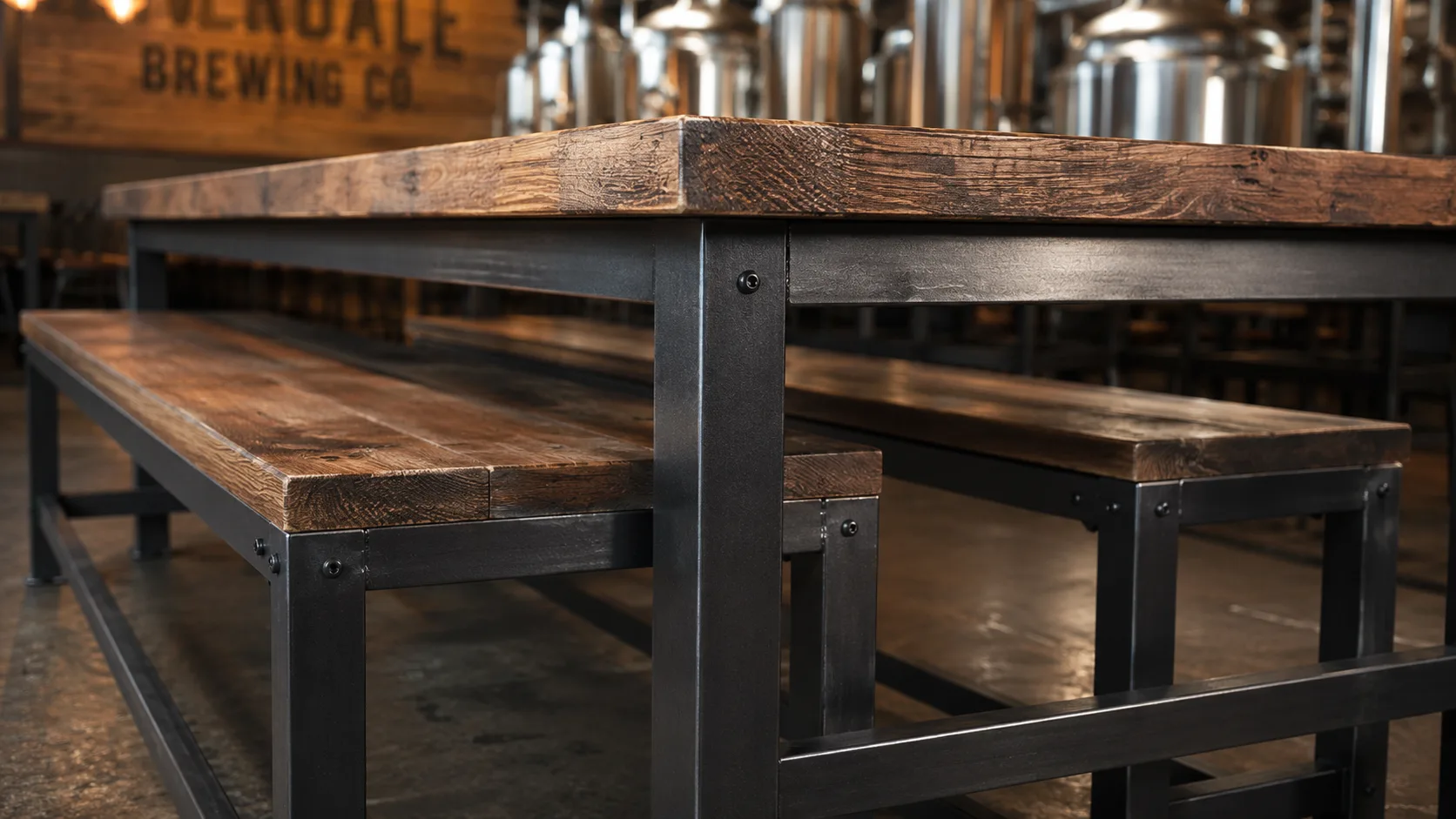
Include reference images, proposed finish colors and communal-table dimensions in the inquiry. Ask suppliers which custom options are feasible and what documentation, minimums and approvals they require.
Plan from confirmed supplier milestones and the opening date rather than relying on a universal 14 to 16 week allowance.
The bottom line
Map the actual zones, compare cleaning and fit, and verify handling for event resets. Coordinate communal and smaller tables with the expected groups and the approved layout.
Related reading: How to Furnish a Bar or Nightclub · Commercial Barstool Buying Guide · Commercial Upholstery Fabric Guide
Check cleaning, expansion, and delivery access
Test the proposed frame finish and floor glides against the taproom's cleaning routine. Compare communal seating with smaller tables using the bookings and group sizes you expect, rather than filling every opening with the same table.
Record the approved furniture codes so a later expansion can match. Confirm the receiving area will be ready before freight arrives, and leave time between installation and opening to inspect, assemble, and correct the order.