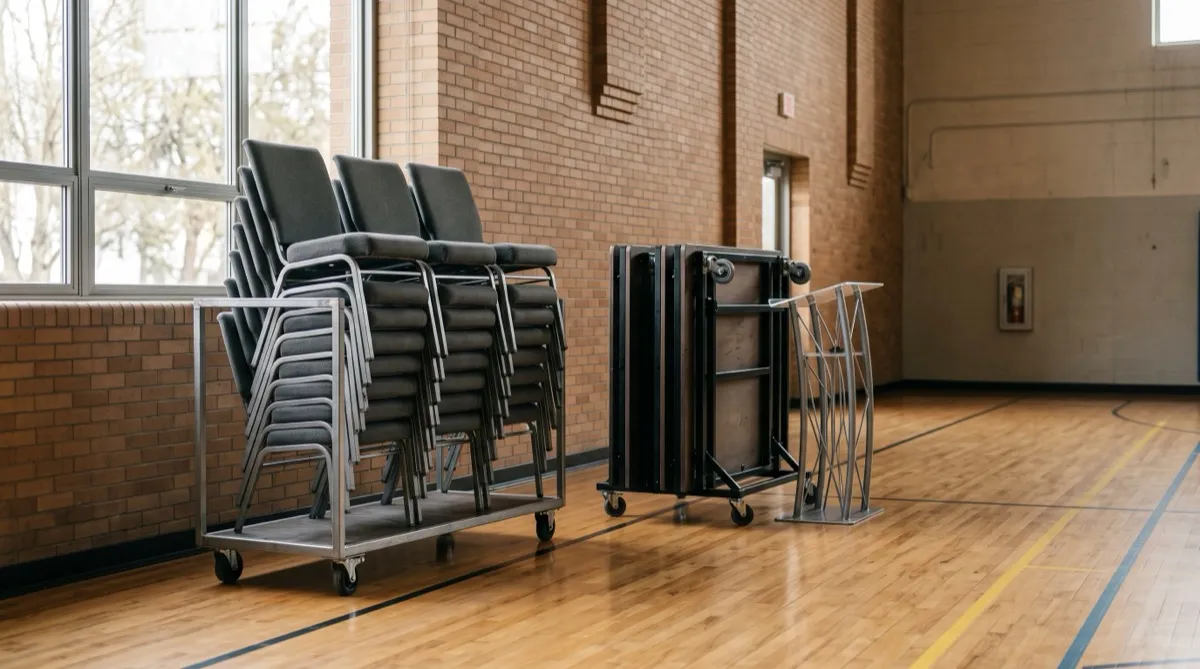
A congregation using rented or shared space needs furniture that fits its setup, service, teardown, transport, and storage routine. Weekly movement creates handling tasks beyond occupied seating, but no decade-to-week wear comparison is established here. Specify the actual cycle and obtain the maker's intended-use and handling instructions.
The portable church reality
Map the actual crew's unloading, seating, staging, signage, service, and building-handback tasks. Fifty or more setups a year is a planning scenario to check against the calendar. Furniture selected for permanent placement may have different handling limits; review the exact product rather than assuming it will fail in portable use.
Compare a 10-to-15-year holding period only as a budget scenario. Track the portable program's inspection, repair, and replacement history, and include frames, connectors, stack contact points, and carts in the specification. Neither sanctuary type establishes an achieved service life.
What a portable kit actually needs
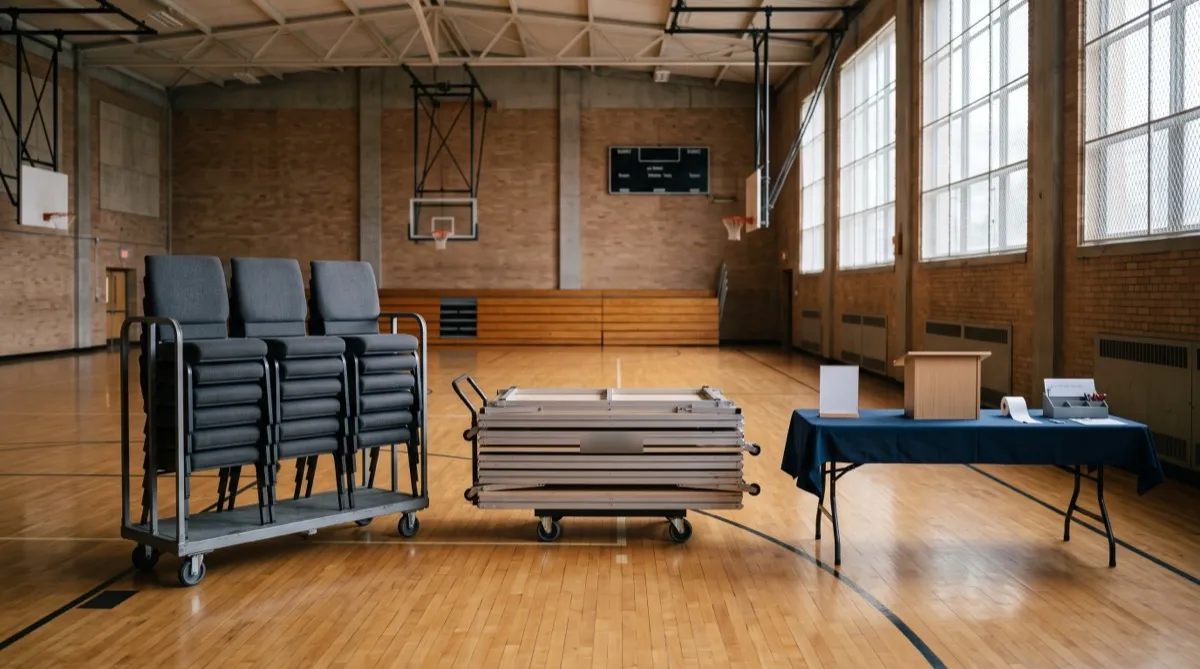
Stackable chairs, and stackable well. Obtain the exact chair's approved storage stack and transport-cart limits. Compare an 8 or 10-chair scenario with a 4-chair scenario only if the models permit those stacks. For 200 chairs, those limits would mean 25, 20, or 50 stack loads respectively; actual cart trips and setup time also depend on the transport system and route.
Chair carts or dollies matched to your chair. The chair and the cart are one system. A cart sized wrong for the chair either wastes capacity or risks tipping a loaded stack. Order carts as part of the initial furniture decision, not as an afterthought once chairs have already arrived.
Lightweight frames. Compare actual mass and approved handling with the volunteer crew, loaded carts, doors, slopes, and floor transitions. Time a trial instead of assuming lighter chairs always reduce fatigue or setup time.
Simple, durable connectors if you gang rows. Use the exact chair's approved connectors and instructions. Trial engagement, release, alignment, and handling with the crew; a snap-in or tool-free label alone does not establish secure ganging or suitability for the required row arrangement.
Portable staging and AV carts. Beyond seating, a portable church typically needs modular stage decking, cable ramps, and rolling cases for AV gear that get loaded into a trailer weekly. These aren't part of every commercial furniture order, but they belong in the same planning conversation since they share the same wear pattern.
The weekly setup and teardown math
Work backward from the crew and actual setup window. Four volunteers setting 200 chairs in 90 minutes would average 50 chairs each, before stage, signage, and other tasks. Use that as a trial workload: time an approved chair/cart system on the actual route rather than assuming the target is achievable from chair weight alone.
Measure teardown separately from setup because the building handback deadline and tasks can differ. A 60 to 70 percent teardown-time scenario can help plan a trial, but it is not a verified staffing rule. Include loading, securing, inspection, and the final room check in the measured window.


What wears out first
Inspect connectors, stacking contact points, frame joints, and cart wheels at the maker's recommended intervals. Ask for intended handling use, approved limits, replacement parts, and any relevant tests. There is no universal one-or-two-year failure timetable for a portable setup.
Inspect cart wheels, brakes where fitted, joints, and frames according to the approved system's instructions and observed condition. Confirm payload and route suitability. An occasional-use or banquet label alone does not establish whether a cart can serve a weekly program.
Sourcing a portable church kit
Use the church furniture brief to describe the full portable program: chairs, matched carts, row connectors, storage, and any separately specified staging. A 100 to 300-chair count is an example scale to plan, not a minimum or confirmed supplier program. Include the actual transport route and crew window when requesting options.
Run your expected seat count through our church seating capacity calculator before ordering, since a rented gym or theater often has an unusual footprint compared to a purpose-built sanctuary.
Related reading
For weekly setup, request a quote with crew size, routes, transport, storage, and the setup window. The request connects your brief with relevant independent suppliers; ask them to confirm a documented chair/cart system, actual availability, price, and service terms.