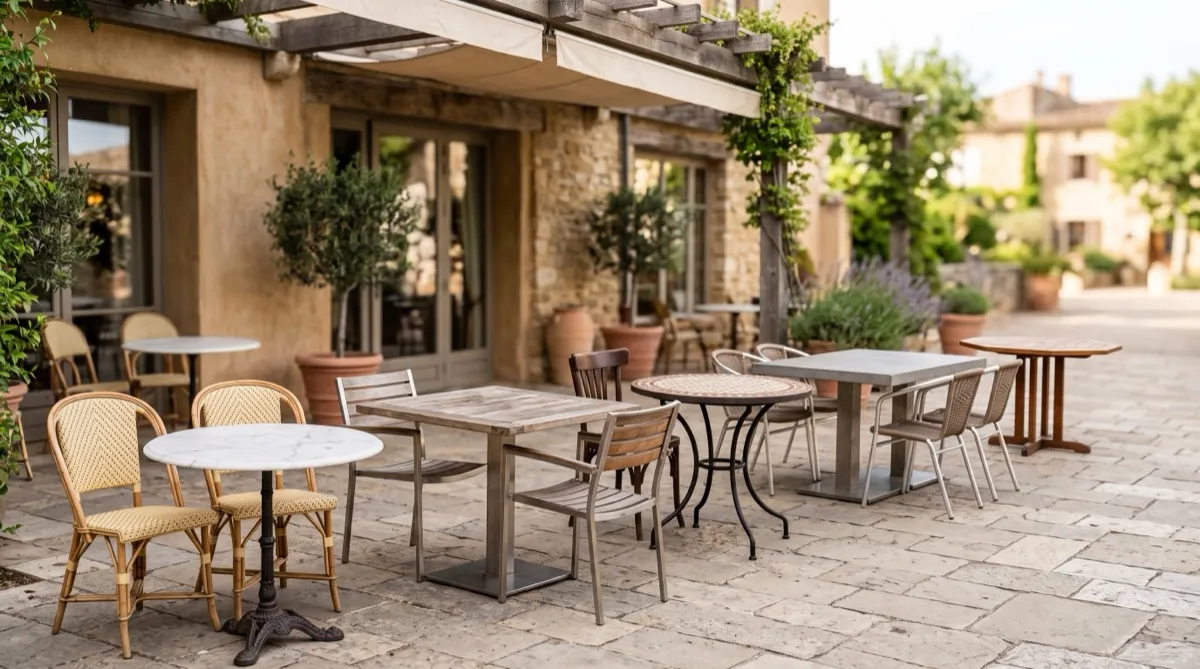
A patio table needs documented suitability for the site's sunlight, rain, temperature, floor conditions, use, and care. An indoor rating does not establish approval for those exposures, but no universal first-season top-replacement date is established here. Review the exact top, base, hardware, and assembly together.
Tops: what actually survives outside
For an aluminum top, check the selected coating, outdoor approval, cleaner compatibility, and top/base system. Aluminum does not develop iron rust, but its coating can weather and the metal can corrode under some exposure conditions. Compare the maker's actual finish and care information rather than assuming every powder-coated top retains color indefinitely.
For synthetic wood-look or HDPE tops, obtain the exact material formulation, outdoor-use documentation, approved spans/loads, thermal limits, and care instructions. Those product details determine whether the top fits the climate; the material label does not guarantee immunity to cracking or color change.
For wood tops, confirm species, finish, exposure limits, and the maker's care and repair instructions; sanding, sealing, or oiling is not a default for every product. For glass, obtain the exact product's outdoor approval, impact and load information, installation, and care limits. Neither material category alone establishes suitability or a first-season failure.
Bases: stability on ground that is never quite level
Test the approved top/base combination on the actual patio surface and check the maker's stability, slope, load, and wind limits. Compare footprint, glides, and approved securing; cast aluminum or a wide base alone does not establish safer use. Follow leveling instructions rather than using improvised shims or assuming glides correct every site condition.
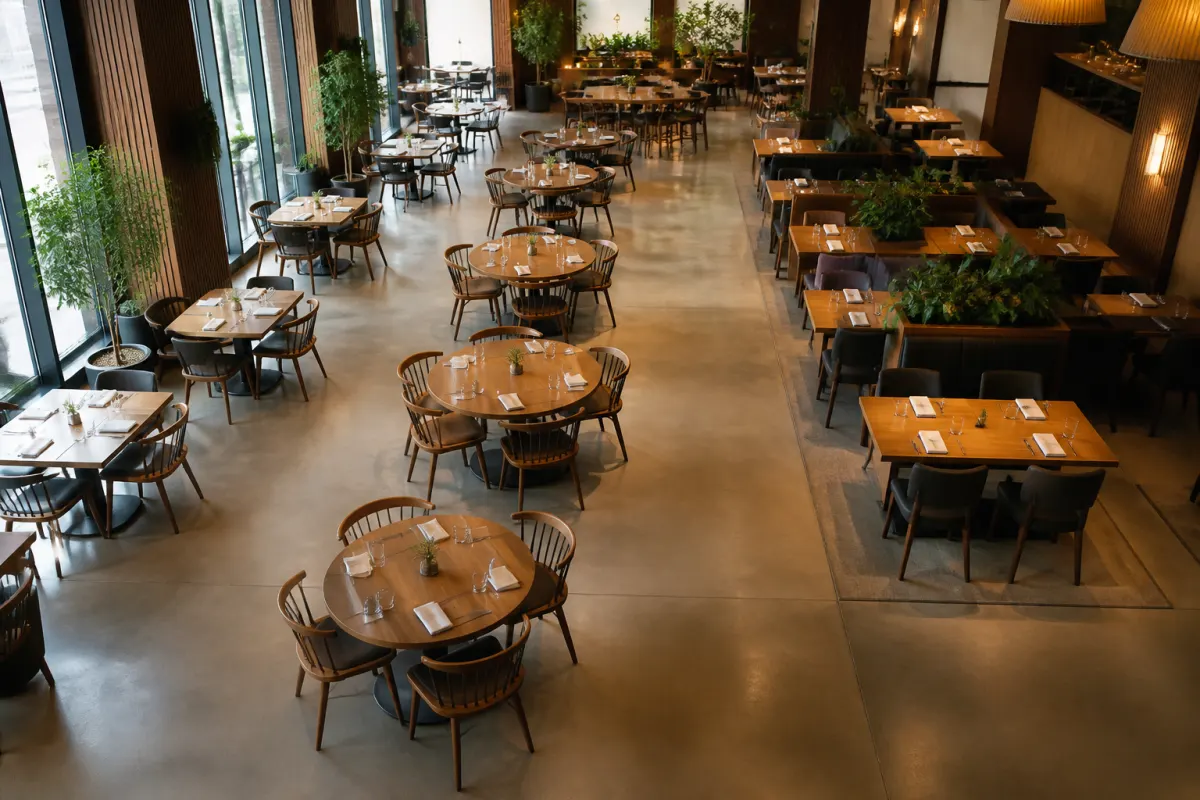
Compare the complete table's stability and approved exposure, not base weight alone. Include handling and storage in the decision. A heavier fixed table is not automatically safe in wind, and a light stackable table still needs approval for its intended location.
Height mixes and how they change the room
Compare dining-height tops around 30 inches and high-tops around 40 to 42 inches as illustrative fit options. Confirm actual table and seat dimensions, footrests, occupied clearances, accessible dining positions, and guest trials. Table height alone does not establish shorter stays or which guest group will use a zone.
Test the proposed height mix against actual sightlines, shade, service routes, and daypart demand. Rail-side high-tops and central dining tables are options to draw and trial, not a guaranteed improvement in peak service.
Sizing for turnover, not just seating
A patio's table sizes should match your actual party mix and turnover goals, not a generic 2-top and 4-top split copied from the indoor dining room. If your patio skews toward smaller, faster-turning parties (a common daytime and happy-hour pattern), more 2-tops that can combine for larger groups gives you flexibility without wasted seats during slower stretches. If your patio is destination dining with longer covers, larger fixed tables reduce the friction of constantly reconfiguring.
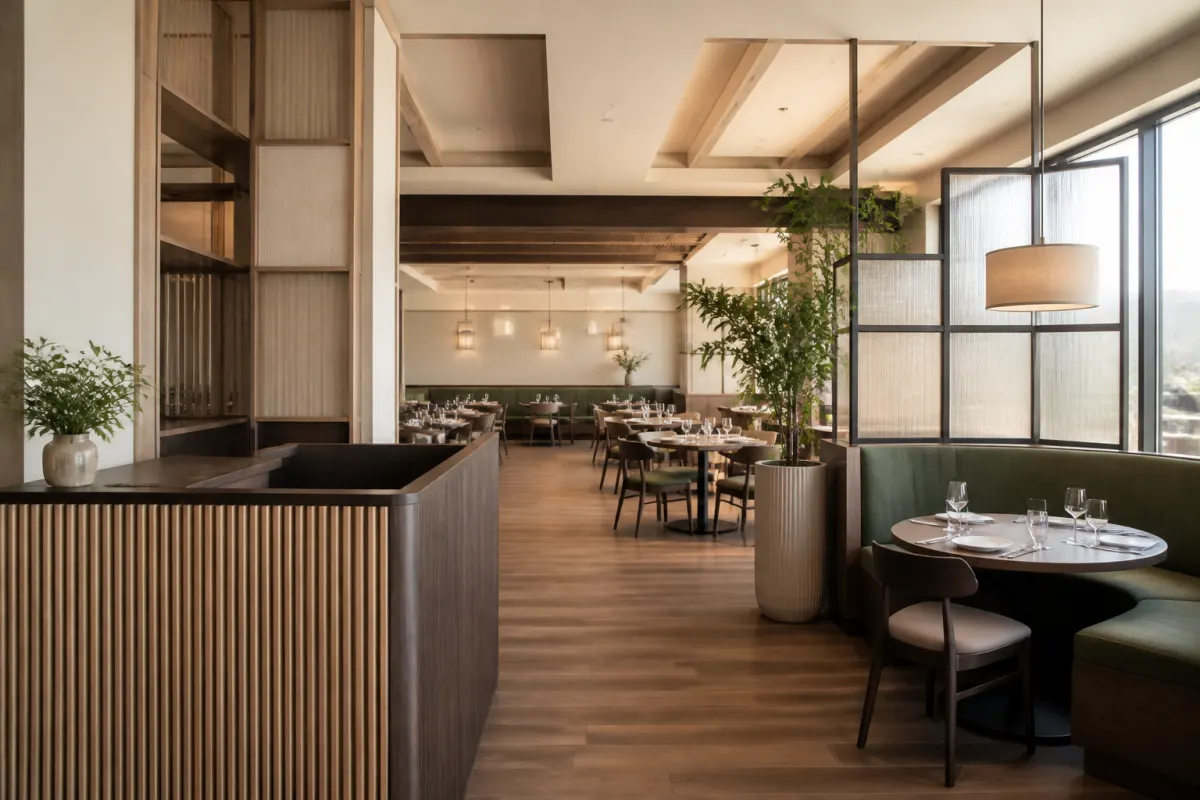
Trial awkward party sizes on the actual round, square, and rectangular tops with the proposed chairs and bases. Straight edges may offer joining options, but count usable end positions and check matched heights and occupied routes before assigning combined capacity.
What to avoid
Avoid choosing a table from an outdoor label or price alone. Check intended commercial use, UV/weathering information, approved loads, top/base compatibility, and replacement parts. There is no universal one-or-two-season failure timetable for all retail resin furniture.
For a table with an umbrella hole, obtain the approved umbrella, base or anchor system, clearances, wind limits, and closure procedure. The hole or table weight is not anchorage approval, and no safety-issue prevalence ranking is established here.
Check any table skirting or coverings for the selected outdoor exposure, securing, cleaning, and storage requirements. Include their movement and wet-weather handling in the trial; coverings and bare tops each need product-specific approval.
Sourcing patio tables
Ask for the exact table's outdoor approval, top/base compatibility, exposure limits, cleaning instructions, and any umbrella requirements. If you plan around a 10 to 14-week custom-order window, confirm the supplier's approval, production, dispatch, transit, and receiving milestones before relying on it.
Include table counts, height mix, exposure, top/base requirements, and receiving details in a quote request for relevant independent suppliers to review. Browse illustrative table concepts for design direction; listings do not verify outdoor ratings, dimensions, stock, or current prices. Suppliers confirm the actual models, minimums, documentation, and dates.
Getting the mix right before you order
Use daypart party-size records, the measured footprint, and occupied trials to select table sizes and heights. Confirm the proposed layout and order quantities; a deliberate mix does not by itself guarantee lunch turnover or dinner appeal.