Banquet tables are the backbone of any event operation, and the ones you choose decide both your room capacity and how fast your staff can flip a space between events. The right banquet tables fold flat, roll easily, and survive years of setup and teardown without warping or wobbling. The wrong ones slow every turnover and crack under the workload. This guide covers how venues, hotels, and caterers choose banquet tables by shape, size, material, and folding mechanism, plus what they actually cost at volume.
Round vs rectangular
The first decision is shape, and it is driven by the events you host.
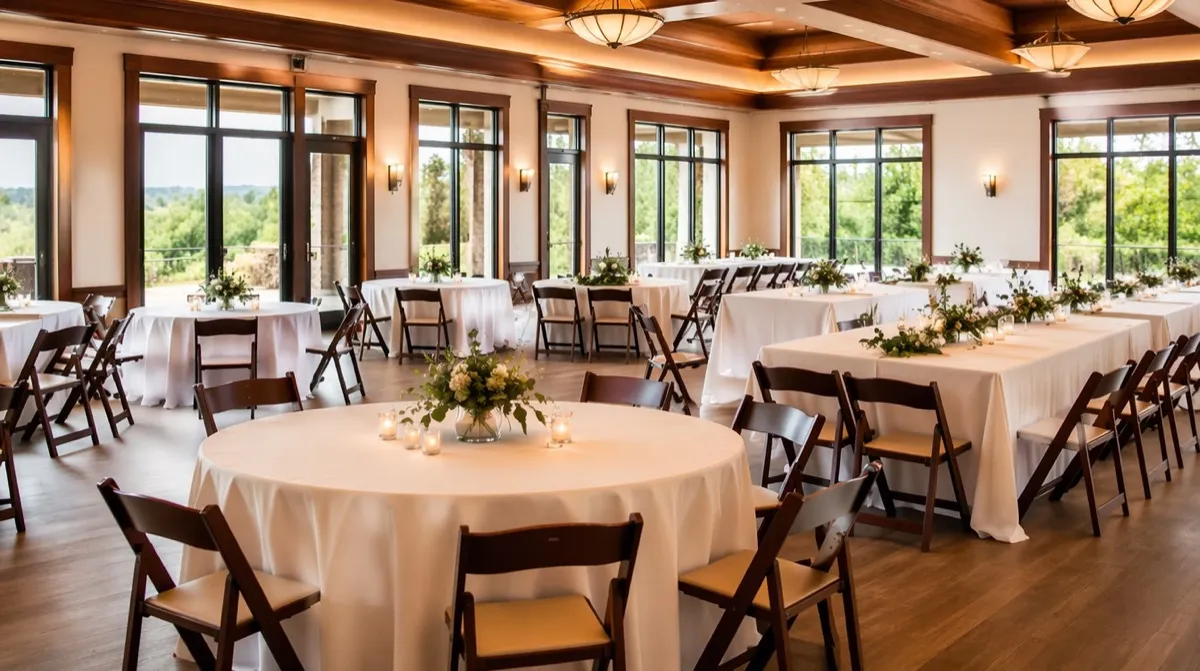
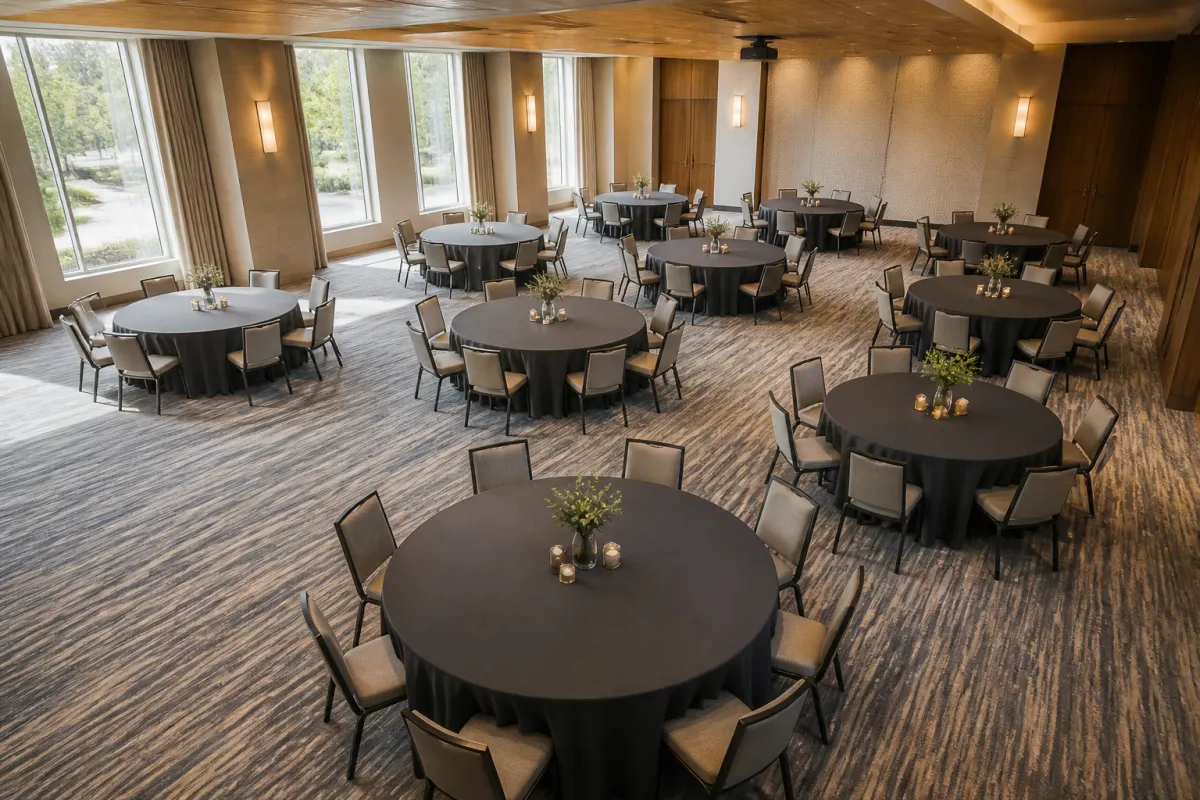
Round banquet tables are the wedding and gala standard. They seat guests facing each other for conversation, work well for plated dinners, and fill a ballroom in an organized grid. A 60 inch round table seats 8 to 10 guests, which makes it the most common size in the event world.
Rectangular banquet tables are the flexible workhorses. They line up end to end for long banquet rows, push together for conference and classroom layouts, and handle buffets, registration, and back-of-house prep. A 6 to 8 foot rectangular table typically seats 6 to 8 guests depending on length and whether you seat the ends.
Most venues buy both, weighting the mix toward whichever event type they book most.
Common sizes and seating counts
For initial scenarios, assign 8 to 10 seats to a 60-inch round and 10 to 12 to a 72-inch round; compare 6 to 8 for a 6-foot rectangle and 8 to 10 for an 8-foot rectangle. These are chosen seat-count ranges, not demonstrated comfortable capacities for every chair and place setting. Keep the selected count consistent in the arithmetic and test the occupied layout before using it for an event.
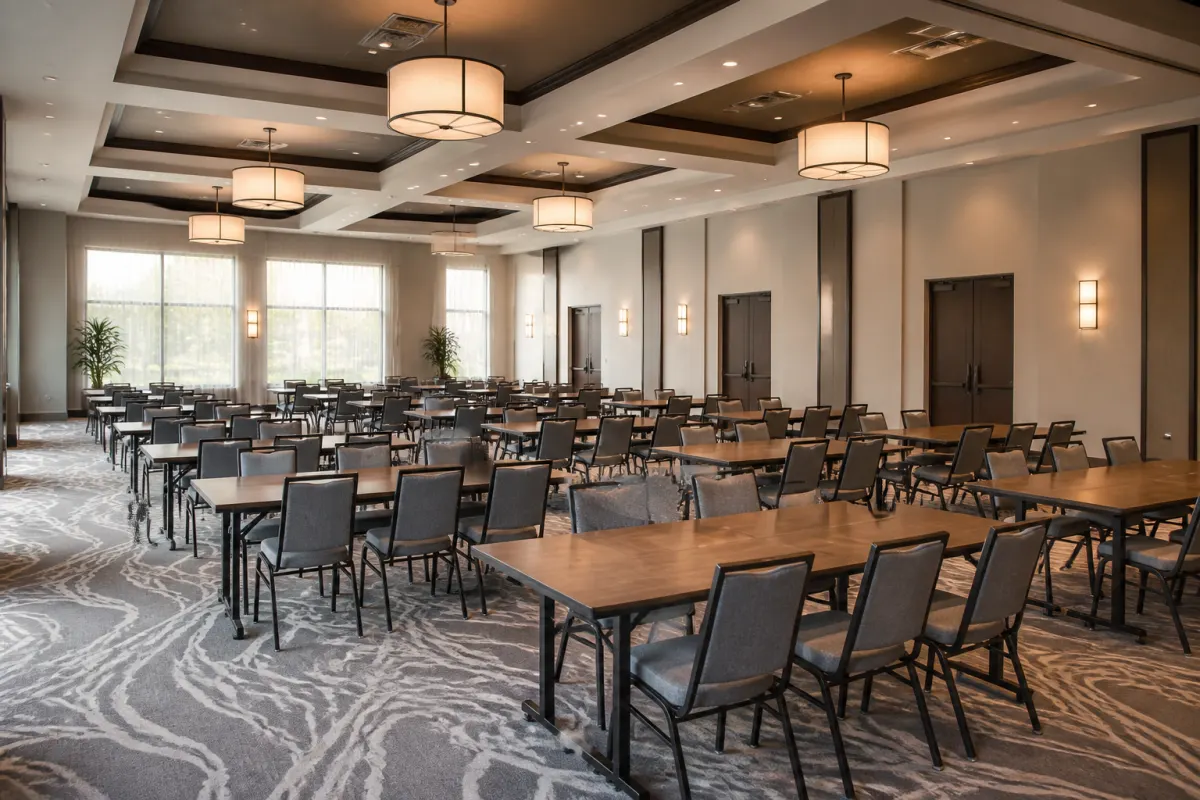
Plan your inventory around the room, not just the guest count. The number of tables that physically fit, with room for service aisles and a dance floor, often matters more than raw seating math. A supplier who knows event layouts can help you spec a mix that maximizes capacity without crowding.
Top materials
The tabletop takes the abuse, so material matters. Most commercial banquet tables use a molded plastic or high-density polyethylene top, which is lightweight, moisture resistant, and forgiving of spills and impacts. These are the go-to for high-turnover event use.
Compare each selected tabletop's actual weight, surface/edge construction, handling limits and care instructions. Laminate and wood-grain labels alone do not establish a heavier top or gentler handling requirement. Browse table concepts for appearance references, then obtain manufacturer documents for the actual folding table and compatible cart.
Folding mechanisms
The folding mechanism is what your staff touches every single setup, so it deserves real attention. Look for a heavy-gauge steel folding frame with a locking mechanism that snaps securely into place and does not collapse mid-event. Wishbone and channel-style leg frames are common on rounds, while rectangulars often use straight folding legs.
Inspect hinges, locks, frame, top and attachment points under the selected model's instructions. A stated thousands-of-fold-cycles result needs its actual test conditions and does not establish a service life. Confirm the permitted setup method and crew requirements, then time a sample reset before making a labor-saving assumption.
Carts and storage
Banquet tables live or die by how you move and store them. Round tables store on edge in dedicated table caddies or dollies, while rectangulars stack flat on flat trucks. Buying the matching transport equipment up front is not optional, it is what protects the tables and your staff during rapid turnover.
Calculate storage from the exact table/cart dimensions and approved loaded capacity. Six to ten tables per movement is a handling example, not proof that one person may safely move that load. Test the real route with the approved equipment and crew, and include carts in the quote.
What banquet tables cost
The 60 to 130 dollar round-table, 50 to 120 dollar rectangular-table and 70 to 150 dollar cocktail/highboy bands are illustrative budget inputs. They are not dated model-specific supplier prices; confirm currency, model, size, top, frame, freight and service scope in the quote.
Submit a furniture request with the event mix, chosen table counts, compatible-cart requirements, finishes and delivery access. Independent suppliers may quote available table and cart models directly. Check the actual package against the event floor plan and storage route before approval.
Use the banquet seating calculator to explore an area and seat-count scenario before ordering. It cannot test actual table/chair geometry or approve capacity. The seating capacity and space planning reference explains the chosen square-feet-per-person and seat-count inputs; verify them against the dimensioned venue layout.
Check the bulk order against storage and freight
Choose the round-to-rectangular mix against both event layouts and the carts and storage space each shape requires. Confirm folded dimensions, cart capacity, doorway clearance, and the route from receiving to storage.
List tops, folding frames, carts, and accessories separately on the quote. Confirm the delivery appointment, unloading equipment, assembly responsibilities, and inspection procedure before comparing the full landed cost.
How many tables for 100 or 200 guests?
Divide the number of seated guests by the seats assigned to each table, then round up to a whole table. Use the same seating assumption throughout the order. At eight guests per table, 100 guests need 13 tables, not 12; 200 guests need 25. At six per table, 200 guests need 34 tables, not 33.
| Planned seats per guest table | Tables for 100 guests | Tables for 200 guests |
|---|---|---|
| 6 | 17 | 34 |
| 8 | 13 | 25 |
| 10 | 10 | 20 |
| 12 | 9 | 17 |
These are arithmetic examples, not a statement that every table can seat those numbers or that the tables will fit in your room. Choose the seats per table after checking the actual top size, base, chair width and place setting. A table with fewer assigned seats may be more suitable for a meal with larger place settings.
Count head-table guests separately if they will not sit at the general guest tables. Add buffet, registration, gifts and service tables as separate inventory; those tables do not supply dinner seats. Provide a chair for each seated guest, and list any spare chairs separately so they are not mistaken for additional approved capacity.
Check the floor plan before placing the order
Use the banquet seating calculator to compare the proposed furniture with the room dimensions. Include the actual dance floor, bar, buffet and other fixed areas. Review occupied chair positions and circulation with the venue before relying on a layout. A guest-count calculation alone cannot establish room capacity or approve an exit route.
For a cocktail reception, decide how many guests need seating and how the standing tables will be used. Do not divide the entire guest count by a highboy's presumed capacity and treat the result as a complete floor plan. If cocktail hour and dinner use different spaces or overlap in time, inventory both arrangements. If they share furniture, confirm who will reset the room and where guests go during the changeover.
Put the final guest tables, service tables, chairs, spares and carts on separate quote lines. Confirm the receiving appointment, unloading scope, storage space and current supplier lead time for those exact items.