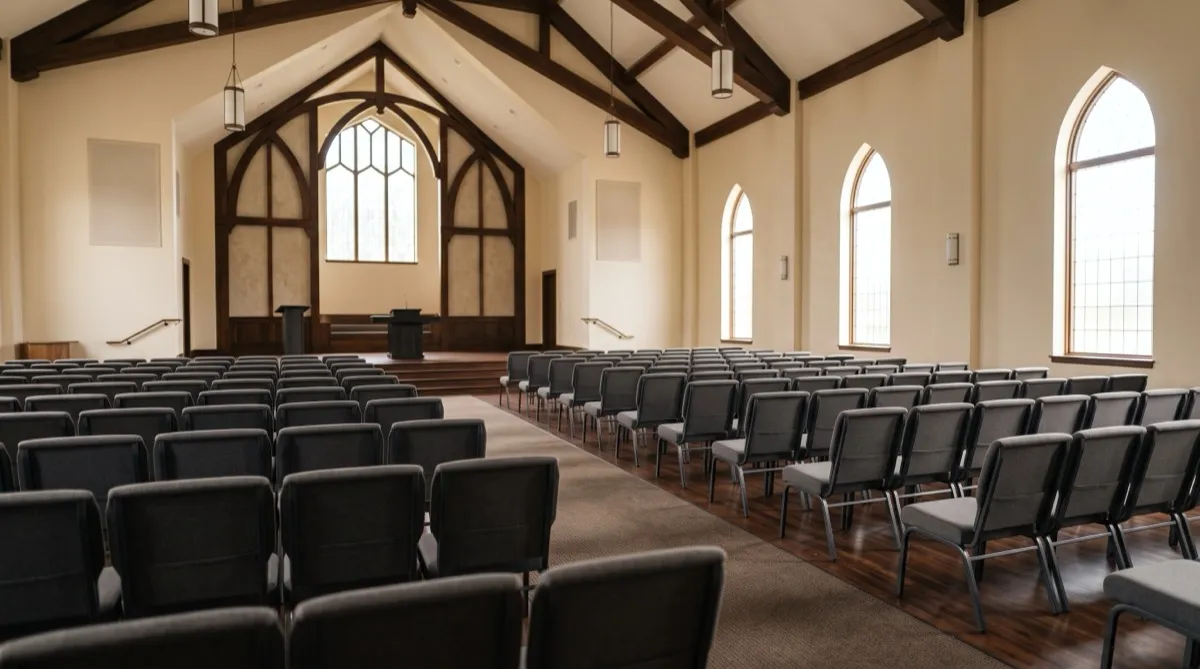
Write the sanctuary's actual service duration, weekly handling, storage and care requirements into the chair brief. An hour or more is an illustrative seated-use scenario, not a universal church-versus-restaurant duty comparison. Define the maintenance budget and inspect sample fit and handling; selecting a category does not guarantee that a second purchase is avoided.
The core spec decisions
Four things determine whether a church chair spec works: the ganging system, the frame, the upholstery, and the extras.
Ganging. Ask whether the approved layout needs connected rows and which exact chair and connector assembly supports it. Test engagement, release, tools, and reset time with the setup team; a commercial label or tool-free feature alone does not establish suitability.
Frame. Compare steel or other proposed frames by exact joint construction, intended-use load, test documentation, inspection requirements, and repair instructions. Welded and bolted joints require model-specific evaluation rather than a universal durability ranking. Compare chrome, black, silver vein, or other finishes using samples and documented care; no finish is established here as chip-free under repeated stacking.
Upholstery. Record the actual seating duration and cleaning method, then compare textile test reports, approved care, cushion properties, and sample comfort. A mid-weight or commercial fabric designation alone does not establish performance through weekly services.
Extras. List any back or under-seat bookrack, connector, number tag, and cart requirement separately. Obtain compatibility documents for the exact chair and rack; neither rack position nor a category label establishes that all accessories fit or are included.
Stacking and storage
Most sanctuaries that also function as multipurpose space (fellowship halls, gymnasiums doubling as worship space, portable church setups) need chairs that stack cleanly and store efficiently. If storage planning assumes 8 to 10 chairs per stack, confirm that count for the selected chair, accessories, and compatible cart before relying on it. Compatible stacking carts move a full stack at once rather than requiring chairs to be carried individually.
For a sanctuary that changes use, compare manual handling with the selected chair's approved cart along the actual storage route. Time loading, connections, turns and parking with the intended team; a compatible cart may be useful but does not establish a weekly labor saving or a guaranteed return on its cost.
Chairs vs pews
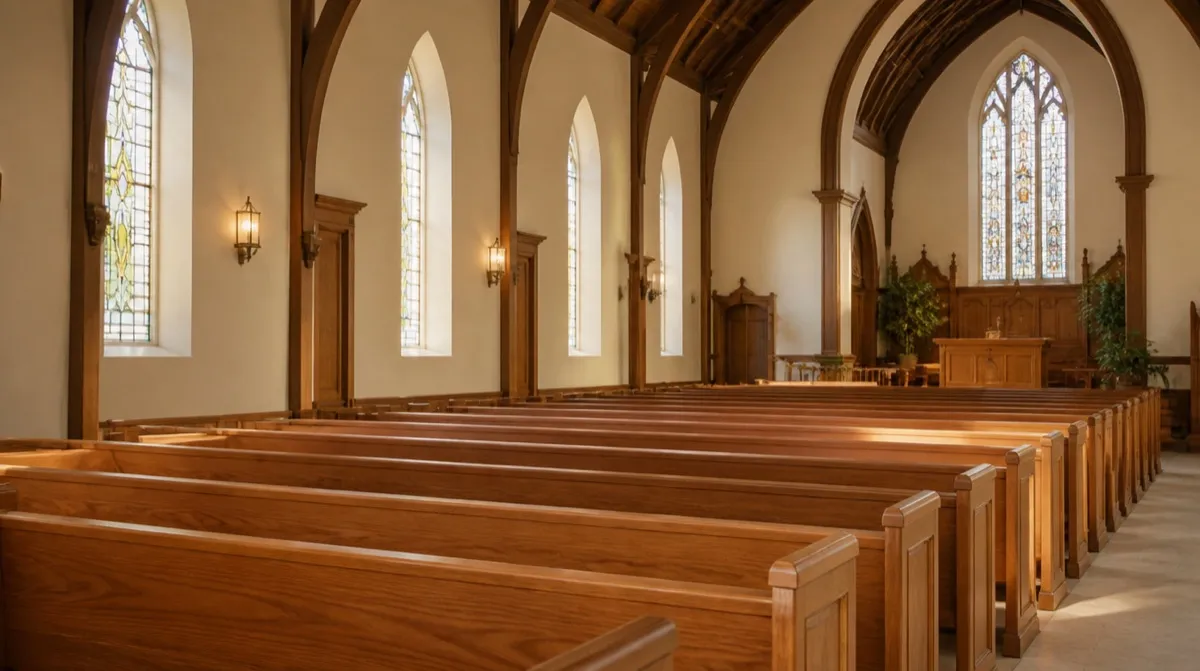
Many churches replacing or adding seating are weighing chairs against traditional pews, and the honest answer is that each solves a different problem. Pews are fixed, permanent, and read as traditional in a sanctuary built around that aesthetic. Chairs flex: a sanctuary seated entirely in chairs can reconfigure for a concert, a conference, a smaller midweek gathering, or a fellowship dinner without moving furniture designed to be permanent.
Growing congregations and multipurpose facilities lean toward chairs specifically for that flexibility. Renovation projects in older sanctuaries with traditional pews often add chair seating in overflow areas, balconies, or secondary rooms rather than replacing the pews outright. Some sanctuary chairs are designed with a pew-back profile that echoes a traditional pew's silhouette while keeping the individual-seat flexibility, which is a common middle path for churches that want the flexibility of chairs without a fully modern look.
Sizing the order
Chair count follows the measured layout as well as attendance. An 8 to 10 square foot allowance per attendee is an illustrative early budget assumption, not an approved occupant load. State whether it includes circulation before applying it so aisles are not deducted twice. Likewise, 36 to 40 inches back to back is a preliminary row-spacing assumption; the selected chair depth, clear passage between rows, accessibility positions, and adopted assembly requirements determine the final drawn arrangement.
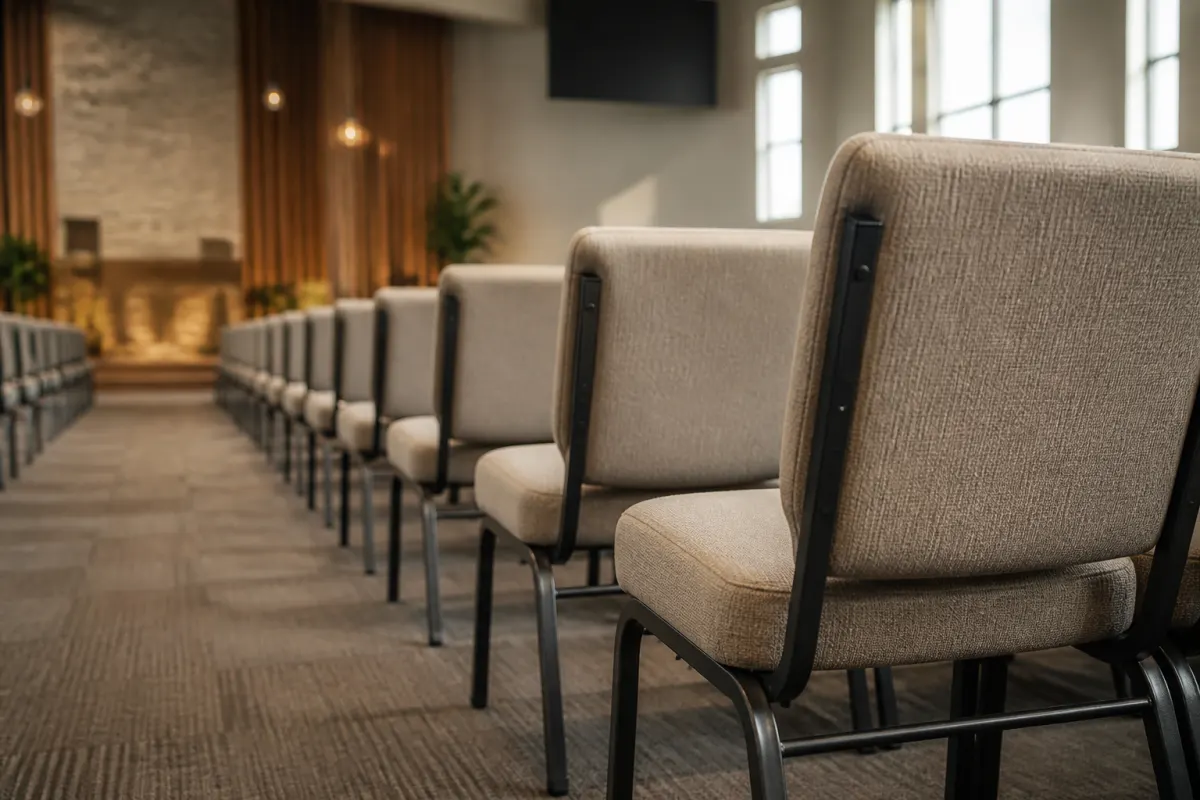
Set a reserve from expected attendance, approved room capacity, available storage, and confirmed replenishment terms. Do not assume a fixed growth interval or future finish match. The event space calculator provides an area-based count scenario; compare it with the drawn rows, selected chairs, accessible positions, and approved occupant load before ordering.
Choir and platform seating
Plan choir and platform seating with the music director and project team using actual sightlines, chair dimensions, riser documents, and finish samples. A lower profile is not universally required, and a coordinated order does not ensure every visible piece matches.
Budget and timeline
Separate stock-supported chairs from the configurations that require manufacturing. If the committee uses 10 to 14 weeks for a preliminary custom fabric and finish calendar, record it as an assumption, then replace it with the supplier's approval, production, and delivery milestones before setting a dedication date.
Most churches fund seating through capital campaigns or building funds rather than operating budgets, so getting an accurate seat count and spec locked early helps the finance committee plan the capital ask with a real number rather than a placeholder.
Getting the spec right the first time
Compare ganging, frame, upholstery and care documents against the actual weekly program. Base quantity on drawn occupied rows and approved capacity, and plan choir and platform assemblies separately; a correct specification does not establish that chairs are the longest-lived furniture decision.
Choose for the room, then test a sample
A chapel that switches between prayer groups, weddings, and visitations needs chairs that move quietly and store neatly. A sanctuary used for long services needs a sample test that lasts long enough to reveal pressure points. Ask several people to try the proposed seat and back, then have the setup team connect, separate, stack, and move the same sample.
For padded chairs, request foam and cleaning specifications alongside fabric swatches. Check how the cushion behaves in a loaded stack. Compare finishes in the actual chapel or sanctuary, and choose glides suited to its floor. An attractive sample that is difficult to clean or awkward to move is not a complete specification.
Related reading
- Church chair programs and quotes
- Church pews vs chairs
- Church seating capacity guide
- Stacking church chairs guide
Request a quote with your sanctuary drawing, target seat count, reset routine, and storage limits. Ask responding suppliers for the exact chair and cart specifications, safe stack limit, ganging compatibility, and fabric test and care documents.