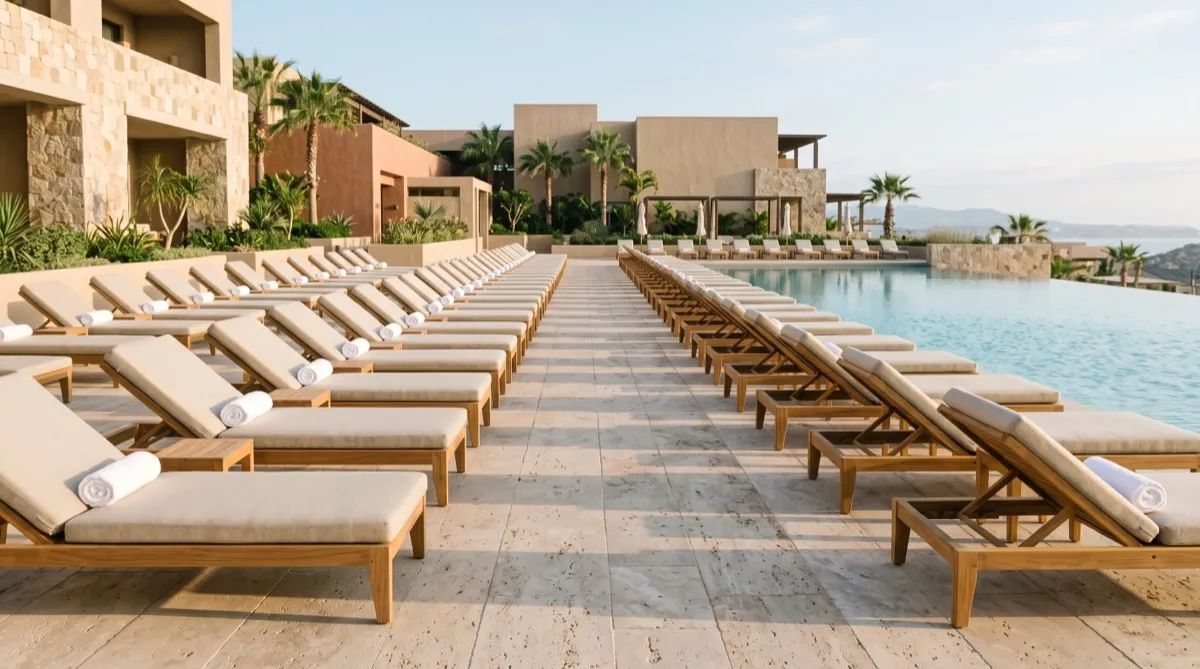
A pool deck lives or dies on its chaise lounges. Guests judge a property's pool program by whether there's a clean, comfortable chair open when they want one, and whether that chair still looks good after a full season of sunscreen, chlorine, and daily stacking. Getting the spec right up front saves a replacement cycle down the road.
Frame material: aluminum, resin, or teak
For an aluminum-frame chaise, obtain the complete model's permitted pool-chemical, salt, UV and temperature exposure, coating care and handling documents. The material label alone does not establish corrosion immunity, long service life or a default choice for every hotel deck.
For a resin/composite chaise, confirm the exact polymer, any internal frame/hardware and the maker's chemical, sun, temperature and load limits. Resin does not establish zero metal exposure or universal chemical tolerance. Compare actual delivered costs and maintenance documents instead of assuming aluminum wins a price/durability ratio.
For a teak candidate, obtain the actual model's exposure, finish and cleaning instructions, weight and handling limits. Follow the maker's maintenance procedure for the intended appearance rather than prescribing oil universally. Teak does not automatically make every assembly more expensive or heavier than every aluminum option.
Sling vs cushion
This decision affects both guest comfort and your housekeeping labor every single day.
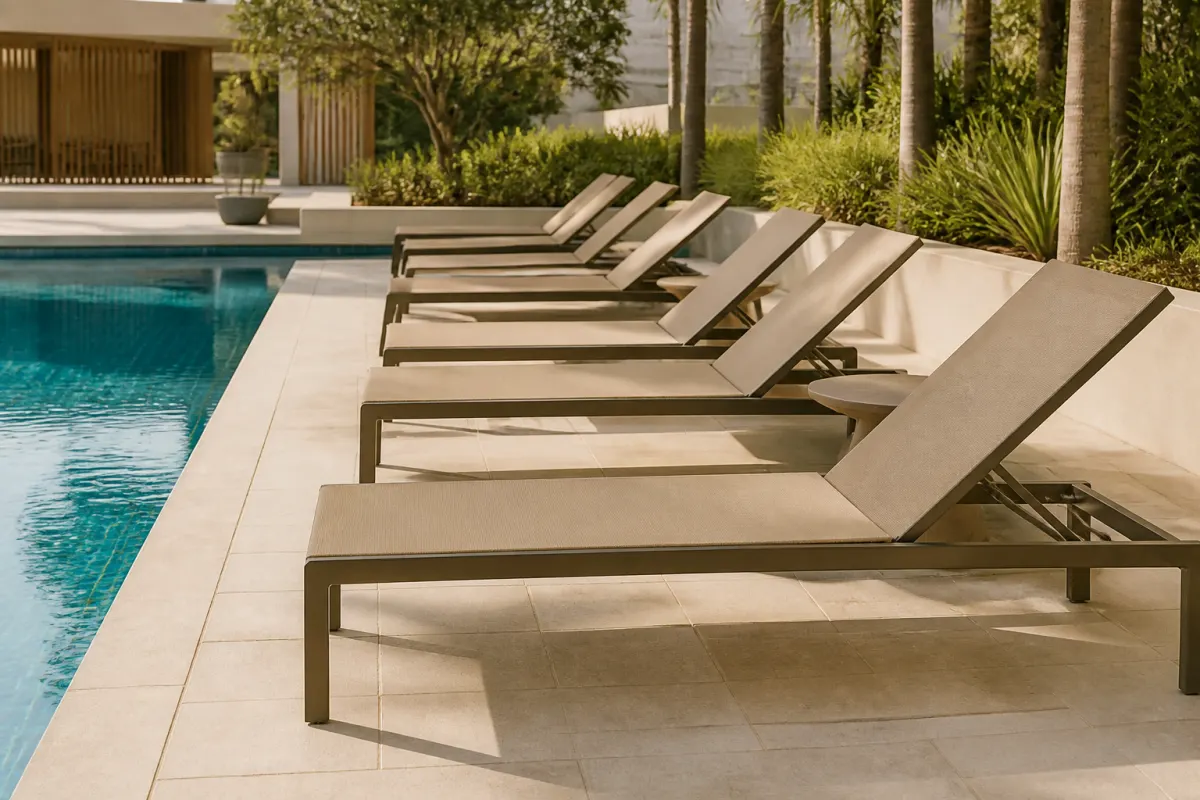
For a sling or strap lounger, check the exact mesh/strap and assembly's drainage, drying, cleaning and replacement instructions. The format alone does not establish that it retains no water or needs almost no daily care. Time the approved staff routine against actual deck use before assigning a labor advantage.
For a cushioned lounger, test comfort with the actual users and obtain complete cushion/cover drying, storage, exposure and replacement instructions. Follow the maker's rain/stowage limits rather than assuming every cushion must come in after each shower. Compare real handling capacity and care labor; neither a boutique label nor a 300-room count determines the correct format.
Stacking and storage
Stackable chaise lounges are worth the small premium at almost every property. A stackable frame lets housekeeping consolidate loungers for overnight storage, weather events, or off-season closure without needing a warehouse's worth of floor space. Non-stacking loungers need flat storage room, which most properties don't have in the quantity a full pool deck requires.
Wheels on the front two legs matter as much as stacking. A chaise that guests and staff can tilt and roll into position, rather than lift and carry, saves real wear on both the furniture and the staff moving it multiple times a day.
Spacing and quantity planning
Pool decks get overbuilt or underbuilt more often than any other outdoor furniture category, because the quantity math isn't obvious until you've run it.
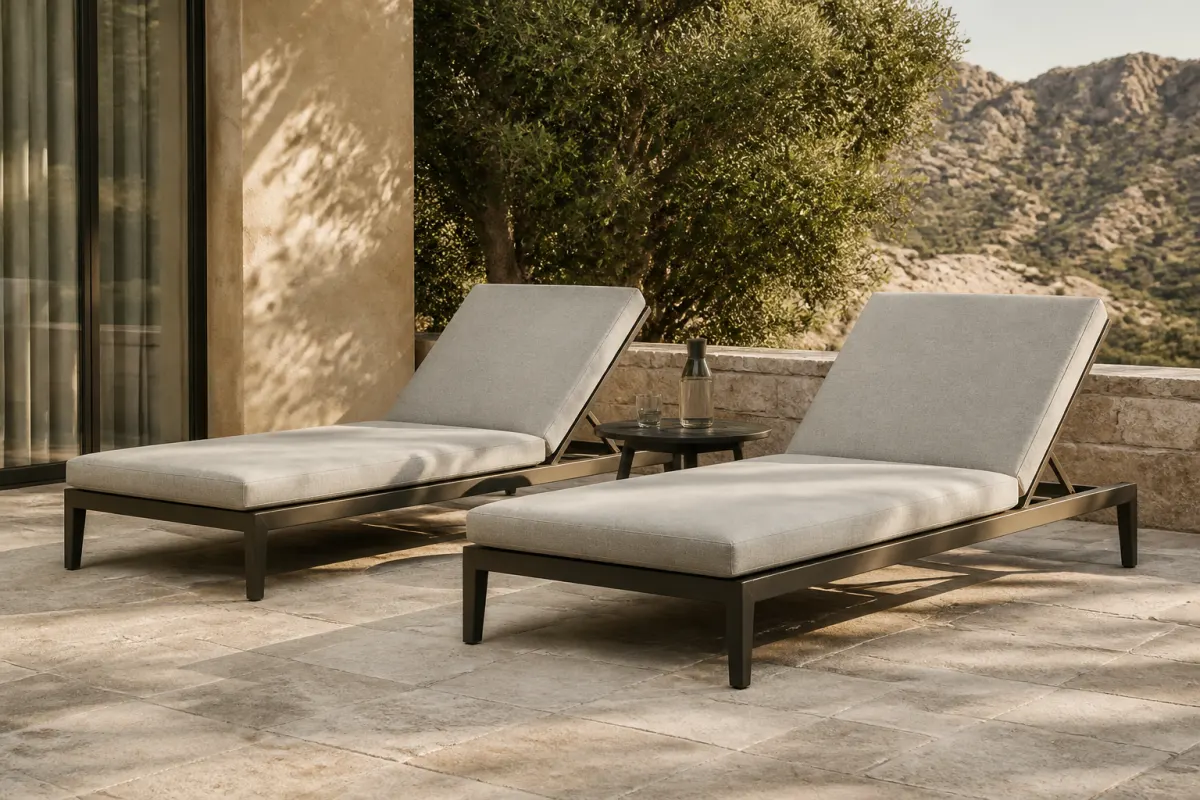
Start with usable deck area and a dimensioned occupied layout. The 25 to 35 square feet per chaise and one-third to one-half occupancy ratios are chosen planning scenarios, not verified hotel demand norms. Check the actual reclined footprint, side tables, umbrella bases, required routes and observed peak users before setting the lounger count.
The 3-foot aisle example is an initial planning input, not a universal pool-deck or egress requirement. Measure clear routes beyond occupied and reclined lounges, and have the project designer verify the applicable access, egress and service requirements. Test housekeeping cart movement separately.
What to avoid
Check the exact model's approved commercial pool use, exposure limits, frame/connection tests, compatible straps/cushions and stacking instructions. A hollow tube, reinforced weld or retail label alone does not establish a one- or two-season failure forecast. Inspect and maintain the actual assembly under its maker's instructions.
Compare fixed and adjustable backs with actual user needs, permitted positions, load/locking documents and the reclined layout. This guide provides no usage or complaint study establishing that every non-adjustable lounger underperforms.
Sourcing and lead times
Confirm the selected model's country of manufacture, stock location and actual availability. Treat 10 to 14 weeks as a provisional custom-order scenario; obtain approval, production and delivery dates for the exact finish and fabric. Include inspection, setup and maker-approved storage for any early delivery before the pool opening.
Minimums scale with the size of the pool program; boutique properties and full resort decks price differently.
Submit a furniture request with usable deck area, the occupied/reclined layout, peak-use assumptions, exposure, quantities and dates. Independent suppliers may confirm actual lounger models, exposure and stack/handling limits and delivered quotes; the project team approves the final quantity and layout.