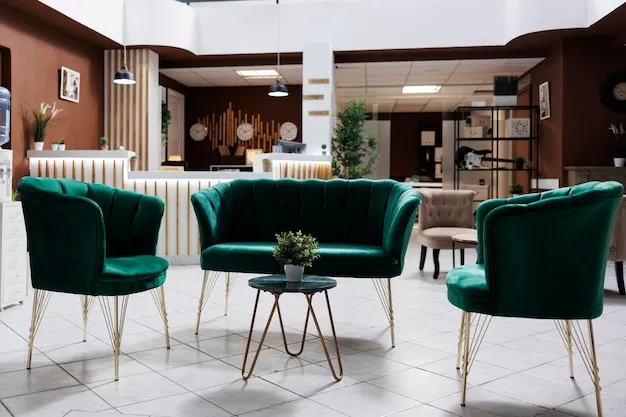
For a lobby sofa or lounge chair, record the expected seating duration, user tasks, handling and appearance requirements. Compare exact frame, cushion, textile and care records and test a sample; this guide has no field evidence predicting seasonal sag or years of like-new appearance.
Where lounge seating goes and why it matters
Commercial lounge seating shows up across hospitality, and each setting changes the spec.
Hotel lobbies demand the highest aesthetic standard. This is the first impression, sat in by guests waiting to check in and used heavily during peak arrival windows.
Restaurant lounge and waiting zones need wipe-clean performance fabrics and frames that survive being shifted constantly by staff and guests.
Reception and corporate lobbies balance brand presentation with all-day use by visitors.
Coworking and collaboration areas see near-constant use and benefit from modular pieces that reconfigure.
Measure the actual lounge and dining tasks, duration and turnover if comparing zones. Category names do not establish longer visits, higher comfort needs or fewer daily users; sample fit and duty requirements should follow the property's own program.
What "commercial grade" means in lounge furniture
Treat the commercial label as a documentation request; it does not establish one universal specification or certification.
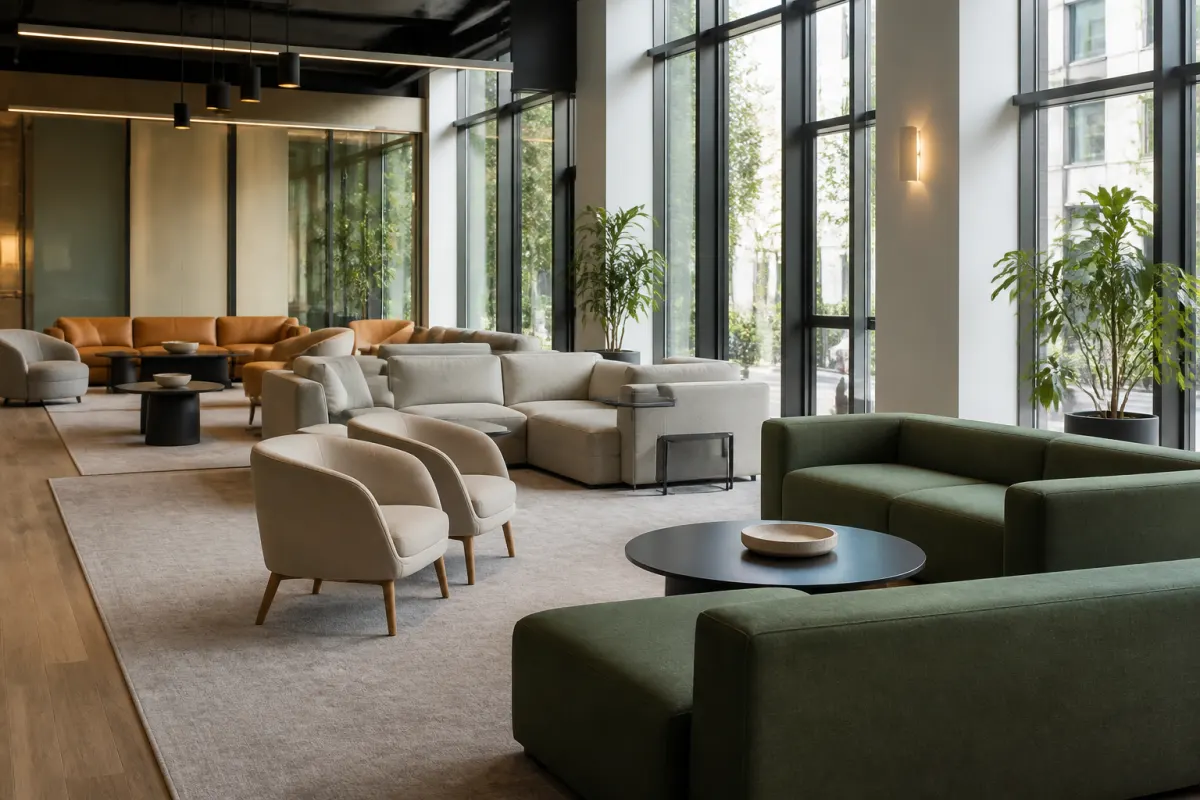
Frame construction. Compare exact hardwood, steel or other assemblies by joints, support, intended-use load, test reports, inspection and authorized repairs. A residential or commercial label does not establish softer wood, stapled joints, or a racking outcome.
Suspension. If sinuous springs or webbing are proposed, obtain the exact support, fastening, load, fatigue and inspection records. Inspect the actual support assembly and its fatigue evidence. Foam or suspension labels alone do not establish a one-year collapse date.
Foam density. If a preliminary cushion specification uses 1.8 to 2.5 lb/ft³, keep the volume unit explicit and label the band as an assumption to test. Density does not alone establish high resilience, firmness, or service life. The Polyurethane Foam Association describes these as different properties; obtain the selected cushion's thickness, support, firmness, and fatigue evidence as well.
Upholstery rating. Use the ACT textile-specific abrasion guidance and the project's stated use and care requirements. A 100,000 or 50,000 target can be a project specification, but it is not a universal high- or low-traffic threshold or a prediction of appearance retention. Record test method and textile type before comparing results.
Materials that hold up
Performance fabrics, including any proposed Crypton collection, need exact stain, moisture, abrasion, application and approved-care records. The performance label does not define a universal hospitality default or guarantee easy cleaning.
Commercial vinyls and polyurethanes: verify the exact cover and complete chair assembly against the actual spills, agents, concentrations and cleaning frequency. Neither label establishes instant cleaning or tolerance of every aggressive protocol.
Bouclé and textured wovens: compare the exact textile's intended use, abrasion method, construction, snag behavior and approved care on the sample assembly. Texture or stain-treatment labels do not establish commercial suitability or a universal required treatment.
Frame finishes: obtain approved cleaning, exposure and repair instructions for the exact powder coat, hardwood finish or other surface; a finish name alone does not establish chemical or scuff resistance.
Ask the project team which fire-performance requirements apply to the proposed textile and complete furniture assembly. Obtain the exact test identifier, configuration and compliance documents requested for the jurisdiction; do not assume one flame-retardant certification or a commercial label covers every project.
Sizing and layout
Lounge seating is sold by the piece and by the configuration.
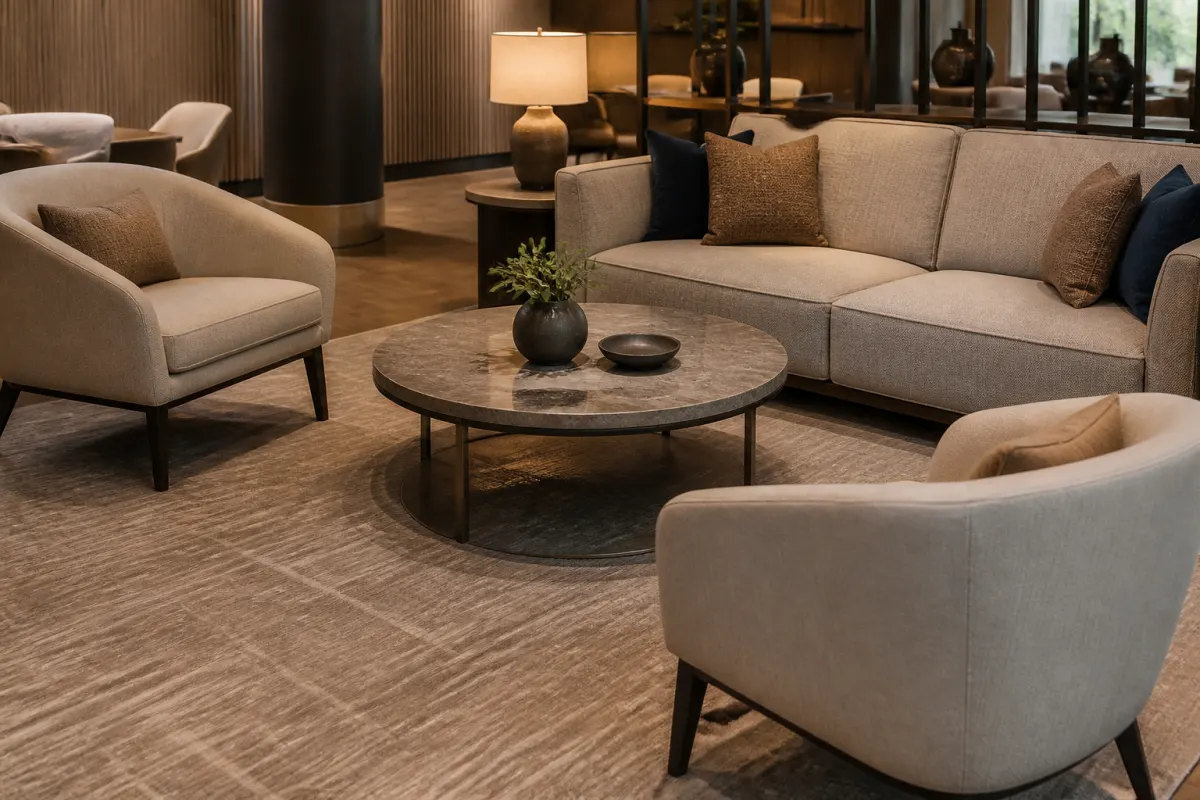
Lounge chairs are the most flexible unit, easy to reconfigure and replace.
Two and three-seat sofas anchor larger lobbies but are harder to move and reupholster.
Modular and sectional lounge: obtain approved module connections, dimensions, release and handling instructions. Draw the intended arrangements and test changes; the category does not establish market dominance or guaranteed reconfiguration.
Ottomans and benches add flexible overflow seating and double as low tables.
Measure your space and your traffic flow before specifying. A lobby needs clear circulation paths, and oversized sofas in a tight footprint create both a code and a comfort problem.
Minimums, customization, and ordering in volume
Compare an illustrative 4 to 6 units per style with the quantities your lounge plan requires, then confirm the supplier's actual product, finish, fabric, or carton minimum. Ask separately whether frame finishes, upholstery, dimensions, and cushion firmness can change on the selected model; a custom order may have different minimums and approval costs.
Compare a full lobby proposal with separate sofa, lounge-chair, and ottoman bids on the same scope. Ask for fabric-lot and finish controls and approve samples where matching matters; one purchase order does not ensure a common dye lot or a better price.
Lead times and warranty
Confirm stock and custom schedules for the selected quantities. A 10 to 14 week factory-direct duration and a 14-week order-date allowance are illustrative initial assumptions; replace them with approval, release, production, transit, receiving, and installation dates before setting an opening or renovation reveal.
Obtain the exact warranty terms and exclusions for frame, suspension, foam, cover and labor. Do not assume multi-year frame coverage or shorter foam terms from a commercial label; record actual duration and commercial-use conditions for each component.
The bottom line
Set lounge requirements from actual tasks, user fit and observed duration. Compare frame and suspension records, density separately from firmness, textile-specific abrasion guidance and approved care. Use matched package and separate-item proposals for finish controls and price; one order does not guarantee a dye lot or discount. Replace the 14-week schedule assumption with confirmed milestones.
Request a quote with the floor plan, seating tasks, quantities, appearance references, cleaning requirements, and dates. Ask responding suppliers for the proposed models' actual dimensions, load and textile documentation, custom-option feasibility, samples, and itemized delivery scope.
Related reading: Commercial Seating Buyer's Guide · Commercial Upholstery Fabric Guide · Contract vs Residential Furniture · Restaurant lounge seating: specs for bar-adjacent and waiting areas
Fit compact seating and plan its upkeep
A loveseat can suit a small lounge, but compare usable seats and circulation against two separate chairs. Check delivery access as well as the installed footprint, including lift doors and turns along the route.
For a multi-piece order, review the cleaning instructions and upholstery at armrests, front seat edges, and other frequent contact points. Ask which covers, cushions, or glides can be replaced and keep the finish codes with the approved sample.