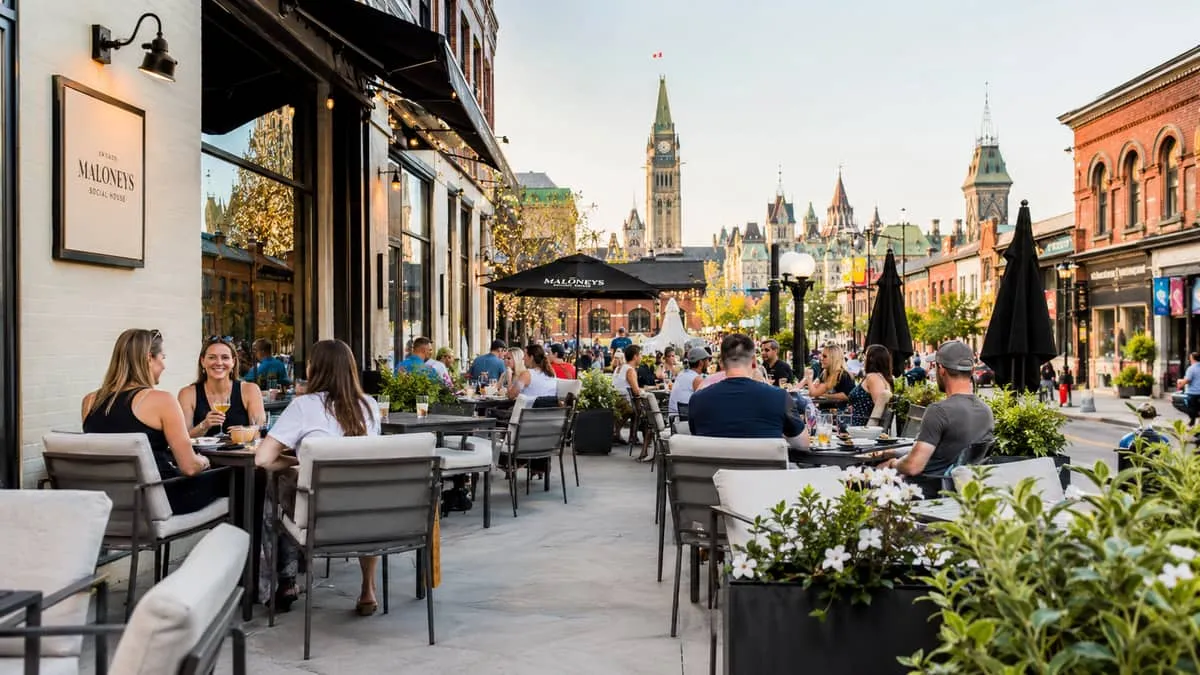
Ottawa treats warm weather like an event. After five months of ice and darkness, the city pivots hard when May arrives, and nowhere is that shift more visible than the ByWard Market terrace scene, which runs from the first reliably warm Thursday through Thanksgiving weekend with an intensity that surprises visitors expecting a staid federal capital. On a July Friday evening, the concentration of occupied patios along George and York Streets rivals anything in Montreal or Toronto by square metre. That is not an accident. It is a city collectively making up for lost time, and for the hospitality operators who own those terraces, it is serious revenue that has to be extracted from a compressed window.
This is the operating reality that should govern every decision you make about commercial patio furniture for an Ottawa property. The season is real, the demand is real, and the off-season storage problem is equally real. Getting the furniture right means thinking about all three simultaneously.
The ByWard Market Terrace: High Visibility, High Standards, Limited Room
ByWard Market is Ottawa's most scrutinized patio environment. Licensed terraces here operate under City of Ottawa guidelines that specify clearance requirements, maximum footprint, and in some cases approved colour palettes that respect the heritage character of the neighbourhood. Parliament Hill is a ten-minute walk north. The National Gallery is visible from several terraces. The clientele on any given afternoon includes federal public servants, diplomatic corps staff, convention delegates from the Shaw Centre, and international tourists who have just finished a Rideau Hall tour.
That audience has expectations. A plastic resin chair that might work fine on a suburban restaurant patio looks wrong here, and guests notice. The furniture is part of the experience signal the operator is sending, and in a district where the competition is immediately visible from your own terrace, the visual standard matters commercially.
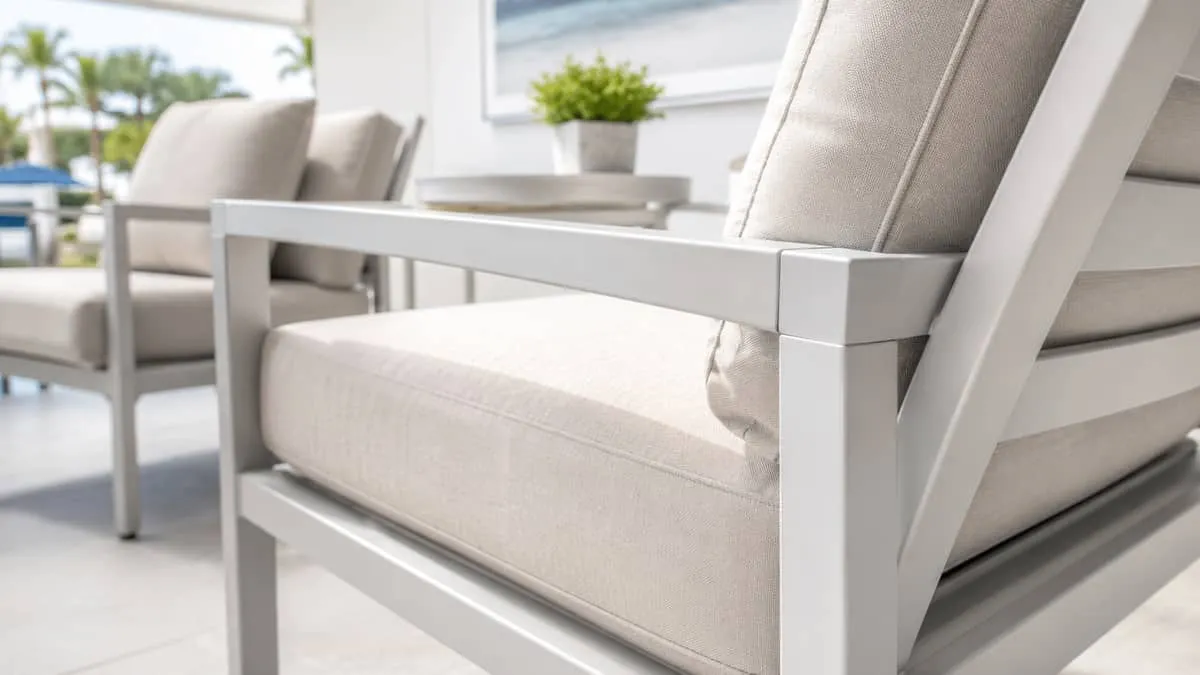
For ByWard Market operators, the practical requirements line up like this: frames need to be aluminum, because wrought iron adds weight that complicates the frequent rearrangements that licensed terraces require when clearing for accessibility access or adjusting for a larger party. Powder-coat finish in anthracite, matte black, or warm bronze reads as intentional against the red brick and limestone of the market buildings. Stackability is not optional given that most ByWard terraces store furniture inside or in tight back-of-house areas nightly during peak season. Stack ratings of eight to ten chairs per column are the minimum worth specifying.
Table bases on ByWard terraces take punishment. Foot traffic from Parliament Hill tourist circuits means chairs get pushed back hard and repeatedly. Cast aluminum or heavy-gauge steel bases outlast lighter alternatives by years in this environment. Tempered glass tops look excellent and are easy to wipe down, but if your terrace is exposed to wind channelling between buildings, weighted bases or hurricane canopy systems belong in the specification.
Rideau Canal Adjacent: A Different Kind of Patio Market
Properties operating near the Rideau Canal face a different set of considerations. The canal corridor is National Capital Commission-regulated land, which means any patio that interfaces with the waterfront involves NCC approval processes and design standards that commercial furniture suppliers should be aware of when helping operators specify product.
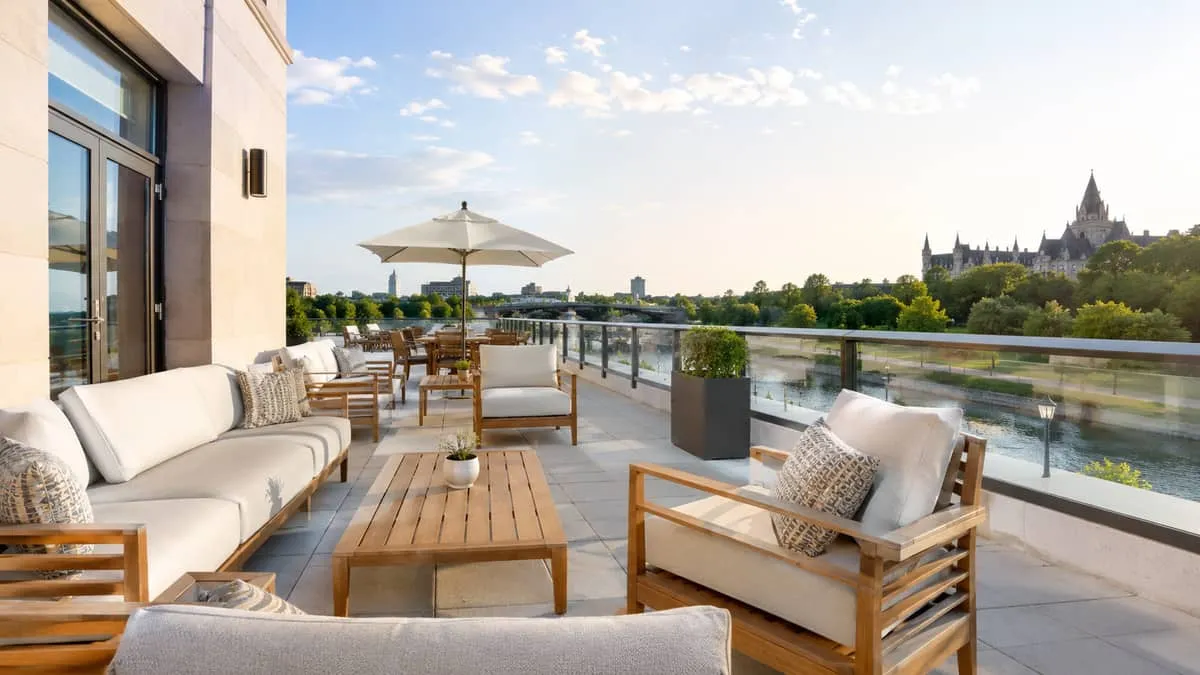
The visual expectation along the canal is higher than a typical urban restaurant setting. Hotels along Colonel By Drive, including properties that serve the convention corridor anchored by the Shaw Centre, set up seasonal terrace seating where the canal view is part of the value proposition. Guests are paying for the experience of being on that waterfront, and furniture that looks wrong undercuts the product they came for.
Teak performs well in this segment. The warmth of the grain reads as deliberate premium positioning rather than budget compromise, it ages gracefully to a silver-grey if operators choose not to oil it annually, and it has enough visual weight to look grounded against a large-scale outdoor setting. For properties that want teak aesthetics without teak maintenance requirements, high-density polyethylene lumber in teak-tone finishes has improved substantially and now holds up credibly in upscale canal-adjacent installations.
Lounge configurations sell well at canal properties because the use case is often lingering, not high-turnover dining. Deep-seat lounge chairs, sectional configurations for groups, and fire table clusters for shoulder-season evenings all expand the revenue window for these venues. A property that can run its canal terrace on a cool September evening with a fire feature and appropriate lounge seating extends its season by four to six weeks compared to one that pulls furniture at the first sign of autumn.
Ottawa's Cold Continental Reality: What Five Months of Storage Does to Cheap Furniture
The storage problem is the most underestimated factor in Ottawa patio furniture purchasing decisions. Any supplier who does not address it directly is not serving Ottawa operators properly.
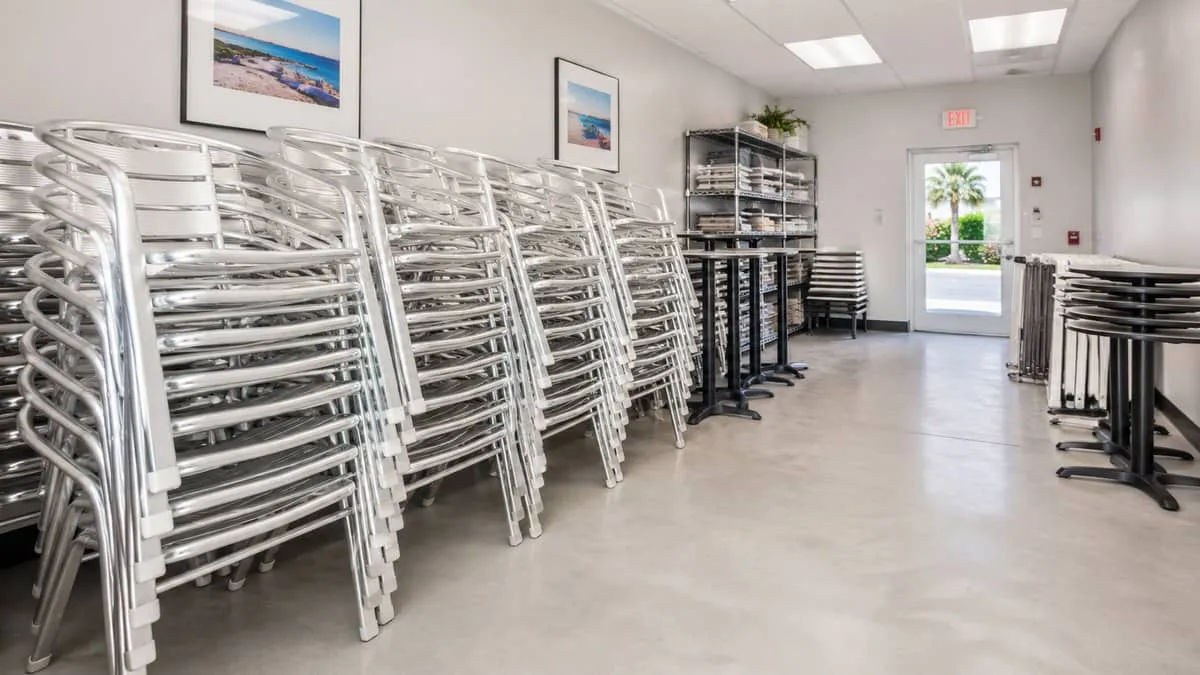
The city runs November through April in conditions that range from freeze-thaw cycles in late fall to sustained minus-twenty temperatures in January and February. Furniture that goes into storage in October needs to emerge in May in serviceable condition, year after year, for the economics of commercial-grade product to hold. That only works if the original specification accounts for how materials respond to storage conditions.
Aluminum frames are the clear choice for Ottawa's freeze-thaw reality. They will not rust, they do not absorb moisture, and powder-coat finishes resist chipping through temperature cycling better than paint. The weight advantage over wrought iron also means staff can stack, move, and store chairs without injury risk, which matters when you are doing it twice a year with seasonal staff.
Resin wicker over aluminum sits in the middle of the market and performs acceptably in Ottawa storage conditions, provided it is quality wicker with UV-stabilized resin rather than cheaper alternatives. Low-grade wicker cracks at joints during cold storage. High-quality product from contract-grade manufacturers holds up through multiple seasons if stored dry.
Cushion storage is where Ottawa operators frequently lose money through poor planning. Even Sunbrella-grade fabric benefits from proper off-season conditions. The fabric itself will survive, but foam fills that sit compressed in a damp storage area deform and lose resilience. A dedicated storage rack system that keeps cushions vertical, off concrete floors, and in a ventilated space pays for itself in extended cushion life. For a ByWard Market restaurant running sixty to eighty cushions, that is a meaningful inventory cost to protect.
Stackable chairs are not a preference in Ottawa, they are a procurement requirement. Specify stack ratings when sourcing: commercial-grade chairs should stack eight to twelve high with protective foot caps that prevent frame-to-frame scratching. Foldable side tables reduce footprint for tighter back-of-house situations that are common in ByWard's older building stock.
Fabric and Finish Standards for Ottawa's Peak UV Months
Ottawa summers run hot and UV-heavy. The capital sits at a latitude where summer sun is intense, and south and west-facing terraces take direct exposure for most of the business day. Cushion fabric that is not built to that standard will fade visibly within a single season, which is both an aesthetic and a financial problem.
Sunbrella is the industry benchmark for hospitality cushion fabric because it is solution-dyed acrylic. The colour runs through the fibre rather than sitting on the surface, which means UV exposure degrades the fabric slowly and evenly rather than bleaching the outer layer while the base material remains saturated. Mildew resistance matters in Ottawa's humid summers, particularly for terraces that take rain without cover and have cushions that may stay damp for a day or two between uses.
For properties in the premium segment, custom Sunbrella colours keyed to brand palettes are worth the additional cost. Several hotels in the Rideau Centre and Shaw Centre convention corridor use this approach to maintain visual consistency between interior design programs and terrace presentation. The Fairmont Chateau Laurier's outdoor presence, for example, operates at a standard where generic cushion colour choices would read as an oversight against the building's architectural weight. Embassy dining rooms along Sussex Drive face the same expectation.
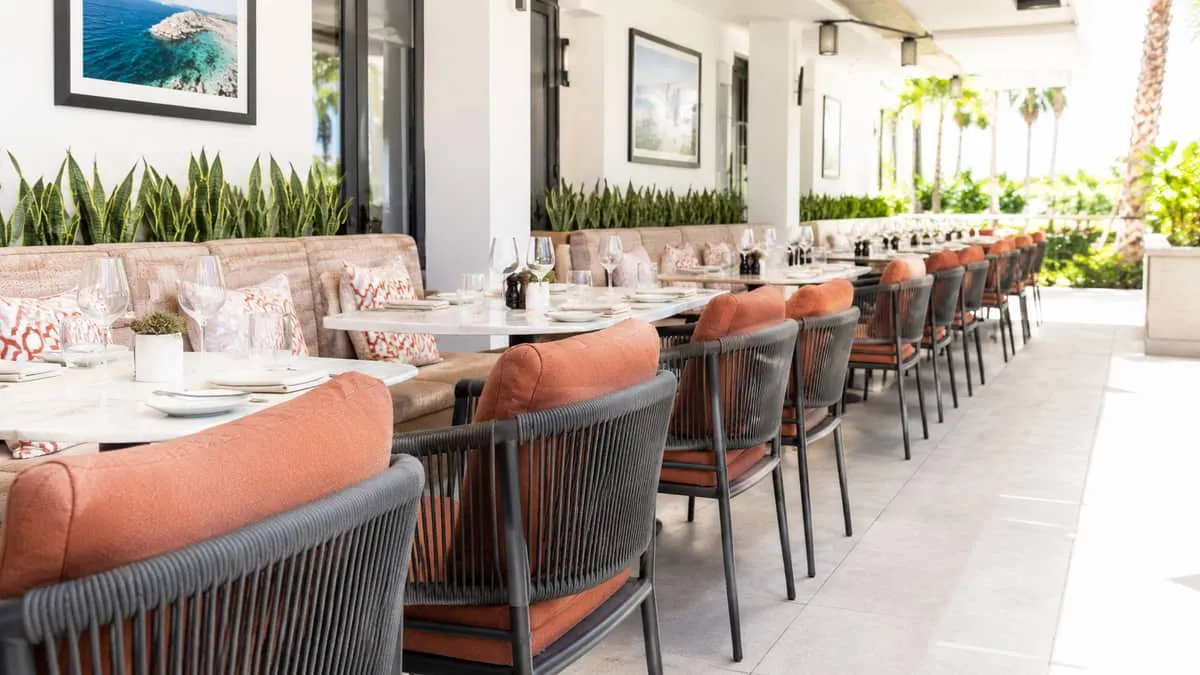
Frame finish longevity follows similar logic. Powder-coat from a commercial-grade manufacturer at appropriate film thickness holds colour through Ottawa's UV peak without chalking or fading. Cheaper powder-coat formulations show degradation by the second or third season. Specifying the finish standard, not just the colour, is the difference between furniture that looks right in year four and furniture that gets replaced in year two.
The Convention and Government Market: Volume, Flexibility, and Fast Setup
Ottawa is the largest convention market in Canada outside Toronto, anchored by the Shaw Centre on Colonel By Drive. Convention hotel terraces and outdoor event spaces serve a client base that requires flexible configurations, fast turnover between events, and furniture that presents well in event photography and social media coverage that travels beyond the local market.
This segment prioritizes different things than a ByWard restaurant operator. High-turnover dining tables matter less than event configuration flexibility. Lounge clusters, cocktail tables at standing height, and modular seating that can be arranged into reception configurations are the volume sellers for properties serving the Shaw Centre corridor and the Rideau Street hotel cluster.
The federal government and association conference market brings a consistent high-season demand base. Lobbying firms, national associations, and government departments use Ottawa's hotel terraces as extensions of meeting space during conference season, and the furniture in those spaces needs to hold up to intensive professional use, not just casual dining. That means commercial-rated load capacity, frame joints that do not loosen after repeated assembly and disassembly, and finishes that do not show wear after a season of daily professional use.
Sparks Street Mall's corporate corridor and the Centretown dining scene serve a lunch and after-work government crowd that has both the spending power and the expectation level of a professional urban clientele. The Glebe and Hintonburg independent dining scenes attract a younger, design-literate audience where furniture aesthetic is a stronger purchase signal. Hotel Arts Helix represents the newer hospitality product in the market that competes on design as a primary differentiator. Each of these segments requires a different specification conversation.
Serving the Gatineau Side: Cross-River Market
Ottawa-based suppliers who ignore the Gatineau market are leaving meaningful volume on the table. Gatineau's Old Hull neighbourhood and its restaurant strips along Rue Principale and Boulevard Saint-Joseph operate on the same May-to-October patio season, face similar storage requirements, and serve an audience that includes significant Ottawa spill-over traffic crossing the river on weekend evenings. The furniture requirements are functionally identical to Ottawa's commercial market, and a supplier with efficient delivery logistics can serve both sides of the Ottawa River without significant additional overhead.
Quebec's licensing environment for terraces has its own regulatory framework, but the physical requirements for furniture, materials, and storage logistics align closely enough with Ontario practice that operators on both sides of the river are essentially the same customer for specification purposes.
Matching Specification to Property Type
The right starting point for any Ottawa operator is a clear read on what the patio is actually doing for the business. A ByWard Market bar running high-turnover covers through a five-hour Friday evening needs durable, easy-to-clean surfaces, fast-stacking chairs, and tables that hold up to being pushed and rearranged dozens of times per shift. A boutique hotel near Parliament Hill needs furniture that photographs well for OTA listings and communicates a premium experience to the diplomatic and government guests who make up a significant share of their occupancy. A convention property needs volume, flexibility, and consistent presentation across a large footprint.
Those are different specifications with different cost structures, and a supplier who steers every Ottawa operator toward the same product line is not paying attention to the local market. The capital has enough diversity in its hospitality mix that the specification conversation should start with the property's guest profile and operational reality, not with a catalogue page.
Ottawa's patio season is compressed, visible, and commercially significant. The furniture choices operators make going into it determine not just how the season looks but how much of it can be monetized before the first November freeze sends everything back into storage. Working with a supplier who understands the specific demands of the capital market, from ByWard terrace licensing constraints to NCC waterfront standards to the storage realities of a city that spends half the year below zero, is the difference between furniture that performs for a decade and furniture that becomes a recurring budget problem.
For Ottawa properties comparing commercial patio furniture options, project-specific pricing tells you more than any published range. Request a quote and we will scope it to your space and volume.