
Ottawa is not a leisure market with a government overlay. It is a government capital with a leisure season layered on top. That distinction matters enormously when you are planning hotel renovation furniture procurement for any property from the Rideau Street corridor to Centretown to Kanata. The demand base here is federal departments booking blocks around budget estimates, embassy staff on long-term corporate accounts, lobbying firms filling suites during committee weeks, and national associations cycling through the Shaw Centre. That base is stable, recurring, and rate-capped in ways that reshape how renovation ROI works. Planning FF&E for an Ottawa property without accounting for these realities means planning for the wrong market.
The Ottawa Renovation Calendar Problem

Ottawa's renovation calendar is genuinely constrained in ways that no other Canadian city quite replicates. The instinct of most operators is to look at parliamentary recess as the obvious window. Parliament typically rises in late June for the summer break, and committee work slows. The problem is that late June through August is also Ottawa's peak tourism season. Parliament Hill draws visitors at scale all summer. The national museums along Sussex Drive and Wellington Street are at full capacity. ByWard Market restaurants, the Rideau Canal pathway, and the Glebe's Bank Street corridor are running at their highest foot traffic of the year. Any hotel within walking distance of those draws, which includes most of the Rideau Street cluster and the properties serving Centretown, is filling rooms that same summer period.
The practical renovation window for most Ottawa properties runs from late January through mid-March. The Christmas tourism spike has cleared. The federal budget season has not yet hit full intensity. The Shaw Centre's spring conference schedule has not ramped up. That eight-to-ten-week corridor is the most protected time on the Ottawa hospitality calendar, and it is the target almost every operator in the market is competing for.
If you miss that window, you face a harder choice. September brings federal employees back from summer, the academic year starting at Carleton and uOttawa, and the beginning of fall conference season. October and November are dense with association conferences and government-adjacent events. December has early holiday corporate bookings before the Christmas pause. There is genuinely no soft month in Ottawa's calendar that is also long enough to execute a significant renovation without careful phasing. Your FF&E supplier needs to understand this going in, not after your order is placed.
Phased Delivery Across a Constrained Floor Plan
Phased delivery in Ottawa is not a preference. It is the standard operating approach for any renovation that needs to protect revenue through a constrained calendar window. The mechanics are straightforward: you phase by floor, by wing, or by room category depending on your property layout, keeping a minimum sellable inventory available at all times while rooms cycle through refresh.
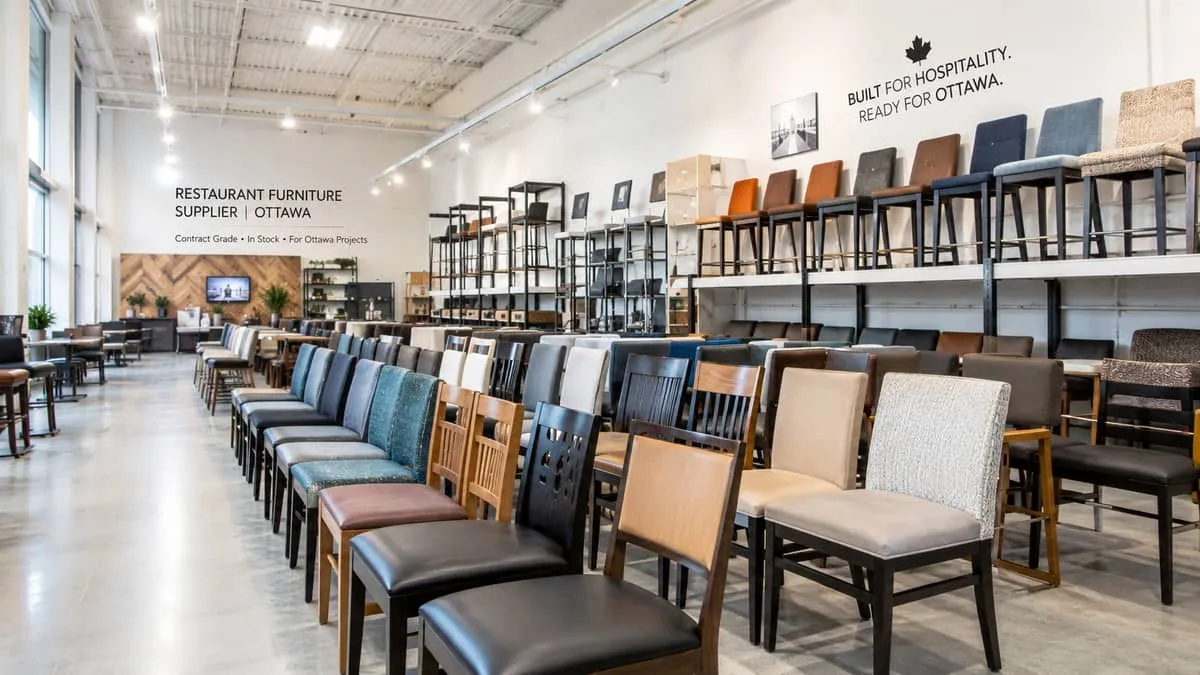
The execution requires a supplier capable of sequenced delivery. You are not receiving a full furniture order on day one and staging it in a parking structure. You are receiving batches tied to a construction schedule, floor by floor, with staging and holding capacity built into the supplier relationship. For Ottawa operators, a supplier with warehouse presence in the National Capital Region or close enough to deliver on short windows matters significantly. A supplier dropping everything at once from a distant warehouse and walking away creates a logistics problem before installation even begins.
The Shaw Centre's event schedule is publicly available, and any experienced Ottawa operator uses it as a hard constraint when building phase timelines. Parliamentary sitting calendars are predictable months in advance. National association conference dates in the market are knowable. Your renovation phase schedule should have those dates marked as non-negotiable stops where no rooms go offline, regardless of where the construction timeline stands.
The furniture specifications for each phase also need to be consistent across the entire renovation, not just within each phase. When a returning government client stays in a room renovated in Phase 1 and then a colleague stays in a room from Phase 3 six months later, the experience and quality level should be identical. Inconsistent spec across phases damages your positioning in the corporate account market more than a delayed renovation timeline does.
FF&E for Government and Diplomatic Accounts: What the Spec Actually Requires
Federal government travel policies create durability expectations that leisure market furniture does not have to meet. A senior public servant staying on a government-approved rate does not want a room that feels trendy. They want a room that is functional, professional, and clearly maintained. Diplomats and embassy staff staying near Sandy Hill, the Glebe, or the Rockcliffe corridor bring a different set of expectations: quieter materials, more refined finishes, and case goods that read as considered rather than value-engineered.
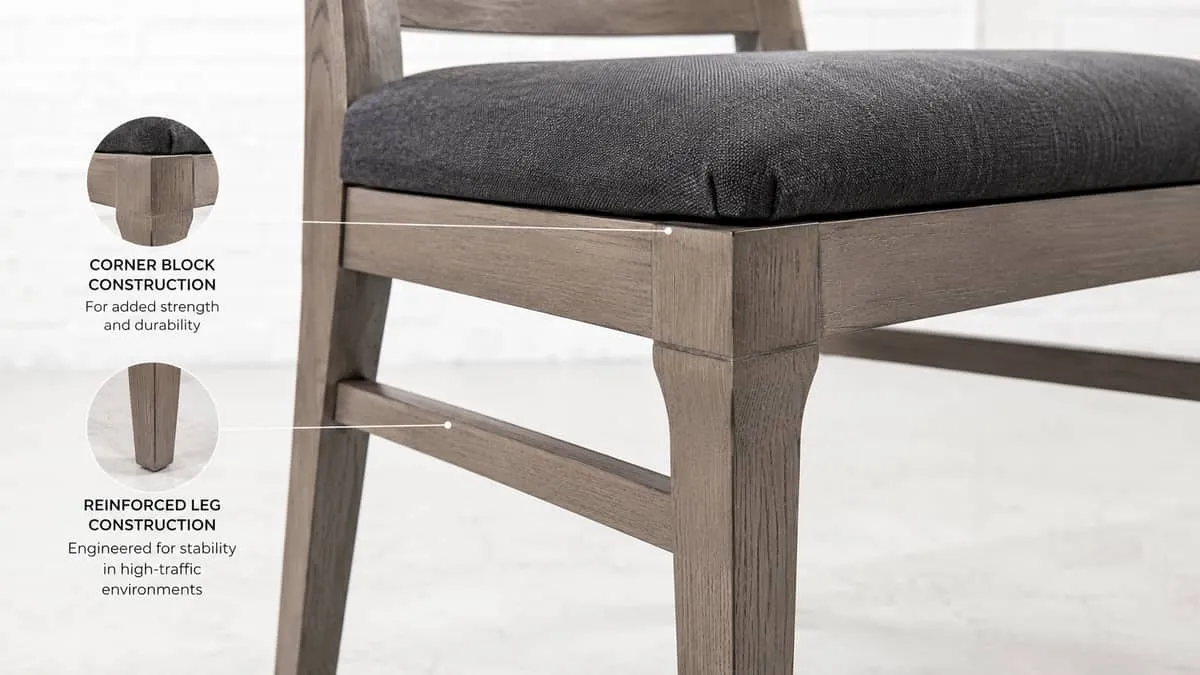
For case goods, solid or veneer-core construction is the minimum viable specification for this market. Hollow-core panels show wear at edges and joints within two to three years of heavy-rotation government use. Desk surfaces need to handle a laptop, a second monitor, and a charger simultaneously without surface degradation inside a single renovation cycle. Wardrobe and storage units need to function correctly through daily use by guests who are often staying for extended periods on long-stay government rates rather than single-night leisure stays.
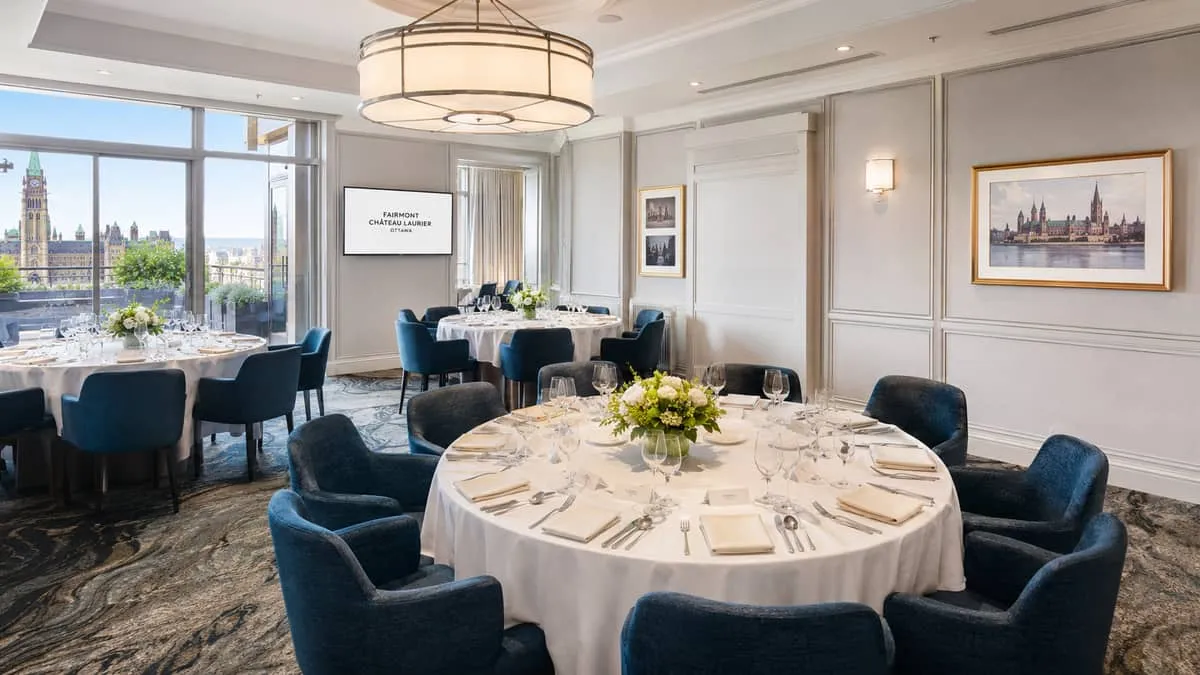
Seating fabric grades of COM1 or higher are the standard, not a premium upgrade, for Ottawa commercial hospitality. The Fairmont Chateau Laurier sets the material quality benchmark visible from Parliament Hill, but the expectation cascades across the market because government and diplomatic guests are comparing across properties. Independent properties in the Centretown market or near the Hotel Arts Helix in the arts and culture corridor around Preston Street compete on perceived quality, not rate. Under-specifying seating fabric or desk chair construction shows up in review scores and in account manager conversations with corporate travel coordinators.
Beds specified for a seven-to-ten-year cycle are the correct planning horizon. Ottawa's stable government demand means your property is not riding volatile leisure peaks that justify a five-year cycle to refresh the look. The guests who matter most to your revenue base are returning frequently and noticing condition, not trend. Specify for longevity and schedule your next cycle accordingly.
Heritage Zones, NCC Properties, and the Character Constraint
One challenge largely specific to Ottawa's renovation market is the heritage character constraint that applies to properties in and adjacent to the National Capital Commission's jurisdictional reach. Properties near Parliament Hill, the Sparks Street Mall corridor, and the Sussex Drive embassy district are operating in areas where the NCC and heritage designation requirements influence not just exteriors but can affect interior renovation scope approvals depending on the building's heritage status.
For operators in those zones, FF&E selection is not purely a commercial decision. Furniture that reads as historically inconsistent with a property's character can create friction with heritage review processes, particularly for any renovation scope that touches common areas visible from the street or in lobbies that fall under heritage interior designations. This is not a bureaucratic abstraction. It has practical consequences for lead times and approval workflows that need to be factored into your renovation planning calendar the same way brand compliance approvals are factored in.
The practical approach is to source FF&E that works within a traditional or transitional design language for heritage-adjacent properties, rather than contemporary or industrial aesthetics that create contrast with the building fabric. This is a constraint, but it is also a market differentiator. Ottawa guests on diplomatic and senior government accounts respond well to properties that carry historical character authentically. The Fairmont Chateau Laurier does not succeed despite its traditional character. It succeeds partly because of it. A smaller independent property near Parliament Hill that invests in furniture appropriate to its heritage context is positioning itself in the same direction, at a different scale.
Lead Times and the Ottawa Procurement Timeline
Custom and semi-custom hotel furniture lead times across the industry currently run from sixteen to twenty-six weeks depending on the category and the supplier's manufacturing pipeline. If your target renovation window is January through March, your FF&E orders need to be placed by September or October of the prior year at the latest. That is not a comfortable timeline for operators who are still managing fall conference season while simultaneously finalizing renovation specifications.
The math is unforgiving in Ottawa specifically because the cost of a delayed renovation window is not just the carrying cost of the unrefreshed rooms. It is the revenue from government and corporate accounts you lose if a room falls below standard during a PIP review, or the accounts you fail to land because your room quality does not match what a competitor in the Rideau Street cluster or the Centretown market is offering at similar rates.
Branded properties add another layer. Your brand's PIP will define some FF&E specifications, and the brand design team approval process adds four to eight weeks to your procurement timeline on top of manufacturing lead time. Getting preliminary selections in front of the brand team before finalizing supplier contracts is not optional. It is the difference between a renovation that lands in your target window and one that slips to fall, which in Ottawa means slipping into a much tighter calendar.
For independent properties without brand approval requirements, the timeline flexibility is real but carries the risk of under-specification. The absence of a PIP does not mean the market's expectations are lower. Ottawa's government and diplomatic guest base has consistent quality expectations across branded and independent properties. Working with a supplier who can provide lifecycle cost data and commercial-grade specifications is more important for independent operators, not less, because there is no brand framework defining the minimum viable spec.
The Rate Cap ROI Problem and How Furniture Strategy Responds
Ottawa's stable occupancy is real. So is the rate pressure that comes with a demand base dominated by government travel policies. Federal approved accommodation rates and corporate negotiated rates with departments and Crown corporations set a ceiling on what many Ottawa operators can charge, regardless of demand. That rate structure changes how renovation ROI is calculated compared to a leisure or mixed market.
In a market where rate growth is constrained, the ROI on renovation comes primarily through three channels: protecting existing government and corporate accounts from migrating to competitors, qualifying for higher-tier government rate categories that require minimum room quality standards, and reducing maintenance cost by specifying furniture with longer replacement cycles.
The first channel is the most consequential. Government travel coordinators and corporate account managers review property quality against the rates their organizations are paying. A property that allows room quality to deteriorate below the standard expected at the approved rate loses accounts, and those accounts are difficult to recover once a competitor has been substituted. The renovation investment is, in this context, account protection as much as property improvement.
The third channel compounds over time. A property that installs COM1 minimum fabric seating, solid-core case goods, and commercial-grade bed systems on a proper renovation cycle spends less on mid-cycle furniture replacement than one that sources to a lower specification and faces early failure in high-rotation rooms. Ottawa's high-occupancy, long-stay-heavy demand pattern accelerates wear faster than comparable room counts in a leisure market would. Specifying to that reality at the procurement stage is the correct financial decision, not a premium cost to be negotiated down.
The combination of stable demand, rate caps, and specific guest expectations in Ottawa creates an investment case for renovation that is different from what most hospitality FF&E sales conversations assume. The calculation is less about capturing rate premiums after renovation and more about protecting the revenue base and extending the productive life of the investment. A supplier who can engage with that framing, rather than defaulting to aesthetic trend arguments, is a more useful partner for Ottawa hotel operators.
For Ottawa properties comparing hotel renovation furniture options, project-specific pricing tells you more than any published range. Request a quote and we will scope it to your space and volume.