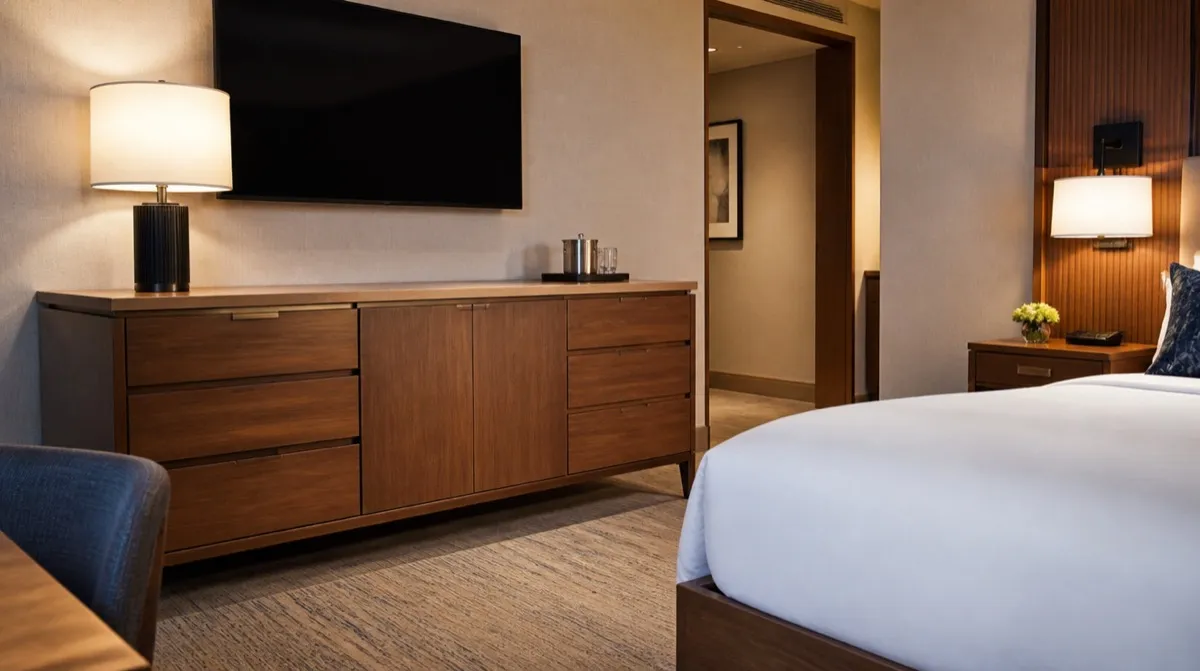
Casegoods are the wooden and hard-surface pieces in a hotel: the headboards, dressers, nightstands, desks, and credenzas that fill out a guest room. They are also the furniture guests notice first and touch most, which makes them one of the highest-stakes line items in any hospitality FF&E package. Get the specs right and hotel casegoods look sharp through years of nightly turnover. Get them wrong and chipped edges and peeling laminate show up in guest photos within a year.
If you are furnishing new rooms or running a renovation, here is how to spec casegoods for durability, how to plan the lead times, and how to budget the order.
What counts as casegoods, and why they wear differently
Casegoods are the case pieces, distinct from the seating and soft goods in a room. Because they are hard surfaces in constant contact with luggage, drinks, room-service trays, and daily housekeeping, they fail in different ways than upholstered furniture. The common failure points are edges that chip, drawer slides that loosen, and surfaces that scratch, stain, or delaminate.
That is why hospitality casegoods are built to a contract standard rather than a residential one. The construction is meant to survive high-turnover use and to be touched up and kept in service rather than replaced at the first sign of wear.
Specs that separate contract casegoods from retail
The surface is the first thing to check. High-pressure laminate and thermofused surfaces resist heat, moisture, and scratching far better than residential veneers, which is exactly what you want on a desk that takes hot coffee and a dresser that takes wet glasses. Where a real wood look is required, ask how the finish is sealed and how it is repaired in the field.
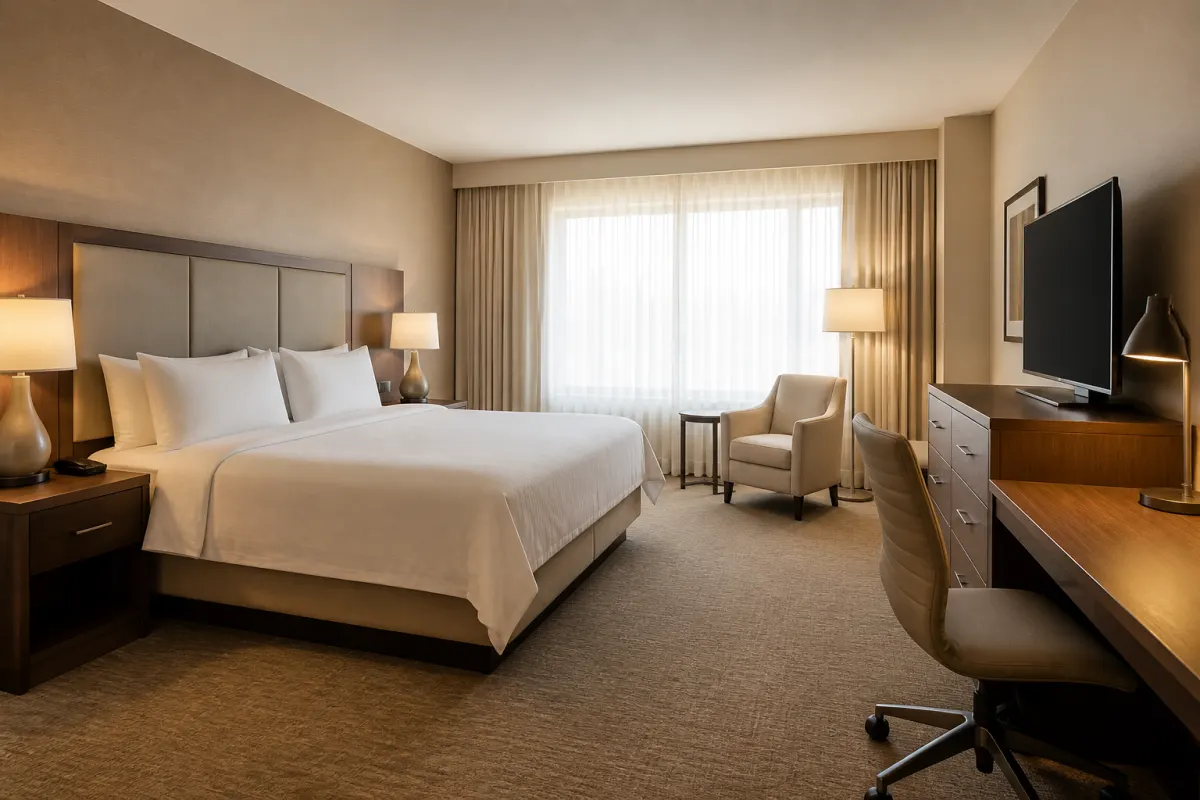
Edges are the most common failure point, so specify durable edgebanding (PVC or 3mm profiles) that resists the chipping that luggage and vacuum cleaners cause. Drawers should ride on commercial-grade slides rated for thousands of open-and-close cycles, because a loose or sticking drawer is one of the fastest ways a room starts to feel worn. Corners and bases take repeated impact from carts and cases, so reinforced construction there pays for itself.
Browse the dressers, nightstands, and headboards categories to see the contract-grade builds these specs describe.
Matching casegoods across the room and the property
Guest rooms read as designed when the casegoods share a finish, a hardware style, and a proportion. That consistency is easy on paper and harder in practice, because a headboard, dresser, nightstand, and desk often come as separate line items that must match in color and profile. When you order, confirm that all case pieces come from the same finish batch and the same program so the room looks intentional rather than assembled.
Consistency matters across the property too. If you are renovating in phases, lock the finish and hardware specs at the start so rooms completed months apart still match. Request physical finish samples before you commit, because color on a screen is not reliable for matching wood tones and laminates.
Lead times: the number that drives the whole schedule
Casegoods are where hospitality projects most often slip, because they are frequently custom. Custom finishes and casework carry a 10 to 14 week lead time, while stocked items ship fast. If your opening or reopening date is fixed, that lead time is the single most important number in your plan.
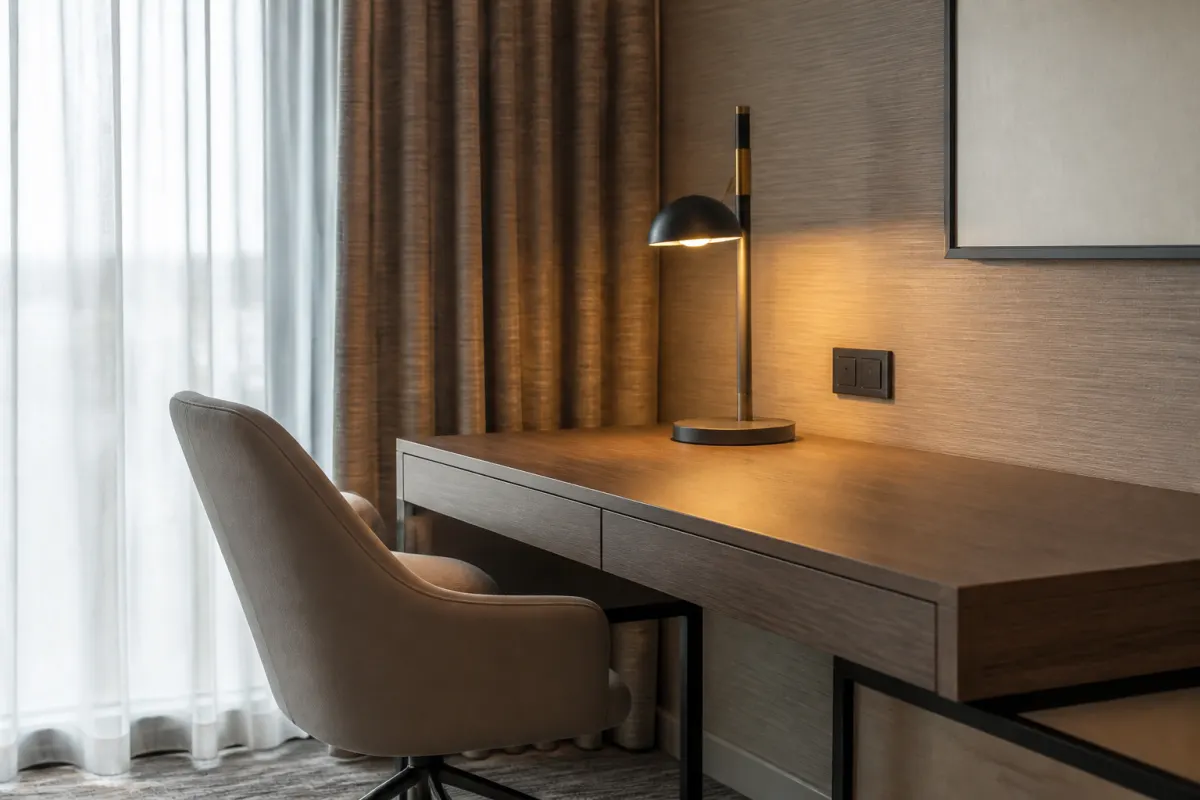
Build the schedule backward from the date rooms must be sellable. Lock finishes early, get samples approved, and confirm the production window in writing before you count on the delivery date. If part of the package can come from stock, use stocked pieces where they fit and reserve the custom lead time for the pieces that truly need it.
Budgeting a casegoods package
Casegoods price best at volume, and the breaks step down at 50, 100, 250, and 500 or more units, which maps neatly to room count. A property doing all its rooms in one order lands a better per-unit cost than one buying a floor at a time, so order the full room count together where cash flow allows.
Two costs need to be in the budget from the start. Freight and installation typically add roughly 14 to 26 percent over the furniture cost, and casegoods are heavy and often need in-room assembly, so that number is real. Custom finishes carry the lead time noted above. To model the delivered cost of a full room package before you commit, run it through our furniture cost calculator.
When you are ready to price a specific room set or a full property, request a quote and a hospitality specialist can put together delivered pricing across the order.