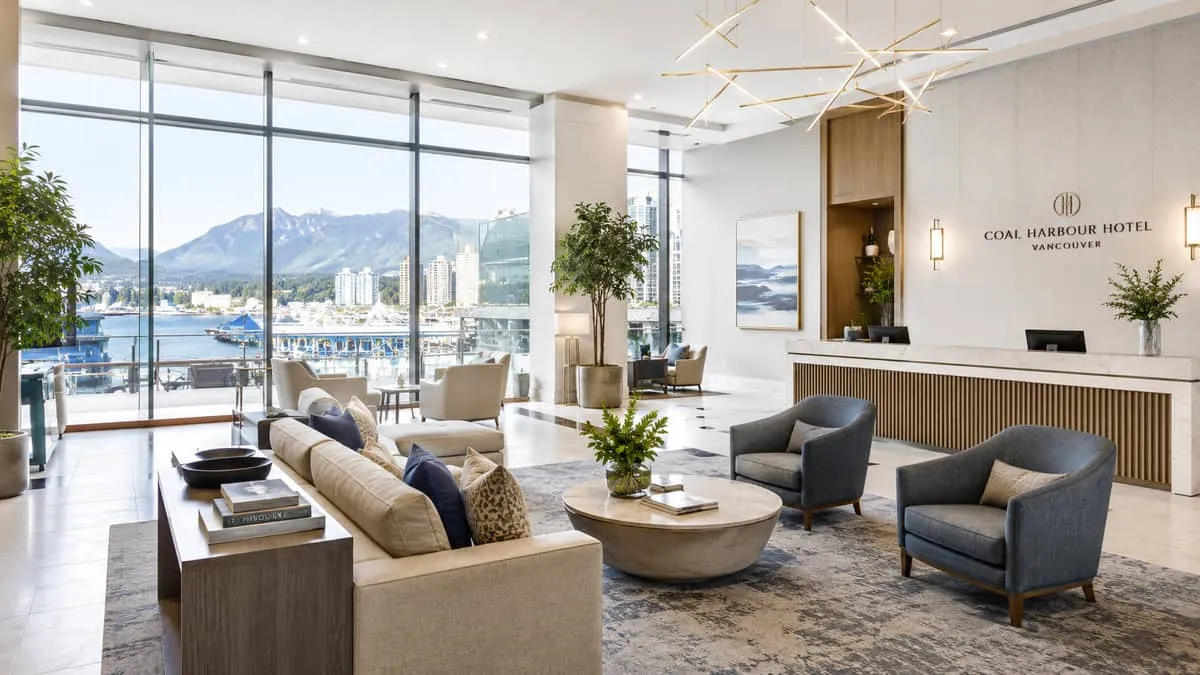
Vancouver holds the highest average daily rate of any hotel market in Canada, and that number is not sustained by domestic leisure travelers. It is sustained by Asia-Pacific business guests, international film industry executives, and design-forward travelers who have stayed at Aman Tokyo, the Fullerton in Singapore, and the Upper House in Hong Kong before they arrive at your property. These guests do not need to articulate what good furniture feels like. They already know. When they sit down in your lobby lounge or settle into the chair beside the desk in their room, they are running an unconscious quality check against every high-end property they have ever stayed in. That check happens in the first ninety seconds. Working with the right hotel furniture supplier in Vancouver is how you pass it.
Design Literacy Is the Baseline, Not the Goal
In most hotel markets, excellent furniture is a competitive advantage. In Vancouver, it is the cost of entry. Coal Harbour, Gastown, and Yaletown each attract a distinct guest profile, but across all three neighborhoods the floor is higher than it is in comparable markets in other Canadian cities. A property opening near the waterfront at Coal Harbour is sitting in the same sightline as the Fairmont Pacific Rim, a benchmark for what Asia-Pacific guests expect from a luxury Vancouver stay. The furniture in that context cannot look like a compromise. It has to look considered.
This is not simply about spending more money on furniture. It is about understanding the design languages that resonate with internationally mobile guests. Scandinavian restraint reads well. Japanese-influenced minimalism reads very well. Anything that signals mass production or catalog indifference reads badly, and it reads badly fast when your guests have reference points that most North American hoteliers never encounter.
A hotel furniture supplier in Vancouver who understands this market will talk to you in terms of design narrative, material provenance, and how a piece communicates within a room , not just load ratings and lead times. Both conversations need to happen, but the design conversation has to be fluent before the spec conversation makes sense.
Coal Harbour, Gastown, Yaletown: Three Neighborhoods, Three Briefs
These three districts are each ten minutes from each other and they require entirely different approaches to furniture specification.
Coal Harbour properties anchor their identity to the waterfront and the mountain backdrop. The visual vocabulary here is maritime luxury: deep navies, slate greys, warm bronzes, solid materials that signal permanence. Guests staying near the seawall or with views of the North Shore expect a level of material quality that matches the setting. Upholstered pieces need tight, precise profiles , nothing overstuffed or casual. Casegoods work best in real wood veneer or lacquer rather than foil-wrapped particleboard. The ocean is right there; the furniture needs to hold its own against it.
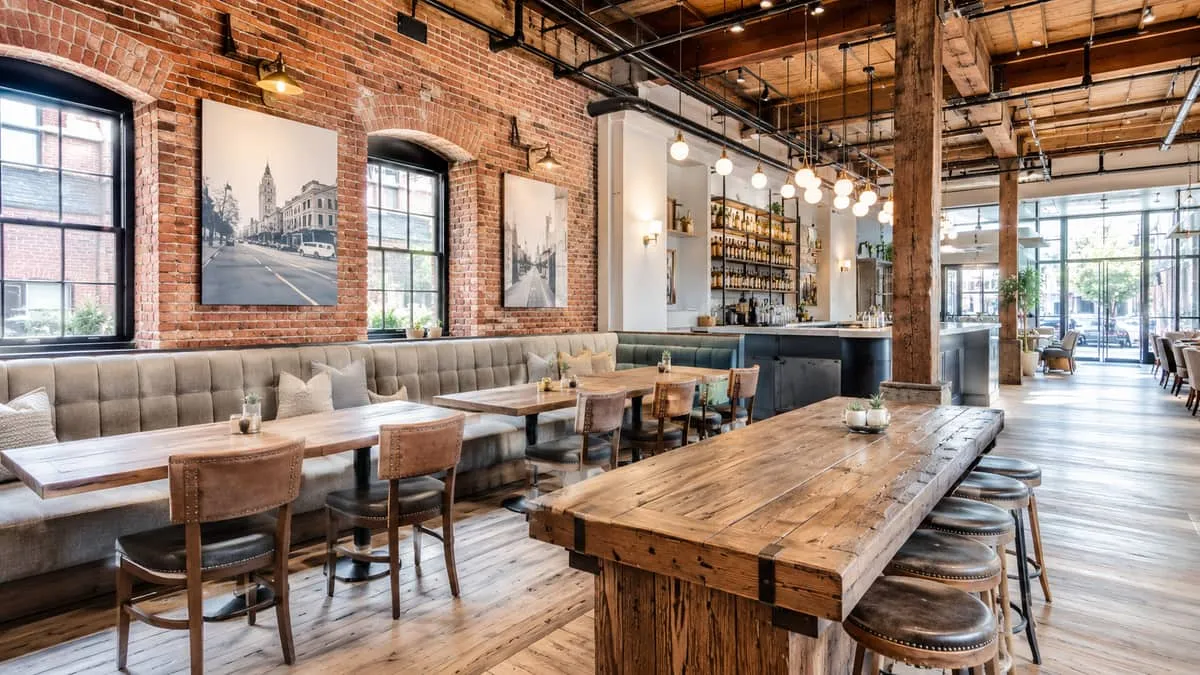
Gastown operates in the opposite register. The heritage brick, the cobblestones, the cast-iron streetlamps , the neighborhood has already written the design brief, and furniture that ignores it reads as tone-deaf. Properties here do well with reclaimed materials, artisan upholstery, warm metals, and anything with visible craftsmanship. Custom millwork and bespoke seating often make more sense than catalogue purchasing because the scale is typically boutique , forty to eighty rooms , and the guests are specifically choosing Gastown because they want an experience that doesn't feel like a chain. If your furniture looks like it was drop-shipped from a national hotel supply account, you have already told your guest something about how seriously you take the neighborhood.
Yaletown has shifted in the last decade toward a Japanese-influenced minimalism that aligns with the neighborhood's architecture and its tech and creative professional resident base. Clean lines, muted palettes, precision joinery, and material restraint. This is the neighborhood where a single well-chosen piece in a room does more work than a room full of forgettable pieces. Furniture with visible hardware or decorative details that look borrowed from another era tends to underperform here. The brief is essentially: sophisticated, quiet, precise.
A credible hotel furniture supplier in Vancouver should be able to engage with each of these briefs on their own terms. If they are showing you the same catalogue pages regardless of which neighborhood your property is in, you are not working with someone who understands this market.
What Asia-Pacific Guests Actually Notice
It is worth being specific about what internationally mobile Asia-Pacific guests evaluate when they assess a hotel room, because it is not the same list that a domestic Canadian traveler uses.
Joinery is one. Guests who have spent time in high-end Japanese or Singaporean properties are accustomed to furniture where every joint is precise and every surface finish is consistent. They notice when a drawer front is slightly misaligned. They notice when an upholstered piece has a seam that shifts under use. They notice the difference between a frame that is solid and one that has any give when they shift their weight.
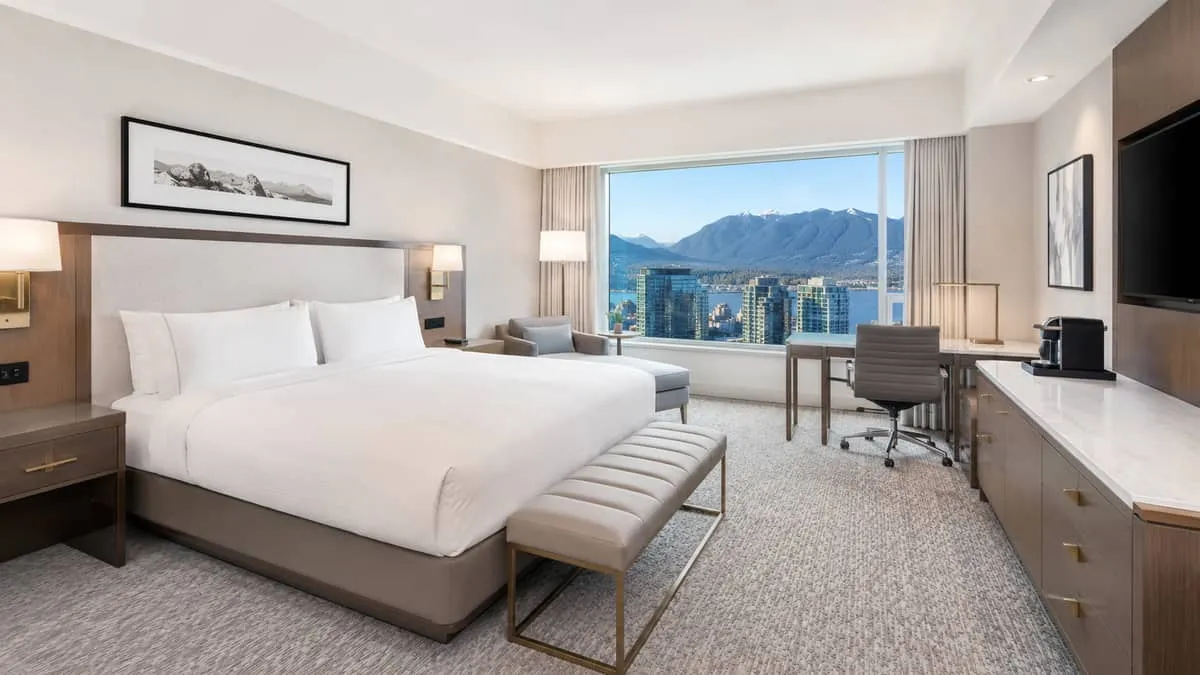
Material quality is another. Foil-wrapped casegoods that mimic wood grain are immediately identifiable to guests who are accustomed to real veneer or solid wood. The same is true for upholstery: a contract fabric that has been selected for durability alone, without attention to hand feel and visual texture, registers as a cost-saving measure to guests who know what luxury upholstery feels like.
Proportion matters more than most North American suppliers account for. Asian design traditions tend toward furniture that is lower and more horizontal than the tall-back chairs and elevated bed frames common in Western hotel design. This does not mean you should replicate an Asian hotel room, but it does mean that a room designed for Asia-Pacific guests should not feel like it was scaled for a different body or a different aesthetic tradition entirely.
A hotel furniture supplier in Vancouver working on properties in this market needs to understand these expectations, not just the standard contract-grade durability specs.
The Commercial Specification Requirements That Don't Change
None of the above means you can compromise on the structural and regulatory requirements that govern commercial furniture. If anything, the Vancouver luxury market requires you to meet both standards simultaneously , the piece has to look as refined as residential furniture and perform as reliably as commercial specification.
Contract upholstery fabrics for a Vancouver hotel should be rated at a minimum of 50,000 double rubs on the Wyzenbeek scale for guest rooms, and closer to 100,000 for lobby and corridor seating that sees continuous daily traffic. Pile fabrics and performance weaves can meet these numbers while still reading as premium , the selection process just requires more attention than defaulting to whatever the supplier's standard offering is.
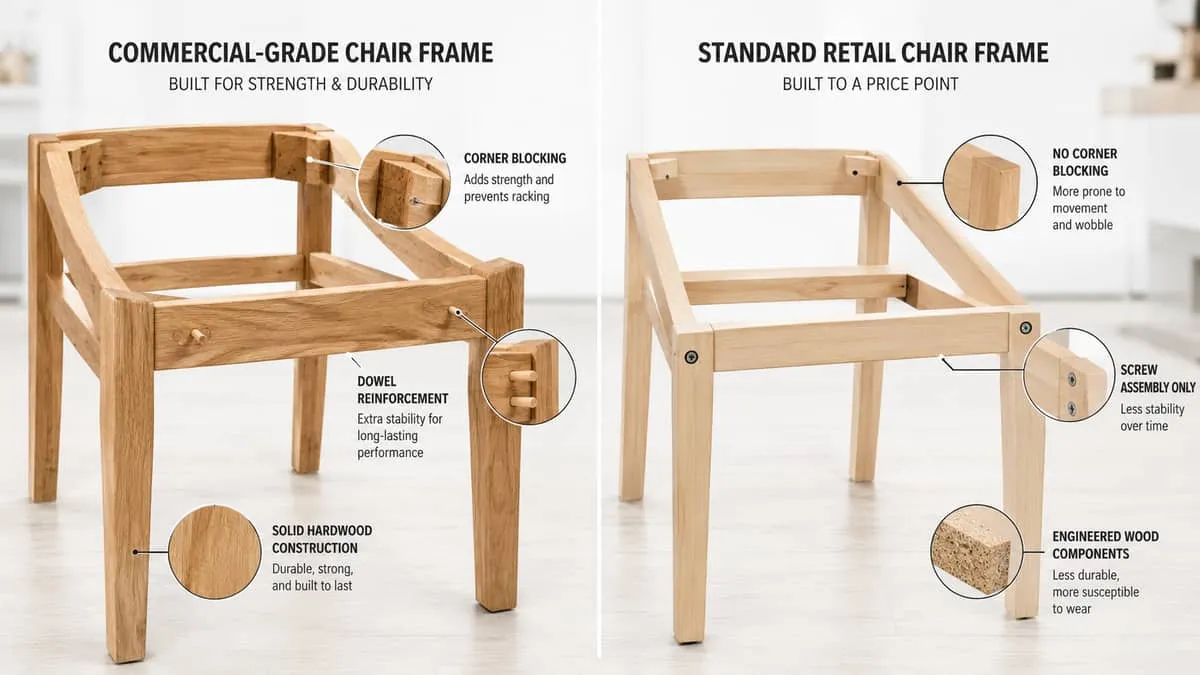
Frame construction on seating should be kiln-dried hardwood with corner blocking and dowel-reinforced joints, not stapled particleboard. In a guest room, a chair or bench takes a different occupant every night, often with luggage being placed on it, guests sitting on the arms, and a full range of use patterns that residential furniture is not designed for. In a lobby that serves as a co-working and meeting destination , which most Coal Harbour and Yaletown lobbies have become , the load on seating is continuous from early morning through late evening.
FR (flame retardancy) compliance is non-negotiable in any Canadian commercial property. Upholstered pieces need to meet the appropriate California TB-117 or equivalent standard depending on your BC building requirements. Any supplier that cannot provide documentation on FR compliance for their upholstered product is not a supplier you should be specifying from in a hotel project.
COM (customer's own material) capability is worth asking about explicitly. If you are working with an interior designer or FF&A consultant who has specified a particular fabric for your property , perhaps a textile sourced from a Japanese manufacturer or a custom-woven material that matches your brand palette , you need a supplier who can work with that material rather than forcing you back to their standard fabric deck.
Vancouver's Import Advantage and Its Real Risks
Vancouver's position as Canada's primary Asia-Pacific port creates sourcing options that most other Canadian cities genuinely don't have. Direct import relationships with manufacturers in China, Vietnam, Taiwan, and Malaysia are more accessible here than anywhere else in the country, and some of those manufacturers produce work at a quality level that competes with European contract furniture at a fraction of the cost.
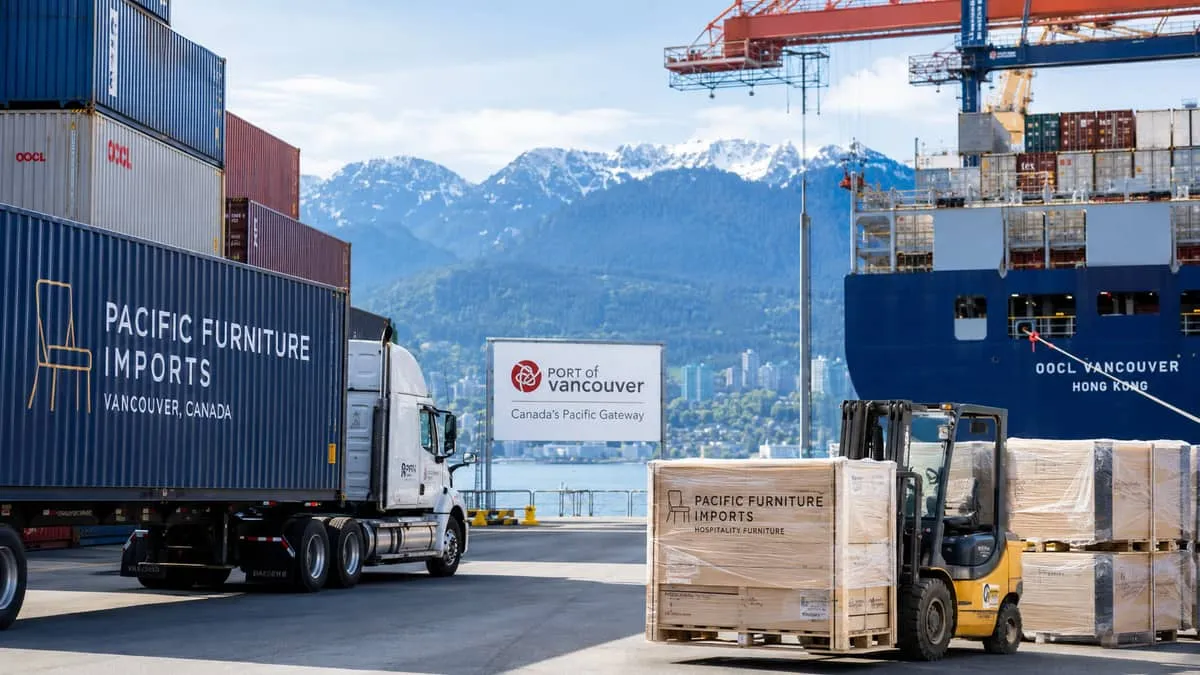
The risks are real, though, and in a high-ADR market they are amplified. Lead times on direct import orders run twelve to twenty weeks in normal conditions and longer when port congestion or manufacturing capacity issues create delays. A property opening that slips because furniture is sitting on a container ship is an expensive problem. Quality control at point of manufacture requires either a trusted local agent with on-the-ground relationships or your own capacity to manage overseas QC, which most operators don't have. And warranty and replacement support on imported furniture can be slow when a damaged piece needs to be reordered from a factory in Guangdong.
The model that works best for most Vancouver boutique properties is a hybrid. Import casegoods , bed bases, dressers, desks , through a reliable local agent with established QC relationships, and source upholstered seating and soft goods through a regional supplier who can turn around replacements quickly and has local inventory. A hotel furniture supplier in Vancouver who operates in both channels, or who has referral relationships that cover both, is worth more than two separate suppliers who don't communicate with each other.
Starting the Sourcing Conversation Right
The suppliers worth working with in this market want specific information from the first conversation. Floor plans matter , not so a supplier can count rooms, but because room dimensions directly affect what furniture profiles will work without the room feeling crowded or undersized. Room count matters because it determines what's achievable within your timeline and what MOQ requirements apply. And your design brief matters most, because in Vancouver's luxury boutique market the design brief is where the real work gets done.
Bring those three things , plans, count, and brief , and you will have a productive conversation. Arrive without them and you are essentially asking a supplier to do speculative work, which is not how the best ones operate. The properties that open at the standard this market demands are the ones where the furniture supplier was in the conversation early enough to influence decisions, not late enough that they were handed a finalized spec and told to fill it.
Vancouver's hospitality market does not forgive furniture that looks like it belongs somewhere else. The guests who drive the ADR numbers in this city have seen the best properties in Asia and they are staying at yours because it was supposed to be worth it. Make sure the furniture confirms that.
Every Vancouver venue has its own volume, layout, and turnaround demands, and hotel furniture pricing follows from those specifics. Request a quote and we will scope it to your project.