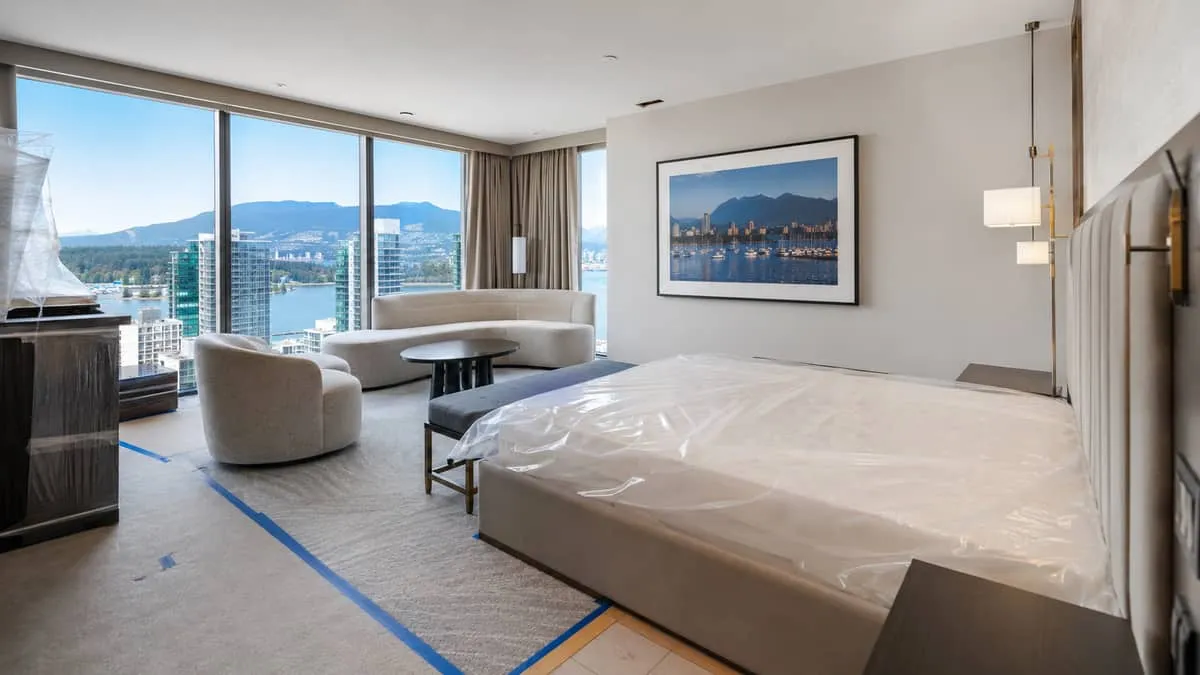
Vancouver's hotel market operates at margins that make delay genuinely expensive. When a Coal Harbour property is running ADRs north of $400 and occupancy pushing 80 percent year-round, every room that sits offline for an extra week represents thousands in lost revenue. That math shapes everything about how renovation furniture procurement should work in this city. You don't have the luxury of slow sourcing, wide contingency windows, or suppliers who need two weeks to return a call. The question isn't whether to renovate , guests who fly in from Seoul, Tokyo, and Hong Kong for the Fairmont Pacific Rim or the boutique independents around Blood Alley Square have seen enough exceptional design globally that an underperforming room reads immediately. The question is how to execute a renovation without bleeding a property dry in the process.
The ADR Argument for Premium Contract Goods , and Why It Changes Your Sourcing Logic
Vancouver consistently posts the highest average daily rates in Canada. That fact is not just a boast , it's a procurement argument. When your rack rate justifies it, the calculus on expedited sourcing shifts dramatically. A Coal Harbour full-service property that earns $450 per night can absorb a 15 to 20 percent premium on FF&E if that premium compresses lead time by six weeks and keeps two additional floors online during peak season. The math works. What doesn't work is applying budget-market sourcing logic to a luxury-market renovation.
This means prioritizing suppliers with domestic or near-shore manufacturing capabilities, finished-goods inventory for high-velocity standard pieces, and the ability to air-freight individual replacement units when a defect surfaces post-installation. It means writing RFQs that explicitly ask for lead time guarantees alongside price. And it means understanding that the cheapest quote on a 200-unit case goods order is rarely the right answer when your property's competitive position depends on getting rooms back online by a specific date.
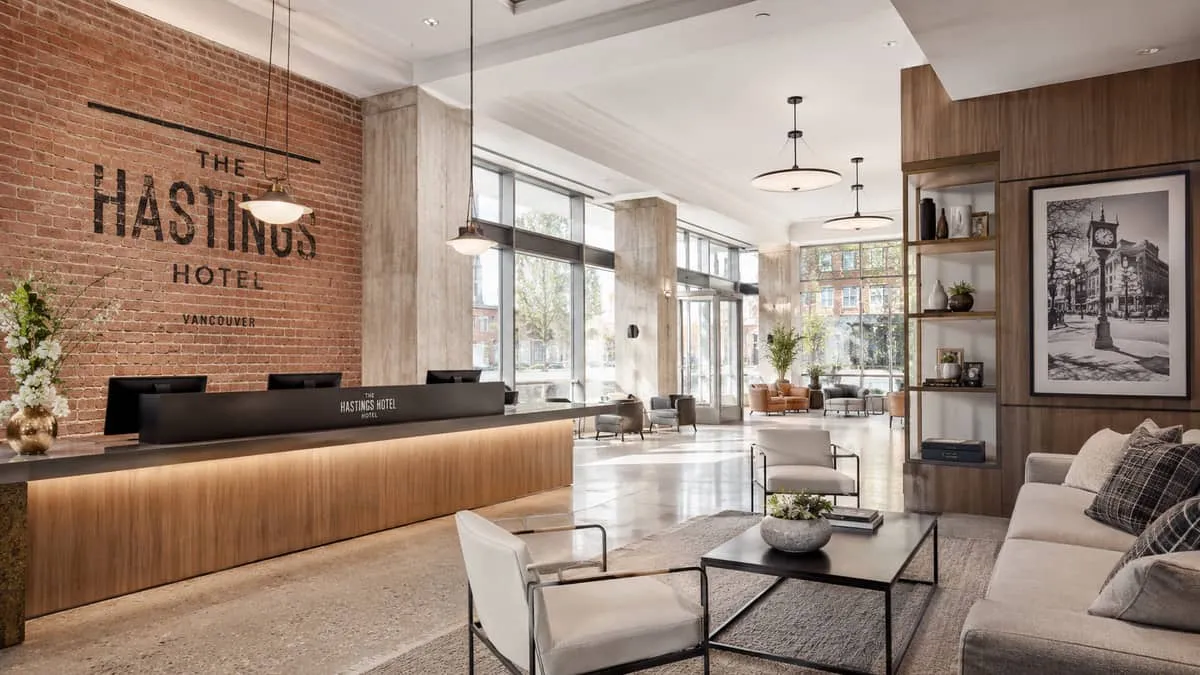
Vancouver's Asia-Pacific clientele is design-literate in a way that matters to your specification decisions. Guests who split time between this city and Singapore, Hong Kong, or Tokyo are not comparing your property to a highway motel in Abbotsford , they're comparing it to what they stayed in last month in Tsim Sha Tsui. Upholstery that shows wear by year two, case goods that chip at the drawer corners, or headboards that read as hospitality-generic against an otherwise thoughtful room design will register as a downgrade. That's a TripAdvisor problem, and it's an FF&E specification problem before it's anything else.
Phased Renovation in High-Occupancy Coal Harbour Properties
The standard advice about phased hotel renovation , take floors offline in sequence, renovate in rotation, minimize total rooms out of service , understates the complexity of executing this in a high-demand urban market where your revenue manager is watching daily occupancy reports and your GC is managing union labour on a compressed schedule.
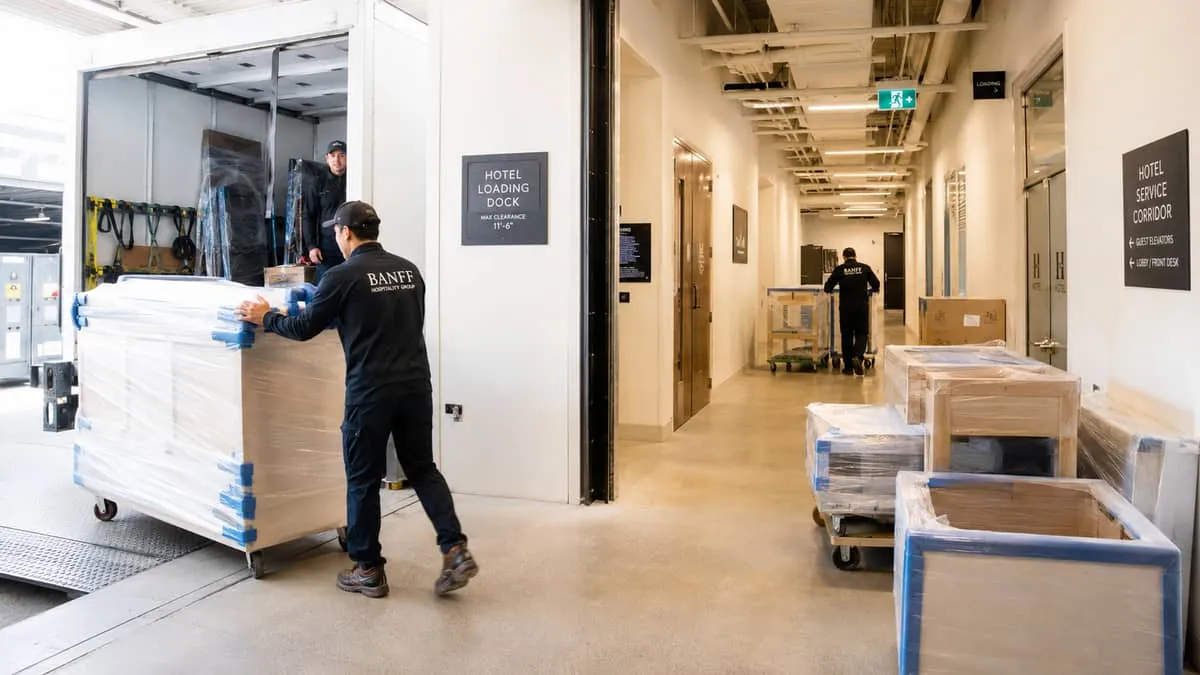
In Coal Harbour full-service properties, phased renovation typically means working in 15 to 25 room blocks, coordinating closely with your front desk on room-type allocation, and accepting that certain room categories will be intermittently unavailable for months. Your FF&E delivery schedule has to map precisely onto that room block sequence. Furniture arriving two weeks ahead of the floor's construction completion means you're warehousing contract goods in a corridor or a loading bay, exposing them to site conditions, and adding handling touches that increase the risk of damage before installation. Furniture arriving two weeks late means your completed rooms sit without furniture while your GC moves to the next floor and your project manager fields questions from ownership.
The logistics solution is a staged warehousing arrangement with your supplier or a third-party FF&E receiving firm. Several Lower Mainland logistics companies specialize in hospitality FF&E receiving, inspection, and sequenced delivery. The added cost , typically 3 to 6 percent of FF&E value , is well-justified on projects over 80 rooms where sequencing errors compound quickly. Get this locked down before your first delivery drops, not after.
Heritage Building Constraints in Gastown: What FF&E Suppliers Need to Understand
Gastown's conversion hotels and boutique properties operate inside a layer of complexity that Coal Harbour full-service properties don't face. Heritage building designation through the City of Vancouver's Heritage Register, combined in some cases with oversight from Heritage BC, imposes constraints on what modifications you can make to floors, walls, and structural elements. Those constraints have direct implications for your furniture specifications.
Older Gastown buildings , the brick-and-timber warehouses converted into hotels along Water Street and Cordova , frequently have floor loading limits, doorway clearances, and room geometries that standard hospitality case goods won't accommodate. A king bed platform that works perfectly in a modern mid-rise may not fit through a heritage doorframe without disassembly. A wardrobe unit designed to anchor to a drywall partition cannot anchor to an unreinforced brick wall the same way. These are not abstract concerns , they show up as on-site surprises that halt installation and push your schedule.
The implication for procurement is that your supplier needs accurate as-built drawings and clear communication about the building's constraints before finalization, not after delivery. For heritage Gastown properties, that means engaging your FF&E supplier earlier in the design process than you might for a conventional build, commissioning furniture that's been dimensioned against the actual room envelope, and specifying assembly methods that are compatible with the surfaces you're anchoring into.
Heritage permit timelines also matter. City of Vancouver heritage permits for interior alterations can run 8 to 16 weeks depending on the scope of work and whether a Heritage Revitalization Agreement is involved. If your permit timeline is uncertain, your FF&E order should be placed with the expectation that delivery might need to be held, and your supplier agreement should accommodate a delivery hold without penalty up to a defined date. Most contract furniture suppliers will accommodate a 30 to 60 day hold on completed orders if this is negotiated upfront. It is not a standard term you'll get after the fact.
Lead Time Compression: The Tactics That Actually Work in This Market
Vancouver is far enough from major North American manufacturing centres that standard lead times , 14 to 20 weeks for custom or semi-custom contract goods , are a genuine constraint. Here's what actually compresses them without sacrificing specification quality.
First, bifurcate your FF&E scope into what must be custom and what can be sourced from finished-goods inventory. Headboards, upholstered seating, and brand-specific case good finishes often need to be custom. Mattress sets, task chairs, luggage racks, and certain case good pieces frequently can be sourced from hospitality-grade stock. A mixed approach , custom for the pieces guests touch and remember, inventory for the functional background pieces , can compress your overall delivery schedule by four to eight weeks without any visible compromise in the finished room.
Second, identify suppliers with Canadian warehouse positions. An Ontario or Quebec-based supplier with finished hospitality goods in inventory ships to Vancouver in five to seven business days by LTL freight. That's dramatically faster than offshore production, and it allows you to carry less buffer in your schedule. Ask every supplier you evaluate where their finished inventory sits geographically.
Third, for a Vancouver-market project where the revenue recovery justification is strong, air freight for small quantities is worth evaluating. If you have 10 rooms ready to go back online and you're waiting on 20 replacement drawer units because of a defect, the cost of air-freighting those units from a Toronto or Montreal warehouse is trivial against 10 days of revenue on those rooms at Coal Harbour rates.
Specification Standards That Survive Vancouver's Hospitality Conditions
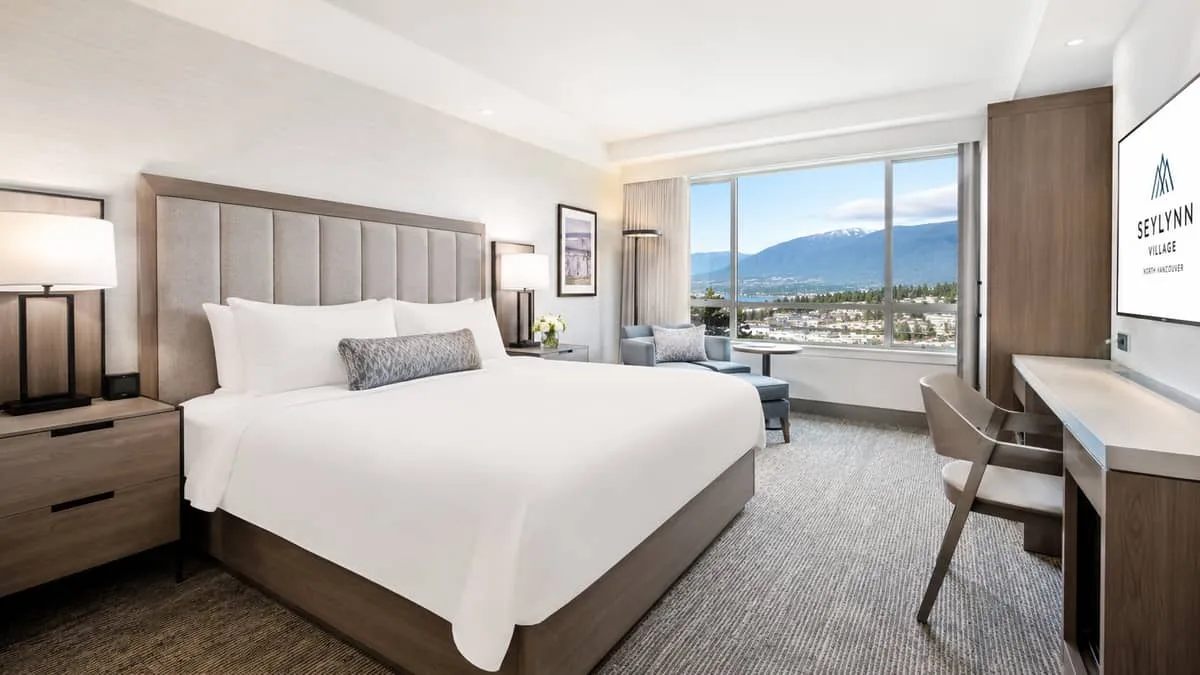
Vancouver's mild, rainy climate means year-round occupancy and consistent room cycling without the seasonal low-use periods that give furniture a rest in colder markets. Rooms in a busy Yaletown hotel or a waterfront Coal Harbour property cycle daily, 365 days a year. That usage pattern demands honest specification decisions.
Upholstered seating should be specified at a minimum of 100,000 double rubs for any piece that sees regular guest contact. High-traffic items , banquette seating in lobby areas, accent chairs in rooms used as working surfaces, lounge pieces near entrances where guests arrive wet from the rain , should be specified higher, with moisture-resistant or cleanable fabrics that won't retain odour or degrade from repeated spot cleaning. In a city where guests walk in damp from November through April, fabric selection is not aesthetic-first.
Case goods for the Vancouver market should carry solid wood or hardwood plywood core construction in areas subject to humidity fluctuation. Buildings near the waterfront in Coal Harbour and along Burrard Inlet can experience meaningful humidity variation, particularly in buildings with older HVAC systems. Particleboard and MDF-core case goods expand and contract with humidity changes; over time, drawers bind, veneer lifts, and joints fail. Suppliers who can't document core construction should be pressed for that information before you commit to volume.
Frame construction on seating for guest rooms should use mortise-and-tenon or double-dowel joinery on all load-bearing connections, not staple-and-glue assembly. Kiln-dried hardwood frames are the standard for contract-grade hospitality seating that will hold up across a five to eight year replacement cycle. This isn't over-specification , it's the difference between furniture that looks the same in year four as it did in year one and furniture that your housekeeping team is reporting problems with by year two.
Choosing a Supplier Who Understands What This Market Requires
The Vancouver hospitality market is sophisticated enough that generic hospitality furniture suppliers , the ones cataloguing the same SKUs they sell into suburban conference centres in the Prairies , are not the right fit for a Coal Harbour renovation or a Gastown boutique conversion. Your guests will notice. Your design team will notice. And your operational team will notice when pieces that looked fine on a specification sheet perform below expectations in actual use.
What to look for: suppliers with demonstrable experience in urban hotel renovations where phased delivery, sequenced logistics, and specification compliance have all been managed simultaneously. Ask for references from projects in Vancouver or comparable high-cost urban markets. Ask specifically about how deficiencies were handled post-installation, because that's where supplier quality becomes most apparent. Ask how they manage specification changes that arrive mid-production, because in a renovation project they always do.
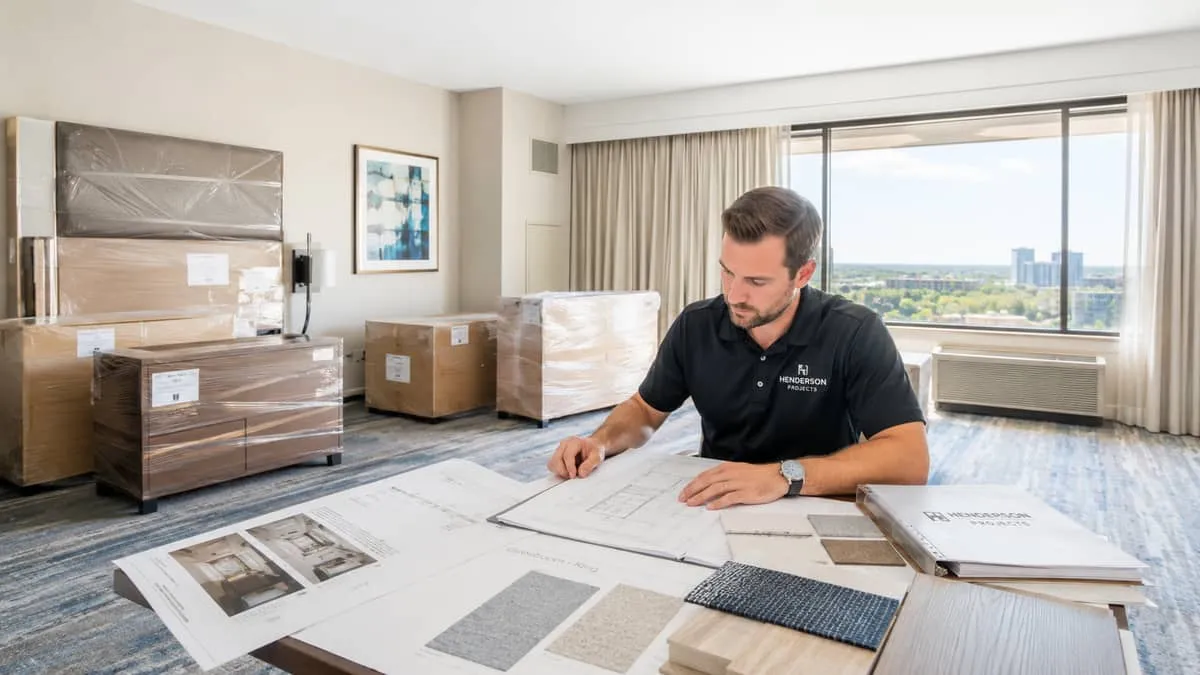
A supplier who understands the Vancouver market will also understand that your rooms going back online on schedule is not just a project management preference , it's a revenue event with a dollar figure attached. That understanding shapes how they prioritize your project, how they communicate delays, and how aggressively they work to resolve problems before they become your problem.
Vancouver's hotel renovation market is not forgiving of suppliers who treat hospitality FF&E as a standard commercial transaction. The stakes are higher here , the rates justify it, the guests expect it, and the competition in Coal Harbour, Gastown, and Yaletown doesn't give you a pass for a renovation that misses its window or delivers a room that looks like it was assembled from a generic catalogue. If you're planning a property upgrade in the Lower Mainland, connect with a contract furniture specialist who has genuine experience in this market before you finalize your project timeline and issue your first purchase order.
Ready to spec hotel renovation furniture for your Vancouver project? Send us the details and we will price it around your requirements. Request a quote to start.