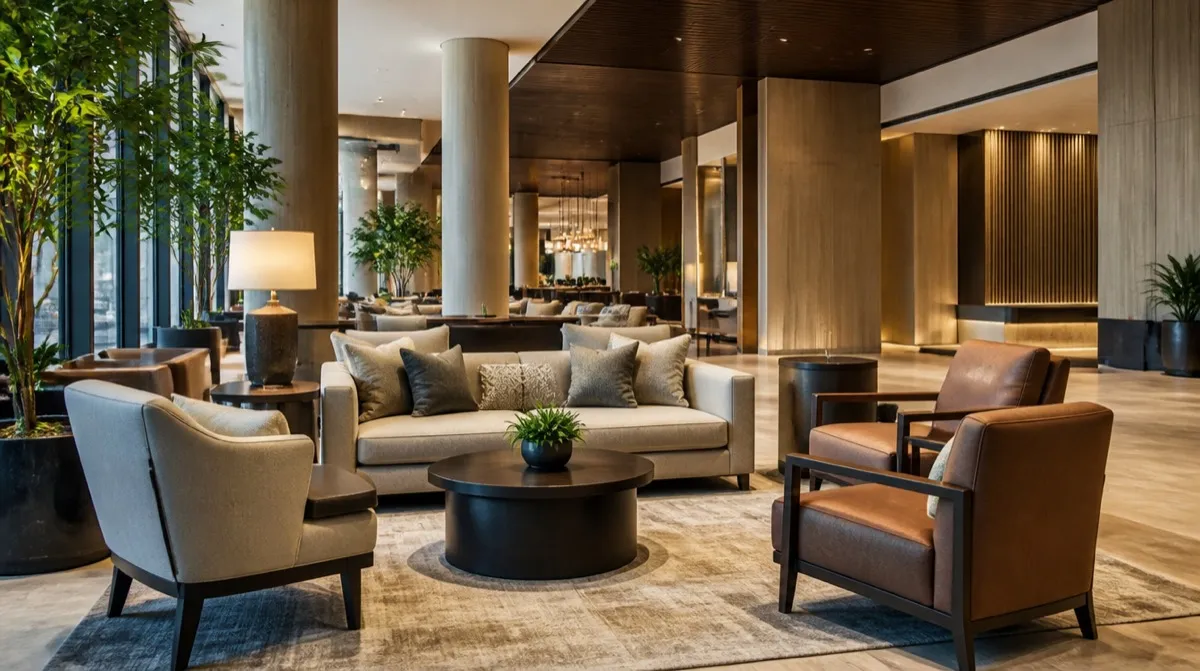
A leather club chair may be chosen for texture, warmth and a changing appearance with use. Patina is an aesthetic preference, not proof that a cover or frame cannot wear out. Compare the actual material, support and care requirements with the intended lounge or reading use.
If you are furnishing a hotel lounge, a members' bar, a law office library, or any space that wants weight and warmth in the seating, here is what separates a club chair that earns its patina from one that just looks worn out.
Hide grade is the whole decision
Full-grain terminology describes a natural-grain leather surface; it does not establish the finish, stain resistance, price or longest service life. Obtain the supplier's exact leather specification and physical sample, including acceptable natural variation.
Ask what the supplier means by top-grain, including any grain correction, pigmentation and protective finish. The term alone cannot establish sanding, uniformity or cleanability across every product.
For bonded or reconstituted material, request its actual composition, surface construction, intended use and care documentation. Compare it with the proposed leather alternatives; a lower quote does not establish composition, and this guide has no verified universal peeling deadline.

The frame and suspension do the surviving
Review the complete frame and joint specification, intended loads and applicable testing. Kiln-dried hardwood, corner blocks or a particular joint can be relevant details, but they do not prove suitability or inevitable failure of another construction.
Request the suspension, cushion density with units, firmness and fatigue documentation. Two to two-and-a-half pounds alone is not a complete density specification, and no suspension style or foam figure guarantees years of use. PFA distinguishes these foam properties.
Where club chairs earn their keep
Hotel lobbies and lounges. A pair of leather club chairs flanking a side table reads as an anchor point without eating the floor plan the way a full sofa does. They work particularly well in transition zones near a fireplace, a bar, or a check-in area where guests wait briefly and want somewhere substantial to sit.
Law offices and libraries. Leather club chairs are the default seating language of a reception area or reading room that wants to signal permanence. Darker hide tones and traditional tufting patterns fit this use case better than the lighter, more contemporary looks that work in hospitality.
Members' clubs and cigar or whiskey bars. Document contact, cleaning and the actual operating environment. Confirm the proposed cover and frame are intended for those conditions rather than imposing a top-grain minimum as a universal qualification.
Maintenance is part of the spec, not an afterthought
Follow the exact leather manufacturer's care instructions rather than imposing quarterly conditioning. Herman Miller's leather guide, for example, warns against oils and furniture polish on its leather; those instructions apply to its materials. Use the fabric durability checker for planning comparisons, then obtain the actual care documentation for every cover in the room.
Follow the supplier's spill procedure promptly, including whether it permits local spot cleaning or requires cleaning an entire surface. Do not assume any leather-safe label or generic conditioner is suitable.
Ordering at volume
Matching leather across a multi-chair order is a real constraint that residential buyers rarely deal with. Natural hide has variation, and a vendor sourcing leather for a twenty-chair hotel lobby order needs to grade and batch hides for consistent color and texture across the full run. Ask specifically how a supplier handles hide matching on larger orders before you commit, since an inconsistent-looking lounge undercuts the exact premium feel a leather program is supposed to deliver.
Confirm stock, hide selection, sample approval, production and delivery dates for the proposed chair. Leather is not invariably the longest-lead item compared with every fabric configuration.
Our commercial lounge seating guide covers related seating. The armchairs category offers design concepts rather than verified leather stock. Request a quote with the room brief and care requirements so independent suppliers can document proposed chairs.