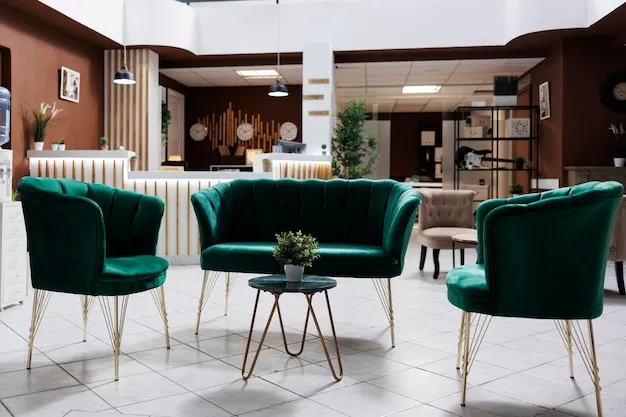
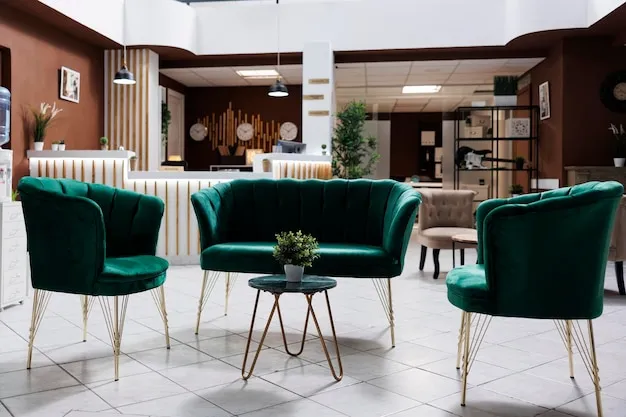
Every lounge, waiting area, and lobby corner has one chair that does more design work than the rest of the furniture combined. That is the accent armchair. It sits alone or in a small grouping, it is the piece guests notice first, and it gets photographed for the brand's marketing far more often than the sofa next to it. Because it carries so much visual weight, buyers sometimes treat it as a decor decision and forget it also has to survive public traffic.
An accent chair in a residential living room gets used a few hours a week by people who take reasonable care of their own furniture. The same silhouette in a hotel lobby, a restaurant waiting area, or an office reception gets sat in and stood up from dozens of times a day by strangers, and it has to look as good after a thousand cycles as it did on delivery day.
Frame and joinery: where retail chairs actually fail
Obtain the exact accent-chair frame, joint, moisture, loading and permitted-use documents. Kiln-dried hardwood, steel, corner blocks, dowels, staples or nails do not individually establish a universal commercial/residential pass rule. Assess the complete approved assembly and its care/inspection instructions.
Compare each candidate's exact frame materials, joints, loading, permitted commercial use and warranty regardless of sales channel. Softwood, particleboard, staples or glue alone do not establish a month-eight or month-nine failure forecast. Missing frame documents are a request for evidence, not proof of failure.
Ask the supplier for the exact frame and joint documents before ordering in volume. A missing answer is an unresolved evidence gap, not proof that the chair was built for the wrong traffic. Resolve the gap or compare a documented alternative before approval.
Seat foam that holds its shape
Ask for foam density with its measurement unit and firmness under its stated test. The 1.8 to 2.5 figure is a chosen density example only when the maker confirms the unit, commonly pounds per cubic foot; it is not measured by ILD. PFA's foam-performance guidance distinguishes density from firmness and other properties. Neither alone predicts a visible depression or a number of service years.
Inspect the complete cushion and support assembly when reviewing comfort or sagging: foam, cover, suspension, frame and use conditions all need their own specifications. Obtain relevant fatigue and replacement information rather than assigning every complaint to density or forecasting a one-year failure.
Fabric grading for the traffic your space actually sees
The 10,000 to 15,000, 30,000 and 50,000 Wyzenbeek figures are abrasion-test references, not universal residential/commercial tiers or a service-life calculation. Confirm the fabric category, actual test method and application. ACT's abrasion guidance explains why higher counts do not directly establish longer life.
Verify the exact upholstery's cleaning instructions and named chemical compatibility separately from its abrasion result. The fabric durability checker helps explore test inputs; it does not certify a textile, confirm maker approval or predict lifespan. Review the actual fabric and cushion documents before a volume order.
Placement and how many to order
Accent chairs work best deployed with intention rather than scattered evenly through a space. A single statement chair anchoring a corner reads as design. Six identical accent chairs lined up along a wall reads as overflow seating, which is a different function that calls for a different, more economical piece.
Plan two or three accent chair styles across a property rather than one style repeated everywhere. A slightly bolder pattern or color in the lobby, a quieter tone in a restaurant waiting area, and a third variant in a suite or VIP space gives each area its own character while keeping the underlying construction standard consistent. Order in matched dye lots when you need multiples of the same chair in one space, because fabric batches can shift shade slightly between production runs and a mismatched pair is obvious to anyone who looks closely.
For the full lounge seating category, sofas, sectionals, and how accent chairs fit into a coordinated lounge layout, see our commercial lounge seating guide.
Ordering in volume
Treat 10 to 20 units and a 10 to 14 week custom window as provisional planning assumptions. Confirm the selected model's actual minimums, fabric/frame options, stock availability, approval milestones and dated production/delivery plan before the opening schedule is committed.
Browse armchair concepts for the style brief, then submit a furniture request with the actual layout, traffic, care requirements, quantities and finishes. Independent suppliers may identify verified model options and provide their frame, foam, upholstery and quote documents.