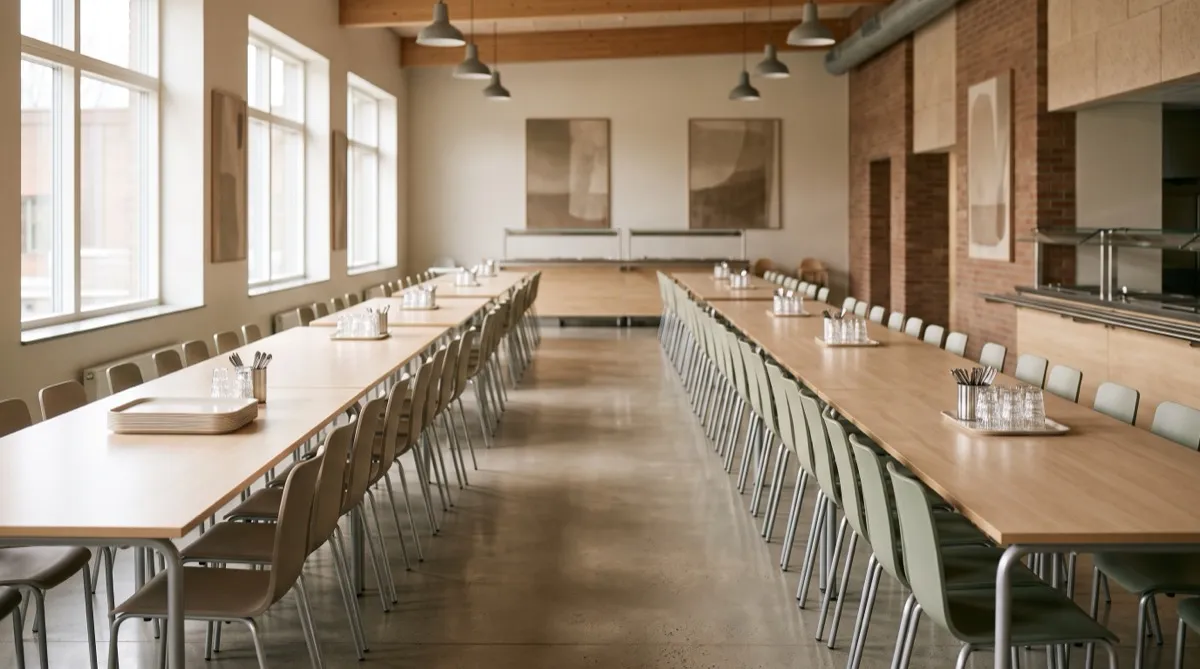
Library furniture is not one product decision, it is five or six smaller ones stacked under a single roof. A branch has a reading room, stacks-adjacent seating, group study rooms, a children's or teen area, and staff space behind the desk, and each of those rooms asks something different of its furniture even though the building code, the funding source, and the maintenance crew are the same across all of them. A zone-by-zone specification makes the operating plan clearer; a two-decade appearance or service outcome still needs evidence for the selected products and maintenance plan. Get it wrong and the wear shows up in the quietest rooms first, because that is where people notice a squeaking chair or a wobbling table leg most.
This guide sets the program-level frame: how a library furnishing project breaks into zones, why durability and quiet are the two specs that govern almost every purchase, and how bond measures, grants, and the municipal or university budget calendar decide when a library gets to buy at all. Visit our library furniture hub for the full set of zone guides; this post is where you start planning the whole program before drilling into any one room.
How does a library furniture program break into zones?
Think of a branch or campus library as five functional zones, each with its own furniture logic.
The reading room and general seating mix is the library's public face, the tables, lounge chairs, and quiet-study seating that most visitors interact with first. It needs the widest range of seat types because it serves the widest range of visit lengths, from a fifteen-minute periodical check to a three-hour research session.
Stacks-adjacent seating sits at the ends of ranges and along sightlines, low-profile chairs or small tables that let a browser sit down without walking back across the floor. This zone is about proximity and unobtrusiveness more than comfort.
Group study and collaboration space is the loudest permitted zone in the building by design, tables sized for four to eight people with power built into the plan, usually behind a door or acoustic partition so the rest of the floor stays quiet.
Children's and teen areas run on a different furniture logic entirely: lower seat heights, higher abuse tolerance, and finishes that clean up fast after snack time and craft projects, while still needing to look intentional rather than institutional.
Staff and service space behind the desk gets the least design attention and the most daily hours of use, task seating and work surfaces that support long shifts of standing and sitting checkout, holds processing, and reference work.
Why do durability and quiet govern almost every library furniture decision?
Two specs cut across every zone above, and they are the two questions worth asking of any piece before it goes on an order.
Record the expected public use and cleaning by zone, then compare exact frames, joints, base hardware, textile tests, parts and warranty. Welded joints, sled bases, reinforced legs or a commercial label do not alone establish durability superiority. A fifteen to twenty year capital horizon is an owner's illustrative planning assumption, not a model lifespan.
Test the selected chair, sled or leg base, and felt, nylon or other approved glides on the branch's exact flooring during occupied moves and staff resets. Record the observed sound and floor condition; base style and upholstery do not guarantee quiet or prevent scratches. Have facilities approve the compatible glide and care combination.
Power access shapes where furniture goes
Record device and outlet demand with the library team, then coordinate service with the architect or facilities electrician before fixing seat positions. Review exact power and data interfaces and maintenance access for tables and carrels. The guide has no evidence predicting visitors' seat choices or a duct-taped power-strip retrofit within a month.
Bond measures, grants, and the calendar that actually decides when you buy
Most library furniture doesn't get bought because a chair wore out, it gets bought because a bond measure passed, a state or federal grant cycle opened, or a fiscal year budget finally has a line item for FF&E after years of deferred replacement. That funding rhythm is worth understanding before you start specifying anything, because it determines how firm your install date really is.
A bond-funded renovation usually comes with a hard construction schedule and a fixed opening date that furniture has to meet, similar to how a school FF&E program answers to the first day of the academic year. A grant-funded purchase often carries its own spending deadline inside the grant terms, meaning the money has to be committed and sometimes delivered before a specific date or it reverts. A municipal or university purchase follows its own appropriation, approval, and procurement rules. Record the actual authorization and spending dates; missing one board meeting does not universally establish a full-year delay. Confirm which of these three funding paths you're on early, because it changes how much slack exists in your production and delivery timeline. Our lead time index can help test an illustrative back-planning scenario. It does not verify a current supplier queue; compare the confirmed product and delivery milestones with the funding source's actual deadline.
Planning a program instead of a room-by-room list
Compare whole-building and zone-specific proposals on matched item, finish, care and delivery scope; a consolidated program does not inherently create better pricing or consistency. An approved seating and table schedule can make the purchasing brief clearer, but confirm actual parts, care and reorder terms for each zone before assigning maintenance or replenishment benefits. The lounge and reading seating catalog offers furniture concepts for discussing the seating mix; exact dimensions, documented use, and current availability need supplier confirmation. Build the library budget from its zone quantities and itemized furniture and delivery quotes. The FF&E budget calculator uses hotel room-count and tier allowances; it does not price a library program. Keep that tool's hospitality scope separate from the branch's budget.
Request a quote with the room list, seat counts by zone, approval and funding deadlines, and installation window. Ask responding suppliers for dated product milestones and delivery scope, and compare those commitments with the actual bond, grant, or purchasing conditions.