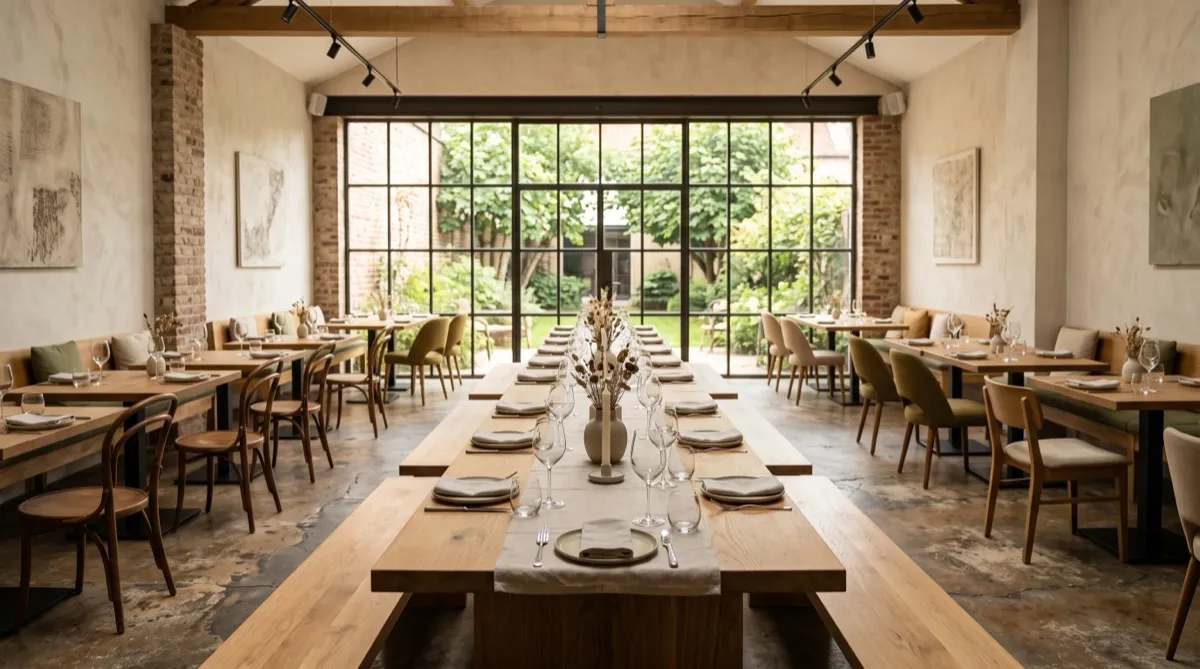
A makerspace may support coding groups, craft workshops and equipment demonstrations at different times. Map the actual calendar, equipment and reset tasks before choosing fixed or mobile furniture. Reconfigurability matters where programs require it, but it does not override stability, access or task-specific requirements.
Why makerspace furniture is a different program from a study floor
Define how often each layout changes and who moves the furniture. Trial the reset with staff and the actual products; other library spaces may also reconfigure, and not every makerspace needs a complete change within minutes.
Worktables built for reconfiguration
If tables must move, check manufacturer-approved casters, locks, loads and floor compatibility. Trial the handling and any folding or nesting procedure, including pinch points and storage limits. Do not assume one person can safely move every mobile table.
Table height matters more here than in a standard study area, since makerspace activity ranges from seated laptop work to standing craft or build projects. A mixed-height program, most tables at standard seated height with a smaller run at counter height for standing work, covers both modes without forcing every activity into one posture.
Surface durability without overselling it
List expected glue, markers, tools and heat exposures and obtain the exact surface's permitted-use and care limits. Laminate or solid surface is not automatically suitable for knives, hot tools or chemicals. Specialized equipment and fabrication may require purpose-built supports, facilities and safety review beyond general furniture.
Seating that moves and stacks as easily as the tables
Where seating must clear, obtain documented stacking or nesting limits and storage equipment. Trial handling and floor-approved glides. Sled bases do not universally avoid wobble or produce less noise than every other chair.
Collaborative zones across different program types
What furniture actually flexes between a teen coding club and an adult workshop? Start with the planned activities. Small table clusters can support shared-screen work, longer runs can suit some craft workshops, and a demonstration may need cleared seating facing a presenter. Test those layouts with the proposed inventory. Mobile tables and stackable chairs can help where their documented use, handling and storage fit the program; some equipment stations may still need fixed supports.
Plan storage into the furniture decision too. Rolling tables and stackable chairs still need somewhere to live between programs, and a room without a dedicated storage wall or closet ends up stacking furniture in a corner where it becomes both a hazard and an eyesore. If your renovation or new-build project has not allocated storage adjacent to the makerspace, flag it early, since retrofitting storage into a finished room is far harder than designing it in from the start.
Noise containment next to quiet floors
Coordinate actual acoustic needs with the building-design team. Furniture may affect room absorption and scrape noise, but no upholstered or sled-base program guarantees adequate isolation beside a reading room. Review placement, partitions and doors alongside the program.
Specialty equipment, tool storage systems, 3D printers, laser cutters, sewing machines, and dedicated AV gear all fall outside a furniture program and need their own procurement lane through equipment vendors and, where applicable, your facilities and safety review. Keep the furniture spec focused on the tables, seating, and mobility that support whatever equipment program the space ultimately runs.
Building the order
Map the calendar and concurrent table/seating use, then test the proposed layouts and storage. Use the furniture cost calculator for a planning scenario. The desk chairs category contains design concepts; stacking, mobility and suitable use require actual model documentation.
See our guide to communal and reconfigurable tables for more on mobile table construction, and our campus furniture volume buying guide for programs scaling across multiple rooms or branches. Zoom out further with the library furniture guide, which places the makerspace inside the branch-wide furnishing picture rather than treating it as a standalone room.
Getting a quote
Request a quote with the program schedule, equipment, layouts, table heights and quantities so independent suppliers can document suitable options and actual delivery terms.