This guide scopes multifamily FF&E to shared amenity spaces and furnished model units: the clubhouse, the leasing office, the coworking lounge, the pool deck, the fitness lobby, and the model units used to sell the property before residents move in. It is a different scope than hospitality or office FF&E because the buyer is usually a developer or a property management company furnishing shared amenity space against a marketing and leasing calendar, not a single building occupant furnishing their own space.
What counts as multifamily FF&E
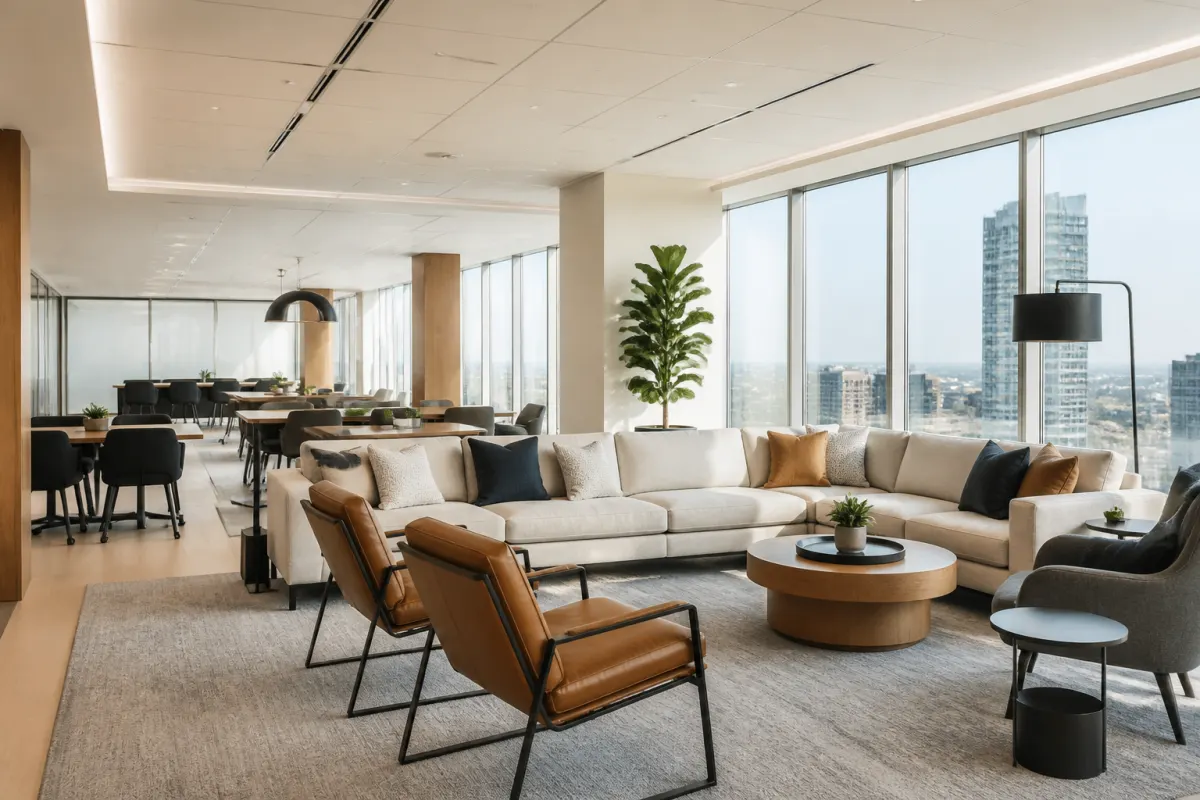
The clubhouse is typically the anchor space and the largest single line item: lounge seating, communal tables, a demo kitchen or coffee bar area, and often a game or media room. The leasing office needs its own furniture program, reception seating for prospects, a desk and guest chairs for the leasing agent, and a small conference or closing table for lease signings. Coworking lounges have become close to standard in new construction and lease-ups over the past several years, and they carry their own spec: task-capable seating alongside lounge pieces, small huddle tables, and enough outlets and surface area that a resident can actually work there for a few hours.
Pool deck and outdoor amenity furniture is its own weather-rated category, separate from the interior pieces, and fitness lobby seating (waiting or stretching area outside the actual gym equipment, which is not FF&E in the furniture sense) rounds out the shared amenity list. Model units are the outlier: fully furnished apartments used to sell the property to prospective residents, spec'd more like a showroom than a real occupied unit, since their entire job is to look finished and aspirational to someone touring the property.
What actually drives leasing decisions?
Ask the property team which amenity and model-unit spaces are needed for photography, tours and resident use, and record the authorized readiness dates. Presentation may matter to the leasing brief, but this guide has no measured furniture effect on leasing velocity. Compare that requirement with actual costs and schedule constraints rather than promise a marketing outcome.
The lease-up clock and why FF&E timing runs backward from it
Record the actual construction, inspection, lawful access, tour, leasing and resident-occupancy milestones for the project. Back-plan each furnishing phase from its approved use date; do not infer that leasing requires furniture before occupancy permission or that those dates always differ. The FF&E freight and logistics guide provides related receiving and installation planning questions.
Model units versus shared amenity space
Set use and care requirements separately for model units, clubhouse, coworking and outdoor areas from expected tours, residents, handling and cleaning. A model-unit label does not establish light wear, and a shared amenity label does not establish round-the-clock use or justify a weaker or stronger construction without exact model evidence.
Durability specs for high-turnover amenity space
Pool deck furniture needs weather and UV-rated materials rated for exterior commercial use, with the maker's exposure, cleaning, anchoring, and storage instructions. A residential or commercial label alone does not establish a one-season failure date. Clubhouse and coworking upholstery should be commercial-grade fabric or performance textile rated for the traffic level, since these are shared spaces with no single resident responsible for their condition the way a unit's own furniture would be. Compare the exact frame, joints, load and cycle evidence with the planned shared use; welded or reinforced labels do not establish a durability advantage over apartment furniture.
Standardizing across a portfolio
A developer or management company running more than one property has the same reason to standardize FF&E specs that a hotel brand or restaurant group does: a repeatable approved item schedule. Confirm finish continuity, parts, reorder availability and matched quantity proposals rather than assume standardization guarantees quality, easy replenishment or better prices. Translate each amenity and model-unit plan into actual item quantities, then use the furniture cost calculator to test those quantities with its illustrative cost inputs. It does not derive an amenity furniture list from apartment count or amenity square footage. See FF&E accounting and capitalization for how a shared amenity purchase typically gets treated on the books once the package is ordered.
Getting the amenity package ordered
Build the amenity and model-unit schedules with locked quantities, specifications, and separate readiness dates. The FF&E procurement process provides a sequence from specification to installation. Browse lounge seating concepts, then request a quote with the item lists, site constraints, and actual launch milestones. Ask responding suppliers which categories and phases they can cover and for itemized product and delivery commitments.