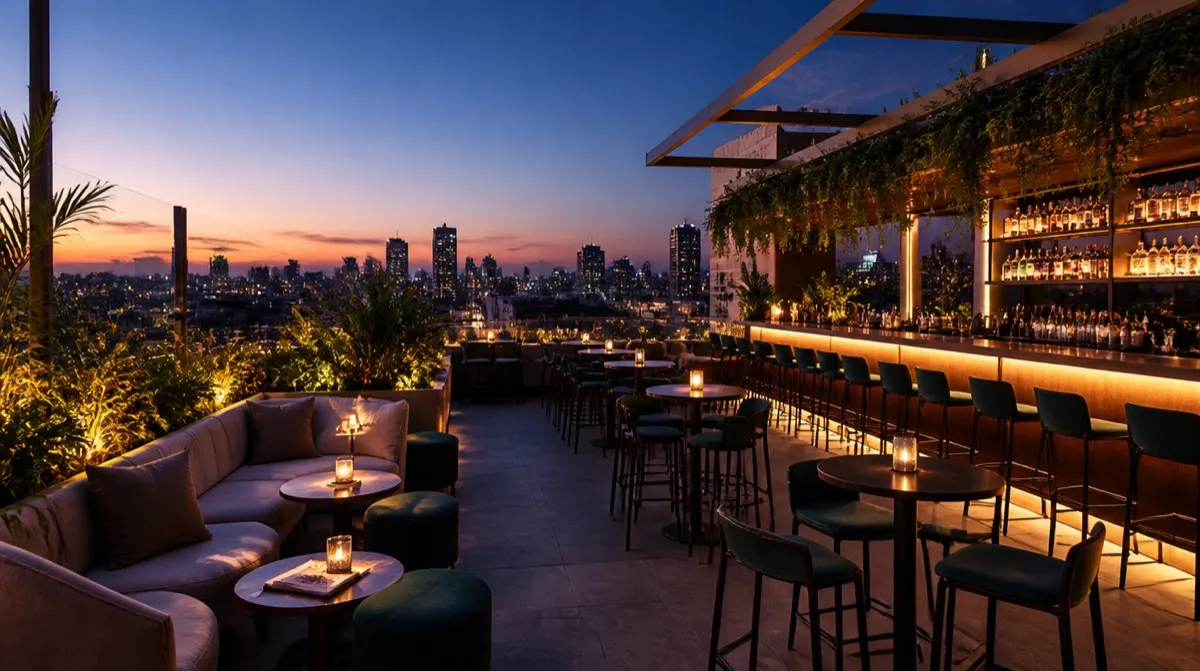
Rooftop bar furniture has to do two hard jobs at once. It carries the same heavy traffic as any high-volume bar, and it does it fully exposed to sun, wind, and rain. That combination is unforgiving. Furniture that would last years indoors can fade, corrode, or blow over in a single season on an open roof, so specifying for the elements is the entire game with a rooftop program.
This guide covers the materials, the seating mix, and the practical details that keep a rooftop bar looking good and staying open.
The elements decide the materials
The first filter for any rooftop piece is weather resistance, and it comes before aesthetics. Sun degrades finishes and fades fabric, moisture corrodes untreated metal, and wind moves anything light.
Frames should be powder-coated aluminum, marine-grade stainless, or teak and other weather-rated woods. Aluminum is the workhorse because it does not rust and stays light enough to handle. Avoid untreated steel and standard indoor finishes, which streak and corrode within a season of exposure.
Upholstery, where you use it, must be outdoor-rated performance fabric with solution-dyed fibers and quick-dry foam. Standard commercial upholstery built for 50,000 or more Wyzenbeek double rubs is right for indoor durability, but a rooftop also needs UV and moisture resistance on top of that abrasion rating. Do not put indoor foam outside; it holds water and breaks down.
Build the seating around the bar
Rooftop bars sell the view and the drink, so the seating mix leans toward the rail and the bar itself.
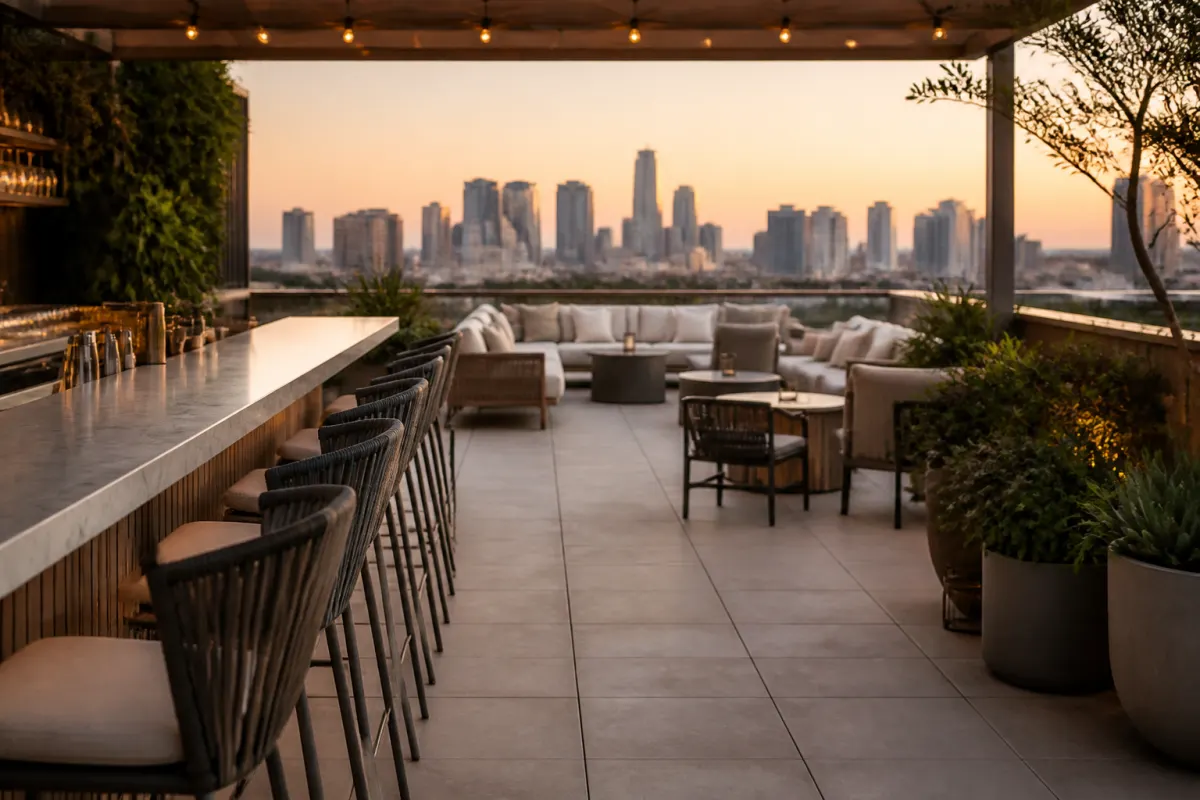
Barstools along the perimeter and the bar are the anchor. Commercial barstools run $110 to $320 per unit at volume, and outdoor-rated aluminum versions sit at the durable end of that range. Counter stools work at mid-height communal tables and ledges. Cocktail and highboy tables ($70 to $150) fill standing zones and turn quickly, which matters when the room is at capacity on a clear evening.
Round out the floor with a few lounge chairs for guests who want to settle in with the view. Keep upholstered lounge pieces under cover or on the sheltered side of the roof if you can.
Weight and wind are a safety issue
Wind is the detail rooftop operators forget until a chair goes over a ledge. Anything light enough to lift is a liability on an exposed roof.
Favor furniture with real mass in the base, and consider weighted or bolt-down options for the most exposed positions. Highboy tables in particular need heavy or fillable bases so they do not tip. Where local code and structure allow, anchoring perimeter seating is the safest choice. This is worth raising directly with your supplier during specification, not after installation.
Plan for teardown and storage
Rooftops close for weather, off-season, and private events, so your furniture should move and stack. Stackable seating and lightweight-but-stable tables let a small crew clear the roof ahead of a storm or reset for a buyout.
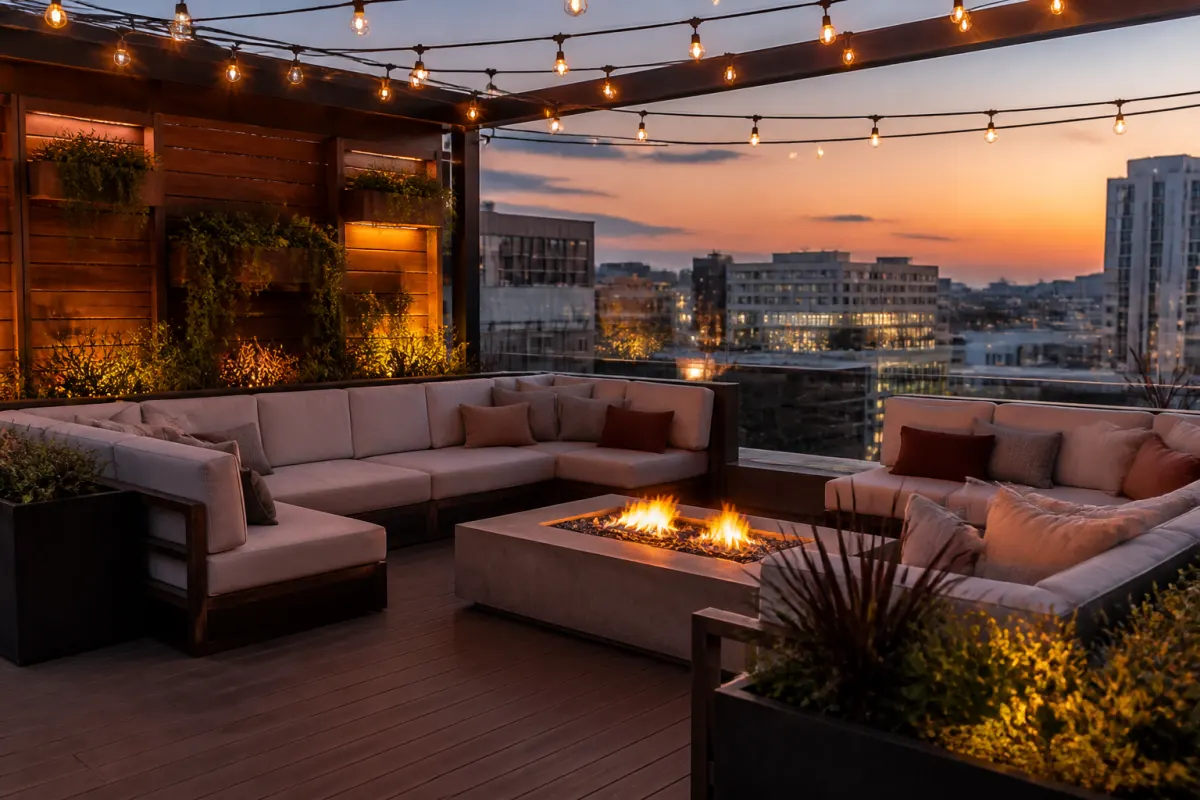
If you run events, keep a reserve of stackable banquet chairs ($45 to $90 per unit) and folding tables (round 60 inch $60 to $130, rectangular $50 to $120) that deploy fast. The ability to clear a roof quickly is both an operations and a safety advantage.
Budget for exposure and replacement cycles
Outdoor-rated furniture costs more up front than indoor equivalents, and that premium is the point: it buys seasons of service instead of months. Because rooftop furniture lives a hard life, plan its budget around total cost over several years rather than the sticker price of a single chair.
Two numbers to build in from the start. Freight and installation typically add roughly 14 to 26 percent over the furniture cost, and rooftop delivery can run higher when access means a service elevator or a crane. Volume price breaks step down at 50, 100, 250, and 500 or more units, so consolidate the order. Custom finishes and upholstery carry a 10 to 14 week lead time while stocked items ship fast, so order early if you are opening for a specific season. Run your seat and table count through our furniture cost calculator to get a working total before you request pricing.
Spec it once, run it for years
The rooftop bars that avoid annual furniture replacement are the ones that specified outdoor-rated construction, weighted bases, and stackable pieces from day one. It costs more at purchase and far less over the life of the space.
When you are ready to build a rooftop program, request a quote with your layout, exposure, and access details, and we will spec seating that handles the traffic and the weather.