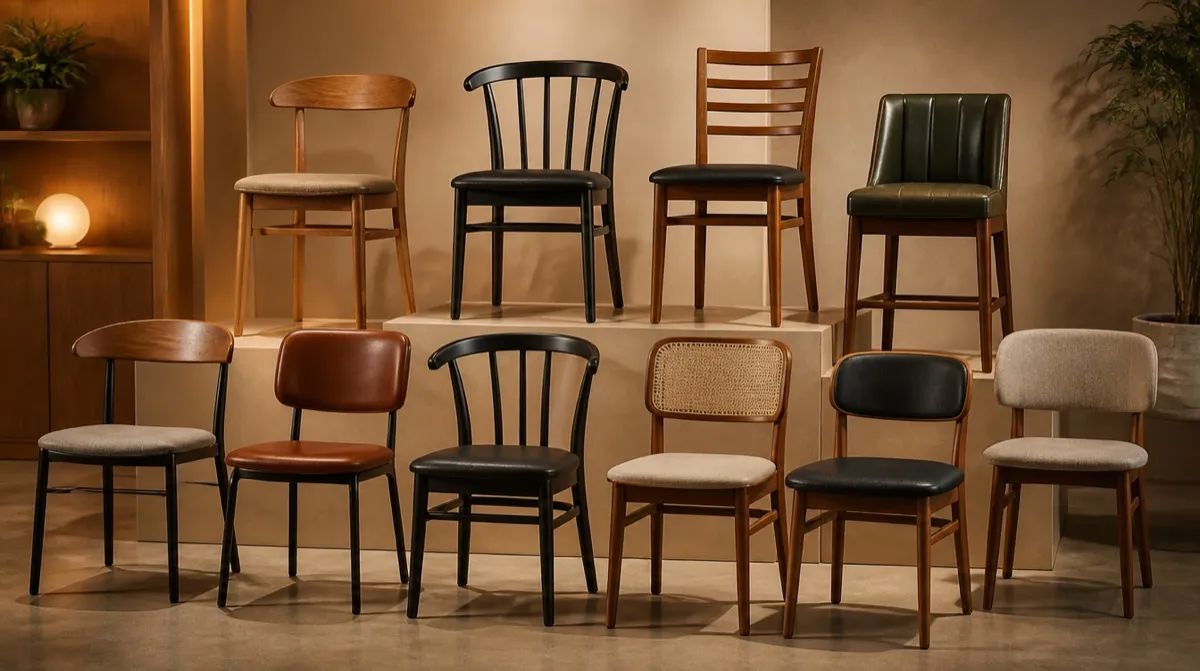
Learning how to choose restaurant chairs is one of the most consequential decisions in any dining room build. Chairs take more daily abuse than almost anything else on the floor, they set the tone of the space, and buying the wrong ones means replacing them within a year or two. The goal is a chair that survives commercial use, feels comfortable through a full meal, and fits the per-seat budget.
This guide walks through the criteria that matter to procurement and operations buyers, from construction and materials to comfort, stacking, and total cost.
Start with construction, not looks
A restaurant chair is judged first on how it is built. Frame material and joinery determine whether a chair lasts five years or fails in twelve months of nightly seating and cleaning.
Metal frames (steel and aluminum) offer the best strength-to-weight ratio and handle high-turnover rooms well. Solid hardwood suits upscale and full-service concepts where warmth matters. Whatever the material, look for welded or doweled joints rather than staples or screws alone, and reinforced stretchers on wood frames. Ask the supplier directly whether the chair is rated for contract use. Residential-grade chairs will not survive a commercial floor no matter how good they look on day one.
Match the seat to the concept and turnover
Comfort should match how long guests sit. A quick-service or bar-height concept wants firmer seats that encourage turnover, while fine dining and lounge concepts justify deeper cushioning and a supportive backrest.
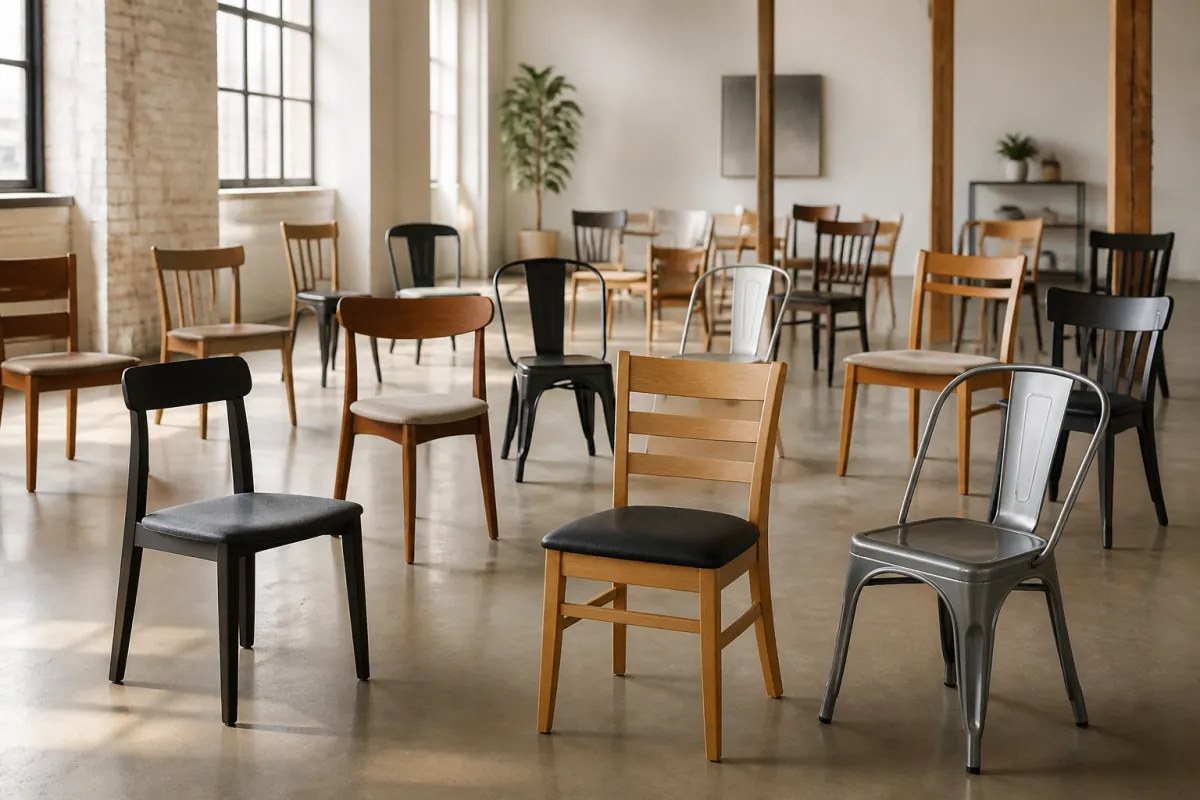
If the chair is upholstered, insist on commercial foam in the 35-40 ILD range. Low-density foam feels fine in the showroom but flattens within months under daily use. Seat height, backrest angle, and armrest clearance under the table all affect how long a guest stays comfortable, so confirm dimensions against your table height before ordering.
Choose upholstery and finishes that survive service
Fabric and finish take the brunt of spills, cleaning chemicals, and constant contact. This is where cutting corners shows fastest.
Commercial upholstery should hit 50,000 or more Wyzenbeek double rubs, compared with roughly 10,000 to 15,000 for residential fabric. For restaurants, prioritize spill-resistant and bleach-cleanable performance fabrics or commercial vinyl, especially in high-traffic and family-dining rooms. On wood and metal frames, ask about the finish system: catalyzed lacquers and powder coats resist moisture and abrasion far better than standard finishes. For a deeper comparison, the commercial upholstery fabric guide breaks down durability ratings.
Decide whether you need stacking or nesting
Operational flexibility is easy to overlook until you are trying to clean floors or reconfigure for a private event. Stackable and nesting chairs make nightly cleaning, storage, and layout changes far simpler.
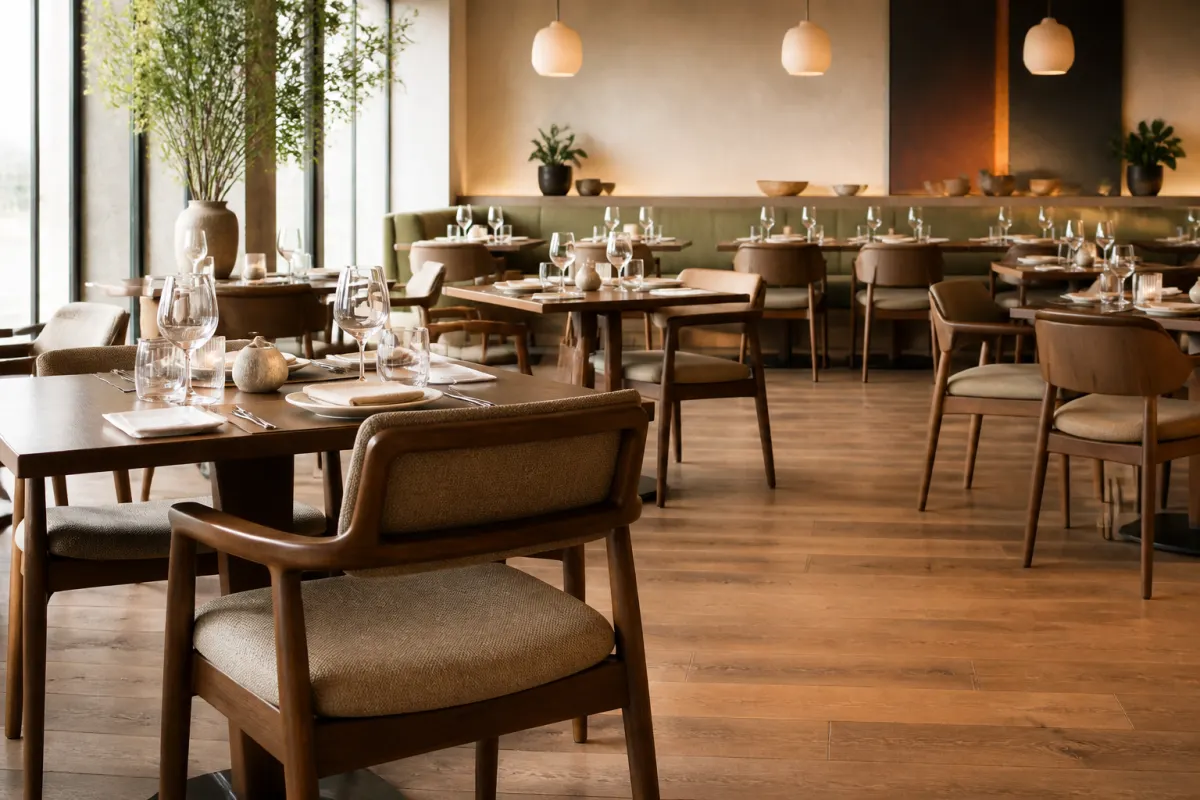
If your room hosts events or needs frequent floor resets, stacking chairs pay for themselves in labor. If the dining room layout is fixed, you can prioritize comfort and design over stackability. Either way, confirm the rated stack height and whether the supplier offers a matching dolly or cart for safe moving and storage.
Budget by the seat, then add freight and install
Chairs are bought in volume, so small per-unit differences multiply fast across a full dining room. Price the project by the seat and then layer in the costs most buyers forget.
At volume, steel stacking chairs commonly run $45-90 per unit, aluminum $70-130, resin Chiavari $40-80, and wood or aluminum Chiavari $90-180. Volume price breaks typically step down at 50, 100, 250, and 500 or more units, so consolidating an order matters. Remember that freight and installation usually add roughly 14-26 percent over the furniture cost. Run your seat count and options through the furniture cost calculator to model the full number before you commit. You can browse frame styles by category on our side chairs and armchairs pages.
Plan lead times around your opening date
The last variable is time. Stocked chairs ship quickly, but custom finishes and upholstery run a 10-14 week lead time, which can derail an opening if you order late.
If your concept needs a specific stain, a branded upholstery, or a nonstandard frame, build that window into your project schedule from the start. When the opening date is tight, ask your supplier which in-stock models come closest to your look so you are not forced to compromise under deadline pressure.
Choosing restaurant chairs comes down to matching construction, comfort, and cost to how the room actually operates. When you are ready to spec a full dining room, request a quote and our team will help you compare models, fabrics, and volume pricing for your project.