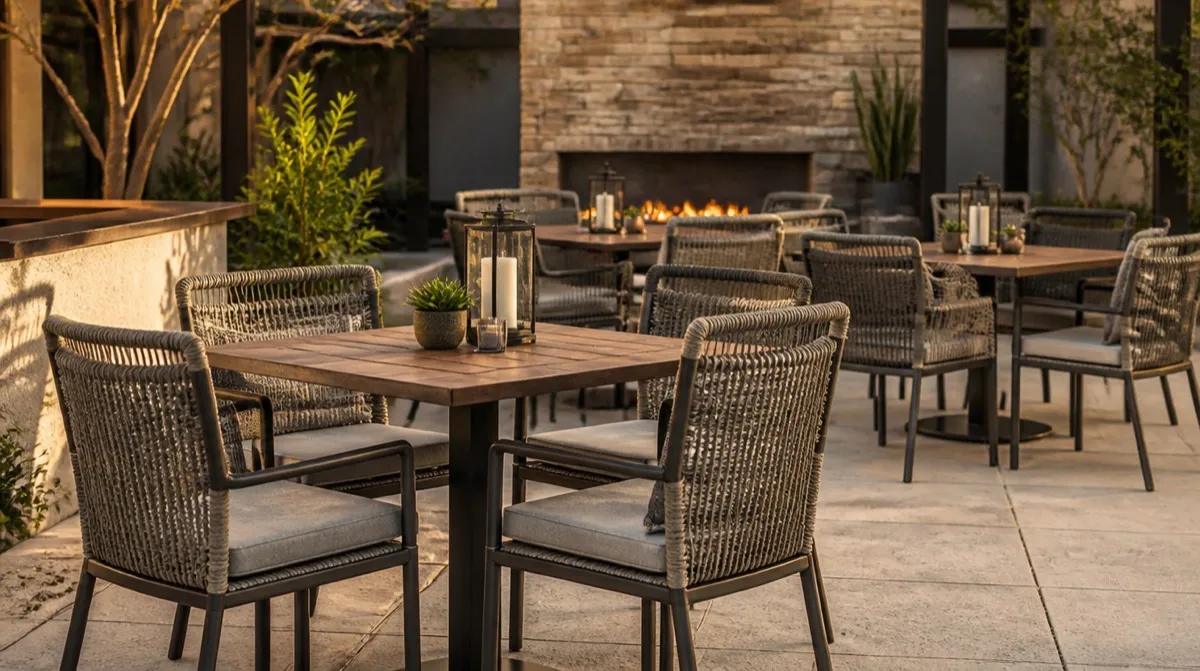
Outdoor restaurant furniture lives a harder life than anything inside your four walls. It absorbs UV, rain, temperature swings, and the same daily service abuse your dining room takes, all at once. Spec it like indoor furniture and you will be replacing it inside a season. Spec it correctly and your patio will still look sharp after five years of full sun.
This guide breaks down what actually holds up outdoors, where the money goes, and how to avoid the mistakes that turn a patio into a recurring line item.
Frame materials that survive the elements
The frame is the foundation of any outdoor program, and material choice decides how long it lasts.
Aluminum is the workhorse of commercial patios. It will not rust, it is light enough to stack and move for cleaning, and powder-coated aluminum holds color through years of sun. For most restaurants, powder-coated aluminum is the default answer.
Steel is stronger and heavier, which helps in windy locations, but it must be galvanized and powder-coated or it will corrode where the finish chips. Untreated steel outdoors is a mistake you only make once.
Commercial-grade resin and high-density polyethylene handle sun and moisture well and cost less, though they can look less premium. Teak and other hardwoods bring warmth to upscale patios but demand real maintenance to avoid graying and cracking.
Upholstery and cushions built for outdoors
Indoor fabric outdoors is a guaranteed failure. Cushions need solution-dyed acrylic like Sunbrella, which resists UV fading, mold, and moisture. Anything less will fade, stain, and rot.
Foam matters just as much. Outdoor cushions need quick-dry, open-cell foam that lets water pass through instead of holding it. Standard commercial foam soaks up rain and stays wet for days. If you are also specifying indoor seating, our commercial upholstery fabric guide covers the durability side in depth.
Slatted seats and backs on chairs and barstools are a smart move outdoors because they shed water instead of pooling it, which keeps guests dry and cuts drying time after rain.
Tables that stay put and stay level
Outdoor tables face two problems indoor tables do not: wind and uneven surfaces. A lightweight table on a breezy patio becomes a hazard.
Weighted or heavy cast bases keep tables planted. For bar-height and cocktail setups, a wide, heavy base is worth the added cost. Tabletops should be rated for outdoor use, which means solid materials like powder-coated metal, teak, or commercial compact laminate that will not delaminate, bubble, or warp when they get wet.
Adjustable glides matter more outdoors, where patios slope for drainage and pavers shift over time. Glides let you level tables on uneven ground without shimming.
What outdoor restaurant furniture costs
Outdoor programs price above their indoor equivalents because the materials and finishes cost more. At volume, aluminum stacking chairs run roughly $70 to $130 per unit, and commercial barstools land between $110 and $320 depending on height and finish. Cocktail and highboy tables run about $70 to $150 each.
Remember that furniture is not the whole number. Freight and install typically add roughly 14 to 26 percent over the furniture cost, and outdoor pieces can ship heavier. To build a realistic patio budget, run your quantities through our furniture cost calculator before you commit.
Volume helps. Price breaks step down at 50, 100, 250, and 500 or more units, so ordering a full patio at once beats piecing it together.
Storage, stacking, and seasonal planning
Furniture that stacks or folds is furniture you can protect. In climates with real winters, the ability to move a patio into storage for the off-season can double its usable life. Stackable aluminum chairs and folding tables make that practical instead of a labor nightmare.
Even in warm climates, plan for storm season and deep cleaning. Lightweight stackable pieces let staff clear a patio in minutes when weather turns. Factor storage space into your layout before you order, not after.
Lead times and getting the spec right
Stocked outdoor items ship fast, which is useful when a patio opens on a deadline. Custom finishes and custom upholstery run a 10 to 14 week lead time, so if you want a signature color or a specific Sunbrella pattern, order early. For a full breakdown, see our lead times guide.
The single biggest mistake operators make is treating outdoor furniture as an afterthought, then buying residential patio sets that fall apart in one season. Contract-grade outdoor furniture costs more up front and far less over five years.
Ready to spec a patio that lasts? Request a quote and we will help you match frames, cushions, and tables to your climate and service volume.