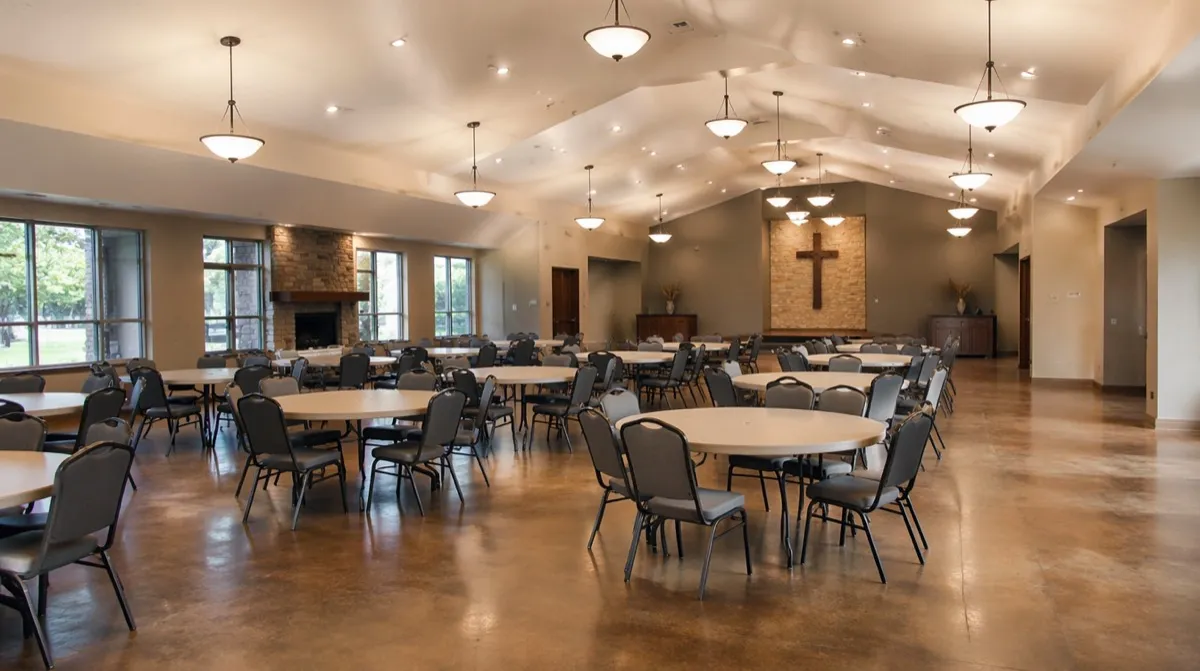
Church furniture is bought differently than almost any other commercial seating, because the goals pull in several directions at once. Worship spaces need to seat large numbers comfortably for long services. Fellowship halls need furniture that stacks, folds, and reconfigures fast between a Sunday crowd, a weekday meeting, and a Saturday event. And every dollar is a stewardship decision, so congregations rightly expect furniture that lasts decades rather than needing replacement every few years. This guide covers how to spec church furniture that balances comfort, flexibility, and long-term value across the sanctuary, the fellowship hall, and everywhere in between.
Match the furniture to how each space is used
A church building is a set of very different rooms, so spec each one for its actual use rather than buying a single chair type everywhere. The sanctuary or worship space needs comfortable, dignified seating for long sittings, whether that is fixed pews, upholstered worship chairs, or a hybrid. The fellowship hall is a true multipurpose room where stacking chairs and folding tables get set and reset constantly. Classrooms, nurseries, and meeting rooms need durable, easy-to-clean seating, and lobbies or gathering areas benefit from a few lounge pieces that make the space feel welcoming. Start by mapping how each room is used through a typical week, and the furniture list follows from that.
Worship seating: comfort for the long service
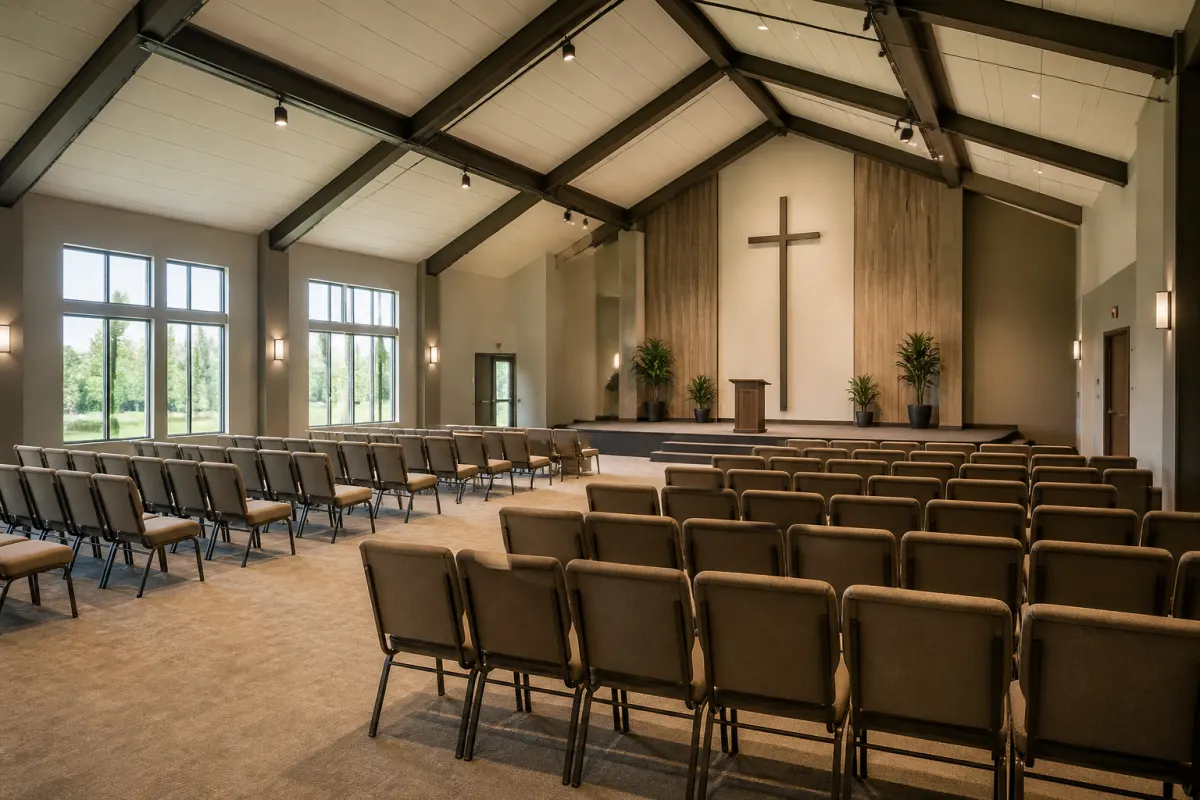
In the sanctuary, comfort matters more than in most venues because people sit for a full service, sometimes more than an hour. Many congregations have moved from pews to upholstered worship chairs, which offer flexibility, individual comfort, and the ability to reconfigure or ganging for aisles and events. Whichever direction you choose, the durability spec should be genuinely commercial. Frames should be welded steel built to hold up through decades of weekly use. Seat foam should be commercial density in the 35-40 ILD range so cushions do not flatten within a few years, since low-density foam looks tired quickly and undermines the comfort you paid for. Upholstery should be a performance fabric rated at 50,000 or more Wyzenbeek double rubs, well above the 10,000 to 15,000 typical of residential fabric, so the seating survives the traffic of a growing congregation.
Fellowship halls: stacking chairs and folding tables
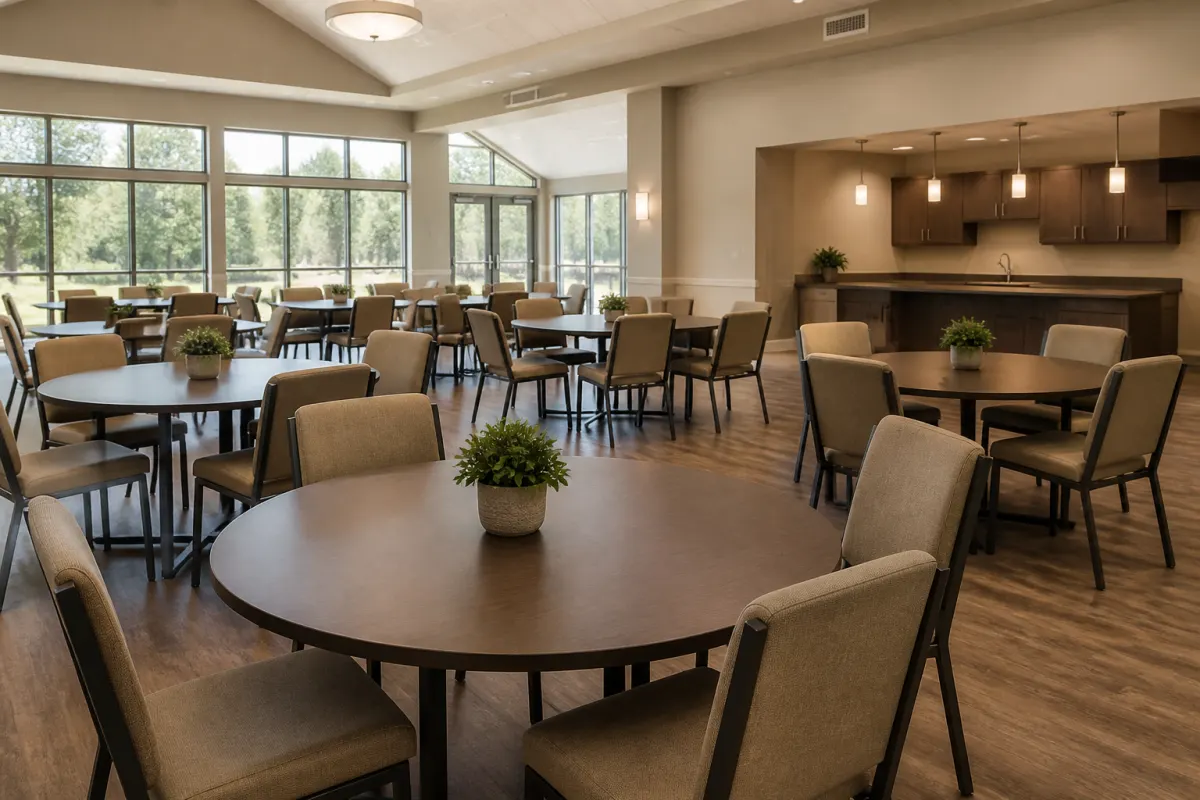
The fellowship hall lives on flexibility, so the furniture has to move. Stacking banquet and side chairs are the workhorses here, set and reset for services, meals, receptions, and community events. At volume, steel stacking banquet chairs run roughly $45 to $90 each, aluminum $70 to $130, and resin styles are lighter for volunteers to handle. Folding tables round out the room: 60-inch round folding tables run about $60 to $130 and rectangular 6 to 8 foot tables about $50 to $120 at volume, both easy to store on carts between uses. Prioritize chairs and tables that are light enough for volunteers to set up quickly yet built to commercial standard, because a fellowship hall may be reconfigured hundreds of times a year. Compare construction across our banquet chairs and tables before you decide.
Durability and stewardship go together
For a congregation, durability is a stewardship issue, not just a quality preference. Furniture that lasts 15 or 20 years costs far less per year than attractive residential-grade seating replaced every three or four, even when the up-front price is higher. Commercial construction, welded frames, high-density foam, high-abrasion upholstery, and finishes that survive cleaning, is what delivers that long service life. This is exactly the difference between contract-grade and retail furniture, and it is why buying commercial from the start protects the budget over time. Our guide on how long commercial furniture lasts breaks down the real service-life math.
Budgeting, volume, and lead times
Churches almost always buy in quantity, whether outfitting a new sanctuary or replacing a fellowship hall set, and that volume works in your favor. Price breaks step down at 50, 100, 250, and 500 or more units, so a full sanctuary order lands at a very different per-chair price than a small reorder. Budget freight and installation too, which typically add roughly 14 to 26 percent over the furniture cost. Plan timing around your calendar: stocked stacking chairs and folding tables ship fast, while custom upholstery and finishes carry a 10 to 14 week lead time, so order well ahead of an Easter or Christmas target. Model your full project with our furniture cost calculator, then request a quote with your seat counts and room plan and we will spec seating and tables to your spaces and confirm pricing and lead time.