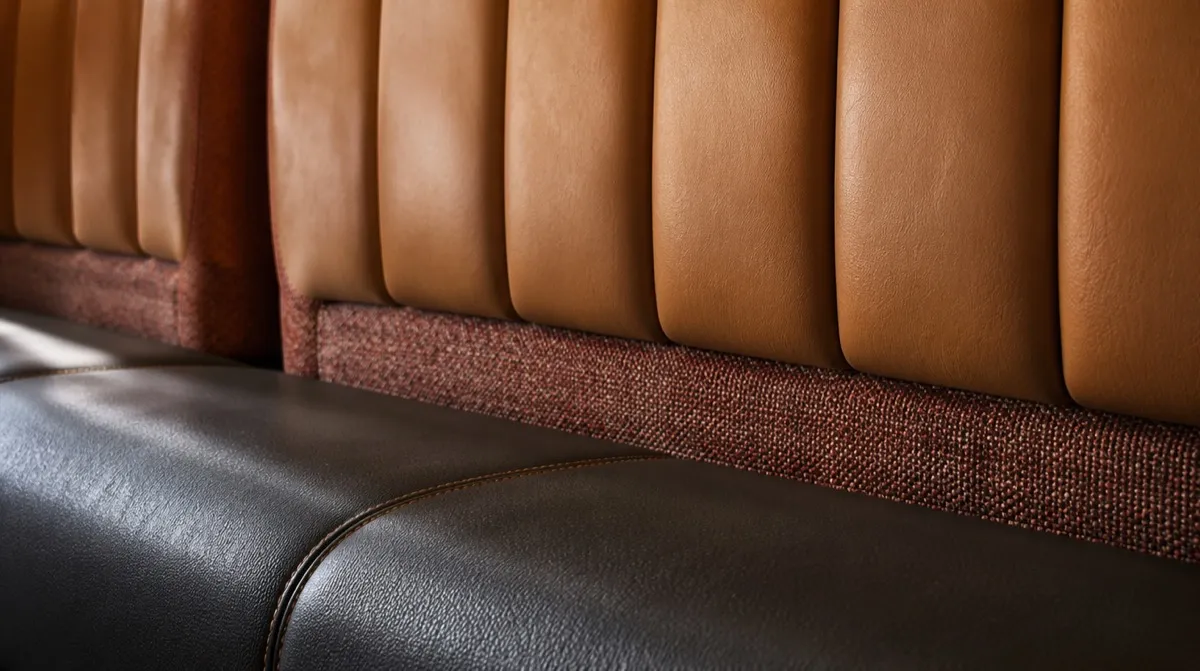
The commercial vinyl vs fabric upholstery decision is one of the most consequential specs you will make on a seating order. It drives how comfortable your guests are, how much your staff spends cleaning, and whether your dining room still looks sharp in year three or looks tired in year one. Get it right and the covering outlives two refreshes. Get it wrong and you are reupholstering a frame that had years of life left.
This guide breaks down where each material wins, the durability numbers that matter, and how to match the covering to the room.
The durability numbers that actually matter
Before you compare vinyl and fabric, understand the test both are measured by. Commercial upholstery durability is rated in Wyzenbeek double rubs, a machine test that rubs the surface until it wears through.
Commercial upholstery should hit 50,000 or more double rubs. Residential coverings, by contrast, typically land around 10,000 to 15,000, which is why residential fabric fails fast in a restaurant. Whether you go vinyl or fabric, the number is your first filter. Any covering under the commercial threshold is disqualified before comfort or color enters the conversation.
Ask any supplier for the double rub rating by number. A legitimate commercial vendor knows it instantly.
Where commercial vinyl wins
Commercial vinyl, usually polyurethane vinyl, is the most durable and easiest to clean option for food service. Staff wipe it down with a cleaning solution, and it shrugs off spills, grease, and repeated cleaning without staining or absorbing moisture.
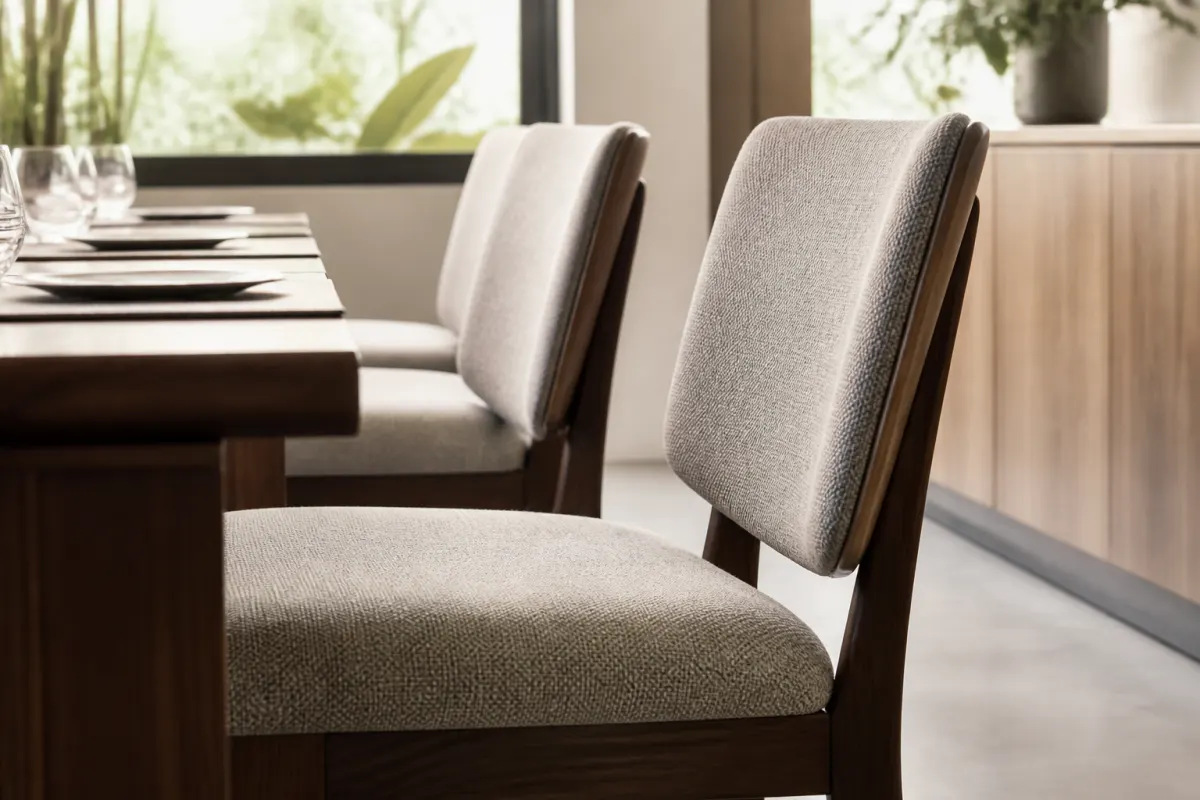
That makes vinyl the default answer for any high-contact surface where guests are eating and drinking within arm's reach: bar seats, counter stools, main dining floors, and quick-service booths. It also handles light-colored designs better than fabric because you can actually clean it back to new.
The tradeoffs are comfort and feel. Vinyl can feel warmer against skin on a long sit and does not breathe like textile. For a bar stool or a fast-turn table, that rarely matters. For a two-hour fine-dining meal, it can.
Where fabric wins
Fabric brings warmth, texture, and a softer sit that guests notice in lounge and upscale settings. The key is that commercial fabric does not mean residential fabric.
Performance fabrics engineered for contract use, with built-in moisture barriers, look and feel like textile while resisting stains and cleaning products that would destroy residential cloth. These belong in hotel rooms, restaurant booths, and lounge chairs where you want comfort without giving up durability.
Fabric shines where the sit is longer and the spill risk is lower. A cocktail lounge, a hotel lobby, or a private dining room are natural fabric environments. Just confirm the double rub rating and, in food service, the presence of a moisture barrier before you commit.
Foam and frame: the parts under the cover
The covering gets the attention, but what sits beneath it decides comfort and lifespan. Commercial foam should be 35 to 40 ILD. Low-density foam flattens within months, and no covering fixes a seat that has gone flat.
Vinyl and fabric both ride on the same foam and frame standards, so do not let the covering debate distract you from specifying proper cushion density. A great vinyl on cheap foam is still an uncomfortable seat.
Matching the covering to the room
The simplest way to decide is to map covering to use.
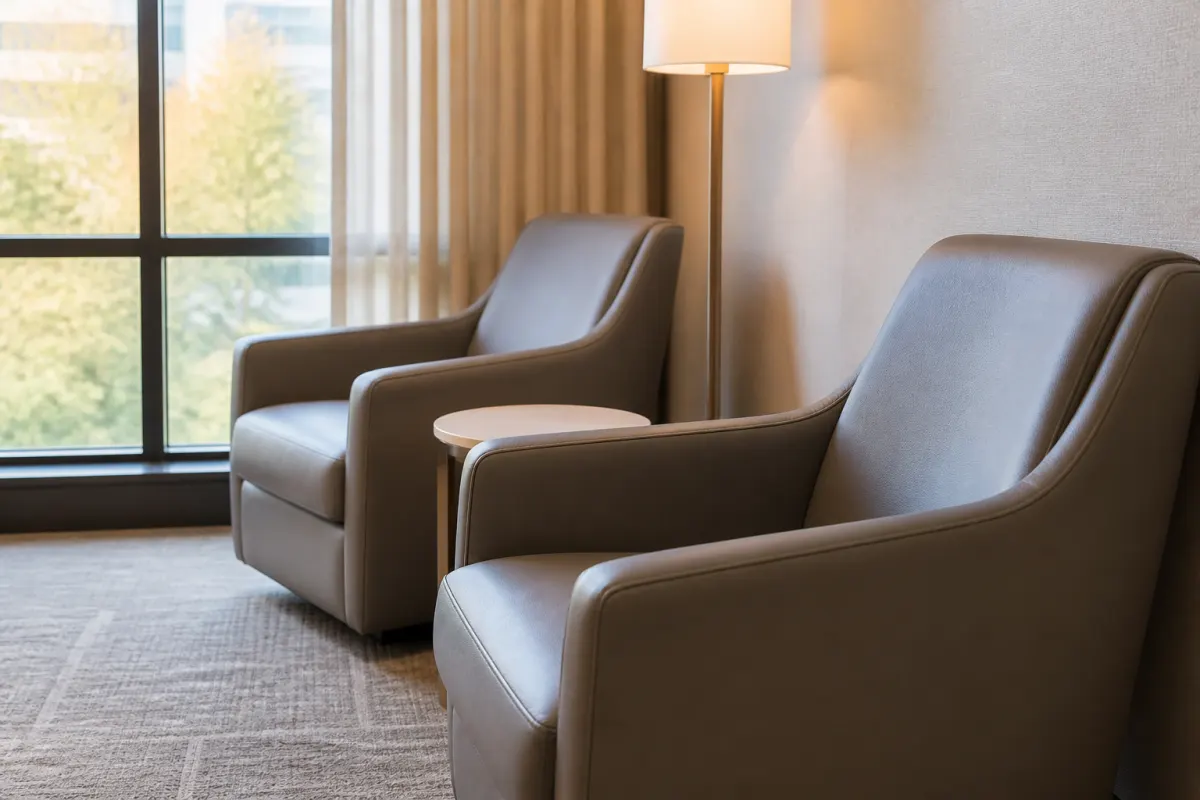
High-spill, high-turn, wipe-clean zones such as bars, patios, quick service, and family dining go vinyl. Lower-spill, longer-sit, comfort-forward zones such as lounges, upscale dining, and guest rooms go performance fabric. Many operators mix both in one venue, vinyl on the working floor and fabric in the lounge, which is a sound strategy rather than a compromise.
Cost is similar enough between commercial vinyl and performance fabric that it rarely decides the call. Volume matters more: price breaks step down at 50, 100, 250, and 500 or more units, so ordering a full room at once beats piecing it together. To pressure-test your budget, run quantities through our furniture cost calculator.
Lead times and ordering
Stocked coverings ship fast. Custom finishes and custom upholstery run a 10 to 14 week lead time, so if you want a specific vinyl grain or a signature fabric, order early. Also budget for delivery: freight and install typically add roughly 14 to 26 percent over furniture cost.
Still unsure which covering fits each zone in your space? Request a quote and we will help you spec vinyl and fabric room by room.